
Zebrafish Gene Microarray Service
InquiryObesity and its associated metabolic complications, such as non-alcoholic fatty liver disease (NAFLD) and type 2 diabetes, represent a global health crisis. Protheragen leverages the zebrafish as a premier vertebrate model to bridge the gap between in vitro assays and mammalian preclinical trials.
Zebrafish Gene Microarray Service for Obesity Research
Zebrafish share approximately 70% of their genome with humans, and more than 80% of human disease-related genes have a functional ortholog in these teleosts. Our zebrafish gene microarray service for obesity research provides a high-throughput, cost-effective transcriptomic platform to analyze gene expression changes induced by high-fat diets (HFD), overfeeding, or pharmacological interventions. By capturing thousands of data points simultaneously, we enable researchers to map metabolic pathways, identify novel biomarkers, and evaluate the efficacy of anti-obesity compounds with unparalleled precision.
Core Technologies
To provide a deeper understanding of our zebrafish gene microarray service for obesity research, Protheragen utilizes a specialized technological suite that bridges high-throughput genomic data with physiological metabolic responses.
- High-Density Oligonucleotide Microarray Platform
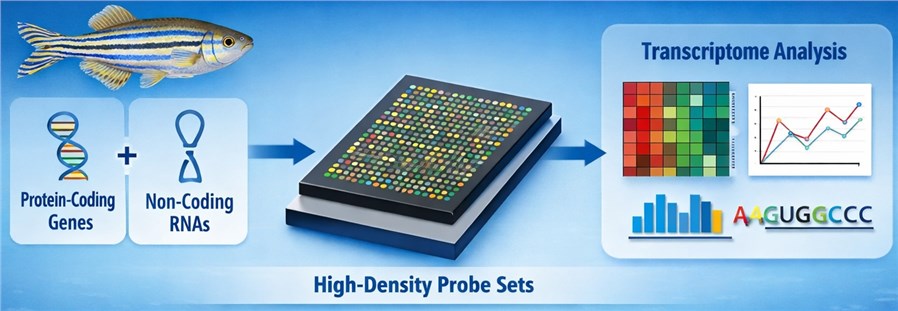
We utilize precision-engineered zebrafish microarrays containing over 15,000 to 40,000 unique probe sets. These arrays are designed to capture the expression of nearly every protein-coding gene and relevant non-coding RNAs in the zebrafish genome, providing an exhaustive transcriptomic snapshot of metabolic states.
- Deep Phenotyping & Adiposity Mapping Beyond Transcriptomics
We integrate deep phenotyping technology to correlate gene expression with physical changes. This includes automated analysis of up to 60+ different adiposity traits, allowing us to link specific gene clusters to regional fat distribution and cellular-level lipid accumulation.
- Advanced Fluorescent Labeling & Scanning
To ensure maximum sensitivity for low-abundance transcripts (such as rare hormone receptors or signaling cytokines), we employ high-efficiency biotinylated cRNA labeling. Our high-resolution laser scanners detect these signals with a wide dynamic range, preventing signal saturation for highly expressed metabolic enzymes while maintaining clarity for regulatory genes.
- Bioinformatics Integration (KEGG & GO Analysis)
Our core includes a proprietary bioinformatics pipeline that automatically maps differentially expressed genes (DEGs) to established metabolic pathways. We focus on the liver-gut-brain axis, specifically identifying shifts in the PPARG signaling, fatty acid metabolism, and insulin resistance pathways that are highly conserved between zebrafish and humans.
- Tissue-Specific Micro-Dissection & RNA Stabilization
Protheragen employs specialized micro-dissection techniques to isolate specific metabolic tissues—such as the visceral adipose tissue (VAT) and hepatic tissue—even in larvae. This reduces biological "noise" from non-metabolic tissues and ensures that the microarray data specifically reflects the obesity phenotype being studied.
- RIN-Optimized Quality Control
Every sample is processed through an automated electrophoresis system to determine the RNA integrity number (RIN). We only proceed with hybridization for samples achieving a high RIN (typically >8.0), ensuring that the resulting microarray data is not biased by RNA degradation.
Contact Our Team to Discuss Your Project
Service Scope
Protheragen offers a comprehensive suite of services within our zebrafish microarray platform:
- Whole-Genome Transcriptomic Profiling
Comprehensive analysis of over 40,000 transcripts to identify global metabolic shifts.
- Tissue-Specific Expression Analysis
Comparative studies focusing on the liver-gut-brain axis to understand organ-specific responses to obesity.
- Custom Probe Design
Tailored microarray layouts focusing on specific gene families, such as lipid transporters, adipokines, or inflammatory cytokines.
- Time-Course Metabolic Studies
Sequential transcriptomic profiling to track the progression of obesity from early onset to chronic stages.
- Comparative Pharmacogenomics
Evaluating how different chemical leads modulate gene expression patterns to reverse the obese phenotype.
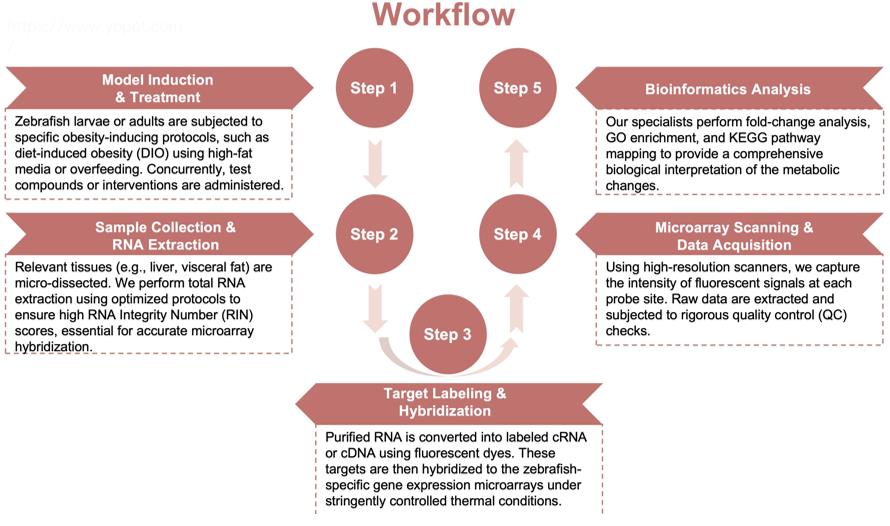
Workflow
Our standardized workflow ensures reproducible and high-quality data for every preclinical project:
Fields of Application
The zebrafish gene microarray service at Protheragen provides a versatile and high-resolution molecular window into metabolic dysfunction, supporting a diverse range of preclinical research objectives from early-stage target identification to the evaluation of therapeutic efficacy.
- Nutraceutical Screening: Evaluating the impact of functional foods and dietary supplements on lipid metabolism genes.
- Drug Discovery and Development: High-throughput screening of small molecules for anti-obesity and lipid-lowering properties.
- Metabolic Syndrome Research: Investigating the molecular links between obesity, insulin resistance, and hepatic steatosis.
- Toxicogenomics: Assessing the impact of environmental pollutants (obesogens) on the zebrafish endocrine system and fat accumulation.
- Endocrinology Studies: Mapping the expression of hunger and satiety signals in the zebrafish brain-gut axis.
Advantages
The zebrafish gene microarray service at Protheragen offers a sophisticated alternative to Traditional Mammalian Models, providing a high-resolution molecular bridge that accelerates the preclinical development timeline. By integrating our high-density microarray platform with the unique biological profile of zebrafish, we deliver data that is both statistically robust and biologically meaningful for human metabolic research.
Exceptional Genomic Orthology
Zebrafish possess functional orthologs for over 80% of human genes associated with metabolic disease. Our microarrays are specifically designed to target these conserved sequences, ensuring that the transcriptomic signatures we identify in response to lipid accumulation or insulin resistance are directly relevant to human obesity.
High-Throughput Cost Efficiency
Our platform allows for the simultaneous analysis of thousands of transcripts across multiple experimental groups at a fraction of the cost of murine studies. This enables researchers to perform large-scale dose-response or multi-compound screening projects that would be financially prohibitive in mammalian systems.
Tissue-Specific Precision
Leveraging advanced micro-dissection and tissue-specific staining, Protheragen isolates gene expression data from the liver, intestine, and adipose tissues. This targeted approach eliminates the "dilution effect" of whole-organism sequencing, revealing subtle metabolic shifts that occur early in the progression of obesity.
Rapid Experimental Cycles
The rapid development of zebrafish allows for the completion of complex obesity induction and transcriptomic profiling cycles in weeks rather than months, significantly shortening the "design-test-learn" loop in drug discovery.
Validated Metabolic Markers
Protheragen’s zebrafish models exhibit consistent differential expression of key metabolic regulators, such as lepta, fasn, and srebp1, mirroring the molecular pathology observed in clinical non-alcoholic fatty liver disease (NAFLD) and metabolic syndrome.
Our Team for More Information and to Discuss Your Project
Publication Data
Title: Diet-induced obesity in zebrafish shares common pathophysiological pathways with mammalian obesity
Journal: BMC Physiology, 2010
DOI: http://www.biomedcentral.com/1472-6793/10/21
Summary: This study establishes a diet-induced obesity (DIO) zebrafish model by overfeeding zebrafish with high-fat Artemia for 8 weeks, leading to increased BMI, hypertriglyceridemia, and hepatosteatosis—key obesity-related phenotypes. Calorie restriction (CR) for 2 weeks reversed these abnormalities. Comparative transcriptome analysis of visceral adipose tissue across DIO zebrafish, DIO rodents, and obese humans revealed shared pathophysiological pathways (coagulation cascade, lipid metabolism) and common regulatory molecules. The zebrafish model, with advantages like simplicity, homogeneity, and high fecundity, offers a cost-effective alternative to rodent models for identifying obesity drug targets and testing novel therapies.
Key Findings
- Successful DIO Zebrafish Model Establishment: Overfeeding 3.5-month-old zebrafish with 60 mg/day Artemia (vs. 5 mg/day control) induced obesity within 1 week, with sustained higher BMI, elevated plasma triglycerides, and liver lipid accumulation (Oil Red O staining confirmed hepatosteatosis) at 8 weeks.
- Calorie Restriction Reverses Obesity Phenotypes: Post-8-week overfeeding, 2 weeks of CR (2.5 mg/day Artemia) reduced zebrafish body weight (to 82-84% of overfed levels) and plasma triglycerides (to 52-69%), mirroring CR effects in mammals.
- Shared Pathophysiological Pathways: GSEA identified common dysregulated pathways in zebrafish and mammalian obesity, including blood coagulation, platelet activation, fatty acid metabolism, cholesterol efflux, and triglyceride metabolism.
- Conserved Regulatory Molecules: SNEA revealed key regulators across species:
- Coagulation cascade: APOH, IL-6, IL-1β
- Lipid metabolism: SREBF1, PPARα/γ, NR1H3, LEP - Model Advantages: Zebrafish show more homogeneous obesity responses than rodent strains (e.g., C57BL/6J mice, Sprague-Dawley rats), are small/easy to maintain, and enable live imaging of visceral adipose tissue (e.g., Casper zebrafish with Nile Red staining), supporting high-throughput drug screening.
- Limitation: Zebrafish lack brown adipose tissue, so the model is unsuitable for studying brown adipose-related obesity pathways.
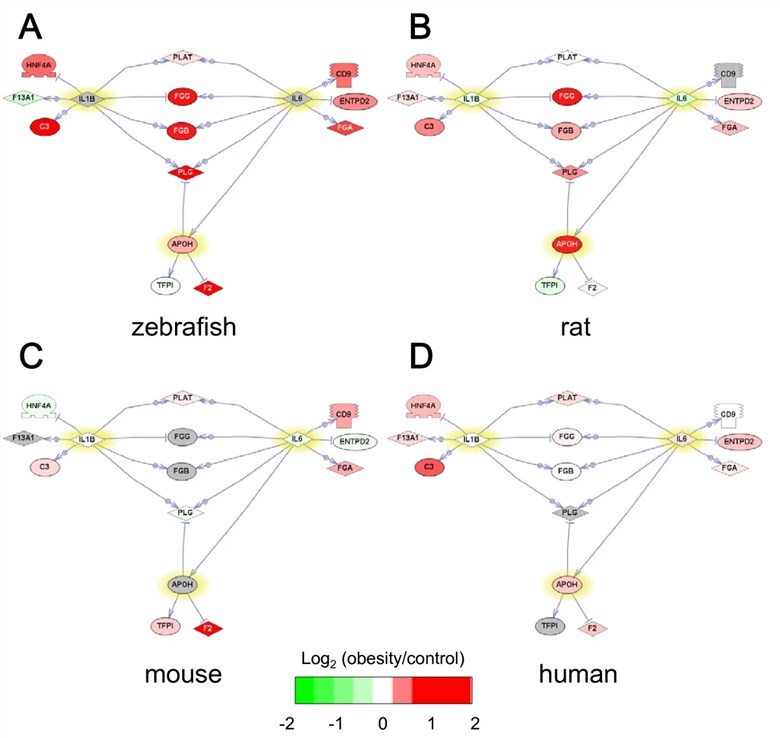 Fig.1 Key regulators (APOH, IL-6, IL-1β) and target genes in the coagulation cascade of obese zebrafish and mammals. (Oka, et al., 2010)
Customer Review
High-Resolution Pathway Discovery
"Working with Protheragen has transformed our approach to metabolic screening. Their zebrafish microarray platform provided us with a clear MoA for the lead compound that we missed in previous in vitro assays. The depth of the bioinformatics report was exceptional, identifying three novel pathways involved in lipid sequestration."
Dr. A. D., Metabolic Research Institute
Accelerated Screening for Nutraceutical Innovation
"The efficiency of the Protheragen team is unmatched. We were able to screen twenty different dietary formulations in a fraction of the time it would have taken using rodent models. The correlation between the microarray data and our phenotypic observations was seamless. We look forward to our next collaboration on insulin resistance models."
Dr. R. D., Global Nutraceutical Company
Frequently Asked Questions
-
Why choose zebrafish over mouse models for obesity microarray studies?
Zebrafish offer higher throughput, lower costs, and external development, allowing for easier manipulation and observation of adipocyte formation.
-
What is the minimum sample size required?
Due to the high sensitivity of our platform, we can work with small tissue biopsies or pooled larvae samples, typically requiring as little as 100-500ng of total RNA.
-
Can you distinguish between different types of lipid metabolism?
Yes, our microarrays cover pathways for fatty acid oxidation, lipogenesis, and cholesterol transport.
-
How long does the entire process take?
From sample receipt to the delivery of the final bioinformatics report, the typical turnaround time is 4-6 weeks.
-
Is the data compatible with human clinical data?
While preclinical, the high orthology between zebrafish and humans allows for meaningful cross-species meta-analysis.
-
Do you provide raw data?
Yes, we provide both raw data files and fully processed, publication-ready reports.
-
Can this service help identify drug toxicity?
Absolutely. Microarray analysis can reveal early signs of hepatotoxicity or metabolic disruption before physical symptoms appear.
-
What obesity induction methods do you support?
We support high-fat diet immersion, high-calorie overfeeding, and genetic models (e.g., leptin receptor mutants).
-
Are your microarrays updated?
We use the latest genome assemblies to ensure all probes correspond to the most current zebrafish genetic nomenclature.
Contact Us
Protheragen provides an industry-leading zebrafish gene microarray service designed to accelerate obesity research. By combining high-resolution transcriptomics with the biological advantages of the zebrafish model, we offer a powerful tool for biomarker discovery and drug efficacy testing. Our comprehensive workflow—from model induction to advanced bioinformatics—ensures that your preclinical data is robust, reproducible, and ready for the next stage of development.
Contact Protheragen for More Information and to Discuss Your Project
Reference
- Oka, T.; et al. Diet-induced obesity in zebrafish shares common pathophysiological pathways with mammalian obesity. BMC Physiology. 2010 10:21. (CC BY 4.0)
All of our services and products are intended for preclinical research use only and cannot be used to diagnose, treat or manage patients.