
Obesity-Related Exosome Function Study Service
InquiryObesity is no longer viewed merely as a metabolic disorder of lipid storage but as a complex systemic disease driven by chronic low-grade inflammation and cellular dysfunction. Central to this pathology is the role of exosomes—small extracellular vesicles (30–150 nm) that act as critical mediators of intercellular communication. Protheragen provides a specialized obesity-related exosome function study service, focusing on how adipose-derived exosomes, as well as those from skeletal muscle and liver, transport bioactive molecules like miRNAs, lncRNAs, and proteins to distant organs.
Exosomal Mediators in Metabolic Signaling Study Service
Our preclinical research platform allows for the detailed investigation of how "obese" exosomes trigger insulin resistance, inhibit thermogenesis in brown adipose tissue (BAT), and promote macrophage polarization. By utilizing Protheragen’s advanced isolation and characterization techniques, researchers can decipher the molecular signatures of exosomal cargo that contribute to metabolic syndrome, providing a robust foundation for identifying novel therapeutic targets or diagnostic biomarkers in the preclinical phase.
Core Technologies
To ensure the highest fidelity in metabolic research, Protheragen employs a suite of high-precision technologies tailored for obesity-related samples, which are often rich in lipids and lipoproteins.
- Optimized Differential Ultracentrifugation (DUC) & Size-exclusion Chromatography (SEC)
We utilize SEC in tandem with density gradient ultracentrifugation to ensure high-purity exosome recovery, effectively removing contaminating chylomicrons and VLDLs that often plague obesity-related serum samples.
- Nanoparticle Tracking Analysis (NTA)
Precise quantification of vesicle concentration and size distribution to ensure the integrity of the isolated exosome population.
- High-Resolution Cargo Profiling
Utilizing next-generation sequencing (NGS) for small RNA-seq and liquid chromatography tandem mass spectrometry (LC-MS/MS) for proteomics to map the complete molecular landscape of exosomes derived from hypertrophic adipocytes.
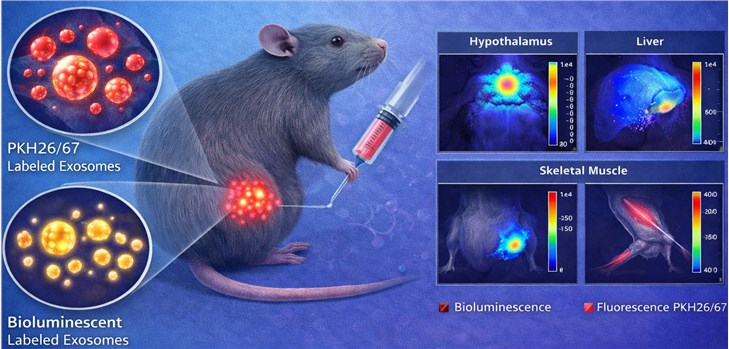
- Exosome Labeling and Tracking
Advanced lipophilic dye labeling (e.g., PKH26/67) and bioluminescence imaging to monitor exosome uptake in target metabolic tissues like the hypothalamus, liver, and skeletal muscle in in vivo animal models.
Service Scope
Our service covers the entire spectrum of preclinical obesity research:
- Adipose-Derived Exosome (AD-Exo) Analysis
Investigating how adipocyte-secreted vesicles influence systemic insulin sensitivity.
- Crosstalk Modeling
Studying the communication between adipose tissue and the liver (NAFLD/NASH), heart, and brain.
- Inflammation Studies
Analyzing exosome-mediated recruitment and activation of M1 macrophages in adipose depots.
- Therapeutic Potential Testing
Evaluating the efficacy of "engineered" or "healthy" exosomes (e.g., from exercise-trained models) in mitigating obesity symptoms in Preclinical Models.
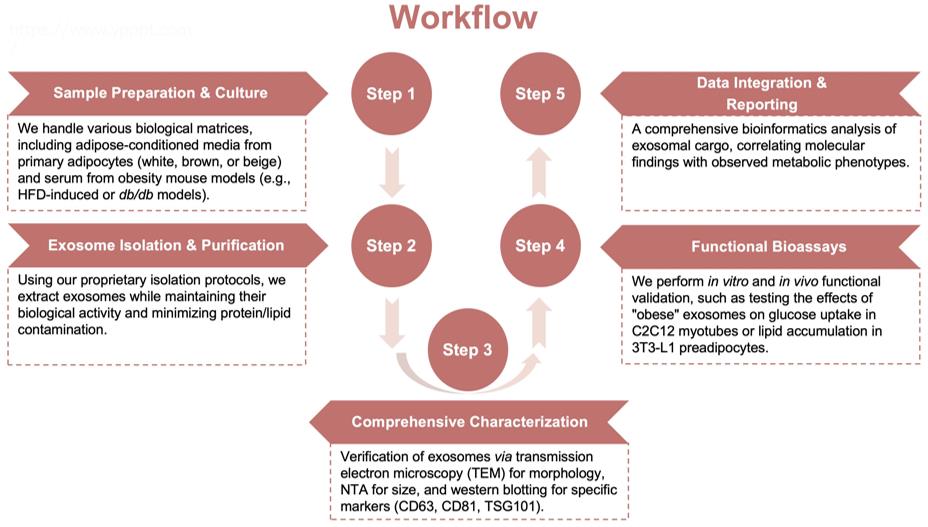
Workflow
Protheragen has streamlined the preclinical study process to provide rapid, reliable data for your metabolic research projects.
Fields of Application
Our exosome analysis platform bridges the gap between basic adipocyte biology and therapeutic innovation.
- Drug Target Discovery: Identifying exosomal miRNAs that regulate metabolic rate or appetite control.
- Biomarker Development: Screening for specific exosomal protein signatures that precede the onset of type 2 diabetes.
- Pharmacodynamic Studies: Using exosome cargo as a readout for the efficacy of novel anti-obesity compounds.
- Regenerative Medicine: Exploring the use of MSC-derived exosomes in repairing metabolic damage and reducing chronic inflammation.
Advantages
Protheragen stands at the forefront of extracellular vesicle research with specific expertise in metabolic diseases.
Metabolic Specialization
Unlike generic providers, we utilize proprietary workflows specifically engineered for the metabolic landscape. We understand the physical and chemical nuances of lipid interference, allowing us to optimize protocols for high-lipid samples—such as fatty liver tissue or diabetic serum—without compromising total vesicle yield.
Purity Assurance
We employ a multimodal hybrid isolation strategy (e.g., combining size-exclusion chromatography with specialized density gradient ultracentrifugation). This approach achieves superior depletion of non-vesicular proteins and lipoproteins, ensuring that the biological effects observed in your downstream assays are truly attributable to the exosomes and not to co-isolated metabolic debris.
Functional Validation
We bridge the gap between raw data and biological relevance. Our platform integrates validated metabolic bioassays, including specialized models for insulin signaling pathways, glucose uptake, and thermogenic gene expression (e.g., UCP1 quantification). We provide the biological context necessary to transform isolated vesicles into actionable therapeutic leads.
High-Quality Data
Our facility utilizes a suite of "gold-standard" instrumentation, including high-resolution nanoparticle tracking analysis (NTA) and cryo-electron microscopy (Cryo-EM). By strictly adhering to minimal information for studies of extracellular vesicles (MISEV) guidelines, our data packages are designed to meet the rigorous standards of high-impact journals.
Inquire with Protheragen Today to Optimize Your Study Design.
Publication Data
Title: Effect of circulating exosomes derived from normal-weight and obese women on gluconeogenesis, glycogenesis, lipogenesis and secretion of FGF21 and fetuin A in HepG2 cells
Journal: Diabetol Metab Syndr, 2020
DOI: https://doi.org/10.1186/s13098-020-00540-4
Summary: This in vitro study investigates the impact of plasma circulating exosomes from obese and normal-weight women on insulin signaling, lipid metabolism, and hepatokine secretion in HepG2 human liver cells. Isolated exosomes were characterized for size, zeta potential, and CD63 expression, and HepG2 cells were treated with these exosomes to assess triglyceride (TG) accumulation, glycogen levels, gluconeogenic enzyme expression, and secretion of hepatokines (FGF21 and fetuin-A). Results show that exosomes from obese women (O-Exo) disrupt insulin signaling, promote hepatic lipid accumulation, and reduce FGF21 secretion, highlighting a key role of obesity-related exosomes in metabolic disorders like nonalcoholic fatty liver disease (NAFLD) and insulin resistance.
Key Findings
- Lipid Accumulation: O-Exo significantly increased intracellular TG levels in HepG2 cells compared to the control group (P=0.005) and normal-weight exosome (N-Exo) group (P=0.018), confirmed by Oil Red O staining.
- Insulin Signaling Impairment: O-Exo reduced phosphorylation of GSK3β (P=0.002) and glycogen levels (P=0.018) in HepG2 cells, indicating inhibited glycogenesis.
- Gluconeogenesis Activation: mRNA expression of gluconeogenic enzymes G6pase (P=0.017) and PEPCK (P=0.010) was significantly upregulated in O-Exo-treated cells versus controls.
- Hepatokine Secretion Change: FGF21 levels in cell supernatants were lower in both O-Exo and N-Exo groups than in controls (P=0.007), with no significant difference in fetuin-A levels among groups.
- Correlation Patterns: Glycogen levels and p-GSK3β/GSK3β ratio were positively correlated (r=0.657, P=0.020) and both negatively correlated with TG levels; FGF21 secretion was negatively linked to G6pase and PEPCK expression.
![Figure 1 Three-panel image showing the impact of circulating exosomes (from control, normal-weight women [N-Exo], and obese women [O-Exo]) on HepG2 liver cells. Panel (a) (MTT assay): bar graph of cell viability (% of control) – no significant difference between control, N-Exo, and O-Exo groups. Panel (b) (TG concentration): bar graph of intracellular triglyceride (μM/mg protein) – O-Exo group has significantly higher TG vs Control (P=0.005) and N-Exo (P=0.018). Panel (c) (Oil Red O staining): micrographs of HepG2 cells (control, normal, obese groups) – the obese group shows dense orange/brown lipid droplets (marking hepatic steatosis, a hallmark of NAFLD), while control/normal groups have fewer droplets. This figure demonstrates obesity-related exosomes increase hepatic triglyceride accumulation without reducing cell viability. (Afrisham, et al., 2020)](https://www.obesityscientific.com/wp-content/themes/obesity/img/2-4-7-13-4-obesity-related-exosome-function-study-service-3.jpg) Fig.1 Obesity-related circulating exosomes (O-Exo) increase intracellular triglyceride (TG) accumulation in HepG2 cells without affecting cell viability. (Afrisham, et al., 2020)
Fig.1 Obesity-related circulating exosomes (O-Exo) increase intracellular triglyceride (TG) accumulation in HepG2 cells without affecting cell viability. (Afrisham, et al., 2020)
Customer Review
Advancing Adipocyte-Liver Crosstalk Research
"Working with Protheragen was a turning point for our project on adipocyte-liver crosstalk. We had struggled with lipoprotein contamination for months, but their SEC-based isolation delivered incredibly pure exosomes. The functional data they provided regarding HepG2 insulin sensitivity were clear and highly reproducible. We are already planning our next series of animal studies with their team."
Dr. K. R., Metabolic Research Institute
Precision miRNA Identification and Technical Support
"The depth of expertise the Protheragen team has in obesity-related models is rare. They helped us identify a specific exosomal miRNA that we had completely overlooked in our whole-tissue analysis. Their reporting is comprehensive, and the technical support during our manuscript preparation was invaluable. A truly collaborative partner in preclinical research."
Mr. K. M., Biopharmaceutical Lead
Frequently Asked Questions
-
What sample types can Protheragen process for obesity studies?
We process serum, plasma, urine, and conditioned media from various metabolic cell lines or primary tissues.
-
How do you handle the high lipid content in obese serum samples?
We utilize a combination of SEC and density gradient centrifugation to specifically separate EVs from lipoproteins of similar size.
-
Can you help identify which miRNAs are enriched in my exosome samples?
Yes, our comprehensive RNA-seq service includes bioinformatics analysis to identify differentially expressed miRNAs.
-
Is it possible to track the distribution of injected exosomes in a mouse model?
Absolutely. We offer fluorescent labeling and organ-specific biodistribution analysis.
-
Do you provide primary adipocyte culture services?
Yes, we can isolate and culture primary white or brown adipocytes for exosome collection.
-
What is the typical turnaround time?
Most characterization and isolation projects are completed within 4–6 weeks, depending on the complexity of the functional assays.
-
How do I know the isolated vesicles are actually exosomes?
We follow MISEV guidelines, providing TEM images, NTA size distribution, and protein marker validation.
-
Can we study the effect of exercise on exosome cargo?
Yes, we have experience working with samples from exercise-preconditioned animal models.
-
Do you offer engineered exosome services for obesity treatment?
We provide preclinical loading services (electroporation/incubation) for testing therapeutic cargo.
Contact Us
Protheragen is dedicated to advancing the understanding of metabolic diseases through high-resolution exosome analysis. Our preclinical expertise ensures that your research is built on a foundation of precision and biological relevance.
Contact Protheragen for More Information and to Discuss Your Project
Reference
- Afrisham, R.; et al. Effect of circulating exosomes derived from normal-weight and obese women on gluconeogenesis, glycogenesis, lipogenesis and secretion of FGF21 and fetuin A in HepG2 cells. Diabetol Metab Syndr. 2020, 12, 32. (CC BY 4.0)
All of our services and products are intended for preclinical research use only and cannot be used to diagnose, treat or manage patients.