
New Obesity Target Validation Service
InquiryIn the rapidly evolving landscape of metabolic disease research, the transition from conventional BMI-centric approaches to precision-based medicine is paramount. Validating novel molecular targets—such as receptor signaling, tissue-specific pathways, and metabolic regulators—provides the mechanistic foundation required to de-risk anti-obesity drug development and accelerate lead candidate identification.
Next-Gen Preclinical Obesity Target Validation
Protheragen offers a specialized new obesity target validation service designed to bridge the gap between initial target identification and clinical readiness. As the industry moves beyond first-generation GLP-1 receptor agonists, the demand for novel mechanisms—such as lipid-absorption modulation, muscle-preserving pathways, and thermogenic activation—has never been higher. Our service focuses exclusively on the preclinical phase, providing robust, data-driven validation for innovative targets including GPCRs, RNA-based therapeutics, and small-molecule modulators. By leveraging advanced translational models and multi-omic integration, we empower biopharmaceutical partners to de-risk their pipelines early, ensuring that only the most viable candidates proceed to development.
Core Technologies
To provide industry-leading validation, Protheragen utilizes a suite of cutting-edge technologies that reflect the "future of obesity drugs" identified in recent preclinical discovery trends:
We integrate transcriptomic, proteomic, and metabolic profiling with machine learning to predict target efficacy and potential off-target effects.
Utilizing high-throughput gene editing to validate the functional role of specific targets within adipocytes and other metabolic tissues.
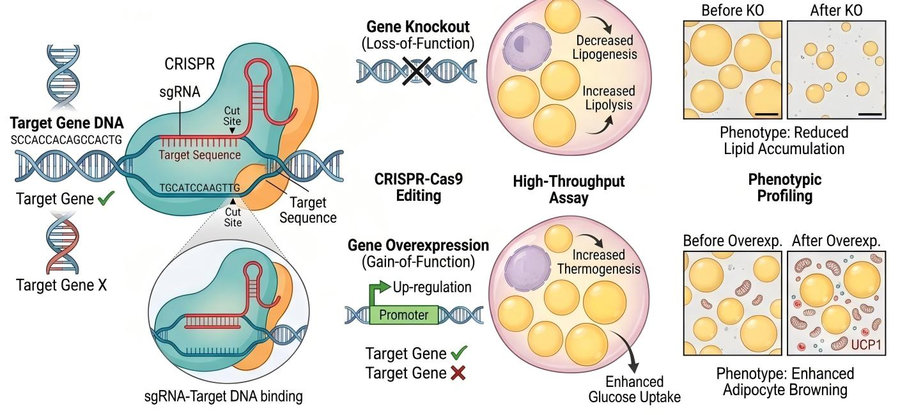
Specialized tools for the targeted silencing of metabolic genes, such as those involved in adipocyte differentiation and lipid storage.
Real-time monitoring of energy expenditure, respiratory exchange ratios (RER), and locomotor activity in specialized Animal Models.
Utilizing micro-CT and MRI to provide precise data on visceral versus subcutaneous fat reduction and lean mass preservation.
Solution Scope
The new obesity target validation service at Protheragen covers a broad spectrum of emerging biological mechanisms, ensuring that our clients stay at the forefront of metabolic innovation:
- Gut-Brain Axis & Incretin Modulators
Validation of dual and triple agonists (e.g., GLP-1/GIP/glucagon receptor pathways) and oral small molecule alternatives.
- Adipose Tissue Remodeling
Focusing on targets that shift adipocytes from energy-storing (white fat) to energy-burning (brown/beige fat) states, such as ALK7 or ACVR1C modulators.
Comprehensive analysis of targets like MGAT2 (monoacylglycerol acyltransferase 2) to modulate intestinal fat uptake.
- Muscle-Preserving & Myostatin Pathways
Validating agents that promote weight loss while actively protecting or increasing lean muscle mass, a critical requirement for next-generation therapeutics.
- Central Nervous System (CNS) Targets
Exploring neuroendocrine regulators of appetite and energy homeostasis beyond conventional pathways.
- RNA-Based Therapeutic Validation
Providing specialized support for RNAi and mRNA-based interventions targeting liver-specific or adipocyte-specific metabolic genes.
Contact Our Team for More Information and to Discuss Your Project
Workflow
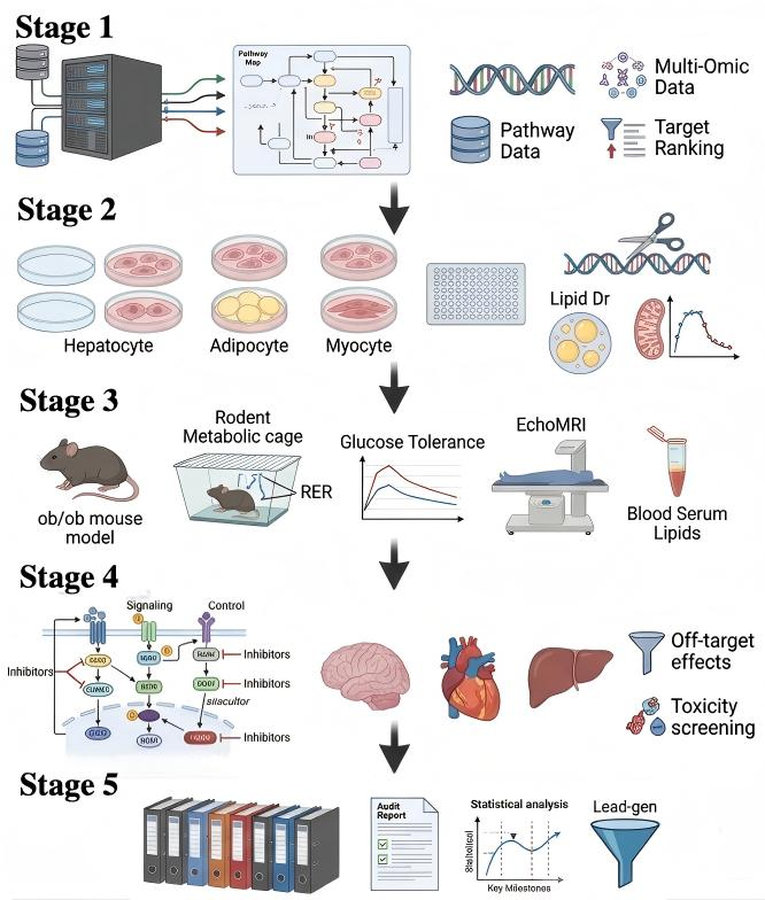
Our streamlined workflow is designed to provide comprehensive validation with maximum transparency and scientific rigor:
Fields of Application
Our screening services are essential for various stages of preclinical development:
- Biopharmaceutical Drug Discovery: De-risking novel drug candidates before expensive clinical commitments.
- Academic & Institutional Research: Providing high-end industrial validation for laboratory-discovered targets.
- Precision Medicine Development: Identifying obesity subtypes and validating targets for specific patient populations based on metabolic profiles.
- Nutraceutical & Metabolic Health Research: Testing the efficacy of bioactive compounds on validated metabolic pathways.
Advantages
Protheragen stands as a premier partner in preclinical obesity research, offering unique advantages that drive project success:
Expertise in Multi-Target Strategies
We excel in validating complex unimolecular agonists and combination therapies that address the multifactorial nature of obesity.
Focus on Body Composition
Unlike standard services that only measure total weight, we prioritize data on visceral fat reduction and lean mass preservation.
Accelerated Timelines
Our AI-integrated platforms can shorten target validation phases by up to 30%, allowing for faster decision-making.
Translational Precision
Our models are specifically designed to mirror the emerging clinical definitions of obesity, focusing on metabolic health and organ protection rather than BMI alone.
Scientific Rigor
Every project is overseen by specialists with decades of experience in metabolic biochemistry and pharmacology.
Contact Protheragen today to discuss your target validation needs.
Customer Review
Precision Imaging and Decisive Data for GIP Modulators
"The team at Protheragen provided us with critical insights into our novel GIP receptor modulator. Their ability to deliver precise data on visceral fat reduction—backed by high-resolution imaging—was a game-changer for our internal go/no-go decision. Their preclinical expertise is truly unmatched in the field of metabolic research."
Dr. E. H., Senior Director of Discovery, Mid-sized Biotech
Rapid RNAi Validation Through AI-Integrated Multiomics
"Partnering with Protheragen for our RNAi target validation allowed us to move from hypothesis to a validated preclinical package in record time. The integration of AI-driven multiomics gave us a clear picture of the metabolic effects that we simply couldn't get elsewhere. We look forward to our next collaboration."
Dr. I. M., Lead Scientist, Metabolic Disease Unit
Frequently Asked Questions
-
How does Protheragen distinguish between "weight loss" and "fat loss" in preclinical models?
We use high-resolution MRI and micro-CT imaging to differentiate between visceral fat, subcutaneous fat, and lean muscle mass, ensuring your target promotes healthy weight loss.
-
Can you validate targets for oral small molecule development?
Yes, our service scope includes the validation of small molecule modulators, providing pharmacodynamic data essential for oral drug candidates.
-
Do you support RNAi-based target validation?
Absolutely. We have specialized platforms for delivering and assessing the knockdown efficiency of RNAi and ASO therapeutics in metabolic tissues.
-
What species are typically used in your in vivo studies?
We primarily utilize mouse and rat models, including diet-induced obesity (DIO) and genetically modified models tailored to your specific target.
-
How do you handle targets that affect the CNS?
We perform comprehensive behavioral and metabolic assessments, including food intake monitoring and energy expenditure analysis via indirect calorimetry.
-
Is AI integrated into all validation projects?
We offer AI-driven multiomic analysis as an integrated or standalone service to enhance the predictive accuracy of our validation studies.
-
How long does a typical validation project take?
While timelines vary based on the complexity of the target, a standard validation project generally ranges from 12 to 24 weeks.
-
Do you offer clinical trial services?
Protheragen specializes exclusively in preclinical research and target validation to ensure the highest quality of early-stage data.
Contact Us
Protheragen provides an elite new obesity target validation service that combines advanced AI technology, precision gene editing, and sophisticated translational models. By focusing on the critical preclinical window, we help our clients validate next-generation targets that promote sustainable weight loss, preserve lean mass, and improve overall metabolic health. Welcome to Contact Protheragen to discuss your project requirements.
All of our services and products are intended for preclinical research use only and cannot be used to diagnose, treat or manage patients.