

Targeting Acetyl-CoA Carboxylase for Developing Anti-Obesity Therapeutics
InquiryOverview
Acetyl-CoA carboxylase (ACC) catalyzes the first critical step in long-chain fatty acid synthesis and represents a potential therapeutic target for obesity. Recent studies indicate that regulating ACC through genetic or pharmacological means may constitute an effective anti-obesity treatment strategy. For instance, ACC inhibitors reduce food intake and enhance fatty acid oxidation by suppressing ACC activity to regulate fatty acid synthesis, thereby achieving rapid and significant weight loss.
Precision Metabolism, Reshaping Health - ACC Targeted Anti-Obesity Therapy Development
Protheragen specializes in developing highly promising obesity treatment strategies and offers a comprehensive, one-stop service for developing ACC-targeted anti-obesity therapies. Our strategy is built upon a deep scientific understanding of lipid metabolism. Leveraging cutting-edge technologies and profound scientific expertise, we conduct rational design and synthesis to develop specific, targeted small-molecule inhibitors or other highly effective therapeutic approaches. Our mature, multi-stage workflow ensures efficient advancement of anti-obesity therapies from concept to preclinical studies. Each step is meticulously designed to provide clients with a clear and efficient R&D pathway.
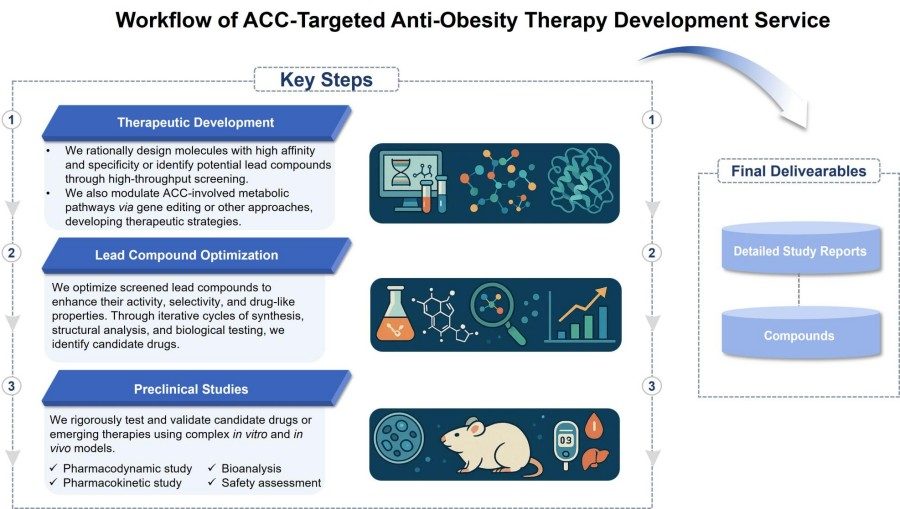
Therapeutic Development
- As a key rate-limiting enzyme, ACC plays a dual role in energy homeostasis by regulating fatty acid synthesis and oxidation. We employ advanced computational biology and molecular docking studies, combined with high-resolution structural data of the ACC enzyme, to rationally design molecules with high affinity and specificity. This approach minimizes off-target effects, accelerates the lead compound screening and optimization phase, and yields more potent and safer drug candidates. Simultaneously, we identify potential lead compounds through high-throughput screening of compound libraries, demonstrating preliminary potential for binding to the ACC target.
- We also explore regulating ACC-involved metabolic pathways via gene editing or other approaches to develop highly effective therapeutic strategies.
Lead Compound Optimization
We refine selected lead compounds to enhance their activity, selectivity, and pharmaceutical properties. Through iterative cycles of synthesis, structural analysis, and biological testing, we refine factors such as solubility, stability, and bioavailability. Ultimately, we identify candidate anti-obesity drugs for subsequent preclinical studies.
Preclinical Studies
We rigorously test and validate candidate drugs or emerging therapies using complex In Vitro and In Vivo Models. This includes stringent testing of candidate lead compounds via cellular assays to evaluate their effects on lipogenesis and fatty acid oxidation. Using in vivo animal models, we assess changes in metabolic parameters such as body weight, glucose, insulin levels, and other relevant aspects. We also conduct detailed safety evaluations.




Workflow
Protheragen provides end-to-end support for anti-obesity therapy development targeting ACC. Our services span the entire drug discovery process, from drug design to preclinical research. Through high-throughput screening technologies, we precisely identify lead compounds with potential activity. Utilizing advanced computational and structural biology techniques, we rationally design and optimize these compounds to enhance targeting and efficacy. Optimized compounds then advance into rigorous preclinical studies. Beyond pharmaceuticals, we also investigate the therapeutic efficacy and safety of therapies such as gene therapy.
Applications
ACC-targeting anti-obesity therapies offer a unique, innovative strategy for developing novel anti-obesity treatments. The innovation of this approach lies in its ability to transcend traditional appetite suppression by directly targeting a core metabolic hub.
ACC inhibitors serve as critical scientific tools for deepening understanding of obesity pathogenesis and metabolic pathway dysregulation. They help elucidate the molecular basis of obesity and related metabolic disorders, providing key insights for future precision medicine and drug development.
Given the central regulatory role of ACC in metabolic processes, ACC inhibitors demonstrate therapeutic potential in treating metabolic disorders and obesity-related complications such as type 2 diabetes, offering a synergistic and comprehensive treatment approach.
Advantages
High-Throughput Screening and Optimization
During the drug development phase, we combine advanced structural biology and high-throughput screening technologies to rapidly identify and optimize highly selective, potent compounds.
Deep Expertise
Our team possesses a deep understanding of lipid metabolism mechanisms and the complexities of drug discovery, with a proven track record of translating intricate biological concepts into tangible outcomes.
Efficient Research
We integrate computational drug design, biochemistry, and extensive in vitro and in vivo models to establish a data-driven, integrated anti-obesity drug development pathway that accelerates the R&D process.
Beyond our core ACC-targeted therapy development services, we also provide comprehensive testing and analysis services to support your obesity research from multiple dimensions. These services are designed to delve into the complexity of obesity from various angles, accelerating your research progress, including:

Publication Data
Title: Anti-obesity therapeutic targets studied in silico and in vivo: A systematic review
Journal: International Journal of Molecular Sciences, 2024
DOI: https://doi.org/10.3390/ijms25094699
Summary: In this study, researchers reviewed multiple literature sources on anti-obesity therapies, ultimately identifying seven potential therapeutic targets for obesity. These targets underwent computational simulation evaluation and in vivo validation. The therapeutic targets include leptin receptors, fat mass, and obesity-associated protein (FTO), ACC, etc. Antagonists, inhibitors, and agonists targeting these sites can modulate responses by activating distinct and/or interconnected metabolic pathways, exerting anti-obesity effects. This work provides informative support for anti-obesity therapy research.
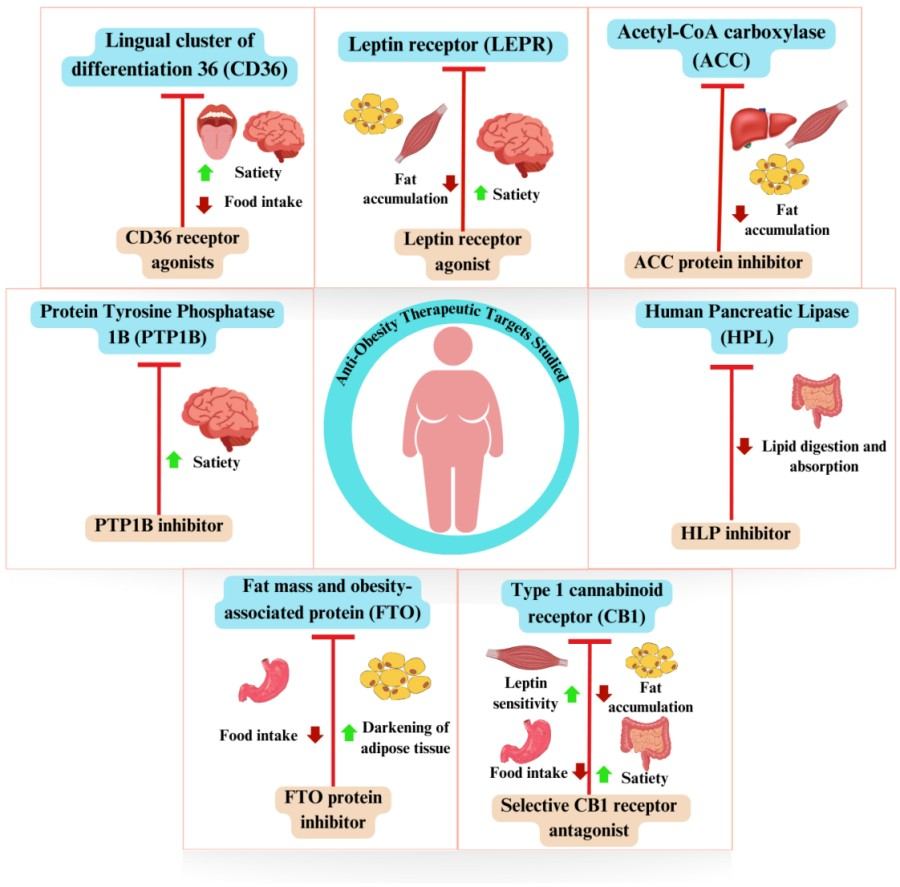 Fig.1 Detailed investigation and evaluation of obesity treatment strategies. (de Medeiros, et al., 2024)
Customer Review
Rapid Screening of Inhibitors
"Protheragen's enzymatic analysis platform enabled us to rapidly identify highly active ACC inhibitors and analyze inhibition ratios, providing critical data for designing subsequent studies."— E. R., Director of Chemical Biology
Detailed Lipidomics Analysis
"Protheragen conducted a comprehensive assessment of lipid changes in key cells using lipidomics analysis. Their reliable data significantly enhanced the accuracy of our inhibitor functional analysis."— K. T., Senior Scientist
Frequently Asked Questions
-
How does the anti-obesity mechanism targeting ACC differ from others?
Two ACC subtypes exist in mammals: ACC1 and ACC2. ACC1 resides in the cytoplasm and is primarily found in adipogenic tissues. ACC2 is located on the mitochondrial membrane, with higher expression in the heart and muscles. It plays a crucial role in lipid metabolism, significantly influencing fatty acid synthesis and oxidation. Inhibiting ACC directly targets metabolic pathways, reducing long-chain saturated fatty acid synthesis or increasing fatty acid oxidation to exert anti-obesity effects.
-
What data will be available during the project?
You will receive comprehensive data packages at each key milestone, including detailed documents such as compound synthesis reports, in vitro assay results, in vivo efficacy data, and toxicology profiles. We uphold a transparent, data-driven collaboration approach with real-time project progress updates.
Protheragen is dedicated to developing novel anti-obesity drugs through precision molecular design and preclinical research. With deep scientific expertise, cutting-edge technology, and a client-centric approach, we are your preferred partner for anti-obesity therapy development projects. Contact us today to learn how our ACC expertise reshapes your therapeutic drug pipeline. We will discuss your specific project needs, address your questions, and develop a customized strategy to help you achieve your goals.
Reference
- de Medeiros, W.F.; et al. Anti-obesity therapeutic targets studied in silico and in vivo: A systematic review. International journal of molecular sciences. 2024, 25(9): 4699.
All of our services and products are intended for preclinical research use only and cannot be used to diagnose, treat or manage patients.