

Anti-Obesity Small Molecule Inhibitor Development
InquiryOverview
Obesity represents a profound and complex global health crisis and is widely recognized as a major driver of numerous serious health risks. The condition is closely associated with complications such as type 2 diabetes, cardiovascular disease, certain cancers, and metabolic syndrome. A variety of Small-molecule Drugs have been developed and show great potential in the treatment of obesity. These drugs act as inhibitors, antagonists, agonists, and activators of multiple biological targets, offering superior pharmacodynamic and pharmacokinetic properties compared to other drug modalities and demonstrating significant advantages in regulating complex biological pathways.
Molecular Innovation, Precision Against Obesity
Protheragen, as a scientific leader in small-molecule drug discovery, focuses on reducing the inherent risks in the drug discovery process through innovative strategies. We offer flexible and comprehensive anti-obesity small molecule inhibitor development services tailored to the specific needs of each project, covering the entire process from initial target identification and validation to final preclinical evaluation. By deeply understanding the molecular mechanisms of the disease and integrating comprehensive expert services, we help accelerate the identification, optimization, and research of the most promising drug candidates.
Target Validation
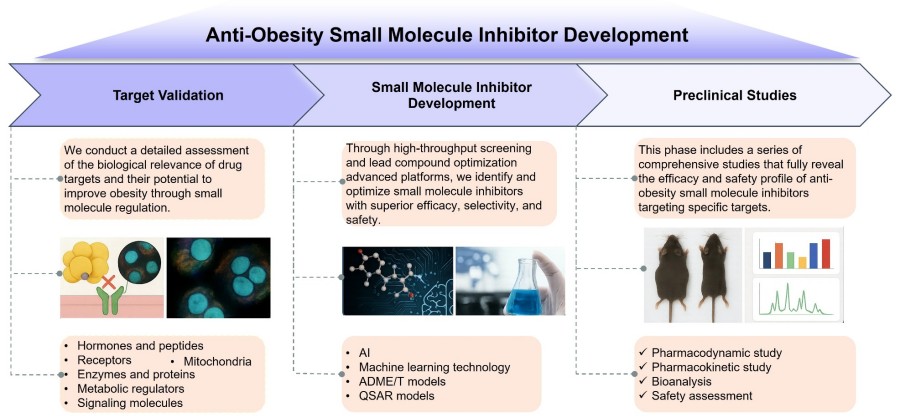
We identify key genes and protein targets closely associated with the onset and progression of obesity, and conduct a thorough assessment of the biological relevance of these drug targets and their potential to improve obesity through small-molecule regulation. These targets involve key molecular pathways regulating thermogenesis and energy homeostasis.
Small Molecule Inhibitor Development
We leverage cutting-edge technologies and computational capabilities to accelerate the drug discovery process. Through high-throughput screening and lead compound optimization platforms, we identify and optimize small molecule inhibitors with superior efficacy, selectivity, and safety. This process is achieved through the integration of advanced Computational Methods, including artificial intelligence (AI), machine learning technologies, ADME/T models, and quantitative structure-activity relationship (QSAR) models.
Preclinical Studies
This phase involves a series of comprehensive studies to fully elucidate the efficacy and safety profile of anti-obesity small molecule inhibitors targeting specific targets. We have extensive In Vivo and In Vitro Obesity Models to analyze the pharmacodynamics, pharmacokinetics, safety, and other bioanalytical aspects of candidate compounds.
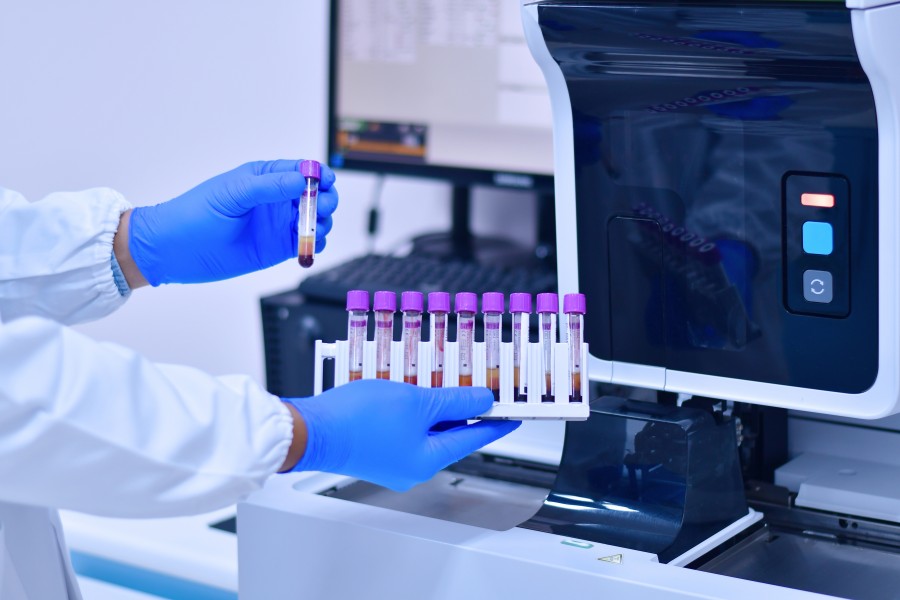

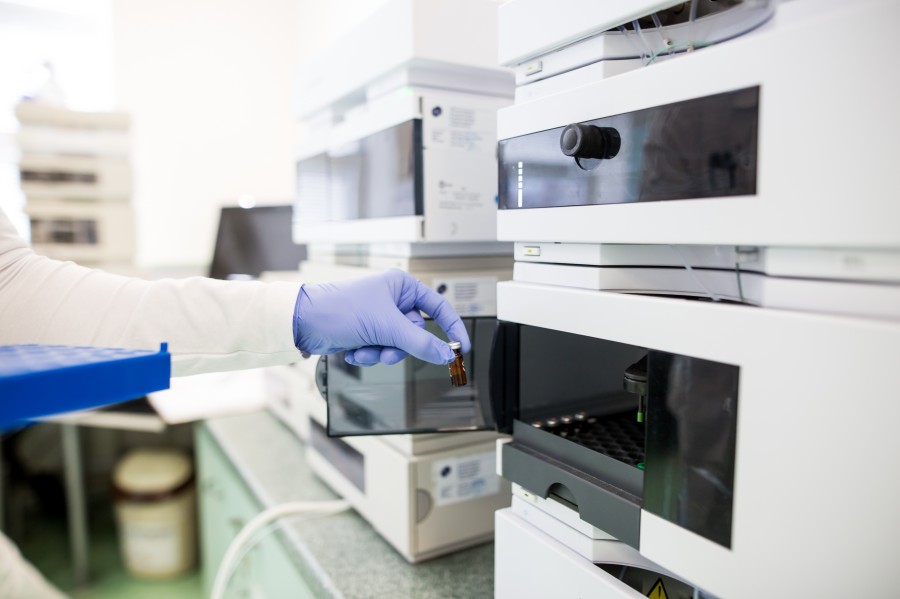

Workflow
Our services are designed to accelerate the development of anti-obesity small molecule inhibitors through systematic and science-driven processes. The entire workflow begins with the precise identification of target validation. We precisely identify key molecular targets associated with obesity pathology and conduct in-depth analyses of their functions. Subsequently, we rapidly identify initial hit compounds with significant activity against the target from a vast compound library. These compounds are then optimized to enhance their activity, selectivity, and pharmacologic properties. Finally, through in vitro and in vivo experiments, we comprehensively evaluate their efficacy, safety, and toxicological properties, and deliver a complete analytical report.
Applications
Through virtual screening optimization and comprehensive preclinical evaluation, we help develop novel anti-obesity therapeutic drugs.
Inhibitors are used to study various biological processes, such as signaling pathways and gene expression, providing powerful tools for advancing obesity-related basic science research.
Small-molecule inhibitors targeting thermogenesis and other metabolic pathways may hold potential for treating obesity-related complications such as metabolic syndrome and diabetes.
Advantages
Multidisciplinary Expertise
Our team of scientists comprises experienced biologists, chemists, and pharmacologists with decades of collective experience in small-molecule drug development.
Deep Understanding of Obesity
With a deep understanding of the complex metabolic pathways and molecular mechanisms involved in obesity regulation, we develop anti-obesity small molecule inhibitors targeting various targets.
Full-Service Approach
We adopt an integrated, holistic drug development approach, offering all necessary services from target validation to preclinical evaluation, and enabling more efficient and accelerated development processes.
At the forefront of obesity research, we are committed to helping researchers tackle the many challenges posed by this complex disease through innovative methods and comprehensive services. We not only provide basic support for obesity research, but also focus on in-depth exploration of the underlying molecular mechanisms and epigenetic regulation.

Publication Data
Title: A small-molecule inhibitor of factor inhibiting HIF binding to a tyrosine-flip pocket for the treatment of obesity
Journal: Angewandte Chemie International Edition, 2024
DOI: https://doi.org/10.1002/anie.202410438
Summary: Researchers have identified an inhibitor of the factor inhibiting hypoxia-inducible factor (FIH) using a structure-mechanism-based approach. Analysis revealed that the inhibitor ZG-2291 selectively binds to FIH and promotes thermogenesis, alleviating symptoms of obesity and metabolic disorders. This study demonstrates that the inhibitor serves as a useful probe for investigating the physiological functions of FIH and provides a potential strategy for anti-obesity research targeting FIH.
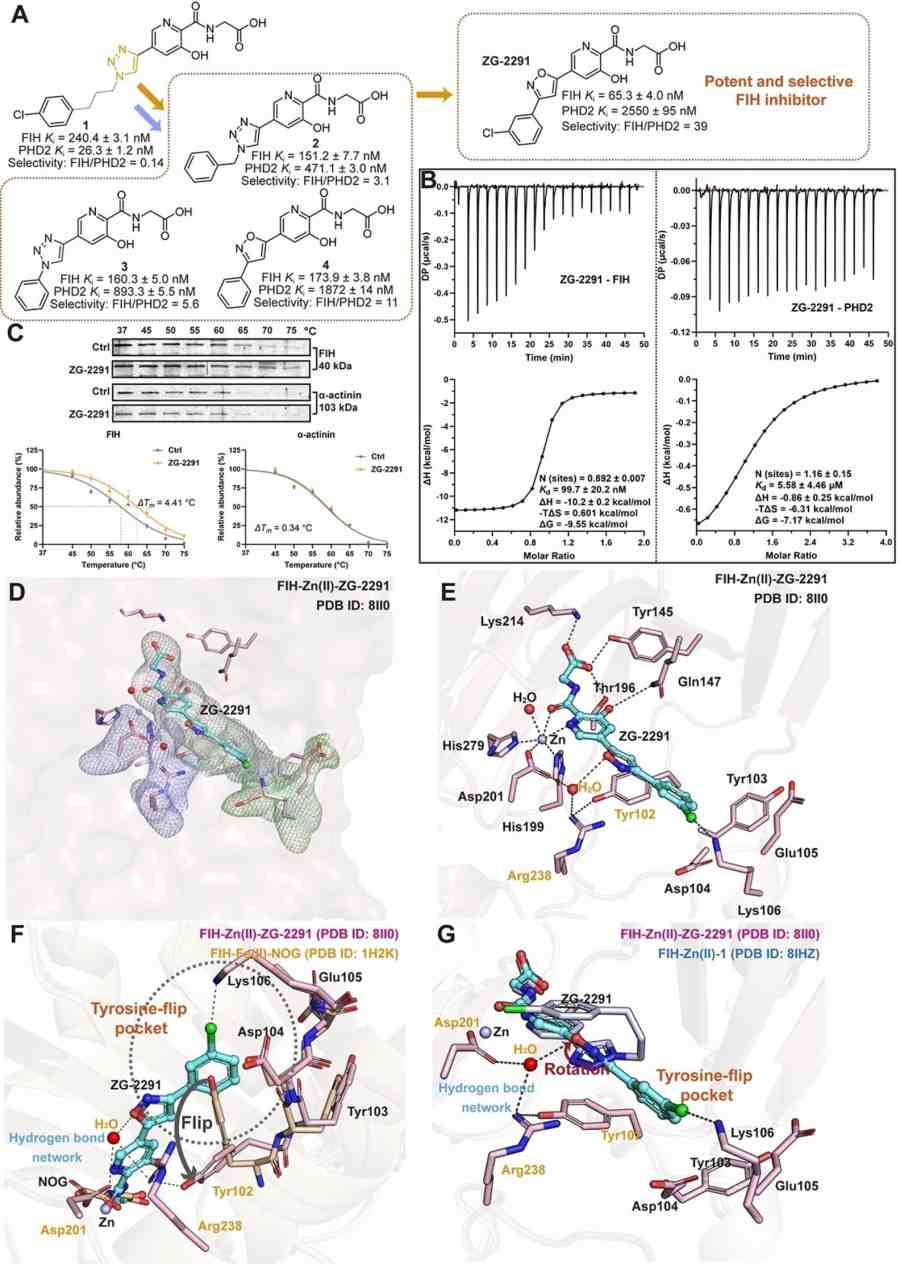 Fig.1 Development and characterization of selective inhibitors. (Wu, et al., 2024)
Customer Review
Excellent Animal Testing Platform
"We identified a lead compound with potent inhibitory activity but urgently needed partners for reliable in vivo validation. Protheragen provided an exceptional platform that helped us complete part of the work, significantly accelerating our research progress."— J. W., Program Manager
In-Depth Competitive Analysis
"Protheragen conducted a thorough and forward-looking competitive analysis of our lead compound's chemical space, integrating medicinal chemistry and bioinformatics. This strategic service enabled us to successfully design inhibitors featuring unique chemical skeletons."— E. Z., Research Fellow
Frequently Asked Questions
-
How do you ensure the specificity and selectivity of anti-obesity small molecule inhibitors?
High selectivity is a key evaluation factor from the initial screening stage to the preclinical testing stage. We utilize advanced platforms to identify and optimize compounds that specifically bind to target molecules, thereby minimizing potential off-target effects and adverse events. This process is validated through a series of target validation and preclinical assessments.
-
Can you collaborate with clients' existing lead compounds?
Absolutely. Our services are fully customizable and scalable. We provide comprehensive support at any stage of the project, including target validation, lead compound optimization, and comprehensive preclinical evaluation. Our goal is to fill gaps in your R&D pipeline and accelerate your progress.
Protheragen is a leading partner in the development of anti-obesity small molecule inhibitors, offering unique scientific expertise, an integrated platform, and end-to-end services to provide comprehensive support to our clients. We are committed to advancing the development of innovative therapies to address the global obesity challenge. For a detailed discussion of your project and to learn how our services accelerate your R&D process, please contact us at any time.
Reference
- Wu, Y.; et al. A small-molecule inhibitor of factor inhibiting HIF binding to a tyrosine-flip pocket for the treatment of obesity. Angewandte Chemie International Edition. 2024, 63(40): e202410438. (CC BY 4.0)
All of our services and products are intended for preclinical research use only and cannot be used to diagnose, treat or manage patients.