
Behavioral Analysis Service
InquiryAt Protheragen, we recognize that the physiological complexity of obesity and metabolic syndrome cannot be fully understood through biochemical markers alone. Behavioral patterns—including feeding kinetics, circadian activity, and environmental interaction—are critical determinants of therapeutic efficacy.
Behavioral Analysis Service for Preclinical Metabolic Research
Our behavioral analysis service provides a high-resolution, data-driven window into the neuro-behavioral profiles of preclinical models. By integrating sophisticated tracking systems with metabolic monitoring, we enable researchers to quantify how novel compounds modulate appetite, energy expenditure, and lifestyle-related behaviors before moving to clinical phases.
Core Technologies
Protheragen utilizes a suite of non-invasive, high-precision monitoring technologies designed to eliminate human interference and provide objective longitudinal data:
- Automated Home-Cage Monitoring
Continuous 24/7 tracking of movement, feeding frequency, and duration without disturbing the animal's natural environment.
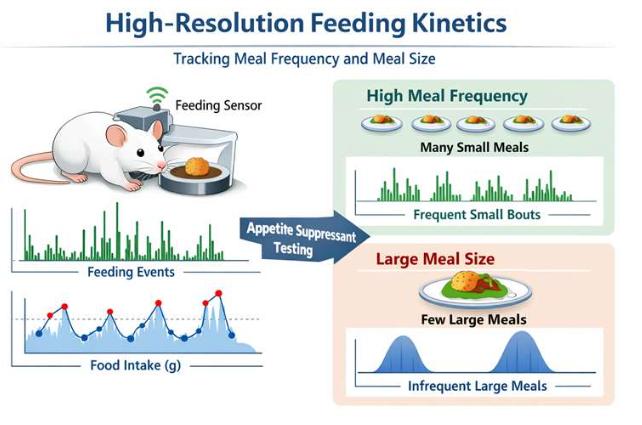
- High-Resolution Feeding Kinetics
Sensors capable of measuring micro-feeding events to distinguish between meal frequency and meal size are essential for evaluating appetite suppressants.
- Indirect Calorimetry Integration
Simultaneous measurement of oxygen consumption (VO2) and carbon dioxide production (VCO2) paired with behavioral data to calculate the respiratory exchange ratio (RER).
- Advanced Video Tracking & AI Phenotyping
Machine learning algorithms that categorize complex behaviors such as grooming, rearing, and social interaction, providing a holistic view of the animal's well-being.
Solution Scope
Our expertise spans diverse behavioral paradigms essential for metabolic and obesity research:
- Feeding Behavior Analysis
Evaluation of hyperphagia, satiety triggers, and dietary preferences.
- Locomotor Activity Profiling
Assessment of horizontal and vertical movement to determine energy expenditure through physical activity.
- Circadian Rhythm Monitoring
Detection of shifts in diurnal/nocturnal activity patterns, which are often disrupted in metabolic disease models.
- Anxiety & Stress Assessment
Utilizing open field and elevated plus maze tests to ensure that weight loss effects are not secondary to drug-induced malaise or anxiety.
Contact Our Specialist Team Today to Design Your Next Study.
Workflow
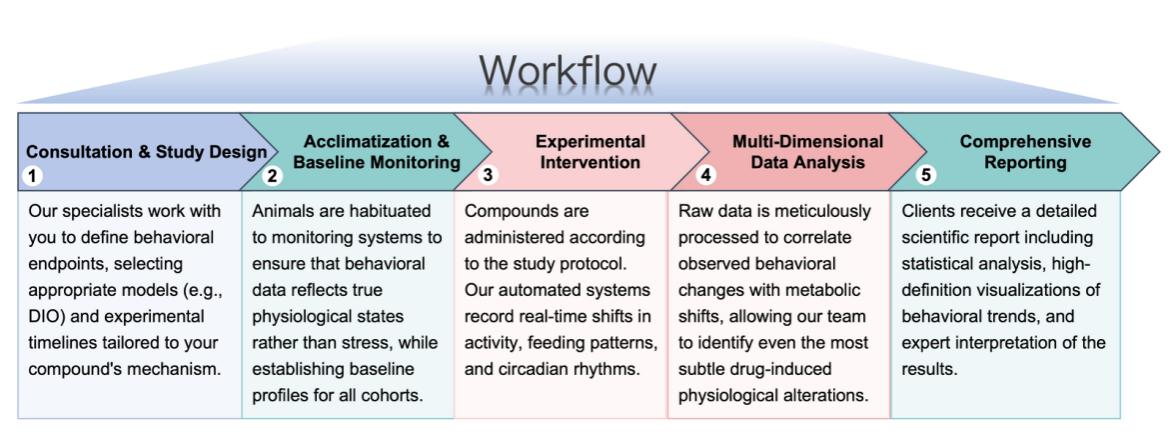
Our service is structured to ensure maximum data integrity and scientific rigor, following a standardized 5-stage process:
Fields of Application
The behavioral analysis service at Protheragen provides a versatile framework for quantifying complex phenotypic responses across a broad spectrum of metabolic and neuroendocrine research areas.
Identifying compounds that promote satiety or increase physical activity.
- Diabetes & Metabolic Syndrome
Studying the behavioral impacts of insulin sensitizers and Glucose-Lowering Agents.
- Neuro-Metabolic Research
Investigating the hypothalamic control of energy balance and the reward pathways associated with overeating.
- Nutraceutical Testing
Evaluating the efficacy of dietary supplements on metabolic health and activity levels.
Contact Our Experts to Tailor Your Study's Scope.
Advantages
Protheragen offers a competitive edge in preclinical behavioral phenotyping through:
Unparalleled Precision and Continuous 24/7 Monitoring
Our systems detect minute changes in food intake (down to 0.01g), ensuring that even subtle anti-obesity effects are captured. Unlike snapshot observations, our longitudinal data provides a complete picture of drug action across the entire light/dark cycle.
Expert Interpretation
With over 20 years of experience, our scientists don't just provide data; we provide insights into the biological significance of behavioral shifts.
Published Data Consistency
Our methods align with gold-standard protocols used in leading peer-reviewed literature, ensuring your results are robust and reproducible for regulatory submissions.
Customer Review
Meal-Pattern Insights That Turned "Weight Change" Into a Clear Satiety Mechanism
"Protheragen didn't just tell us whether animals ate less—they showed us how feeding changed. The meal-pattern analytics clarified that our signal was satiety-driven rather than nonspecific suppression. Their early-response readouts helped us prioritize the right dose window and move faster into the next iteration."
Program Lead, Metabolic Discovery Team
Integrated Efficacy and Neurobehavioral Risk Readouts That De-Risked the Go/No-Go Decision
"We needed to de-risk neurobehavioral liabilities while optimizing efficacy. Protheragen integrated motivation and mood-relevant endpoints into the same study, which gave our governance team confidence to proceed. The deliverables were structured for decision meetings, and we're planning an expanded follow-on package for durability and challenge testing."
Translational Scientist, Preclinical Strategy
Frequently Asked Questions
-
What exactly will I receive at the end of a Behavioral Analysis study?
You receive a curated behavioral dataset with interpretation: feeding microstructure (meal timing/size/frequency), activity persistence, motivation/reward readouts, and—when relevant—neurobehavioral safety signals. The deliverable is a decision package that explains why the phenotype changed, not only whether the weight moved.
-
How do you keep the work strictly preclinical?
All studies are performed in non-clinical research models and generate research-use datasets. Protheragen does not provide diagnosis, treatment, or patient-facing behavioral therapy services; we support R&D teams with preclinical evidence only.
-
How soon can we detect meaningful signals?
Many programs benefit from early behavioral markers (first 1–2 weeks), especially when early trajectories help flag nonresponse risk and guide iteration.
-
We already measure body weight and food intake—why add microstructure?
Total intake can hide the mechanism. Microstructure can distinguish fewer meals vs smaller meals, altered satiety vs altered reward, and compensation patterns that predict durability—critical when translating behavior-driven outcomes.
-
Can you assess motivation and "cravings" in animals?
We quantify motivation through validated effort-based and choice paradigms (work performed for food, preference shifts, cue-reactivity). These readouts map to behavior-change constructs emphasized in structured programs (tracking, stimulus control, reinforcement).
-
How do you control for stress and sleep effects that confound appetite?
We incorporate stress- and sleep-proxy endpoints where relevant, because mechanistic reviews show that appetite-pathway modulation can intersect with mood and sleep regulation.
-
What if our mechanism is peripheral, not CNS-targeting?
Peripheral mechanisms can still trigger compensatory behavior (palatability shifts, meal timing changes). We tailor the battery to your mechanism so the behavioral layer explains compensation rather than masking it.
-
Do you offer responder/nonresponder stratification?
Yes. We baseline-fingerprint behavior, then segment cohorts using early response features (intake dynamics, activity adoption, reward valuation) to support cleaner interpretation and smarter next-step designs.
-
What sample sizes and durations are typical?
It depends on model variability and endpoint sensitivity. We commonly structure studies in stages—baseline → intervention → maintenance/challenge—reflecting real-world behavior-change cadence concepts (intensive early, then maintenance).
How to Contact Us
At Protheragen, we understand that behavior is the most complex phenotype. Our behavioral analysis service is built to decode this complexity, providing you with high-fidelity data that accelerates discovery and ensures safety. Whether you are targeting weight loss, neuroprotection, or pain relief, our expert team and state-of-the-art infrastructure are ready to support your goals.
Contact Protheragen for More Information and to Discuss Your Project
All of our services and products are intended for preclinical research use only and cannot be used to diagnose, treat or manage patients.