
Neuroendocrine and Metabolic Regulation Analysis Service
InquiryThe global obesity epidemic, driven by a complex interplay of genetic, environmental, and behavioral factors, has necessitated a paradigm shift in preclinical research. Moving beyond simple weight metrics, modern drug discovery demands a granular understanding of the neuroendocrine and metabolic regulation pathways—specifically the intricate "crosstalk" between the central nervous system (CNS) and peripheral metabolic organs (adipose tissue, pancreas, liver, and gut).
Neuroendocrine and Metabolic Regulation Analysis Service for obesity research
Protheragen offers a premier, end-to-end preclinical service platform designed to dissect these regulatory mechanisms. Our specialized service portfolio enables clients to evaluate novel therapeutics, natural bioactive compounds, and biologics by analyzing their impact on hypothalamic appetite circuitry, energy expenditure, and hormonal signaling. Whether investigating the leptin-melanocortin pathway, gut-brain axis signaling (GLP-1, PYY, ghrelin), or adipose tissue browning, our expert team provides the high-fidelity data required to accelerate your obesity research programs.
Core Technologies
Our facility is equipped with state-of-the-art instrumentation tailored for high-precision metabolic and neuroendocrine profiling in rodent models.
- Automated Metabolic Phenotyping System
We utilize advanced indirect calorimetry systems (e.g., CLAMS-equivalent) to continuously monitor oxygen consumption (VO2), carbon dioxide production (VCO2), respiratory exchange ratio (RER), and ambulatory activity. This allows for the precise differentiation between agents that suppress appetite versus those that enhance thermogenesis.
- Multiplex Neuroendocrine Immunoassay Platform
Our high-sensitivity bead-based multiplex assays allow for the simultaneous quantification of critical metabolic hormones (leptin, insulin, ghrelin, GLP-1, PYY, adiponectin, and resistin) from minute sample volumes, providing a comprehensive snapshot of the endocrine landscape.
- Central CNS Mapping Suite
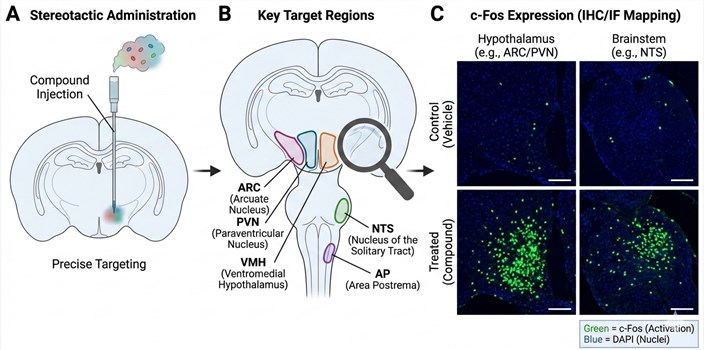
We employ precise stereotactic techniques and advanced histology (IHC/IF) to map neuronal activation (e.g., c-Fos expression) in key hypothalamic nuclei (arcuate nucleus, PVN, VMH) and brainstem regions, visualizing the central footprint of your compound.
- Adipose Tissue Morphology & Gene Expression Analysis
Our molecular biology core utilizes qPCR and RNA-seq to analyze the expression of adipogenic (PPARγ, C/EBPα) and thermogenic (UCP1, PGC-1α) markers, complemented by automated histological quantification of adipocyte size and number.
Service Scope
Our analysis services cover the entire spectrum of preclinical obesity research:
- Appetite Regulation Analysis
Evaluation of satiation (meal size) vs. satiety (inter-meal interval), and analysis of orexigenic/anorexigenic neuropeptide expression (NPY, AgRP, POMC, CART) in the hypothalamus.
- Energy Expenditure & Thermogenesis
Assessment of resting metabolic rate (RMR), diet-induced thermogenesis, and cold-tolerance tests to evaluate "browning" of white adipose tissue (WAT) and activation of brown adipose tissue (BAT).
- Gut-Brain Axis Assessment
Investigation of how peripheral signals (GLP-1, CCK) integrate with vagal afferents and brainstem nuclei (NTS) to modulate feeding behavior.
- Lipid & Glucose Metabolism
Comprehensive analysis of circulating lipid profiles (triglycerides, NEFA, cholesterol) and glucose homeostasis (HOMA-IR, glucose tolerance tests).
- Natural Compound Screening
Evaluation of phytochemicals (e.g., polyphenols, alkaloids) for their potential to modulate AMPK pathways, inhibit adipogenesis, or enhance mitochondrial fatty acid oxidation.
Workflow
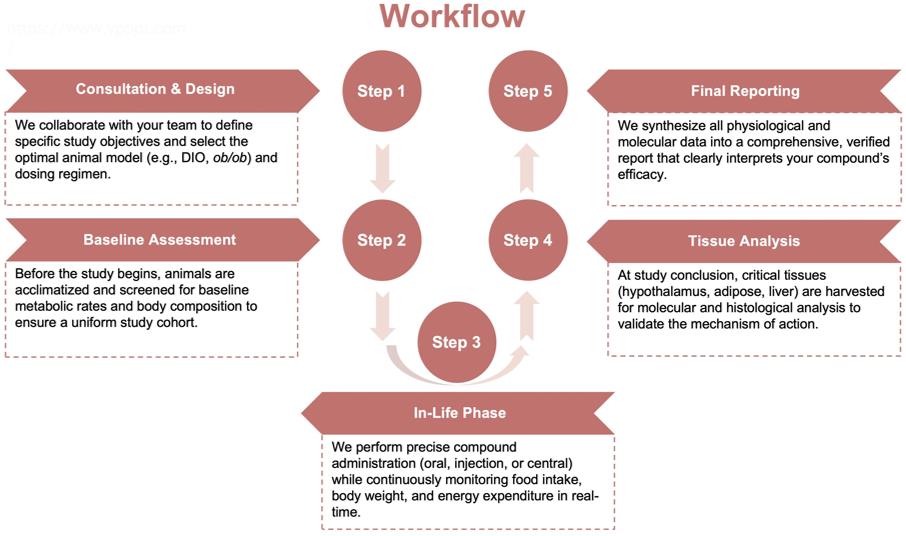
Protheragen follows a rigorous, streamlined workflow to ensure study reproducibility and data integrity.
Contact Us Today to Schedule Your Initial Consultation and Design Your Optimal Study.
Fields of Application
Our specialized analytical platform empowers researchers to translate complex vesicular data into biological breakthroughs across several critical areas of metabolic investigation.
- Pharmaceutical Development: Target validation and lead optimization for novel small molecules and biologics targeting GPCRs (e.g., GLP-1R, MC4R) or enzymes involved in lipid metabolism.
- Nutraceuticals & Functional Foods: Scientific validation of natural extracts and bioactive ingredients for weight management claims, focusing on safety and efficacy in Preclinical Models.
- Academic Research: Supporting university laboratories with specialized assays (e.g., multiplex hormone analysis or stereotactic surgery) that may not be available in-house.
- Biotechnology: Early-stage proof-of-concept studies for gene therapies or microbiome-modulating interventions aimed at metabolic disorders.
Advantages
Choosing Protheragen for your neuroendocrine and metabolic research provides distinct competitive benefits:
Mechanistic Depth
Unlike general toxicology CROs, we specialize in the mechanism. We do not just tell you if your compound works; we tell you how (e.g., "compound X reduced body weight by 15% primarily via UCP1-mediated thermogenesis rather than appetite suppression").
Customized Preclinical Models
Reliability in metabolic research depends on the fidelity of the model. We offer a wide range of validated models, including specific knock-outs and diet-induced models that mimic human metabolic syndrome, ensuring high translational relevance.
High-Throughput Capabilities
Our facility bridges the gap between early-stage screening and deep-dive validation. Our automated platforms allow for the simultaneous screening of multiple compounds or dose-ranging studies without compromising data granularity.
High-quality Data
Our data does not just sit in a report; it stands up to the highest levels of scientific scrutiny. Our methodologies adhere to the highest standards, generating publication-ready figures and data sets that have supported high-impact publications.
Ready to Uncover the Mechanism of Your Anti-obesity Candidate? Inquire Now to Design Your Study.
Publication Data
Title: Generalized Anxiety Disorder and Obesity: Overlapping Neuroendocrine, Metabolic, and Behavioral Pathways
Journal: Nutrients, 2025
DOI: https://doi.org/10.3390/nu17172835
Summary: This narrative review explores the bidirectional relationship between generalized anxiety disorder (GAD) and obesity, identifying shared neuroendocrine, metabolic, and behavioral mechanisms. GAD (global lifetime prevalence 3.7%) and obesity (a global epidemic) frequently co-occur, reinforcing each other through overlapping pathways like HPA axis dysregulation, oxidative stress, insulin resistance, gut-brain axis imbalance, sleep disturbance, and maladaptive eating. The review highlights gaps in high-quality GAD-specific research and advocates for integrated, multidisciplinary interventions (psychological, pharmacological, lifestyle) alongside routine mutual screening for anxiety in obese patients and metabolic risk in GAD patients.
Key Findings
- Prevalence & Bidirectional Link: GAD affects 3.7% of people globally (1.6% in low-income countries to 5.0% in high-income countries), while obesity (BMI ≥30 kg/m²) is a global epidemic. The two conditions feed each other—anxiety leads to weight-gain behaviors like emotional eating, and obesity worsens anxiety via inflammation and stigma.
- Shared Core Mechanisms:
- HPA Axis Dysregulation: Chronic stress/early trauma overstimulates this system, raising cortisol levels—triggering anxiety and promoting fat storage.
- Oxidative Stress & Inflammation: Both conditions involve excess free radicals, low antioxidants, and inflammation, disrupting brain chemicals (e.g., serotonin) and metabolism.
- Insulin Resistance (IR): Obesity-related inflammation causes IR; IR impairs brain emotion regulation, while anxiety-driven high cortisol worsens IR. ~40% of GAD patients have IR.
- Gut-Brain Axis Imbalance: Unhealthy gut bacteria (dysbiosis) reduces beneficial microbes, disrupting mood-regulating chemicals (e.g., serotonin) and increasing inflammation.
- Sleep Disturbance: Less than 6 hours of sleep raises abdominal obesity risk by 8% and amplifies anxiety; GAD-related hyperarousal disrupts sleep, creating a loop.
- Maladaptive Eating: Emotional eating (eating to cope with anxiety) and uncontrolled eating are key links, especially in women, leading to weight gain and worse anxiety.
- Clinical Takeaways: Treatments should combine therapy (e.g., CBT), medication (e.g., SSRIs), and lifestyle changes (diet, exercise, sleep improvement). Clinicians should screen obese patients for anxiety and GAD patients for metabolic risks.
- Research Gaps: Few high-quality studies focus specifically on GAD; more longitudinal and standardized research is needed to confirm causality and treatment efficacy.
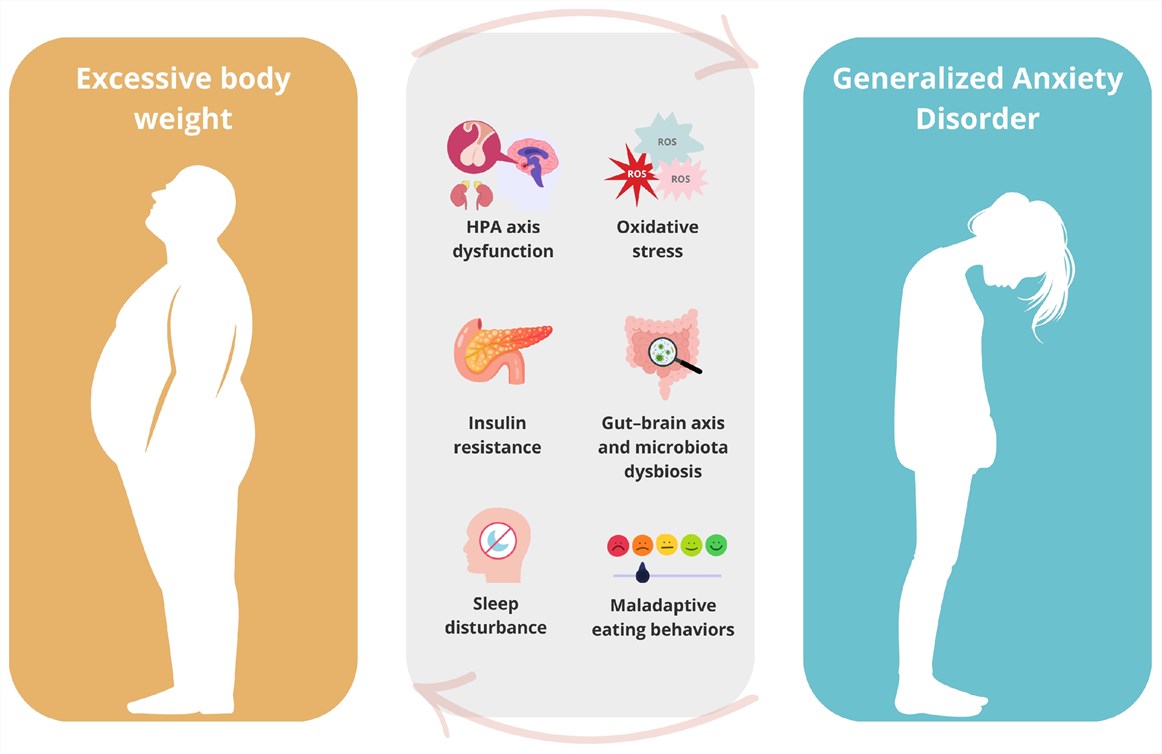 Fig.1 Overlapping drivers of obesity and GAD: neuroendocrine, metabolic, and behavioral Links. (Dymek, et al., 2025)
Customer Review
A Game-Changer for Our Lead Optimization
"We engaged Protheragen to differentiate two lead compounds targeting the MC4 receptor. Their detailed breakdown of the meal patterns and energy expenditure helped us identify that one candidate had a superior safety profile regarding anxiety-like behaviors while maintaining efficacy. The depth of the neuroendocrine data was exactly what we needed for our investor presentation."
Dr. E. R., Director of Pharmacology, Mid-Sized Biotech
Exceptional Technical Expertise
"As an academic lab, we lacked the infrastructure for high-resolution indirect calorimetry. Protheragen not only ran the study efficiently, but their team provided invaluable input on the experimental design, suggesting a pair-feeding control that saved us from a potential reviewer rejection later on. We look forward to collaborating on our next grant."
Prof. J. T., Principal Investigator, Metabolic Research Institute
Frequently Asked Questions
-
What animal models are best for mimicking human obesity?
The diet-induced obese (DIO) C57BL/6J mouse is widely considered the gold standard for modeling human metabolic syndrome, as it develops obesity, hyperinsulinemia, and hyperglycemia when fed a high-fat diet, closely resembling the human condition.
-
Can you distinguish between a compound that reduces appetite and one that increases energy burn?
Yes. Using our indirect calorimetry systems, we can simultaneously measure food intake and energy expenditure. If a compound causes weight loss without reducing food intake, and oxygen consumption increases, it suggests a thermogenic mechanism.
-
Do you offer intracranial (ICV) dosing to test central effects directly?
Absolutely. We have extensive experience in stereotactic surgery for cannulation, allowing for direct administration of compounds into specific brain ventricles or nuclei to bypass the blood-brain barrier.
-
How much compound is required for a standard study?
This varies by study duration and dosing route. Typically, a 4-week chronic efficacy study in mice requires approximately 100-500 mg of compound, but we can work with smaller amounts for acute pilot studies.
-
Can you analyze the "browning" of white fat?
Yes. We analyze specific markers (UCP1, Cidea, Prdm16) in white adipose depots (inguinal/epididymal) via qPCR and Immunohistochemistry to confirm the browning phenotype.
-
What is the typical turnaround time for a study?
A standard chronic efficacy study (including acclimatization, 4-6 weeks of dosing, and data analysis) typically takes 8-10 weeks from compound receipt to final report.
-
Do you perform pair-feeding studies?
Yes. Pair-feeding is essential to confirm if metabolic changes are independent of food intake. We can run a control group that is fed the exact amount consumed by the treatment group to isolate metabolic effects.
-
Can you measure multiple hormones from a single sample?
Yes, our multiplex platform allows us to quantify up to 10 metabolic hormones (including leptin, insulin, and ghrelin) from a small volume of plasma (less than 20 μL).
-
Do you support microbiome-related obesity research?
Yes, we can collect fecal samples under sterile conditions for 16S rRNA sequencing or metabolomics to investigate the gut-brain-microbiome axis.
Contact Us
Don't leave the mechanism of your therapy to chance. Partner with Protheragen to gain deep, actionable insights into the neuroendocrine and metabolic effects of your compounds. Our team of experts is ready to help you design a study that meets your specific scientific and regulatory needs.
Contact Protheragen for More Information and to Discuss Your Project
Reference
- Dymek, A.; et al. Generalized Anxiety Disorder and Obesity: Overlapping Neuroendocrine, Metabolic, and Behavioral Pathways. Nutrients. 2025, 17, 2835. (CC BY 4.0)
All of our services and products are intended for preclinical research use only and cannot be used to diagnose, treat or manage patients.