
Exosome-based Therapy Development Service
InquiryObesity is no longer seen as just a cosmetic issue or a simple lack of willpower. It is a highly complex, chronic metabolic disease driven by intricate cellular signaling networks. Traditional pharmaceutical interventions often struggle with tissue specificity or trigger severe systemic side effects, which is why the pharmaceutical industry is desperately looking for more targeted alternatives. Extracellular vesicles, specifically exosomes, have emerged as a revolutionary biological tool in this space. These small, membrane-bound vesicles (typically 30 to 150 nanometers in size) serve as natural communication vehicles between cells, transferring microRNAs, proteins, and lipids that can actively reprogram metabolic states.
Advanced Exosome-Based Therapy Development for Metabolic Dysregulation and Obesity
At Protheragen, we focus on helping researchers harness these nano-carriers to modulate adipose tissue behavior, improve insulin sensitivity, and alleviate chronic low-grade inflammation. Our specialized platform provides end-to-end preclinical development services designed to transform exploratory metabolic concepts into highly validated, scalable exosome therapy candidates. By focusing entirely on the preclinical stage, we ensure your therapeutic candidates are rigorously optimized for cargo stability, target specificity, and in vivo efficacy before moving toward large-scale manufacturing.
Core Technologies
Developing an effective exosome-based therapy for metabolic disorders requires precise control over vesicle biology. Our engineering platform relies on three core technical pillars:
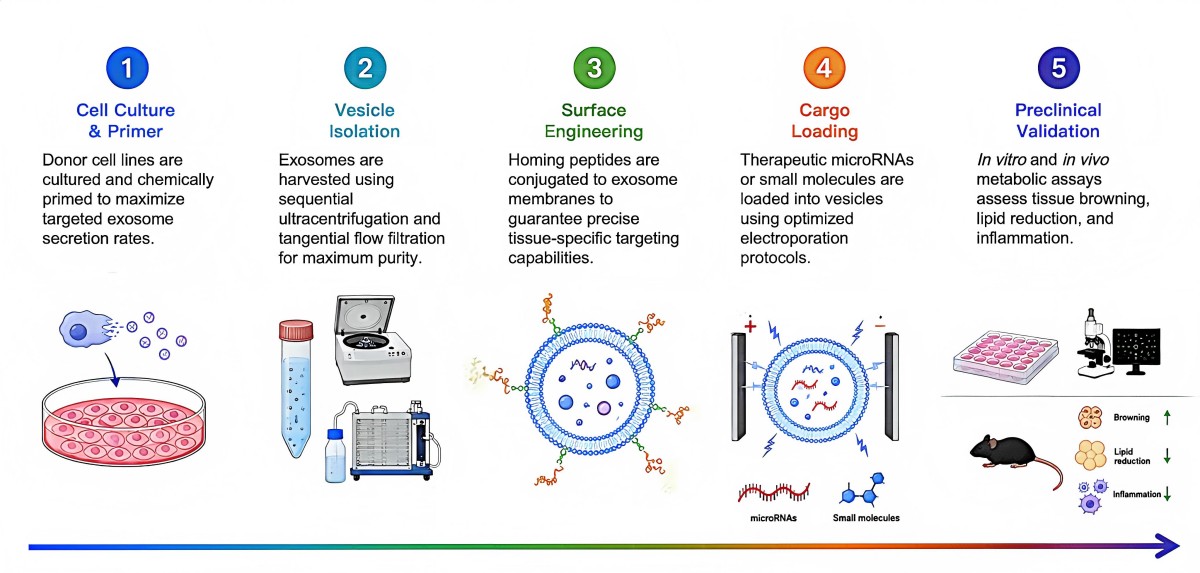
We utilize specialized donor cell sources, including adipose-derived mesenchymal stem cells (ADMSCs) and engineered immune cells. These cell types naturally possess innate homing properties toward inflamed fat depots.
To boost native targeting capabilities, Protheragen employs advanced surface display technologies. By modifying exosomal surface proteins like LAMP-2B, we attach specific homing peptides that guide the vesicles directly to hypertrophic adipocytes or M1-polarized macrophages within adipose tissue.
We use high-efficiency electroporation and chemical transfection techniques to load specific therapeutic payloads—such as microRNAs (e.g., miR-133 or miR-26) or small molecule metabolic activators—directly into the purified exosomes, ensuring high stability and protection from enzymatic degradation in circulation.
Solution Scope
Protheragen provides a flexible, modular service portfolio tailored to the unique demands of obesity and metabolic syndrome research. Our capabilities cover everything from early-stage discovery to comprehensive in vivo validation:
We design and produce exosomes with customized surface markers to target specific fat depots, such as visceral versus subcutaneous adipose tissue. This includes engineering cell lines to stably express your metabolic genes of interest.
- High-Yield Isolation & Purification
Utilizing advanced tangential flow filtration (TFF) and size-exclusion chromatography, we isolate high-purity exosomes free from contaminating cellular debris or protein aggregates, preserving their natural biological activity.
- Comprehensive Analytical Characterization
Every batch undergoes strict quality control. We measure particle size and concentration using nanoparticle tracking analysis (NTA), verify morphology via transmission electron microscopy (TEM), and profile surface proteins using western blotting and flow cytometry.
- In Vitro Metabolic Functional Assays
We evaluate therapeutic efficacy using robust Cell-Based Models. Our assays track the browning of white adipocytes (monitoring UCP1 upregulation), lipid droplet accumulation via Oil Red O staining, and glucose uptake dynamics in insulin-resistant cell lines.
We offer specialized animal model testing, including diet-induced obesity (DIO) mouse models. Our team monitors body weight trajectories, tracks body composition changes, performs glucose and insulin tolerance tests (GTT/ITT), and analyzes downstream tissue inflammation through detailed immunohistochemistry.
Connect with a Protheragen Specialist to Define Your Preclinical Study Scope
Workflow
Our preclinical service process is structured into five integrated phases to guarantee the highest quality data for your metabolic research program:
Fields of Application
The engineered vesicles generated through our services serve as a versatile foundation for multiple areas of metabolic research:
- Adipose Tissue Browning Studies
Investigating the transition of energy-storing white adipose tissue into energy-burning beige or brown adipose tissue via specific microRNA delivery. - Insulin Sensitivity and Glucose Homeostasis
Developing therapeutics aimed at restoring normal insulin receptor signaling in skeletal muscle and liver tissue cells. - Chronic Low-Grade Metainflammation
Targeting and reprogramming pro-inflammatory M1 macrophages within expanding fat tissue into an anti-inflammatory M2 phenotype to reduce systemic inflammation. - Combination Therapeutic Delivery
Exploring the synergistic effects of co-loading Small Molecule Anti-Obesity Drugs alongside metabolic nucleic acids into a single, unified exosomal vehicle.
Advantages
Partnering with Protheragen gives you access to a deeply specialized, technically advanced preclinical development infrastructure:
Adipose-Specific Targeting Efficiency
Our proprietary surface engineering protocols dramatically increase vesicle localization to inflamed adipose tissue. This targeted approach minimizes off-target accumulation in the liver and spleen, ensuring that your therapeutic payloads exert their maximum effect directly where metabolic dysfunction occurs.
Uncompromised Purity and Scalability
By combining tangential flow filtration with specialized chromatography, we achieve exceptionally pure exosome preparations. This rigorous process eliminates over 95% of non-vesicular proteins and background cellular debris, which delivers highly reproducible, clean data across all your preclinical experimental cohorts.
Deeply Validated Metabolic Models
Our in vitro and in vivo assay systems are explicitly calibrated for metabolic readouts. Utilizing targeted mesenchymal stem cell-derived exosomes can induce measurable white adipose tissue browning and significantly lower systemic insulin resistance markers in high-fat diet rodent models.
Rigorous Analytical Quality Control
We don't rely on guesswork; every single engineered vesicle batch is backed by an extensive analytical datasheet. From precise particle sizing via nanoparticle tracking analysis to detailed Western blot confirmation of exosomal markers like CD63, CD9, and CD81, you receive completely transparent, publication-ready characterization data.
Submit an inquiry to our scientific experts to receive a customized project proposal.
Publication Data
Title: Extracellular Vesicles in Obesity: From Pathophysiological Mediators to Therapeutic Tools
Journal: International Journal of Molecular Sciences, 2026
DOI: https://doi.org/10.3390/ijms27073137
Summary: This 2026 review details obesity's pathological extracellular vesicles (EVs): pro-inflammatory EV cargo drives multi-organ metabolic dysfunction, while EVs act as liquid biopsy biomarkers. Engineered stem cell EVs show preclinical therapeutic promise, with manufacturing costs and batch variability as key clinical translation barriers.
Key Findings
- Obesity is redefined as disrupted intercellular communication mediated by heterogeneous EVs (30–1000 nm). Hypertrophic adipocytes and M1 macrophages release EVs loaded with miR-34a, miR-155, ceramides and damaged mitochondria, triggering self-reinforcing inflammatory feedback loops in fat tissue. These circulating EVs travel systemically, inducing liver steatosis, pancreatic β-cell failure, skeletal muscle insulin resistance and atherosclerotic vascular damage; visceral fat EVs carry far more pathogenic cargo than subcutaneous fat vesicles.
- Circulating EV subpopulations and miRNA signatures form minimally invasive liquid biopsy biomarkers: miR-122/192 signal liver disease, TF-positive EVs predict cardiovascular thrombotic risk, and machine learning boosts diagnostic precision to track obesity severity and bariatric/GLP-1 treatment responses.
- Therapeutically, Mesenchymal, Wharton's jelly and adipose stem cell EVs restore insulin sensitivity and suppress inflammation in preclinical models. EV engineering (cargo loading, tissue-target surface peptides) improves potency, with Phase I trials confirming safety. Major translational hurdles include inconsistent EV production, high manufacturing costs and rapid systemic clearance limiting targeted organ delivery.
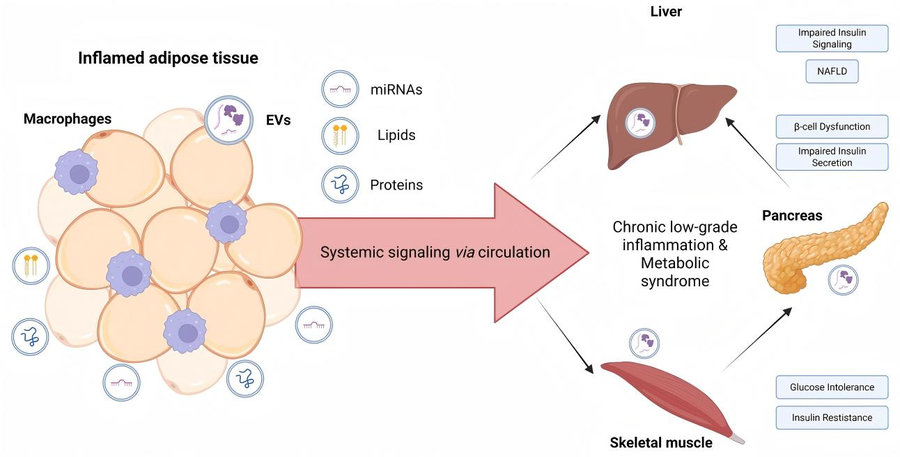 Fig.1 Extracellular vesicles in obesity: biomarkers, pathophysiology & novel EV therapeutics explained. (Pavlović, et al., 2026)
Customer Review
Overcoming Delivery Hurdles to Secure Critical Project Funding
"We were struggling to achieve consistent targeting of our microRNA candidates to visceral adipose tissue using synthetic lipid nanoparticles. Protheragen engineered a custom ADMSC-derived exosome with a modified surface peptide that completely turned our project around. The tissue-specific accumulation we observed in our DIO mouse model was exactly what we needed to secure our next round of funding. Their analytical data package was incredibly thorough and publication-ready."
Dr. A. R., Lead Therapeutics Investigator
Solving Isolation Bottlenecks with Exceptional Replicability and Rigorous Data
"The reproducibility of exosome isolation was our primary bottleneck before partnering with Protheragen. Their tangential flow filtration and rigorous characterization services gave us complete confidence in our vesicle batches. We're currently planning our next phase of in vivo efficacy testing with them and highly value their deep scientific expertise in metabolic syndrome biology."
Dr. M. V., R&D Scientist
Frequently Asked Questions
-
What primary donor cell lines do you use for obesity-focused exosome development?
We typically utilize adipose-derived mesenchymal stem cells (ADMSCs) due to their natural metabolic homing tendencies, but we can also work with human embryonic kidney (HEK293) cells or customized immune cell lines depending on your specific target.
-
Can we provide our own custom microRNA or small molecule cargo for loading?
Absolutely. Our platform is fully compatible with client-provided payloads, and our team will handle the optimization of the encapsulation protocol to ensure maximum loading efficiency.
-
How do you ensure the stability of the engineered exosomes during storage?
We use specialized formulation buffers and controlled cryopreservation techniques to maintain vesicle integrity and cargo protection, ensuring zero loss of activity when you deploy them in your assays.
-
What is the typical turnaround time for a custom engineering project?
Timeline varies based on the level of customization and verification required, but most standard engineering and purification projects are completed within 6 to 8 weeks; please reach out to get a precise estimate.
-
Do you offer clinical trial manufacturing or patient-side testing?
No, Protheragen is strictly a preclinical research partner. We focus entirely on early-stage discovery, engineering, and validation services to prepare your candidates for future development steps.
-
How do you verify that the cargo has been successfully loaded inside the exosomes?
We utilize a combination of membrane-washing protocols followed by quantitative RT-PCR for nucleic acids or high-performance liquid chromatography (HPLC) for small molecules to confirm actual internal loading.
-
What animal models are available for in vivo metabolic testing?
Our standard in vivo evaluation relies on high-fat diet-induced obesity (DIO) mouse models, which closely mimic human metabolic syndrome and type 2 diabetes progression.
Contact Us
In summary, Protheragen provides a highly sophisticated, fully integrated preclinical pipeline for developing exosome-based therapies tailored to obesity and metabolic disorders. From cell engineering and precision surface targeting to comprehensive in vivo validation, we deliver the high-quality, reproducible data required to move your therapeutic candidates forward confidently. Welcome to Contact Protheragen to discover how our high-performance molecular tools can accelerate your discovery process.
Reference
- Pavlović, N.; et al. Extracellular Vesicles in Obesity: From Pathophysiological Mediators to Therapeutic Tools. International Journal of Molecular Sciences. 2026; 27(7):3137 (CC BY 4.0).
All of our services and products are intended for preclinical research use only and cannot be used to diagnose, treat or manage patients.