
Obesity-Related Exosome Isolation Service
InquiryObesity is no longer viewed merely as a metabolic disorder of energy storage but as a complex, systemic endocrine pathology. Central to this complexity are exosomes, which are nanosized extracellular vesicles (EVs) that serve as critical mediators of intercellular communication. In the context of obesity, adipose-derived exosomes (AdEx) transport bioactive lipids, proteins, and non-coding RNAs (such as miRNAs) that reprogram distant organs, contributing to insulin resistance, chronic inflammation, and cardiovascular complications.
Precision Exosome Isolation for Advanced Obesity Research
Protheragen provides a specialized obesity-related exosome isolation service tailored specifically for preclinical researchers. We understand that adipose tissue and high-lipid plasma present unique biophysical challenges, such as lipoprotein contamination (VLDL/LDL) which can skew downstream proteomic and transcriptomic data. Our platform is engineered to deliver high-purity, biofunctional exosomes from challenging obese-model samples, enabling investigators to uncover the mechanisms of metabolic signaling with unprecedented clarity.
Core Technologies
To ensure the integrity of obesity-related vesicles, Protheragen employs a multi-modal isolation strategy that surpasses standard ultracentrifugation.
- Size-Exclusion Chromatography (SEC) Optimization
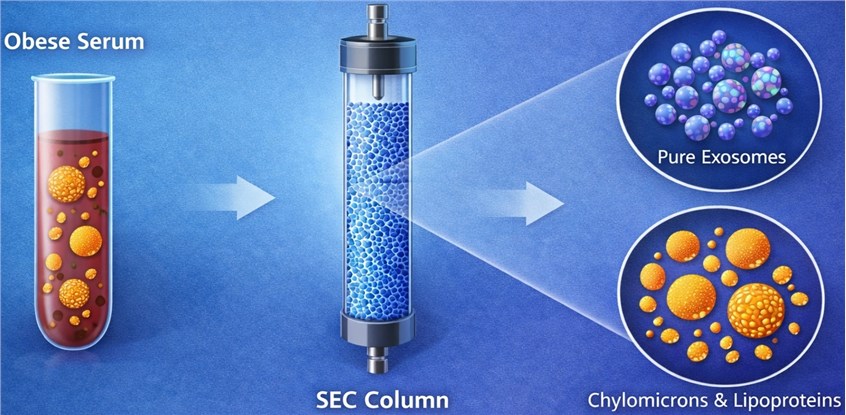
Utilizing specialized resins to effectively separate exosomes from the dense population of chylomicrons and lipoproteins prevalent in obese serum and plasma.
- Immunoaffinity Capture (IAC)
Targeting specific surface markers such as CD63, CD81, or adipose-specific markers (e.g., perilipin-1) to isolate sub-populations of exosomes directly involved in metabolic crosstalk.
- Tangential Flow Filtration (TFF)
A scalable solution for large-volume preclinical samples (such as conditioned media from adipocyte cultures) that ensures high yield without the sheer-stress damage associated with high-speed pelleting.
- Lipid-Removal Integration
Proprietary pretreatment protocols designed to deplete interfering lipids while preserving the delicate vesicular membrane and its internal cargo.
Service Scope
Protheragen supports a wide range of Preclinical Obesity Models and sample types:
- Biofluid Isolation
High-lipid plasma, serum, and urine from obese rodent models (ob/ob, db/db, or DIO models).
- Cell-Culture Models
Exosome recovery from primary adipocytes, pre-adipocytes, and macrophage-adipocyte co-culture systems.
- Tissue-Specific Extraction
Isolation of exosomes from adipose tissue interstitial fluid (ATIF) to study the local microenvironment.
- Cargo Analysis
Specialized extraction and sequencing of exosomal miRNAs known to regulate glucose transporters and insulin signaling.
Workflow
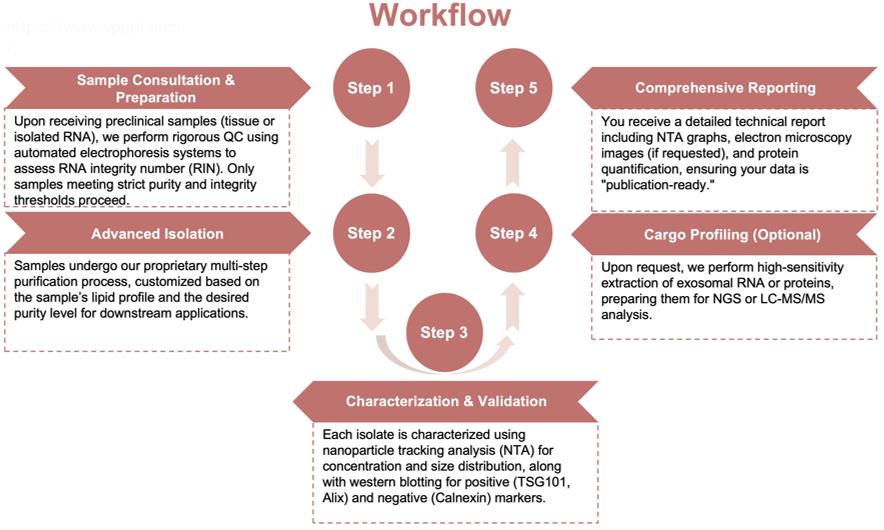
Our streamlined preclinical workflow is designed to move your project from raw sample to actionable data with rigorous quality control at every stage.
Contact Our Team to Streamline Your Exosome Workflow
Fields of Application
The versatility of our obesity-specific isolation platform enables researchers to explore the pervasive influence of adipocyte-derived vesicles across a diverse spectrum of metabolic, cardiovascular, and oncological studies.
- Insulin Resistance Studies: Investigating how muscle and liver cells internalize adipocyte-derived exosomes to alter insulin sensitivity.
- Inflammation Research: Mapping the communication between adipose tissue and M1 macrophages via vesicular cargo.
- Biomarker Discovery: Identifying exosomal miRNA signatures in urine or blood that predict the onset of metabolic syndrome.
- Therapeutic Development: Utilizing exosomes as "biogenic nanocarriers" for delivering metabolic regulators in preclinical obesity models.
Advantages
Choosing Protheragen means accessing a platform specifically refined for metabolic research.
Overcoming Lipid Interference
The primary hurdle in metabolic studies is the "lipoprotein overlap" problem, where VLDLs and chylomicrons mimic the size and density of exosomes. We utilize advanced SEC coupled with ligand-binding steps. This ensures that the RNA and proteins you sequence are strictly exosomal, eliminating the "noise" from lipid particles that often lead to false-positive metabolic signatures.
High Bioactivity Retention
Metabolic signaling requires more than just physical particles; it requires functional ones. Harsh chemicals or high-speed pelleting can "bruise" the vesicle membrane or cause irreversible aggregation. By employing gentle tangential flow filtration (TFF) and isotonic buffer exchanges, we maintain the native structural integrity and surface protein orientation of the exosomes.
Unmatched Sensitivity
Metabolic research often involves longitudinal studies on small animal models where sample volume is the limiting factor. Our microfluidic and magnetic-capture technologies are optimized for ultra-low volume inputs. We can reliably isolate high-quality exosomes from as little as 100 µL of mouse tail-vein plasma, allowing you to conduct serial sampling without sacrificing the animal or compromising data density.
Expert Insight
Data without context is just numbers. In the world of metabolic flux and insulin resistance, the "cargo" of a vesicle tells a story. With over two decades of experience, our team provides scientific consultation to help interpret the role of vesicles in metabolic flux.
Proven Success
In high-fat diet (HFD) models, standard isolation methods often fail due to the sheer volume of circulating lipids. Our techniques have been rigorously validated against industry benchmarks. Protheragen’s protocols consistently yield vesicles with a 3x higher purity ratio (particle-to-protein) compared to standard precipitation methods.
Contact Our Team for More Information and to Discuss Your Project.
Publication Data
Title: Exosomes and Obesity-Related Insulin Resistance
Journal: Front. Cell Dev. Biol., 2021
DOI: https://doi.org/10.3389/fcell.2021.651996
Summary: This paper reviews the critical role of exosomes (30–150 nm lipid bilayer extracellular vesicles) in obesity-related insulin resistance. It details exosomes’ biogenesis, cargo (proteins, nucleic acids, lipids), and function as intercellular "signal boxes," exploring how exosomes from adipose tissue, liver, pancreas, and mesenchymal stem cells (MSCs) regulate insulin sensitivity. The paper also highlights exosomes’ potential as non-invasive biomarkers for insulin resistance and their therapeutic value via MSC-derived exosomes, emphasizing their role in mediating interorgan crosstalk and inflammation in metabolic disorders like type 2 diabetes.
Key Findings
- Exosome Basics: Exosomes are secreted by diverse cells (adipocytes, hepatocytes, stem cells) and found in bodily fluids; key markers include CD63/CD81/CD9, with Grp94 as a negative marker.
- Obesity-Insulin Resistance Link: Adipose tissue expansion triggers chronic inflammation and ectopic lipid storage, driving insulin resistance with exosomes acting as central mediators of this process.
- Adipose Tissue-Derived Exosomes: They promote M1 macrophage polarization (via RBP4, Shh, miR-34a) and inhibit M2 macrophages, secrete pro-inflammatory cytokines (TNF-α, IL-6), and target skeletal muscle/liver (via miR-27a, miR-141-3p) to impair insulin signaling.
- Exosomes from Other Tissues: Hepatic miR-130a-3p regulates lipid/glucose metabolism; pancreatic β-cell miR-26a improves insulin sensitivity; gut microbe-derived exosomes induce insulin resistance by crossing the gut barrier.
- Biomarker Potential: Urinary phosphoenolpyruvate carboxykinase, plasma let-7b/miR-144-5p, and serum miR-20b-5p are promising non-invasive biomarkers for insulin resistance.
- Therapeutic Value of MSC-Exosomes: Exosomes derived from human umbilical cord, bone marrow, or adipose MSCs improve insulin sensitivity by enhancing insulin signaling (p-IRS-1/p-AKT), reducing inflammation, and protecting pancreatic β-cells, owing to their low immunogenicity and non-tumorigenic profiles.
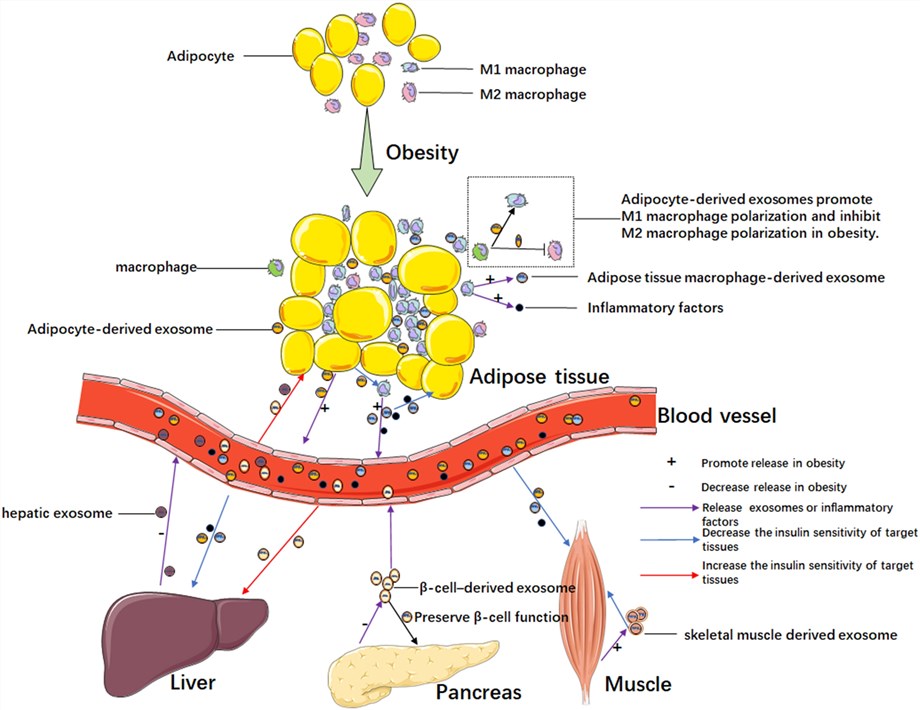 Fig.1 Exosome-mediated intercellular crosstalk: the hidden driver of obesity-related insulin resistance. (Lei, et al., 2021)
Customer Review
Breakthroughs in Metabolic Signaling Discovery
"Working with Protheragen transformed our study on HFD-induced insulin resistance. In the past, our plasma samples were so lipid-rich that standard ultracentrifugation resulted in massive contamination. Protheragen provided us with ultra-pure exosome fractions that allowed us to identify three novel miRNAs that modulate hepatic glucose production. Their technical report was thorough enough to go straight into our supplemental data."
Dr. S. Y., Metabolic Research Institute
Unmatched Reproducibility in Complex Co-Culture Models
"The reproducibility of the data is what impressed us most. We sent multiple batches of conditioned media from our macrophage-adipocyte co-culture models, and the particle yield and purity were consistent every time. Protheragen’s team acts more like a collaborator than a service provider, offering insights into the best markers for our specific preclinical model. We are already planning our next series of cargo profiling projects with them."
Dr. D. S., Biopharmaceutical Lead Discovery
Frequently Asked Questions
-
How do you handle the high levels of chylomicrons in obese plasma?
We utilize a combination of density-gradient pre-clearing and SEC to ensure that lipoproteins are separated from the exosome fraction based on both density and hydrodynamic radius.
-
Can I use the isolated exosomes for functional assays in cell culture?
Yes, our isolation processes are non-toxic and preserve the surface ligands necessary for cellular uptake and signaling.
-
What is the minimum sample volume required for mouse plasma?
We have optimized protocols for volumes as low as 100-200 μL, though higher volumes are recommended for comprehensive cargo analysis.
-
How do you verify that the vesicles are actually from adipose tissue?
We can perform immuno-enrichment using adipose-specific markers such as FABP4 or caveolin-1 to verify the tissue of origin.
-
Is your service limited to mouse models?
No, we support various preclinical models including rats, pigs, and non-human primates.
-
Do you provide TEM imaging?
Yes, Transmission electron microscopy is available to visualize the characteristic cup-shaped morphology of your isolated exosomes.
-
How do you prevent RNA degradation in the samples?
We use specialized lysis buffers and RNase inhibitors immediately following isolation to ensure the stability of the exosomal cargo.
-
How does your method compare to commercial precipitation kits?
Precipitation kits often co-isolate non-exosomal proteins and lipids. Our SEC and TFF-based methods provide significantly higher purity, which is essential for accurate mass spectrometry and sequencing.
-
What is the typical turnaround time?
Standard isolation and characterization typically take several weeks, depending on the complexity of the sample matrix.
-
Can you help with the experimental design for exosome tracking?
Absolutely. We offer guidance on labeling strategies (e.g., PKH67 or DiI) for in vivo biodistribution studies.
Contact Us
Protheragen is committed to providing the high-resolution molecular tools necessary to deconstruct the complexities of obesity. Our specialized isolation services bridge the gap between raw biological samples and groundbreaking metabolic insights, ensuring your preclinical research is built on a foundation of purity and precision.
Contact Protheragen for More Information and to Discuss Your Project
Reference
- Lei, L-M.; et al. Exosomes and Obesity-Related Insulin Resistance. Front. Cell Dev. Biol. 2021, 9:651996. (CC BY 4.0)
All of our services and products are intended for preclinical research use only and cannot be used to diagnose, treat or manage patients.