
Adipose Tissue Immune Environment Analysis Service
InquiryThe persistence of global obesity has shifted the scientific paradigm from viewing adipose tissue merely as an energy storage organ to recognizing it as a complex, active endocrine and immunologic hub. In the context of chronic overnutrition, adipose tissue undergoes pathological remodeling characterized by adipocyte hypertrophy, hypoxia, and a profound shift in the resident immune cell population. This "meta-inflammation"—chronic, low-grade systemic inflammation—is a primary driver of insulin resistance and metabolic syndrome.
Adipose Tissue Immune Environment Analysis Service for Anti-Obesity Therapeutics
Protheragen offers a specialized adipose tissue immune environment analysis service designed to decode the intricate crosstalk between adipocytes and infiltrating immune cells. By evaluating the recruitment of pro-inflammatory macrophages (M1-type), the depletion of regulatory T cells (Tregs), and the secretion of deleterious adipokines, we provide drug developers with the high-resolution data necessary to validate the efficacy of novel anti-obesity and anti-inflammatory therapeutics in the preclinical phase.
Core Technologies
To provide a granular view of the adipose microenvironment, Protheragen utilizes a suite of high-parameter technologies:
- Multi-Parametric Flow Cytometry
Precise quantification and phenotyping of stromal vascular fraction (SVF) cells, including macrophage polarizations, NK cell activation, and T-cell subsets.
- Multiplex Protein Profiling
Utilization of Luminex and MSD platforms to measure a broad spectrum of cytokines (IL-6, TNF-α, MCP-1) and adipokines (leptin, adiponectin) from serum or tissue lysates.
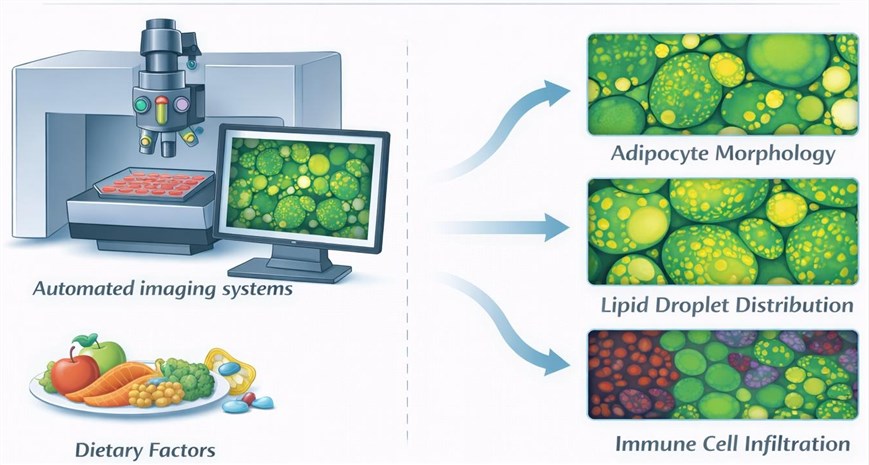
- High-Content Cellular Phenotyping
Automated imaging systems to assess adipocyte morphology, lipid droplet distribution, and spatial immune cell infiltration.
- Single-Cell RNA Sequencing (scRNA-seq)
Uncovering rare cell populations and transcriptomic shifts within the adipose niche in response to pharmacological intervention.
Service Scope
Protheragen provides an end-to-end analytical framework covering:
- Macrophage Polarization Assays
Tracking the M1 (pro-inflammatory) to M2 (anti-inflammatory) transition.
- Lymphocyte Profiling
Assessing the balance between Th1/Th17 cells and protective Treg populations.
- Adipokine Secretome Analysis
Evaluating the systemic and local endocrine effects of adipose tissue.
- Thermogenic Assessment
Analyzing the "browning" of white adipose tissue and the activation of UCP1-mediated thermogenesis in brown fat.
- Fibrosis Evaluation
Quantifying extracellular matrix deposition and its impact on adipose health.
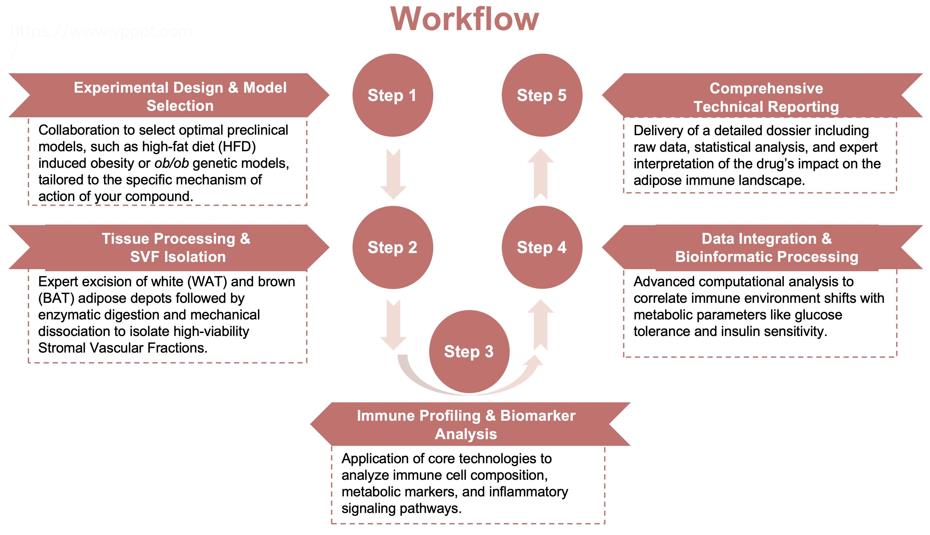
Workflow
Our streamlined workflow ensures rigorous data generation from initial pilot studies to final report delivery:
Contact Our Scientists to Design Your Custom Adipose Profiling Workflow Today
Fields of Application
Our adipose tissue immune environment analysis service provides critical mechanistic insights across a diverse range of metabolic and inflammatory research areas, enabling the validation of targeted interventions.
- Anti-Obesity Drug Discovery: Validating compounds aimed at reducing systemic inflammation and promoting weight loss.
- Diabetes & Insulin Resistance Research: Studying the reversal of adipose-driven insulin desensitization.
- NASH/MASH Research: Investigating the link between adipose tissue dysfunction and hepatic steatosis.
- Nutraceutical Development: Screening bioactives for their ability to modulate the adipose immune niche.
Advantages
Partnering with Protheragen grants access to industry-leading expertise in metabolic immunology:
Unrivaled Precision
Standard isolation techniques often suffer from high debris interference and low cell recovery. Our SVF isolation protocols utilize gentle enzymatic dissociation and standardized filtration to maximize the recovery of sensitive populations like adipose tissue macrophages (ATMs) and regulatory T cells (Tregs).
Comprehensive Insights
Data is only as valuable as the context it resides in. We go beyond basic immunophenotyping by correlating immune cell shifts directly with systemic physiological outcomes.
Customization
Metabolic pathways are rarely "one size fits all." We design flexible flow cytometry and cytokine panels tailored to your specific mechanism of action. Whether you are targeting nutrient sensing via GPR120 agonists, modulating inflammation through TLR4 antagonists, or exploring the immunomodulatory effects of novel incretin mimetics, we curate markers that capture the precise shift in polarization or activation state relevant to your therapeutic.
Validated Models
Reliability is the cornerstone of preclinical success. Our extensive experience with ob/ob, db/db, and chronic high-fat diet (HFD) models ensures a stable baseline for testing. By leveraging protocols validated in peer-reviewed publications, we minimize experimental drift. This ensures that the immunometabolic signatures observed in our assays provide a robust and translatable foundation for human clinical trials.
Inquire Now to Discuss Your Study Design with Our Scientists
Publication Data
Title: Adipose tissue inflammation linked to obesity: A review of current understanding, therapies and relevance of phyto-therapeutics
Journal: Heliyon, 2024
DOI: https://doi.org/10.1016/j.heliyon.2023.e23114
Summary: This review delves into the global epidemic of obesity, focusing on its tight link to adipose tissue inflammation (ATI)—a key driver of comorbidities like type 2 diabetes (T2D), insulin resistance (IR), and cardiovascular disease (CVD). It critiques conventional obesity therapies (lifestyle changes, pharmacotherapies) for limitations (adverse effects, inconsistent long-term efficacy) and highlights the potential of natural alternatives, especially plant-sourced compounds, anti-inflammatory peptides (AIPs), and macromolecular antioxidants (MAs). The paper also explores the molecular mechanisms of ATI (involving immune cells, signaling pathways like MAPK/NF-κB, and adipokines) and outlines future research directions to improve obesity care and reduce related morbidity/mortality.
Key Findings
- ATI: Core Driver of Obesity Comorbidities
Adipose tissue inflammation (ATI) stems from excess fat accumulation, triggering immune cell infiltration (e.g., macrophages) and pro-inflammatory cytokines (IL-6, TNF-α). It disrupts insulin/leptin signaling, directly leading to insulin resistance (IR), type 2 diabetes (T2D), and cardiovascular disease (CVD).
- Limitations of Conventional Therapies
Lifestyle changes (diet/exercise) reduce ATI by shrinking adipocytes but require strict adherence. Pharmacotherapies (statins, PPAR agonists) target inflammation but carry side effects (e.g., COX-2 inhibitors raise myocardial infarction risk), highlighting the need for safer alternatives.
- Natural Alternatives Show Great Promise
Plant-derived extractable phenols (EPs) like gallic acid (fruits) and glucoraphanin (broccoli sprouts) suppress lipogenesis and reduce inflammation. Macromolecular antioxidants (MAs), fiber-bound polyphenols (e.g., pomegranate ellagitannins), offer long-lasting effects via gut flora metabolism. Anti-inflammatory peptides (AIPs) from natural sources (milk, plants) regulate immune pathways, with peptidomimetics addressing stability issues.
- Novel Targets & Future Directions
Key signaling pathways (MAPK, NF-κB) and transcription factors (PPARγ) are critical therapeutic targets. Innovations like electroacupuncture (EA) and gut-microbiota-microRNA axes (miR-181) show potential. Computational tools accelerate AIP discovery, while sex-specific ATI responses and ATI-atherosclerosis links need more research for personalized care.
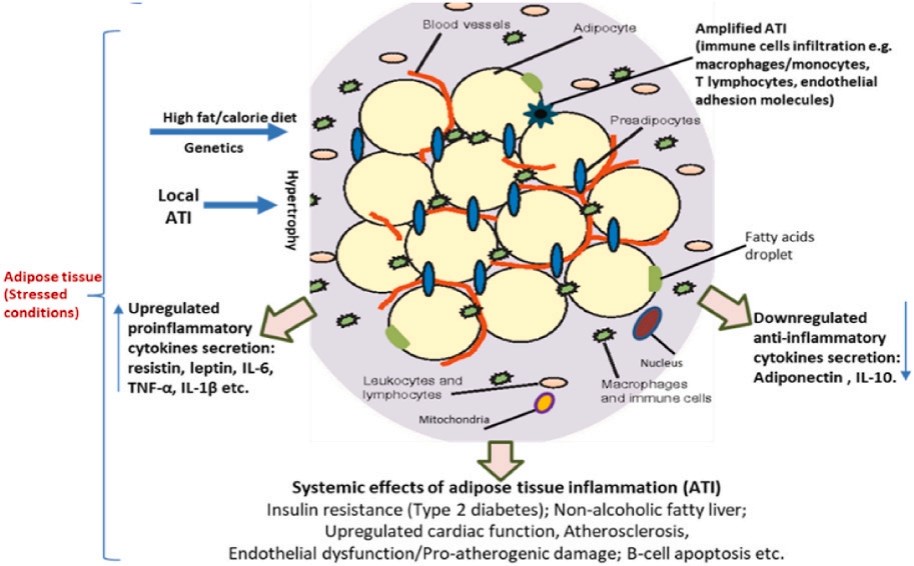 Fig.1 Adipose tissue inflammation (ATI) mechanisms: the interplay between adipocytes, immune cells, and pro-Inflammatory signals in obesity. (Aruwa & Sabiu, 2024)
Customer Review
Validating Mechanism of Action with Precision
"The team at Protheragen provided indispensable data for our lead candidate's proof-of-concept studies. Their ability to precisely quantify the reduction in M1 macrophages within the visceral fat was essential to confirming our drug's anti-inflammatory mechanism. The depth of the bioinformatic analysis and the correlation with metabolic markers provided a level of clarity we hadn't achieved previously."
Dr. M. R., Mid-size Biotech
Enhancing Data Reliability in Preclinical Models
"Working with Protheragen has transformed our approach to adipose tissue research. Their SVF isolation protocol is significantly more robust than our previous internal methods, leading to much cleaner flow data and highly reproducible results across cohorts. We are already planning our next series of efficacy studies with their immunology team to further explore our compound's impact on tissue remodeling."
Dr. P. P., Pharmaceutical Development
Frequently Asked Questions
-
What types of adipose tissue can you analyze?
We analyze inguinal, epididymal, and perirenal white adipose tissue (WAT), as well as interscapular brown adipose tissue (BAT).
-
Can you distinguish between resident and infiltrating macrophages?
Yes, using specific surface markers like CD11b, F4/80, and CD11c, we can identify specific subpopulations.
-
Is it possible to ship frozen tissue for SVF analysis?
For optimal viability and accurate phenotyping, we recommend processing fresh tissue; however, we offer specialized stabilization buffers if immediate processing isn't possible.
-
Do you provide metabolic cage data (CLAMS) alongside immune analysis?
Yes, we can integrate immune profiling with energy expenditure and locomotor activity data.
-
What is the typical turnaround time for a standard profiling study?
Generally, 4–6 weeks from the conclusion of the in-life portion of the study.
-
How do you ensure the consistency of your high-fat diet models?
We utilize standardized diet formulations and rigorous environmental controls to minimize cohort variability.
-
Can your service evaluate the "browning" of white fat?
Absolutely. We use a combination of IHC for UCP1 and qPCR for thermogenic gene markers.
-
What is the minimum sample size required for statistical significance?
This depends on the effect size, but we typically recommend n=8-10 per group for metabolic studies.
-
Do you offer histological services for adipose tissue?
Yes, including H&E for adipocyte sizing and IHC for crown-like structures (CLS).
Contact Us
Protheragen provides the specialized analytical depth required to navigate the complex landscape of adipose tissue immunology. By combining advanced cellular phenotyping with metabolic expertise, we empower our clients to develop more effective anti-obesity therapeutics.
Contact Protheragen for More Information and to Discuss Your Project
Reference
- Aruwa, C. E.; Sabiu, S. Adipose tissue inflammation linked to obesity: A review of current understanding, therapies and relevance of phyto-therapeutics. Heliyon. 2024, 10(1), e23114. (CC BY 4.0)
All of our services and products are intended for preclinical research use only and cannot be used to diagnose, treat or manage patients.