
Obesity-Related Mitochondrial Metabolomics Service
InquiryObesity is a complex metabolic disorder characterized by excessive accumulation of adipose tissue, leading to profound systemic metabolic dysregulation. At the cellular level, mitochondria serve as the central hub for energy production, lipid oxidation, and signal transduction. In obese states, mitochondrial dysfunction within key metabolic tissues—including white and brown adipose tissue, liver, and skeletal muscle—drives impaired oxidative phosphorylation, elevated reactive oxygen species (ROS) production, and altered substrate utilization.
Preclinical Mitochondrial Metabolomics Services for Obesity Research
Understanding these tissue-specific mitochondrial alterations is crucial for unraveling the pathophysiology of obesity and identifying candidate targets for preclinical drug discovery. Protheragen provides an integrated obesity-related mitochondrial metabolomics service designed specifically for preclinical research. By combining high-resolution mass spectrometry with specialized mitochondrial isolation protocols, we enable researchers to map low-abundance metabolites, energetic intermediates, and lipid species localized within organelle compartments. This targeted and untargeted analytical framework delivers actionable insight into mitochondrial bioenergetics, metabolic flux, and disease progression in preclinical models.
Core Technologies
Our analytical platform relies on high-resolution mass spectrometry and robust isolation protocols tailored to resolve organelle-specific metabolic profiles.
Equipped with high-resolution Orbitrap and triple quadrupole (QqQ) analyzers, providing broad dynamic range and low-nanomolar detection limits for polar metabolites and lipids.
Optimized for volatile and semi-volatile metabolic intermediates, such as short-chain fatty acids (SCFAs) and central carbon metabolites, following automated derivatization.
Standardized differential centrifugation and magnetic bead-based immunoaffinity purification methods designed to yield intact, highly pure mitochondrial fractions from preclinical tissue samples while minimizing metabolite leakage.
Enables precise quantification of selected metabolic panels, including tricarboxylic acid (TCA) cycle intermediates, acylcarnitines, and nucleotides, against stable isotope-labeled internal standards.
Service Scope
Protheragen offers comprehensive metabolic profiling tailored to preclinical obesity research, spanning key bioenergetic pathways and lipid species involved in mitochondrial function.
- Central Carbon & Energy Metabolism
We profile key intermediates of the TCA cycle (such as citrate, alpha-ketoglutarate, succinate, fumarate, and malate) along with glycolytic and pentose phosphate pathway metabolites. Dynamic ratios of adenine nucleotides (ATP, ADP, AMP) and nicotinamide cofactors (NAD+/NADH, NADP+/NADPH) are quantified to evaluate cellular energy charge and redox state.
- Mitochondrial Lipidomics & Acylcarnitine Profiling
Mitochondrial membrane composition dictates organelle integrity and electron transport chain activity. Our lipidomics platform quantifies structural lipids—including cardiolipins, phosphatidylethanolamines, and phosphatidylcholines—along with long-chain, medium-chain, and short-chain acylcarnitines. These measurements provide direct insights into fatty acid beta-oxidation efficiency and lipotoxicity.
- Amino Acid & One-Carbon Metabolism
Quantification of branched-chain amino acids (BCAAs: leucine, isoleucine, valine), glutamate, glutamine, and one-carbon donor metabolites (S-adenosylmethionine, S-adenosylhomocysteine). Alterations in BCAA catabolism within mitochondria are strongly correlated with insulin resistance and metabolic strain in Preclinical Obesity Models.
- Reactive Oxygen Species & Redox Markers
Measurement of reduced and oxidized glutathione (GSH/GSSG balance), oxidative damage markers, and intermediates of the gamma-glutamyl cycle, reflecting mitochondrial oxidative stress and antioxidant capacity in response to high-fat diet interventions or therapeutic candidates.
Partner with Protheragen to unlock high-resolution mitochondrial insights
Workflow
Our streamlined, organelle-specific workflow takes your preclinical samples from rapid isolation to publication-ready bioenergetic data.
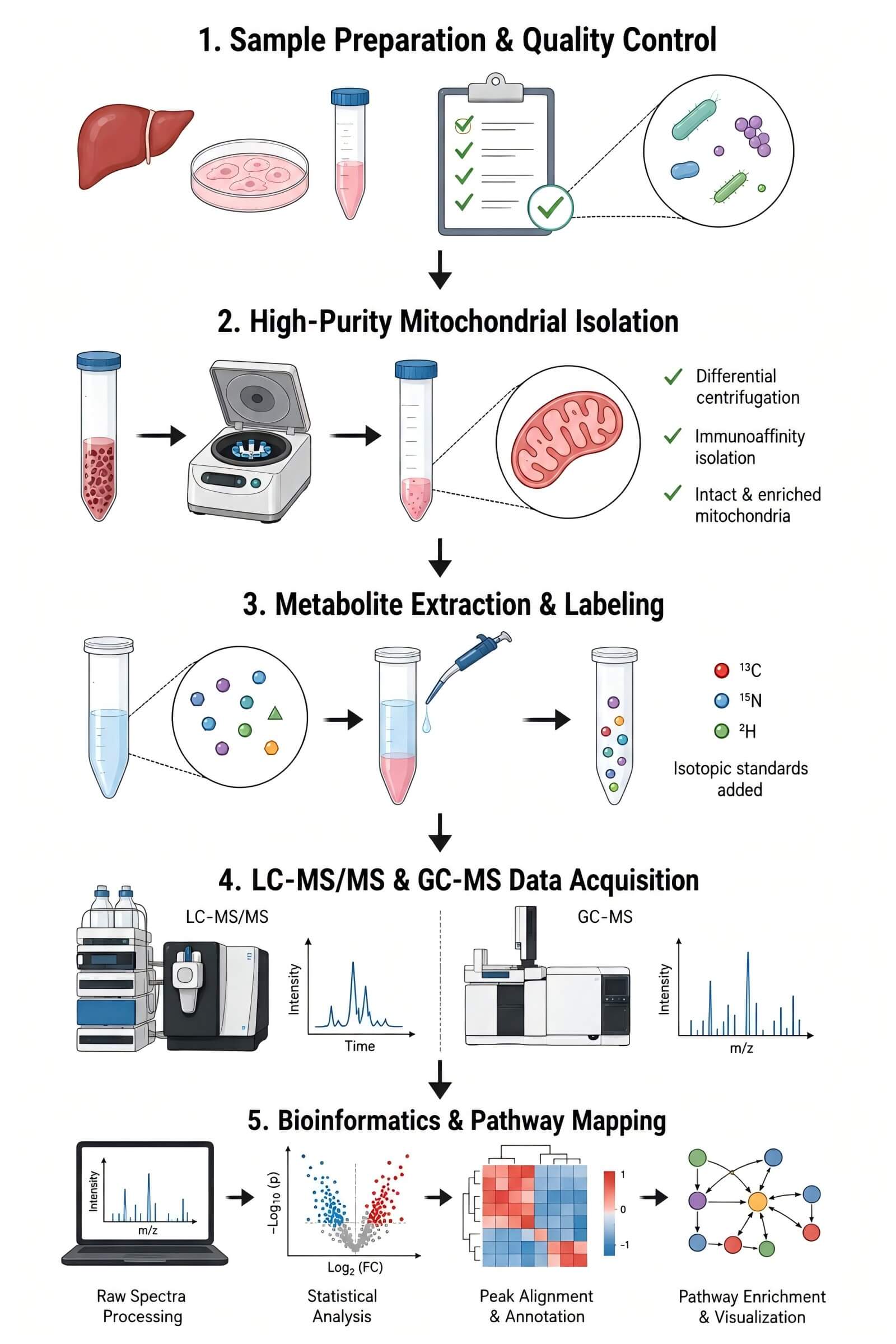
- Step 1: Tissue or cell samples undergo strict quality assessment and baseline bioburden check before extraction.
- Step 2: Differential centrifugation or immunoaffinity techniques yield enriched, intact mitochondrial fractions rapidly on ice.
- Step 3: Quenching methods prevent enzymatic turnover, followed by biphasic extraction and isotopic standard addition.
- Step 4: Instrumental analysis is executed using optimized chromatographic gradients and mass spectrometer acquisition parameters.
- Step 5: Raw spectra undergo alignment, peak picking, statistical validation, and functional pathway enrichment analysis.
Fields of Application
Our organelle-specific metabolomics platform provides actionable bioenergetic insights across critical stages of non-clinical metabolic disease research.
- Preclinical Drug Target Discovery: Identifying dysregulated mitochondrial pathways in high-fat diet-induced obesity models to uncover novel therapeutic targets.
- Mechanism of Action (MoA) Studies: Evaluating how Small Molecule Candidates, peptides, or biologics modulate mitochondrial bioenergetics and substrate utilization in rodent models.
- Biomarker Identification: Discovering circulating or tissue-specific mitochondrial metabolite signatures that correlate with weight loss, insulin sensitivity, or reduced hepatic steatosis.
- Nutritional & Dietary Intervention Screening: Assessing the metabolic impact of functional foods, dietary restrictions, or calorie restriction mimetics on mitochondrial health.
Advantages
By isolating intact organelles and applying high-resolution mass spectrometry, our platform delivers unmatched specificity and precision for preclinical obesity research.
Organelle-Specific Resolution
Our optimized isolation protocols ensure that metabolic signatures represent true mitochondrial activity rather than background cytosolic signal. This specificity allows accurate assessment of intra-mitochondrial metabolite pools in liver, adipose, and muscle tissue. It has been confirmed that high enrichment purity is achieved across diverse preclinical rodent models.
Absolute Quantification Precision
By incorporating stable isotope-labeled internal standards (SIL-IS) for key bioenergetic panels, Protheragen delivers reproducible quantitative metrics across longitudinal preclinical studies, facilitating confident decision-making during candidate selection.
Tailored Preclinical Analytics
Designed exclusively for non-clinical research applications, our analytical workflows are optimized for mouse, rat, cell culture, and non-human primate tissue samples, offering rapid turnaround times without clinical regulatory overhead.
Integrated Multi-Omics Capability
Data generated from our metabolomics workflows seamlessly integrates with transcriptomic and proteomic datasets, providing a systems-biology view of mitochondrial adaptation in obesity models.
Contact Our Technical Specialists Today to Discuss Your Study Requirements
Publication Data
Title: Metabolomic Pathways Distinguishing Metabolically Healthy and Unhealthy Obesity from Normal-Weight: A Cross-Sectional Study.
Journal: Journal of Molecular Sciences, 2026
DOI: https://doi.org/10.3390/ijms27104555
Summary: This cross-sectional Qatar biobank study uses untargeted plasma metabolomics to contrast metabolically healthy/unhealthy obesity and normal-weight phenotypes. It identifies lipid-amino-steroid metabolite-ratio biomarkers, showing metabolic health depends on biochemical regulation rather than BMI alone.
Key Findings
- Study population: 6000 Qatar adults; 312 participants completed untargeted plasma metabolomics, grouped into MHO, MUHO, MHNW, MUHNW.
- Clinical phenotype differences: MUHO showed highest diabetes (21%), hypertension (34.7%) and insulin-resistance (96.8%) rates; cardiometabolic risk diverged independent of BMI.
- Sex-specific clinical markers: Elevated C-peptide and uric acid linked to poor metabolic health; estradiol and free thyroxine exerted protective effects across groups.
- Metabolite alterations: MUHO had strong upregulation of glycerophospholipid species linked to inflammatory signalling; MHO displayed adaptive antioxidant and lipid-remodelling signatures.
- Pathway disruptions: Branched-chain amino-acid metabolism, glycerophospholipid metabolism, ferroptosis and SLC-mediated transmembrane transport differentiated metabolic phenotypes.
- Novel biomarkers: Metabolite ratios outperformed single metabolites for discrimination. Ratio 1-palmitoyl-2-linoleoyl-GPE/gamma-glutamylthreonine distinguished MUHO vs MHO (AUC 0.843); metabolonic lactone sulfate/pregnendiol sulfate separated MHO vs MHNW (AUC 0.865).
- Core conclusion: MHO is a compensatory intermediate adaptive state, not metabolically identical to normal-weight health.
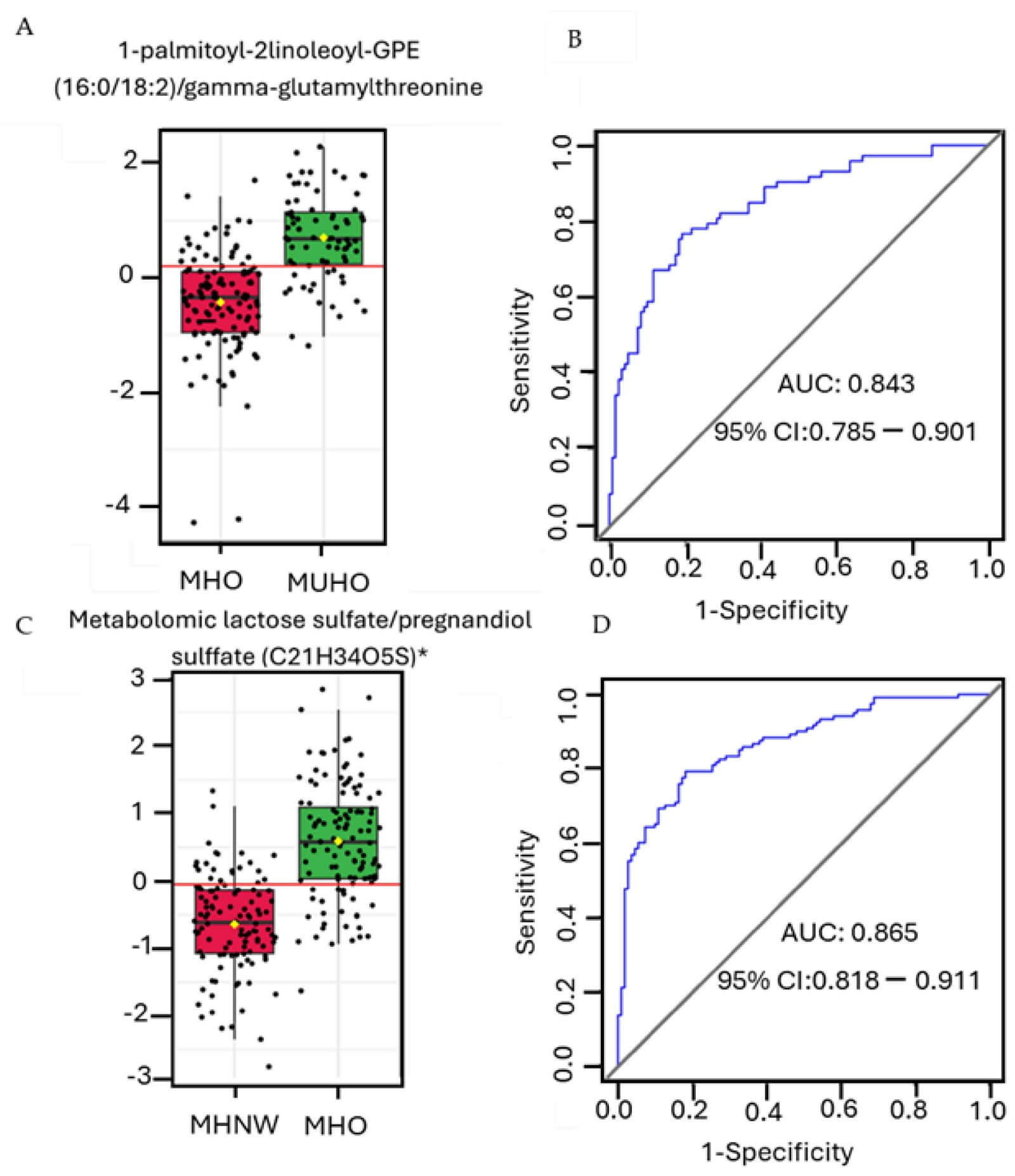 Fig.1 Novel metabolite-ratio biomarkers distinguish healthy-versus-unhealthy obesity sub-phenotypes. (Al Akl, et al.; 2026)
Customer Review
Validating Lead Compound Mechanisms in Diet-Induced Obesity Models
"Working with Protheragen on our diet-induced obesity mouse model project provided us with exceptionally clear mitochondrial data. Their targeted acylcarnitine and TCA cycle panels gave us the mechanistic depth we needed to validate our lead compound's mode of action. The team walked us through every step of sample handling and bioinformatics interpretation."
Dr. S. D., Preclinical Biotech Partner
Uncovering High-Resolution Organelle Signals Beyond Whole-Tissue Limitations
"The depth of pathway analysis provided by the Protheragen team exceeded what typical CROs offer. They did not just dump raw mass spec files on us; they provided clear, publication-grade pathway enrichment plots highlighting mitochondrial dynamics and stress responses. We appreciate their ongoing technical communication and consider Protheragen a primary partner for all our upcoming metabolic disease profiling projects."
Dr. M. D., Lead Principal Investigator
Frequently Asked Questions
-
What sample types are suitable for mitochondrial metabolomics profiling?
Fresh or rapidly frozen tissue samples (such as brown adipose, white adipose, liver, and skeletal muscle) as well as primary cell cultures and isolated cell lines are ideal for our platform.
-
How do you prevent metabolite degradation during mitochondrial isolation?
We utilize rapid cold-temperature extraction protocols, enzymatic quenching solutions, and standardized flash-freezing procedures to preserve metabolic integrity prior to analysis.
-
Do you offer both targeted and untargeted mitochondrial profiling?
Yes, we provide absolute quantification for targeted metabolite panels (e.g., TCA cycle, acylcarnitines) as well as untargeted profiling to discover novel metabolic signatures.
-
What minimum tissue mass is required for mitochondrial isolation and analysis?
Typically, 50–100 mg of wet tissue yields sufficient intact mitochondria for robust metabolomic analysis. Specific requirements depend on the target tissue type and chosen analytical panel.
-
How does mitochondrial lipidomics differ from standard whole-cell lipidomics?
Mitochondrial lipidomics isolates organelle membranes before extraction, allowing precise measurement of specific structural lipids like cardiolipin without interference from bulk cellular lipid droplet stores.
-
How are the bioinformatics results delivered?
Clients receive a comprehensive report containing raw and processed data tables, multivariate statistical analyses (PCA, PLS-DA), heatmaps, and pathway enrichment visualizations.
-
Can this service help differentiate between brown, beige, and white adipose tissue biology?
Absolutely. Mitochondrial density and metabolic function vary significantly across adipose depots, and our high-sensitivity platform is well-suited to capture these depot-specific profiles.
-
What internal standards are used for quantification?
We employ stable isotope-labeled internal standards (e.g., 13C- or 15N-labeled analogs) across our targeted quantitative assays to correct for matrix effects and extraction recovery.
Contact Us
Protheragen is committed to supporting your preclinical research with precise, high-throughput metabolomic solutions. Whether you are validating drug targets, investigating disease mechanisms, or profiling compound effects in animal models, our team of expert biologists and analytical chemists is ready to assist you. Do not hesitate to Contact Protheragen for more information.
Reference
- Al Akl, N. S.; et al. Metabolomic Pathways Distinguishing Metabolically Healthy and Unhealthy Obesity from Normal-Weight: A Cross-Sectional Study. International Journal of Molecular Sciences. 2026, 27(10), 4555. (CC BY 4.0)
All of our services and products are intended for preclinical research use only and cannot be used to diagnose, treat or manage patients.