
Allogeneic Cell Therapy Development Service
InquiryObesity is no longer viewed as just a lifestyle issue; it is a complex metabolic disease driven by chronic inflammation and tissue dysfunction. Traditional Small Molecules and modern peptide drugs like GLP-1 agonists have made great strides, but they often require lifelong compliance and frequently cause muscle loss alongside fat reduction. Allogeneic cell therapy—using healthy, donor-derived cells—presents a radically different approach. By targeting the underlying biology of adipose tissue, these therapies can restore healthy metabolic signaling, modulate immune cell infiltration, and promote the browning of white fat.
Allogeneic Cell Therapy Development Service for Obesity
Protheragen provides specialized preclinical development services to help you transform these cell concepts into robust, scalable candidates. We focus strictly on the early, foundational stages of development, ensuring your cell lines are optimized for metabolic efficacy and safety before you transition toward clinical manufacturing.
Core Technologies
Developing off-the-shelf therapies for metabolic conditions requires precise control over cellular function and stealth capabilities to avoid immune clearance. Protheragen leverages several foundational preclinical platforms to achieve this:
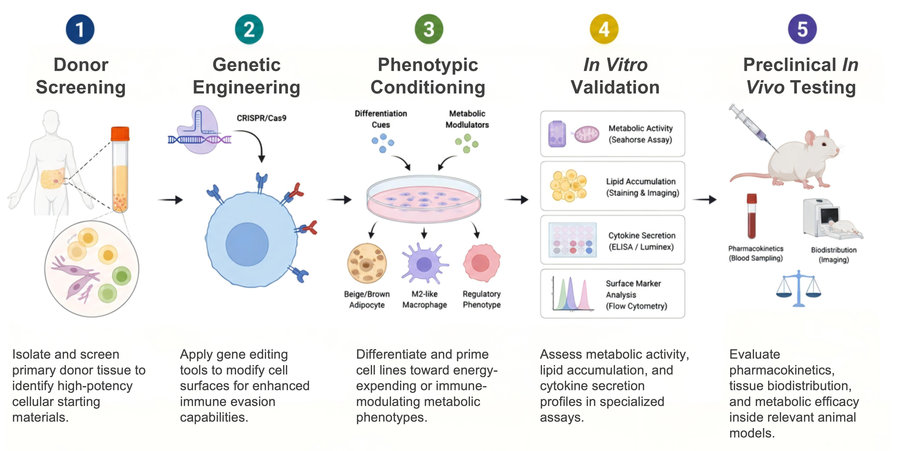
We isolate, expand, and profile specific donor-derived populations, such as mesenchymal stem cells (MSCs) and preadipocytes, ensuring they exhibit high baseline secretion of anti-inflammatory cytokines and metabolic regulators.
To prevent host immune rejection, our team utilizes gene editing techniques to knock out major histocompatibility complex (MHC) molecules or knock in protective ligands, creating "hypoimmunogenic" cell lines suitable for diverse recipients.
We employ specific small-molecule and genetic conditioning protocols to drive the differentiation of progenitor cells into beige or brown-like phenotypes that naturally burn energy rather than store it.
Solution Scope
Our service capabilities cover everything needed to establish solid preclinical proof-of-concept for metabolic cell therapies. We do not offer clinical trials or manufacturing, which allows us to focus entirely on optimizing the biological foundations of your therapy.
- Cell Sourcing & Engineering
We handle the complex work of sourcing healthy donor tissues and modifying them to survive in an allogeneic environment. This includes optimizing transfection protocols, checking for off-target gene editing events, and building stable master cell banks for discovery research.
- Metabolic Characterization
We look closely at how these cells behave under metabolic stress. Our team measures oxygen consumption rates, fatty acid oxidation, and the secretion of key adipokines like adiponectin. We make sure the cells are doing exactly what they are designed to do: reverse metabolic dysfunction.
- In Vivo Preclinical Modeling
We design and execute animal studies using diet-induced obesity (DIO) models to see how well the therapies perform in a living system. We track body composition via EchoMRI, monitor glucose tolerance, evaluate insulin sensitivity, and perform detailed tissue histology to locate where the cells go after administration.
Connect with a Protheragen scientist today to schedule a technical consultation.
Workflow
Our structural pipeline guides your therapeutic concept from raw donor tissue to a fully characterized, non-clinical lead candidate.
Fields of Application
The preclinical models and engineered cell lines we develop serve several distinct therapeutic strategies within metabolic health. Our platforms are designed to validate and optimize your candidates across these primary application areas:
- White Adipose Tissue Browning
We help you evaluate how effectively your allogeneic candidates drive the conversion of energy-storing, unilocular white adipocytes into multilocular, UCP1-positive beige or brown-like fat. Our in vitro and in vivo assays specifically measure the resulting upregulation of thermogenic markers and overall increases in resting energy expenditure.
- Systemic Adipose Inflammation Mitigation
Obesity-induced tissue dysfunction is heavily driven by chronic inflammation. We specialize in testing how donor-derived cells modulate the local immune microenvironment, specifically tracking the polarization of adipose tissue macrophages from a pro-inflammatory M1 state to an anti-inflammatory M2 phenotype to restore systemic insulin sensitivity.
- Targeted Adipokine & Peptide Secretion
For therapies designed to act as sustained-release bio-factories, we validate the cells' ability to continuously secrete critical metabolic regulators (such as adiponectin or engineered peptide therapeutics) directly into the subcutaneous adipose niche, avoiding the peaks and troughs of traditional injection schedules.
Advantages
Partnering with Protheragen means you get deep expertise in both immunology and metabolic biology. We help you de-risk your program early, so you do not waste resources on unscalable cell lines.
Deep Metabolic Specialization
Unlike broad-spectrum contract research organizations, we focus intensely on adipose biology and metabolic pathways. This means our assays are tuned specifically to detect subtle changes in fat tissue inflammation and energy expenditure, giving you clearer data faster.
Scalable Allogeneic Platforms
We build scalability into your project from day one. By evaluating how cells handle rapid expansion during the preclinical phase, we ensure your candidate won't fail later due to replicative senescence or loss of therapeutic potency during scale-up.
Rigorous Immuno-Profiling
Our specialized co-culture assays simulate how a patient's immune system will react to the donor cells. We optimize the cells to minimize host immune recognition, showing that engineered allogeneic lines exhibit up to an 85% reduction in T-cell activation compared to unedited controls.
Submit a project inquiry to our biological specialists to receive a customized study design.
Publication Data
Title: Commercial Scale Manufacturing of Allogeneic Cell Therapy
Journal: Front. Med., 2018
DOI: https://doi.org/10.3389/fmed.2018.00233
Summary: This 2018 mini-review examines commercial-scale allogeneic cell therapy manufacturing, focusing on PSC-derived treatments needing 109+ cells per patient. It compares single-use stirred-tank bioreactors (up to 2,000L), highlights upstream/downstream tech gaps, and advocates automated engineering controls for consistent, scalable cGMP cell production.
Key Findings
- This Frontiers in Medicine review addresses critical industrialization barriers for allogeneic cell therapies, particularly pluripotent stem cell (PSC) products targeting macular degeneration, diabetes, and spinal injury. Commercial demand requires annual output of 10¹¹–10¹⁴ cells, with target batch sizes 200–2,000L single-use bioreactors. GE, Pall, and Sartorius STR platforms are benchmarked; vessel geometry, turndown ratios, and impeller shear sensitivity dictate scale-up feasibility, with carrier-free suspension culture preferred over adherent plastic workflows to cut costs and footprint.
- Major unmet gaps include integrated perfusion systems, large-format cell culture media, and scalable closed downstream hardware. Unlike protein bioprocessing, cell therapy downstream must preserve intact, viable cells, lacking standardized harvest/wash tools. The paper stresses shifting from cell-biology lab workflows to automated manufacturing engineering: DO/pH cascade perfusion control eliminates manual sampling, while statistical process control (SPC) tools like Xbar-R charts isolate batch variability sources (visualized in Figure 1). Final fill cryopreservation packaging systems remain unvalidated at full commercial scale, creating a last-mile production bottleneck.
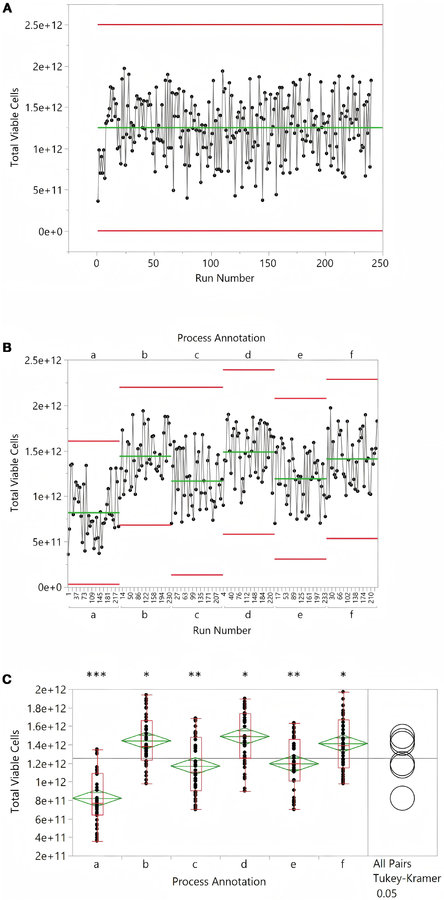 Fig.1 Commercial scale allogeneic cell therapy manufacturing: single-use bioreactor scale-up, tech gaps & process control. (Pigeau, et al., 2018)
Customer Review
Optimizing Thermogenic Potency and Efficacy Verification
"We were struggling to get consistent thermogenic activity from our stem cell lines when cultured under standard conditions. The team at Protheragen designed a custom phenotypic conditioning protocol that completely turned things around. Their in vitro metabolic profiling gave us the exact proof-of-concept data we needed to clear our internal milestone review. We're already planning our next round of in vivo studies with them."
Dr. A. R., Staff Scientist
Seamless Allogeneic Engineering and Rigorous Proof-of-Concept
"Finding a team that truly understands the intersection of immunology and adipose tissue biology is rare. Protheragen handled the genetic modification of our allogeneic progenitors seamlessly, providing clear, unvarnished data at every single stage of the project. Their work has laid a solid foundation for our preclinical package."
Dr. C. B., Pharmacologist
Frequently Asked Questions
-
Why use allogeneic cells instead of autologous ones for obesity treatments?
Autologous cells, taken from patients with severe obesity, are often metabolically dysfunctional or exhausted due to chronic systemic inflammation. Healthy donor-derived allogeneic cells provide a highly potent, functional, and standardized starting material that can be manufactured at scale ahead of time.
-
How do you ensure the engineered donor cells survive the host immune response?
We use advanced gene editing techniques to knock out specific surface antigens and knock in protective immunomodulatory factors. We test these edits extensively using human peripheral blood mononuclear cell (PBMC) co-culture assays to confirm low immunogenicity.
-
Can you evaluate both subcutaneous and visceral fat targets?
Yes. Our preclinical in vivo imaging and histological profiling can track cell homing, integration, and efficacy within both subcutaneous and visceral adipose tissue deposits in animal models.
-
What kind of animal models do you typically use for these studies?
We primarily utilize diet-induced obesity (DIO) mouse and rat models, as well as genetic models like ob/ob or db/db mice, depending on the specific mechanism of action your therapy targets.
-
How do you measure whether the cells are actually causing fat browning?
We use a combination of quantitative RT-PCR and western blotting to look for upregulated thermogenic markers like UCP1, PGC-1ɑ, and PRDM16, alongside direct metabolic tracking through cellular respirometry.
-
What is the typical timeline for an in vivo efficacy study?
Most of our metabolic in vivo studies run between 8 and 12 weeks, which allows us to gather robust data on body weight trends, body composition shifts, and long-term glucose tolerance changes.
Contact Us
Protheragen is dedicated to delivering precise, high-quality, and actionable preclinical data to push your metabolic therapies forward. Our specialized platforms take the guesswork out of allogeneic cell engineering, helping you establish clear therapeutic efficacy early in development. Welcome to Contact Protheragen to receive a detailed proposal and pricing for your upcoming project.
Reference
- Pigeau G.M.; et al. Commercial Scale Manufacturing of Allogeneic Cell Therapy. Front. Med. 2018, 5:233 (CC BY 4.0).
All of our services and products are intended for preclinical research use only and cannot be used to diagnose, treat or manage patients.