

Gluconeogenesis Assessment Service
InquiryGluconeogenesis (GNG)—the metabolic pathway that results in the generation of glucose from non-carbohydrate carbon substrates—plays a pivotal role in the pathophysiology of obesity and type 2 diabetes. In obese states, dysregulated hepatic and renal GNG often leads to fasting hyperglycemia and impaired metabolic flexibility. As the pharmaceutical landscape shifts toward multi-agonist peptides (such as GLP-1, GIP, and glucagon receptor agonists) and third-generation amylin analogues like Cagrilintide, quantifying the precise contribution of GNG to total glucose output has become essential.
Gluconeogenesis Assessment Service for Anti-Obesity Therapeutics
Protheragen provides a specialized preclinical gluconeogenesis assessment service designed to help drug developers decode the complex metabolic flux changes induced by novel anti-obesity candidates. Our platform transitions beyond simple blood glucose monitoring to provide a deep, mechanistic understanding of how your therapeutic modulates endogenous glucose production (EGP).
Core Technologies
To provide high-fidelity metabolic data, Protheragen utilizes a suite of sophisticated tracer-based and surgical methodologies:
- Stable Isotope Dilution (SID)
We employ [6,6-2H2]glucose and [U-13C]glycerol tracers to differentiate between glycogenolysis and gluconeogenesis without the risks associated with radioactive isotopes.
- Hyperinsulinemic-Euglycemic Clamps
Recognized as the "gold standard," this technique allows us to measure insulin sensitivity and the ability of a therapeutic to suppress hepatic glucose production under controlled steady-state conditions.
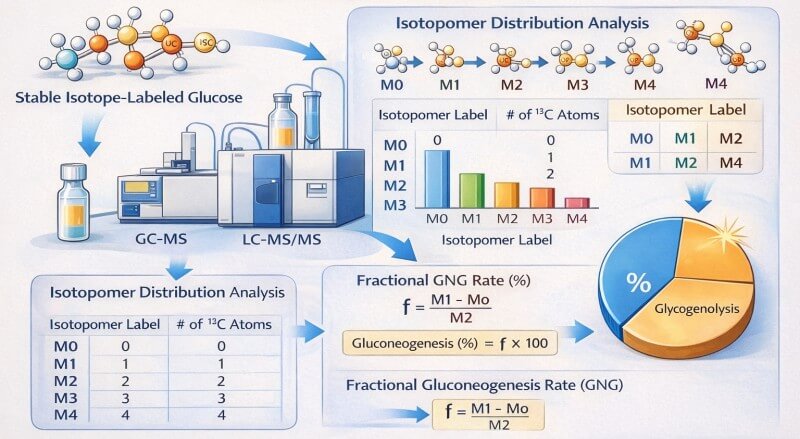
- Mass Isotopomer Distribution Analysis (MIDA)
By analyzing the enrichment patterns of glucose molecules via gas chromatography–mass spectrometry (GC–MS) or liquid chromatography tandem mass spectrometry (LC-MS/MS), we calculate the absolute fractional rate of GNG.
- Enzymatic Activity Profiling
Quantitative assessment of key GNG enzymes, including phosphoenolpyruvate carboxykinase (PEPCK) and glucose-6-phosphatase (G6Pase), in harvested hepatic tissues.
- Continuous Glucose Monitoring (CGM) Integration
In preclinical models, we synchronize GNG flux data with 24/7 interstitial glucose trends to observe the impact of drug dosing on circadian metabolic rhythms.
Service Scope
Protheragen offers a comprehensive range of assessments tailored for metabolic disease research:
- Hepatic vs. Renal GNG Partitioning
Quantifying the specific organ contribution to systemic glucose levels.
- Substrate Preference Mapping
Determining if a drug shifts GNG precursors from lactate/pyruvate to glycerol or amino acids (e.g., alanine).
Mapping GNG suppression across various concentrations of your anti-obesity candidate.
- Combination Therapy Analysis
Evaluating synergistic effects of dual/triple incretin agonists on glucose turnover.
- Counter-Regulatory Response Testing
Assessing the safety profile of drugs by monitoring the GNG response during induced hypoglycemia.
Contact Our Team for More Information and to Discuss Your Project
Workflow
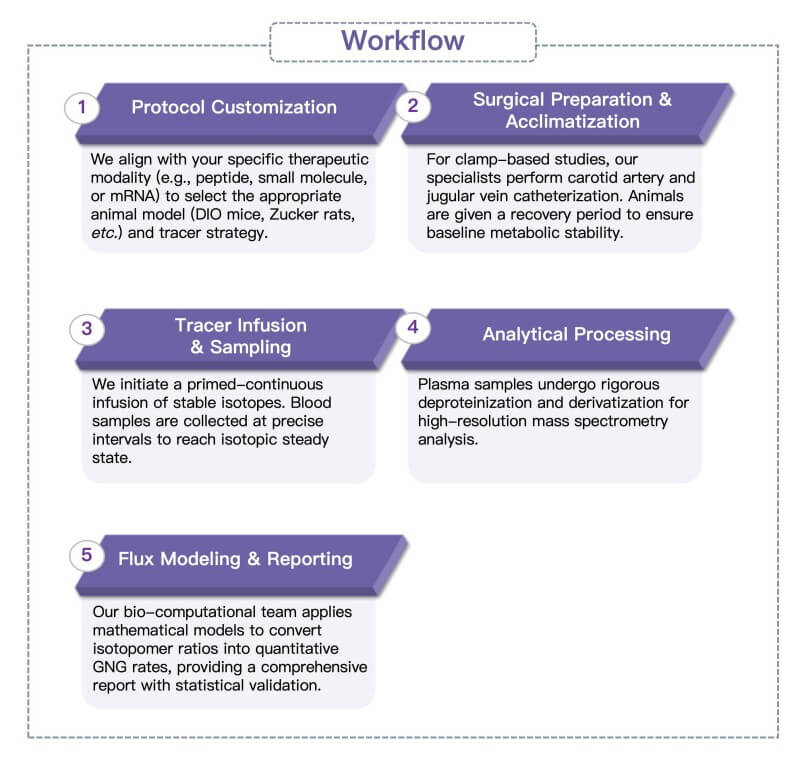
Our service is structured to ensure rigorous data acquisition and rapid turnaround for your lead optimization phases:
Fields of Application
Our gluconeogenesis assessment service provides critical metabolic insights across a diverse range of therapeutic research areas, enabling developers to validate target engagement and physiological impact in multiple disease contexts.
- Incretin Mimetic Development: Assessing GIP/GLP-1/Glucagon Receptor co-agonists.
- Amylin & Calcitonin Research: Evaluating third-generation weight-loss peptides like Cagrilintide analogs.
- Nutraceutical Testing: Validating the metabolic claims of functional food ingredients.
- NASH/MASH Research: Understanding the link between fatty liver progression and gluconeogenic dysregulation.
- Mitochondrial Therapeutics: Analyzing the impact of uncouplers on metabolic rate and glucose output.
Advantages
Partnering with Protheragen ensures your preclinical program is backed by industry-leading precision:
- Superior Sensitivity
Our MIDA platforms offer a level of resolution that traditional fasting glucose or GTT (glucose tolerance test) protocols simply cannot match. By tracking stable isotope incorporation, we detect minute fluctuations in GNG flux and metabolic turnover long before they manifest as changes in static blood glucose levels.
- Mechanistic Clarity
We move beyond surface-level observations. Protheragen doesn't just report that glucose levels have dropped; we provide a high-definition map of how the shift occurred. Our assays distinguish between reduced hepatic glucose output (GNG inhibition) and enhanced peripheral glucose disposal (insulin sensitization).
Biological relevance is the cornerstone of translatability. We provide access to a sophisticated suite of models, ranging from standard diet-induced obesity (DIO) and db/db mice to highly specialized transgenic and knockout lines.
- Expert Interpretation
Our senior metabolic biologists provide a consultative layer of expertise, helping you synthesize complex flux data into actionable insights. We assist in interpreting 'noisy' metabolic signals within the broader context of clinical translatability, helping you evaluate how preclinical findings may translate to human physiological responses.
Contact Protheragen to Design Your Custom Gluconeogenesis Study Today.
Publication Data
Title: Glucagon-based therapy for people with diabetes and obesity: What is the sweet spot?
Journal: Peptides, 2024
DOI: https://doi.org/10.1016/j.peptides.2024.171219
Summary: Obesity and type 2 diabetes (T2D) are closely linked to metabolic disorders like metabolic-associated steatotic liver disease (MASLD) and hyperlipidemia, creating an urgent need for effective therapeutics. Glucagon, a hormone with dual metabolic effects—raising hepatic glucose production but reducing liver fat, improving lipid profiles, and boosting energy expenditure—has emerged as a promising target. While glucagon receptor (GCGR) antagonists improve glycemic control in T2D, they exacerbate liver fat accumulation and dyslipidemia, limiting their use. In contrast, co-agonists of GCGR and glucagon-like peptide-1 receptor (GLP-1R) (and triple agonists adding glucose-dependent insulinotropic polypeptide receptor [GIPR]) leverage glucagon's benefits: enhancing weight loss, reducing liver fat, and ameliorating dyslipidemia without worsening glycemia. However, challenges remain, including gastrointestinal side effects, potential muscle mass loss, and heart rate increases. Optimal receptor activity ratios for these co-agonists are still unconfirmed, and long-term cardiovascular safety studies are needed. When paired with lifestyle interventions, these agents hold great potential for personalized treatment of obesity, T2D, and related conditions like MASLD.
Key Findings
- Glucagon's Dual Role: Glucagon increases hepatic glucose production (a drawback for T2D) but offers benefits like reduced liver fat, improved lipidemia, and increased energy expenditure—making it a nuanced target for metabolic disorders.
- GCGR Antagonists' Limitations: While these agents effectively lower fasting blood glucose and HbA1c in T2D, they raise liver fat (via increased transaminases) and worsen hyperlipidemia, making them unsuitable for patients with MASLD (common in obesity/T2D).
- Co-Agonists' Superiority: GCGR/GLP-1R co-agonists (e.g., cotadutide, mazdutide) and triple agonists (e.g., retatrutide) outperform GLP-1R monoagonists in weight loss and liver fat reduction. Retatrutide, a GIPR/GLP-1R/GCGR tri-agonist, achieves 24% weight loss over 48 weeks and 90% liver fat reduction in high doses.
- Glycemic Safety: Co-agonists maintain or improve glycemic control (lowering HbA1c and fasting glucose) in T2D, with no increased hypoglycemia risk, as weight loss and GLP-1R activity offset glucagon's glucose-raising effects.
- Unresolved Challenges: Gastrointestinal adverse events (nausea, vomiting) are common and have halted development of some agents (e.g., SAR425899). Potential muscle mass loss (from amino acid catabolism) and heart rate increases require further investigation.
- Optimal Receptor Balance: Co-agonists with differing GCGR/GLP-1R activity ratios vary in efficacy—balanced dual agonists (e.g., mazdutide) and triple agonists (e.g., retatrutide) show the most promise, but the "sweet spot" for specific conditions (e.g., MASLD vs. T2D) is still undefined.
- Lifestyle Synergy: Co-agonists work best as adjuncts to diet and exercise, enhancing sustained weight loss and reducing side effects, mirroring the success of bariatric surgery in metabolic disease management.
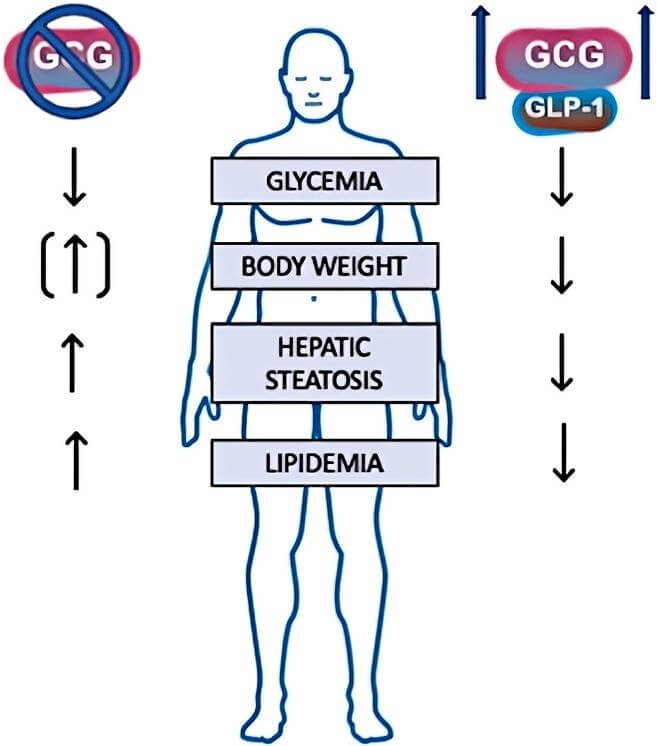 Fig.1 Metabolic effects of glucagon receptor manipulation: Blockade vs. GLP-1 receptor co-agonism in obesity and type 2 diabetes (T2D). (McGlone & Tan, 2024)
Customer Review
Accelerating Lead Optimization for Novel Amylin Agonists
"The team at Protheragen provided us with critical insights into our lead amylin agonist. Their ability to partition hepatic glucose output gave us the data needed to differentiate our molecule from competitors. We are already planning our next series of dual-agonist studies with them."
Dr. J. M., Biopharma Lead Discovery
Validation of Hepatic Glucose Suppression in Multi-Incretin Programs
"Working with Protheragen was seamless. Their expertise in the hyperinsulinemic-euglycemic clamp technique in DIO mice is unparalleled. The GNG flux data were the 'missing link' in our metabolic package. We highly value their scientific consultancy throughout the study."
Mr. E. W., Innovative Therapeutics
Frequently Asked Questions
-
Why should I measure GNG instead of just fasting glucose?
Fasting glucose is a static measurement influenced by many factors. GNG assessment provides the dynamic rate of production, revealing the drug's direct impact on liver metabolism.
-
What species do you typically use?
Most studies are conducted in C57BL/6J DIO mice or SD rats, though we can adapt to other preclinical models.
-
Are the isotopes you use safe?
Yes, we exclusively use non-radioactive stable isotopes (2H, 13C), which do not interfere with the biological processes of the model.
-
Can you handle long-acting peptide therapeutics?
Absolutely. Our infusion protocols can be timed to coincide with the Tmax of your long-acting candidate.
-
How long does a typical GNG study take?
From protocol approval to final report, most studies are completed within 6 to 8 weeks.
-
Do you provide tissue harvesting for downstream analysis?
Yes, we can flash-freeze liver, muscle, and adipose tissue for subsequent qPCR or Western Blot analysis of GNG enzymes.
-
How do you ensure the animals are not stressed during the clamp?
We utilize tether-swivel systems in conscious, free-moving animals to eliminate the metabolic artifacts caused by stress or anesthesia.
-
Can this service help predict clinical weight loss?
While we focus on preclinical GNG, suppression of excessive EGP is a strong mechanistic indicator of metabolic improvement often seen in successful anti-obesity trials.
-
What is the minimum amount of drug required for a study?
This depends on the dosing regimen, but our team will provide a precise calculation during the project design phase.
Contact Us
Protheragen delivers high-precision, tracer-based assessments of gluconeogenesis to accelerate the development of next-generation anti-obesity and diabetes therapeutics. By providing a clear window into endogenous glucose production, we empower our clients to make data-driven decisions during the preclinical phase.
Contact Protheragen for More Information and to Discuss Your Project
Reference
- McGlone, E. R.; Tan, T. M. M. Glucagon-based therapy for people with diabetes and obesity: What is the sweet spot? Peptides. 2024, 176, 171219. (CC BY 4.0)
All of our services and products are intended for preclinical research use only and cannot be used to diagnose, treat or manage patients.