

Obesity Nutrigenomic Service
InquiryObesity is a multifaceted metabolic disorder resulting from complex interactions between genetic predisposition and environmental factors. As the global demand for effective anti-obesity medications (AOMs) surges, the industry is shifting away from "one-size-fits-all" approaches toward precision pharmacology. Protheragen provides a specialized obesity nutrigenomic service designed specifically for biopharmaceutical companies and research institutions developing next-generation therapeutics.
Obesity Nutrigenomic Service for Anti-Obesity Therapeutics
Our service focuses on the preclinical intersection of nutrition, genetics, and metabolic signaling. By utilizing advanced genomic profiling and molecular assays, we help partners identify how specific compounds or nutritional bioactives interact with genetic variants to influence adipogenesis, thermogenesis, and satiety pathways. This data is critical for refining drug candidates and validating mechanisms of action before entering human trials.
Core Technologies
To ensure high-fidelity data, Protheragen employs a suite of cutting-edge technologies tailored for nutrigenomic exploration:
- Transcriptomic Profiling
We utilize RNA-sequencing (RNA-seq) to monitor changes in gene expression across white, brown, and beige adipose tissues, identifying the molecular signatures of metabolic improvement.
- Single-nucleotide Polymorphism (SNP) Genotyping Arrays
Selection and analysis of specific SNPs known to modulate lipid metabolism, insulin sensitivity, and energy expenditure.
- Epigenetic Mapping
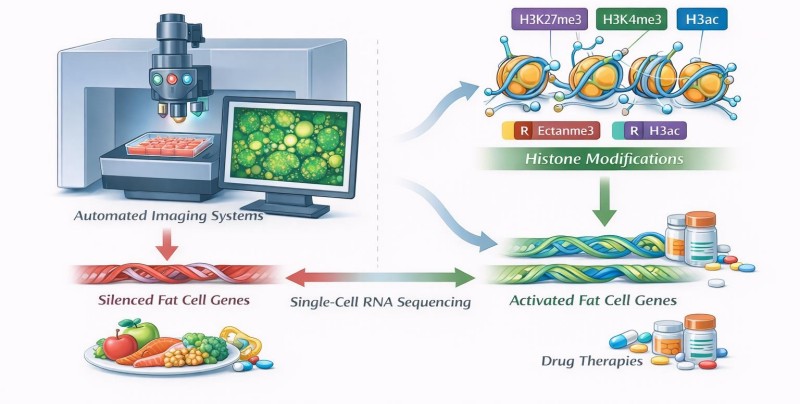
Evaluation of DNA methylation and histone modification patterns that influence how dietary factors and therapeutics "silence" or "activate" obesity-related genes.
- Metabolic Flux Analysis
Real-time assessment of cellular respiration and glycolytic rates in primary adipocyte cultures to measure the functional impact of nutrigenomic interventions.
Service Scope
Our expertise spans the entire preclinical nutrigenomic spectrum, including:
- Adipocyte Differentiation Studies
Assessing how compounds influence the transition of pre-adipocytes to mature lipid-storing cells.
- Browning/Thermogenesis Validation
Quantifying the upregulation of UCP1 and other markers of thermogenic activity in "beige" fat.
- Nutrient-Drug Interaction Modeling
Evaluating how specific dietary backgrounds (e.g., high-fat vs. restricted) alter the genomic efficacy of an anti-obesity therapeutic.
- Target Validation
Confirming that a therapeutic candidate successfully modulates the intended genetic target within metabolic networks.
Contact Protheragen Today to Define Your Project's Custom Preclinical Scope and Genomic Targets.
Workflow
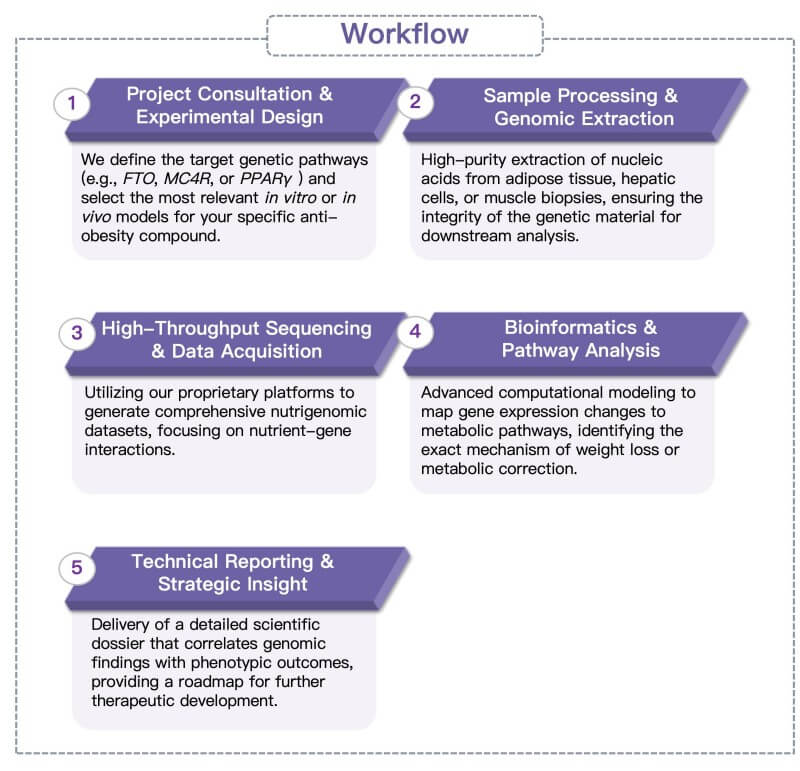
Protheragen follows a rigorous, five-stage preclinical workflow to ensure every project delivers actionable intelligence:
Fields of Application
The obesity nutrigenomic service is essential for:
- Pharma & Biotech: Refining the efficacy of GLP-1 agonists, dual/triple co-agonists, and novel small molecules.
- Nutraceutical Development: Validating the genomic claims of bioactive compounds and functional food ingredients.
- Metabolic Research: Investigating the underlying causes of "non-responders" to traditional metabolic therapies.
- Repurposing Studies: Identifying new metabolic indications for existing compounds through genomic screening.
Advantages
Protheragen stands at the forefront of metabolic research by integrating genomic precision with drug discovery needs.
- Precision Targeting
We move beyond basic weight metrics to provide a molecular-level understanding of why a compound works. By utilizing high-resolution spatial transcriptomics and single-cell sequencing, we pinpoint exactly how a molecule modulates metabolic pathways. This granular insight allows for the identification of off-target effects early, reducing the risk of late-stage clinical failure.
- Optimized Models
Our Preclinical Models are specifically refined to mirror human genetic variations in obesity, increasing the translational value of your data. We utilize CRISPR-engineered polygenic models that replicate the metabolic syndrome "milieu" seen in diverse patient populations. This ensures that the efficacy observed in the lab translates more reliably to human clinical outcomes.
- Expert Bioanalytics
Our team of PhD-level bioinformaticians provides deep-dive analysis into complex "omics" data, turning raw sequences into strategic assets. We don't just deliver heatmaps; we provide functional interpretation. By integrating proteomics, metabolomics, and genomics, we reconstruct the complete metabolic network, identifying key regulatory nodes that serve as the "smoking gun" for your compound's mechanism of action.
- Mechanistic Depth & Reliability
Our advanced methodologies are engineered to identify secondary metabolic pathways that typically remain invisible to standard phenotypic screening. By uncovering compensatory mechanisms and alternative metabolic shunts, we provide a comprehensive safety and efficacy profile, revealing critical biological insights that standard assays simply cannot detect.
Contact Our Specialist Team to Discuss Your Project
Publication Data
Title: Obesity and Nutrigenetics Testing: New Insights
Journal: Nutrients, 2024
DOI: https://doi.org/10.3390/nu16050607
Summary: This review explores the role of nutrigenetic testing in obesity prevention and treatment, amid obesity's status as a global chronic disease linked to 5 million annual deaths and a projected 1 billion cases by 2025. It examines obesity's multifactorial causes (genetics, environment, lifestyle), the science of precision nutrition and nutrigenetics, current evidence for nutrigenetic tests, ethical/regulatory gaps, and barriers to clinical application. The review concludes that while such tests show potential for personalized weight management, they cannot be used in isolation and require strengthened regulation, scientific evidence, and professional training to fulfill their promise.
Key Findings
- Obesity's Global Burden & Etiology: Obesity is a complex disease driven by genetic (monogenic/polygenic variants like SNPs), environmental (ultra-processed food consumption, sugary drinks), and cultural (collectivism vs. individualism) factors, with over 2 billion adults affected worldwide and strong links to CVD, diabetes, and cancer.
- Nutrigenetics Testing Basics: As a type of direct-to-consumer (DTC) genetic testing, nutrigenetic tests analyze SNPs (e.g., FTO, MC4R genes) to identify obesity predispositions and guide personalized dietary recommendations, with high public interest (66% of European participants willing to take the test).
- Mixed Clinical Evidence: Most studies report beneficial weight loss outcomes (e.g., reduced BMI/waist circumference in nutrigenetic-guided diet groups at 60–90 days and 18-month follow-ups), but a U.S. randomized controlled trial found no significant weight loss differences vs. standard diets; scientific validation of commercial tests remains limited.
- Critical Barriers: Major challenges include lack of standardized global regulation (variable rules across countries), insufficient clinical validity of test results (especially for polygenic obesity), and inadequate training for health professionals (e.g., nutritionists) to interpret tests.
- Professional & Ethical Stances: Leading bodies oppose isolated use of nutrigenetic tests for diet planning; ethical concerns include genetic data privacy, discrimination risks, and misleading consumer information.
- Path Forward: Advancing nutrigenetics requires three pillars—cross-country regulation, robust clinical trials for scientific evidence, and specialized training for health professionals—to integrate tests safely into obesity management.
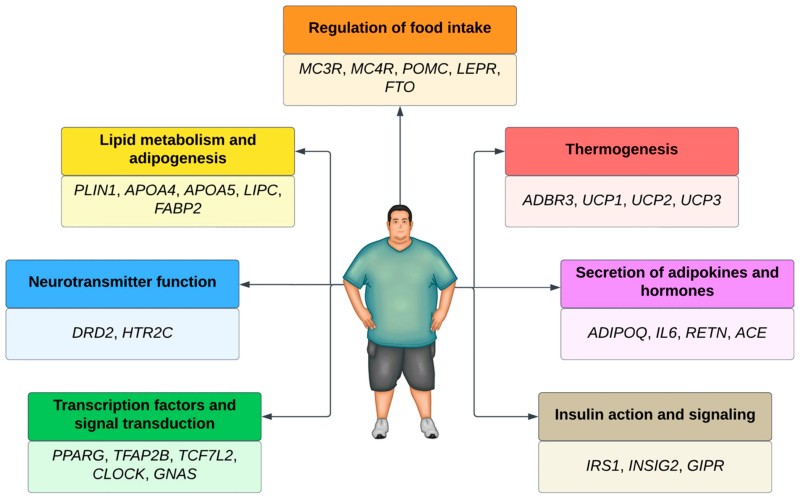 Fig.1 Obesity-associated genes & pathways: from energy intake to lipid metabolism. (Duarte, et al., 2024)
Customer Review
Strategic Insight into Molecular Drivers
"Working with Protheragen revolutionized how we viewed our lead compound. We were seeing weight loss in our models, but didn't understand the specific genetic drivers. Their nutrigenomic profiling revealed a secondary effect on mitochondrial biogenesis that we hadn't even considered. It changed our entire development strategy for the better."
Dr. E. E., Senior Director of Metabolic Research
Validation of Complex Mechanisms of Action
"The depth of the bioinformatics report provided by Protheragen was exceptional. They didn't just give us a list of upregulated genes; they mapped them to functional pathways that validated our mechanism of action. We are already planning our next three preclinical projects with their team."
Mr. J. Z., Biopharma Startup
Frequently Asked Questions
-
What types of samples are required for the nutrigenomic analysis?
We typically work with stabilized tissue biopsies or primary cell cultures provided by the client or generated in our facility.
-
Can you differentiate between subcutaneous and visceral adipose tissue responses?
Yes, our transcriptomic services can specifically compare the genetic signatures of different fat depots.
-
How do you handle large datasets generated by RNA-seq?
We provide full bioinformatics support, delivering interpreted results rather than just raw data.
-
Is this service applicable to non-alcoholic fatty liver disease (NAFLD) research?
Absolutely, as hepatic lipid metabolism is a core component of our nutrigenomic profiling.
-
Do you provide clinical diagnostic services?
No, Protheragen focuses exclusively on preclinical research and development services.
-
Can you help identify biomarkers for drug sensitivity?
Yes, we identify genetic markers that correlate with high or low response rates to your therapy.
-
What is the typical turnaround time?
Most projects are completed within 6 to 10 weeks, depending on the complexity of the sequencing and analysis.
-
Can your service support claims for functional foods?
Yes, our genomic data provides the mechanistic evidence needed to support metabolic health claims in preclinical stages.
Contact Us
Protheragen is dedicated to providing the high-resolution genetic data necessary to solve the global obesity crisis. Our expertise in nutrigenomics ensures that your anti-obesity therapeutic development is backed by rigorous science and clear molecular evidence.
Contact Protheragen for More Information and to Discuss Your Project
Reference
- Duarte, M.K.R.N.; et al. Obesity and Nutrigenetics Testing: New Insights. Nutrients. 2024, 16, 607. (CC BY 4.0)
All of our services and products are intended for preclinical research use only and cannot be used to diagnose, treat or manage patients.