

Oxidized Phospholipid Analysis Service
InquiryThe escalation of global obesity rates has shifted the focus of therapeutic intervention from simple caloric restriction to the mitigation of chronic low-grade inflammation. A primary driver of this metabolic dysfunction is the accumulation of oxidized phospholipids (OxPLs). These pro-inflammatory molecular species, often sequestered on apolipoprotein B (apoB) and lipoprotein(a), trigger macrophage activation and adipose tissue expansion.
Oxidized Phospholipid Analysis Service for Anti-Obesity Therapeutics
At Protheragen, we specialize in advanced analytical services designed to quantify OxPL levels and assess the efficacy of novel anti-obesity compounds in preclinical models. Our high-resolution analysis enables researchers to determine how therapeutic candidates modulate lipid peroxidation and systemic inflammatory signatures, providing critical data for drug candidate selection and optimization.
Core Technologies
Protheragen utilizes a suite of high-precision analytical platforms specifically engineered to detect, characterize, and quantify unstable oxidative lipid species within complex biological matrices.
- Targeted Ultra-high-performance Liquid Chromatography Coupled with Tandem Mass Spectrometry (UHPLC-MS/MS) Lipidomics
We employ UHPLC-MS/MS to provide definitive molecular identification. This system allows for the separation and absolute quantification of specific pro-inflammatory species, such as POVPC, PGPC, and SOVPC, which are critical indicators of metabolic stress.
- OxPL-apoB Immunoassay Platform
Our specialized assays utilize the E06 monoclonal antibody, which recognizes the phosphocholine headgroup of oxidized phospholipids. This allows us to specifically measure the "inflammatory burden" on apolipoprotein B-100 particles, a key biomarker for assessing the efficacy of anti-obesity therapeutics.
- Automated Lipid Extraction & Stabilization
To ensure the integrity of preclinical samples, we utilize an automated extraction workflow incorporating proprietary antioxidant stabilization buffers. This technology prevents ex vivo oxidation, ensuring that the detected OxPL levels accurately reflect the physiological state of the Animal Model.
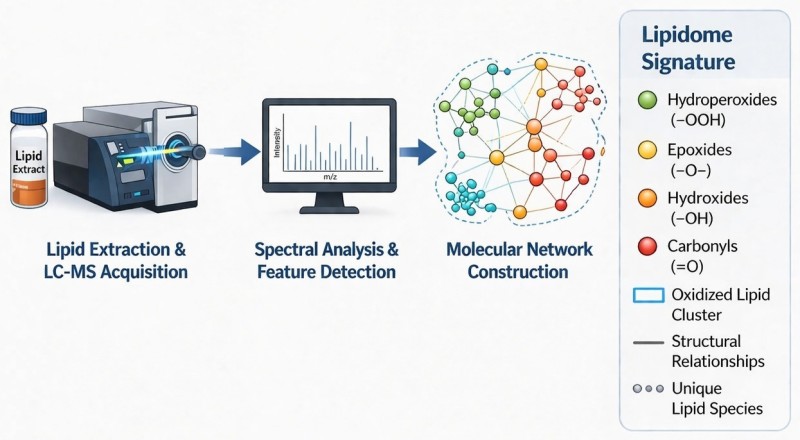
- High-Resolution Molecular Networking
By leveraging advanced bioinformatics, we map the structural relationships between different oxidized lipid species. This provides a comprehensive "lipidome signature" that helps researchers identify the specific metabolic pathways being modulated by their therapeutic candidates.
- Multiplexed Lipoprotein Fractionation
Our technology integrates size-exclusion chromatography with downstream analysis to determine the distribution of OxPLs across different lipoprotein fractions (VLDL, LDL, and HDL), providing insight into how a drug affects systemic lipid transport and clearance.
Contact Our Technical Team for a Detailed Platform Overview
Service Scope
Protheragen offers a broad spectrum of analysis tailored to metabolic research:
- Quantification of OxPL-apoB
Measuring the pro-inflammatory burden on LDL and VLDL particles.
- Adipose Tissue Lipidomics
Mapping oxidative stress within visceral and subcutaneous fat depots.
- Liver Lipid Profiling
Assessing the impact of anti-obesity drugs on hepatic steatosis and lipid peroxidation.
- E06 Monoclonal Antibody Assays
Utilizing specialized probes to detect the phosphocholine headgroup of oxidized phospholipids.
- Custom Method Development
Designing bespoke assays for unique animal models or novel therapeutic modalities like RNAi or monoclonal antibodies.
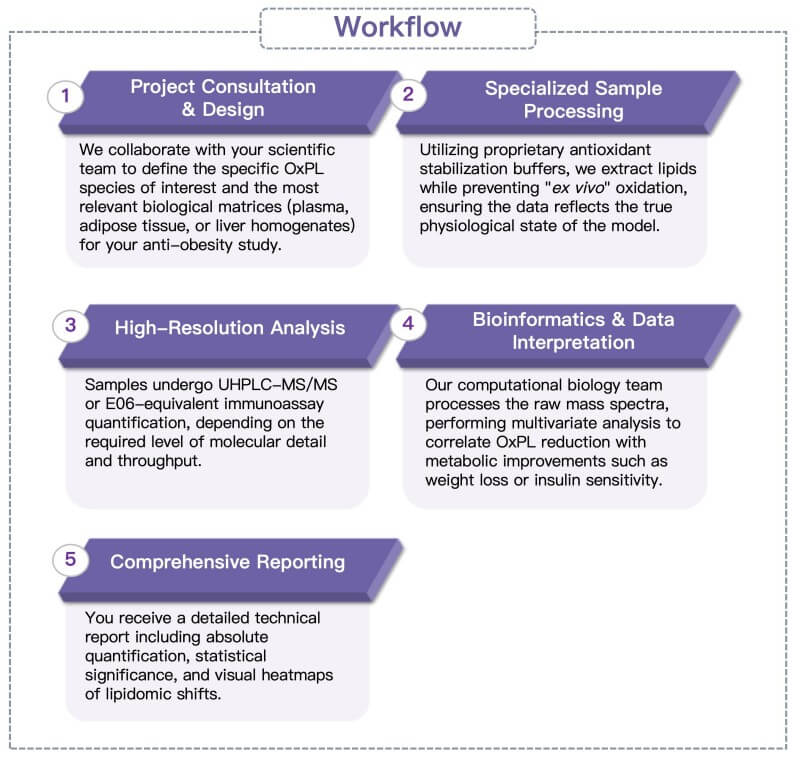
Workflow
Our streamlined service process is designed to integrate seamlessly with your existing preclinical pipeline, ensuring rapid turnaround without compromising scientific rigor.
Inquire About Our OxPL Analysis Packages Today
Fields of Application
Our oxidized phospholipid analysis service serves as a vital diagnostic bridge in preclinical research, offering deep mechanistic insights across a diverse range of metabolic and inflammatory disease models where lipid peroxidation plays a causative role in pathology.
- Anti-Obesity Drug Discovery: Validating the anti-inflammatory mechanism of action for GLP-1 Agonists and dual/triple co-agonists.
- NASH/MASH Research: Investigating the link between lipid oxidation and the progression of fatty liver disease.
- Cardiovascular Risk Assessment: Evaluating how weight-loss therapeutics concurrently reduce the risk of atherosclerosis.
- Nutraceutical Development: Screening natural compounds for their ability to inhibit systemic lipid peroxidation.
Advantages
Choosing Protheragen provides your drug development program with a competitive edge through precision and expertise. Our specialized focus on OxPL allows us to detect subtle therapeutic impacts that standard lipid panels miss.
- High-Sensitivity & Validated Efficacy
Our platforms detect picomolar concentrations of oxidized species, enabling the precise tracking of OxPL sequestration. This high-sensitivity analysis aligns with gold-standard benchmarks, validating your candidate's ability to reduce weight gain and restore metabolic health in HFD models.
- Specialized Preclinical Expertise
From DIO mice to non-human primates, we possess the specialized expertise to handle diverse matrix types, ensuring matrix-specific accuracy for your most complex preclinical studies.
- High-Throughput Scalability
Leveraging automated extraction protocols, we provide the speed and scalability required for high-throughput screening of large candidate libraries without compromising data integrity.
Inquire About Our OxPL Analysis Packages Today
Publication Data
Title: Innovative Therapeutic Approaches Targeting Obesity: Can Flavonoids Improve the Efficacy of Anti-Obesogenic Drugs?
Journal: Int. J. Mol. Sci., 2025
DOI: https://doi.org/10.3390/ijms262010142
Summary: This review focuses on innovative therapeutic strategies for obesity, exploring the potential of combining flavonoids (natural polyphenols) with anti-obesity drugs to enhance efficacy. It first outlines obesity's complex pathophysiology, including adipocyte differentiation disorders, chronic inflammation, oxidative stress, and epigenetic dysregulation. It then systematically summarizes the anti-adipogenic, anti-inflammatory, and antioxidant effects of flavonoids (e.g., EGCG, quercetin, naringin) in both in vitro and in vivo models—such as inhibiting adipocyte differentiation via downregulating PPAR-γ and SREBP1, and modulating epigenetic mechanisms like DNA methylation and histone modification. Additionally, the review details the mechanisms and limitations of current anti-obesity drugs (e.g., GLP-1 receptor agonists like Semaglutide, Tirzepatide, and the lipase inhibitor Orlistat), emphasizing that flavonoids can synergize with these drugs to improve weight loss, insulin resistance, and lipid profiles (e.g., hesperidin enhancing Orlistat's lipid-lowering effects, quercetin boosting Liraglutide's insulin-sensitizing role). Finally, it points out future directions, including addressing flavonoid low bioavailability via nano-delivery and validating drug-flavonoid combinations in large-scale clinical trials.
Key Findings
- Synergistic Anti-Obesity Effects: Combining rebaudioside A (Reb A, natural steviol glycoside) and neohesperidin dihydrochalcone (NHDC, flavonoid-derived sweetener) significantly reduced weight gain, food efficiency ratio, and fat mass in ob/ob mice.
- Lipid Metabolism Regulation: The combination suppressed adipogenesis- and lipogenesis-related gene expression in perirenal fat, lowered hepatic triglyceride levels, and downregulated hepatic lipogenic and pro-inflammatory genes. It also upregulated hepatic β-oxidation genes to enhance fat breakdown.
- Liver Protection: The combo reduced serum glutamic oxaloacetic transaminase (GOT) and glutamic pyruvic transaminase (GPT) levels, mitigating obesity-related liver damage.
- Gut Microbiota Modulation: It reshaped gut microbial structure—enriching beneficial taxa like Blautia and Parabacteroides while depleting harmful Faecalibaculum and Mucispirillum—supporting metabolic health.
- Therapeutic Potential: As low-calorie sweetener alternatives, Reb A and NHDC act via multi-targeted mechanisms (lipid regulation, inflammation suppression, microbiota balance) to address obesity-related metabolic disorders, offering a natural, effective strategy for weight management and metabolic disease mitigation.
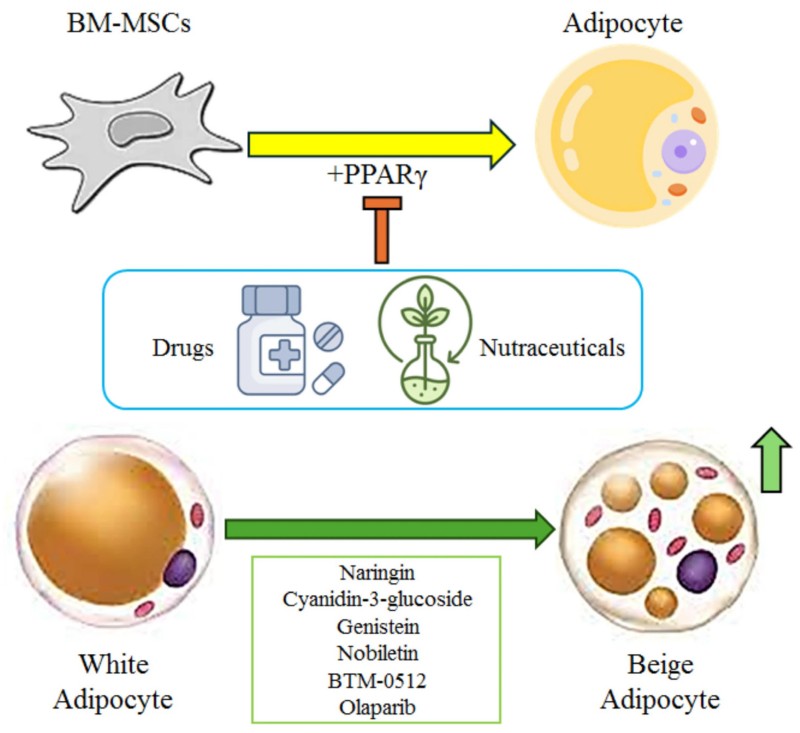 Fig.1 Flavonoid-nutraceutical + anti-obesity drug combinations inhibit adipocyte differentiation (via PPAR-γ downregulation) and induce beige adipogenesis for enhanced energy expenditure. (Scarpa, et al., 2025)
Customer Review
Validation of Anti-Inflammatory Mechanisms in DIO Models
"The team at Protheragen provided us with game-changing data for our lead anti-obesity candidate. Their ability to quantify OxPL-apoB in our DIO mouse model allowed us to prove a direct reduction in vascular inflammation that we couldn't see with standard assays. Their technical support during the data interpretation phase was exceptional."
Dr. E. J., Senior Director of Pharmacology
Precision Stabilization and Reliable Metabolic Profiling
"We were struggling with sample stability in our previous lipidomics efforts. Protheragen's stabilization protocols and high-resolution MS/MS gave us the clean, reproducible data needed for our internal stage-gate review. We are already planning our next series of liver-specific studies with them."
Dr. J. O., Metabolic Disease
Frequently Asked Questions
-
Why focus on OxPL instead of standard LDL-C in obesity studies?
Standard LDL-C measures the volume of carriers, whereas OxPL measures the "inflammatory cargo" that actually drives tissue damage and metabolic dysfunction.
-
What sample volume is required for a mouse study?
We have optimized our protocols for microsamples, typically requiring as little as 20-50 µL of plasma.
-
Can you distinguish between different types of oxidized phospholipids?
Yes, our MS/MS platform can differentiate between fragmented and oxygenated species, providing a granular view of the oxidative environment.
-
How do you prevent sample degradation during shipping?
We provide specialized collection kits with pre-added antioxidant cocktails to stabilize the OxPL species immediately.
-
Is this service applicable to non-GLP studies?
Yes, we specialize in discovery-phase and preclinical proof-of-concept studies.
-
Do you offer comparative analysis against standard reference drugs?
Absolutely. We can include benchmark arms in the analysis to show how your candidate performs against industry standards.
-
What is the typical turnaround time?
Standard projects are typically completed within 3 to 4 weeks from sample receipt.
-
Can you analyze OxPL in tissue biopsies?
Yes, we have validated protocols for liver, muscle, and adipose tissue homogenization and extraction.
-
How does Protheragen ensure data reproducibility?
We use internal standards for every run and maintain strict QC protocols with CVs (coefficient of variation) typically under 10%.
Contact Us
Protheragen provides the most comprehensive OxPL analysis service dedicated to the preclinical development of anti-obesity therapeutics. By combining state-of-the-art mass spectrometry with deep biological expertise, we help you uncover the inflammatory drivers of obesity and validate the efficacy of your therapeutic pipeline.
Contact Protheragen for More Information and to Discuss Your Project
Reference
- Scarpa, E.S.; et al. Innovative Therapeutic Approaches Targeting Obesity: Can Flavonoids Improve the Efficacy of Anti-Obesogenic Drugs? Int. J. Mol. Sci. 2025, 26, 10142. (CC BY 4.0)
All of our services and products are intended for preclinical research use only and cannot be used to diagnose, treat or manage patients.