

Adipose Storage and Dynamic Turnover Mechanism Analysis
InquiryThe global escalation of metabolic disorders has shifted the scientific focus from simple caloric restriction to the complex regulatory mechanisms of the adipocyte. Adipose tissue is no longer viewed merely as a passive energy reservoir but as a highly dynamic endocrine organ essential for systemic metabolic homeostasis. At Protheragen, we specialize in deciphering the "life cycle" of lipids—from initial uptake and de novo lipogenesis to storage in specialized lipid droplets and eventual mobilization via lipolysis or fatty acid oxidation (FAO).
Adipose Storage and Dynamic Turnover Mechanism Analysis for Anti-Obesity Therapeutics
Understanding the balance between adipocyte hypertrophy (cell size increase) and hyperplasia (differentiation of new adipocytes) is critical for developing anti-obesity therapeutics. Our analysis platforms explore the flux of fatty acids through these pathways, providing high-resolution data on how specific compounds or genetic interventions shift the needle from storage-dominant to turnover-dominant phenotypes. By mapping the dynamic turnover of triglycerides and the metabolic fate of various lipid species, Protheragen empowers researchers to identify potent targets for therapeutic intervention in obesity, insulin resistance, and hepatic steatosis.
Core Technologies
Protheragen utilizes a multi-omics approach integrated with advanced metabolic tracing to provide a granular view of adipose dynamics:
- Stable Isotope-Assisted Metabolic Flux Analysis (MFA)
Utilizing 13C and 2H labeled precursors to track the rate of lipid synthesis and degradation in real-time.
- High-Resolution Mass Spectrometry (HRMS)
Employs liquid chromatography tandem mass spectrometry (LC-MS/MS) and gas chromatography–mass spectrometry (GC–MS) platforms for precise quantification of complex lipid species, acyl-carnitines, and short-chain fatty acids.
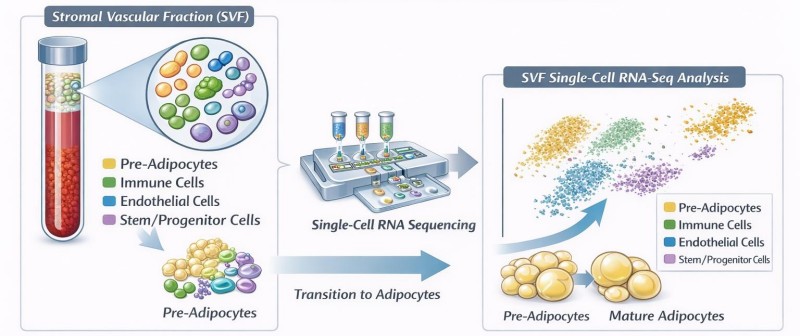
- Single-Cell Adipose Profiling
Analyzing the heterogeneity of the stromal vascular fraction (SVF) to understand the transition from pre-adipocytes to mature, functional adipocytes.
- Seahorse XF Extracellular Flux Analysis
Measuring mitochondrial respiration and glycolytic rates specifically within adipocyte populations to assess the bioenergetic cost of lipid turnover.
Service Scope
Our analysis covers a broad spectrum of metabolic indicators essential for obesity research:
Quantifying the rate at which long-chain fatty acids are shuttled into the mitochondria for β-oxidation.
Measuring the incorporation of carbon units into palmitate and subsequent elongation/desaturation steps.
A comprehensive screening of saturated, monounsaturated, and polyunsaturated fatty acids within adipose depots.
Evaluating the levels of acetate, propionate, and butyrate, which act as key signaling molecules between the gut microbiota and adipose tissue.
High-sensitivity detection of non-esterified fatty acids (NEFA) to assess lipolytic activity and systemic lipid spillover.
Monitoring the critical intermediates of lipid metabolism to identify bottlenecks in energy utilization or mitochondrial dysfunction.
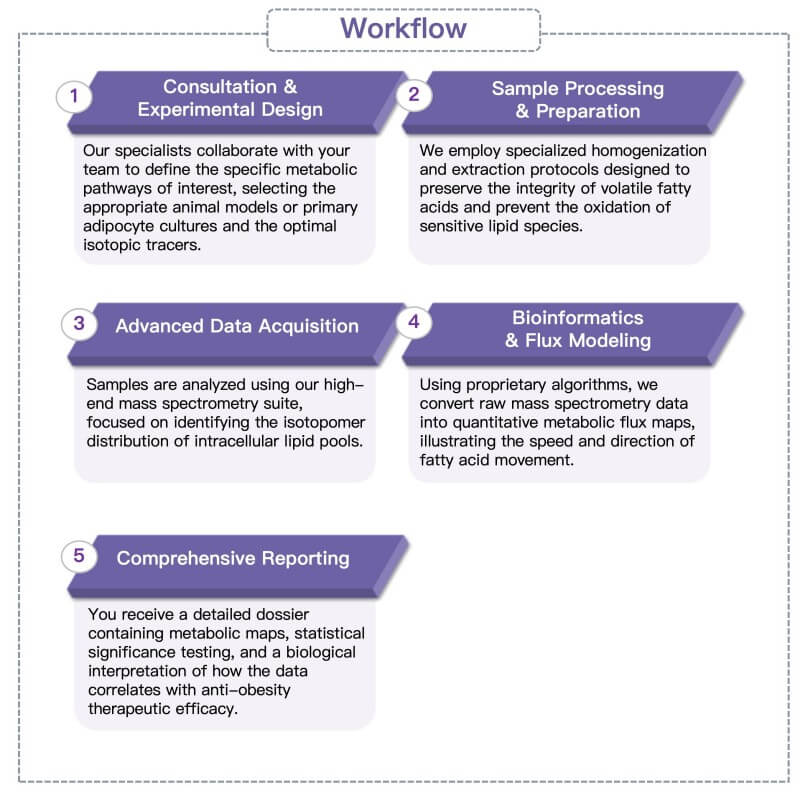
Workflow
Protheragen ensures a seamless transition from experimental design to actionable biological insights through a structured five-stage process:
Inquire Today to Design Your Custom Metabolic Study
Fields of Application
Protheragen's adipose storage and dynamic turnover mechanism analysis serves as a critical bridge between basic lipid research and the development of next-generation metabolic regulators by providing high-resolution quantification of pathway-specific activities in Preclinical Models.
- Anti-Obesity Drug Screening: Evaluating the impact of GLP-1 Agonists, thermogenic activators, or lipase inhibitors on lipid storage and mobilization.
- Metabolic Syndrome Research: Investigating the link between adipose dysfunction, systemic inflammation, and insulin desensitization.
- Nutraceutical Development: Testing the efficacy of dietary supplements or functional foods on fatty acid oxidation rates.
- NAFLD/NASH Studies: Understanding how adipose tissue lipolysis contributes to the delivery of fatty acids to the liver.
Advantages
Protheragen stands at the forefront of metabolic research by providing unparalleled depth in adipose tissue characterization. Our specialized focus on preclinical models allows for a "deep dive" into mechanism-of-action studies that clinical settings cannot replicate.
- Precision and Depth
While standard lipidomics provides a static "snapshot" of lipid concentrations, our flux analysis provides the "video." We track the dynamic movement of fatty acids through critical metabolic checkpoints, such as esterification and lipolysis. This kinetic resolution allows you to see not just the accumulation of lipids, but the rate of turnover, revealing how a drug truly recalibrates systemic energy balance.
- Depot-Specific Analysis
Adipose tissue is not a monolith. We provide sophisticated depot-specific analysis, differentiating between white (WAT), brown (BAT), and beige adipose tissues. This is critical for modern anti-obesity drug development, where a candidate may promote "browning" in subcutaneous WAT or enhance thermogenesis in BAT while leaving visceral fat unaffected.
- Integrated Solutions
Protheragen manages the entire technical pipeline—from specialized lipid extraction and stable isotope labeling to advanced mass spectrometry and final pathway modeling. This integrated approach ensures sample integrity is maintained at every step, providing a unified and high-fidelity dataset that is ready for interpretation.
Contact Our Specialist Team Today to Request a Detailed Project Quote and Technical Consultation.
Publication Data
Title: Adipose Tissue Dynamics: Cellular and Lipid Turnover in Health and Disease
Journal: Nutrients, 2023
DOI: https://doi.org/10.3390/nu15183968
Summary: Obesity, a global pandemic linked to type 2 diabetes and cardiovascular diseases, is driven by excessive adipose tissue accumulation—rooted in energy imbalance and disrupted adipose tissue (AT) dynamics, including cellular and lipid turnover. White adipose tissue (WAT), once viewed as passive storage, is now recognized as a complex metabolic/endocrine organ with distinct subtypes (white, brown, beige, pink) and depot-specific differences (visceral vWAT, subcutaneous scWAT) that influence function. This review synthesizes in vitro and in vivo research on AT turnover: lipid turnover (storage/release of triglycerides) is slow in humans (half-life 6–9 months) and impaired in obesity (reduced lipolysis, increased lipid age), while adipocyte turnover (proliferation/differentiation/apoptosis) is constant in adulthood (~10% annual replacement) with early-life programming of adipocyte number. Weight loss primarily reduces adipocyte size via decreased lipid uptake, not cell number, and exercise improves lipolysis. Understanding these dynamics is critical for developing targeted obesity interventions, though methodological constraints and depot-specific variability remain key research gaps.
Key Findings
- AT Heterogeneity Shapes Function: WAT subtypes (white, brown, beige, pink) exhibit plasticity (e.g., white-to-brown transdifferentiation), and depots (vWAT vs. scWAT) differ metabolically—vWAT impacts portal blood directly, while scWAT dominates energy storage, with distinct lipid/adipocyte turnover patterns.
- Lipid Turnover Is Impaired in Obesity: Lean individuals have scWAT lipid half-lives of 6-9 months; obesity reduces triglyceride removal (lipolysis), increasing scWAT lipid age by ~0.6 years vs. lean individuals. vWAT lipid turnover remains normal until severe obesity, but central obesity boosts its lipid uptake.
- Adipocyte Number Is Programmed Early: Adipocyte number stabilizes in adulthood, with ~10% replaced annually across BMI categories. Obesity-related hypercellularity develops in childhood/adolescence, not adulthood, and persists post-weight loss.
- Weight Loss Relies on Lipid Uptake Reduction: Caloric restriction or bariatric surgery reduces adipocyte size via decreased lipid uptake (the main weight-loss driver), not cell number. Sustained weight loss correlates with increased lipid removal rate.
- Metabolic Health Ties to AT Dynamics: "Unhealthy" obesity links to low scWAT lipid turnover (independent of adipocyte size) and ectopic fat deposition. Familial combined hyperlipidaemia (FCHL) mirrors obesity's lipid turnover defects, even in non-obese individuals, driving insulin resistance.
- Exercise Modulates AT Remodelling: Exercise improves scWAT lipolysis, reduces new adipocyte formation in rodents, and aids long-term weight maintenance—especially useful for individuals with "younger" lipid age (prone to weight regain).
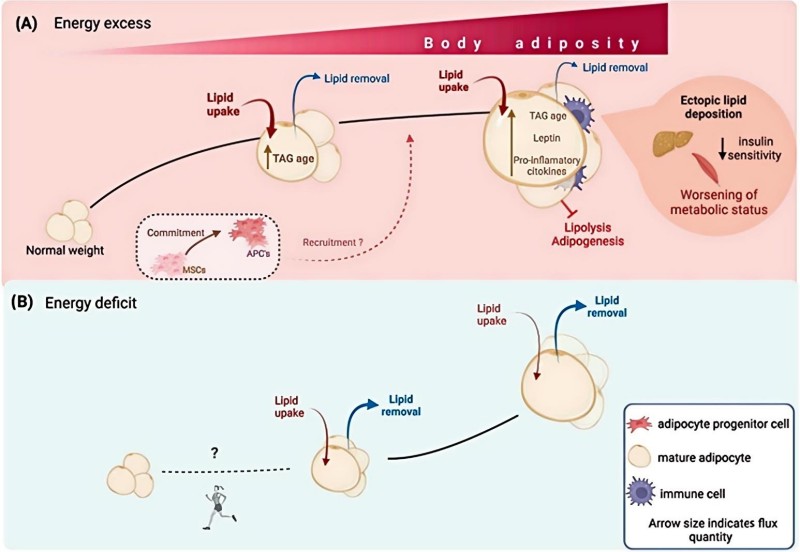 Fig.1 How energy balance shapes adipose tissue lipid/cellular turnover and metabolic health. (Palacios-Marin, et al., 2023)
Customer Review
Uncovering Hidden Mechanisms: A Breakthrough in Beige Fat Activation
"Working with Protheragen transformed our understanding of our lead compound's mechanism. We initially thought it was simply inhibiting lipogenesis, but Protheragen's flux analysis revealed a significant increase in mitochondrial fatty acid oxidation and beige fat activation. Their technical team was instrumental in refining our dosing strategy for the next phase of our preclinical trials."
Dr. A. Z., Biotech Firm
Precision Profiling: Identifying Metabolic Bottlenecks in Drug Development
"The precision Protheragen provides in acyl-carnitine profiling is unmatched. They helped us identify a specific bottleneck in lipid processing that we had missed using standard assays. We plan to utilize their full adipose turnover suite for all our upcoming obesity programs."
Dr. P. T., Pharmacology Division
Frequently Asked Questions
-
How does flux analysis differ from traditional lipidomics?
Traditional lipidomics measures static concentrations; flux analysis measures the rate of production and consumption, which is more indicative of metabolic health.
-
Can you analyze the differences between subcutaneous and visceral fat?
Yes, our protocols are optimized for the unique structural and metabolic profiles of different adipose depots.
-
Do you provide services for primary adipocyte cultures?
Absolutely. We can perform flux analysis on 3T3-L1 cells or primary human/murine pre-adipocytes.
-
How do you ensure the stability of volatile fatty acids?
We utilize immediate cold-chain processing and specialized derivatization techniques to lock in volatile components.
-
Can this service help identify off-target effects of my lead compound?
Yes, by mapping global lipid metabolism, we can see if a compound intended for FAO also inadvertently affects de novo synthesis.
-
What is the typical turnaround time?
Most projects are completed within 4-6 weeks, depending on the complexity of the metabolic modeling required.
-
Is isotope labeling mandatory?
While not mandatory for profiling, it is essential for dynamic turnover and flux analysis.
-
How do you handle data normalization in obese models?
We offer multiple normalization strategies, including DNA content, protein concentration, or adipocyte cell count.
-
Can I integrate this data with transcriptomics?
Yes, we provide multi-omics integration services to correlate metabolic flux with gene expression patterns.
Contact Us
Protheragen provides the essential analytical bridge between theoretical drug design and proven metabolic impact. Our specialized adipose storage and dynamic turnover mechanism analysis offers the clarity needed to navigate the complexities of lipid metabolism and bring effective anti-obesity therapeutics to light.
Contact Protheragen for More Information and to Discuss Your Project.
Reference
- Palacios-Marin, I.; et al. Adipose Tissue Dynamics: Cellular and Lipid Turnover in Health and Disease. Nutrients. 2023, 15, 3968. (CC BY 4.0)
All of our services and products are intended for preclinical research use only and cannot be used to diagnose, treat or manage patients.