
Fatty Acid Profile Analysis Service
InquiryIn the rapidly evolving landscape of metabolic disease research, the fatty acid (FA) profile serves as a critical indicator of metabolic health and a primary endpoint for evaluating the efficacy of anti-obesity drug candidates.
Fatty Acid Profile Analysis Service for Anti-Obesity Therapeutics
Protheragen provides a specialized fatty acid profile analysis service tailored specifically for preclinical drug development. Our service offers a granular view of lipid metabolism, enabling researchers to quantify how novel therapeutics influence the composition of saturated fatty acids (SFAs), monounsaturated fatty acids (MUFAs), and polyunsaturated fatty acids (PUFAs).
Core Technologies
Our analytical platform integrates high-resolution mass spectrometry (HRMS) with advanced chromatographic separation to ensure the highest degree of sensitivity and specificity for complex biological matrices.
- Gas Chromatography-Tandem Mass Spectrometry (GC-MS/MS)
The gold standard for fatty acid methyl ester (FAME) analysis. This platform provides exceptional resolution for identifying isomeric species and quantifying long-chain fatty acids (C14–C24) with high precision.
- Liquid Chromatography-Tandem Mass Spectrometry (LC-MS/MS)
Utilized for non-volatile or thermally unstable fatty acids, including short-chain fatty acids (SCFAs) and specialized pro-resolving mediators (SPMs). This technology excels in analyzing free fatty acids (FFAs) without the need for extensive derivatization.
- Targeted Lipidomics Panels
We employ multiple reaction monitoring (MRM) modes on triple quadrupole systems to achieve absolute quantification of predefined lipid signatures, ensuring high-fidelity data that supports critical preclinical milestones and mechanistic validation.
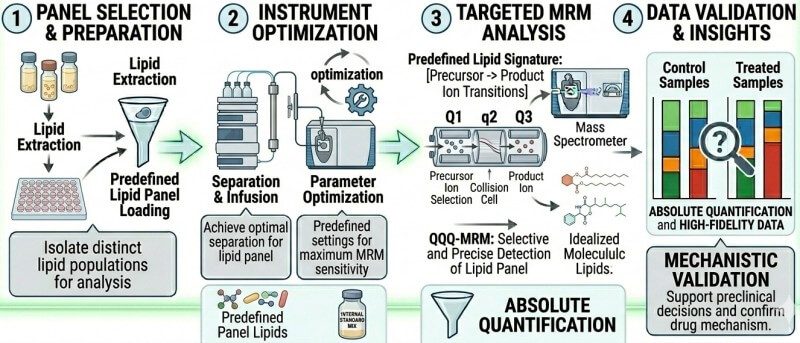
- High-Resolution Orbitrap Technology
For discovery-based studies, our Orbitrap systems provide untargeted profiling to uncover novel lipid biomarkers or unexpected metabolic shifts induced by therapeutic intervention.
Service Scope
- Saturated Fatty Acids (SFA)
Monitoring levels of C14:0, C16:0 (palmitic), and C18:0 (stearic) acid as indicators of lipotoxicity and inflammation.
- Monounsaturated Fatty Acids (MUFA)
Quantifying C16:1 and C18:1 (oleic) acid to assess SCD1 enzyme activity and thermogenic potential.
- Polyunsaturated Fatty Acids (PUFA)
Detailed profiling of omega-3 (EPA, DHA, ALA) and omega-6 (LA, AA) ratios to evaluate the anti-inflammatory properties of therapeutics.
- Short-Chain Fatty Acids (SCFA)
Analysis of acetate, propionate, and butyrate in fecal or portal blood samples to study the role of the gut microbiome in obesity.
- Enzymatic Activity Indices
Calculating product-to-precursor ratios to indirectly measure the activity of desaturases and elongases involved in lipid synthesis.
Contact Our Team for More Information and to Discuss Your Project
Workflow
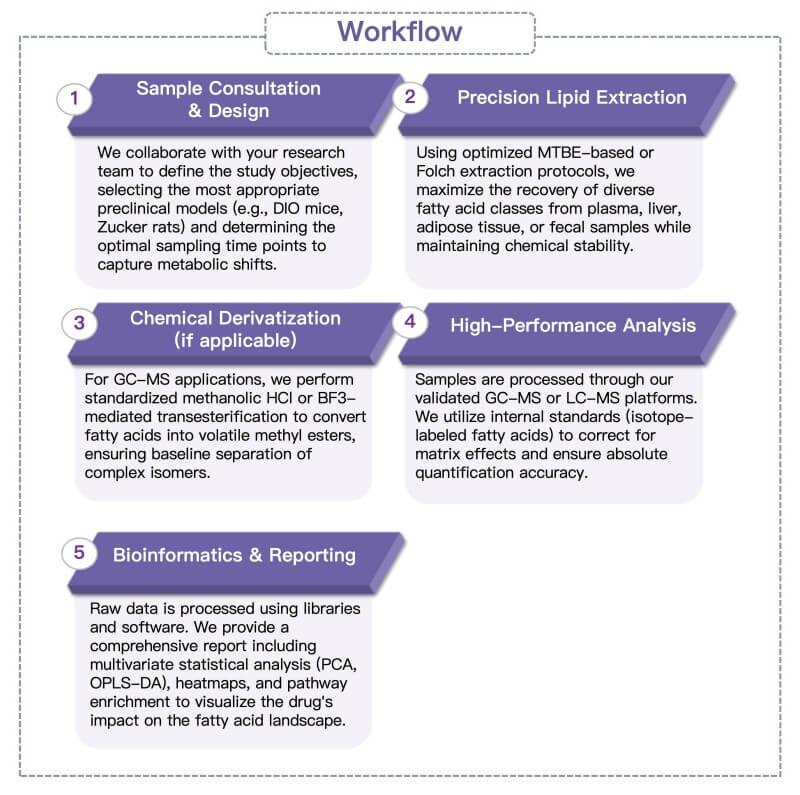
Protheragen systems follows a rigorous, standardized workflow to ensure that every preclinical sample yields actionable, high-quality data.
Fields of Application
Our fatty acid profile analysis service is designed to address the complex metabolic challenges inherent in diverse therapeutic strategies, providing the high-resolution data necessary to evaluate drug impact across various physiological systems.
- GLP-1/GIP Agonist Research: Evaluating the downstream effects of incretin mimetics on systemic lipid metabolism and adipose tissue remodeling.
- Thermogenesis & BAT Activation: Identifying specific fatty acid signatures (e.g., MCFA increases) associated with brown adipose tissue thermogenesis.
- NAFLD/MASH Drug Development: Quantifying hepatic lipid accumulation and the reduction of lipotoxic saturated fats following treatment.
- Metabolic Syndrome Biomarkers: Discovering novel fatty acid ratios that correlate with improved insulin sensitivity and reduced cardiovascular risk in obese models.
- Nutraceutical & Functional Food Testing: Assessing how dietary fatty acids or supplements modulate the endogenous lipidome.
Advantages
Protheragen systems distinguishes itself through a combination of technical precision and therapeutic specialization.
- Preclinical Specialization
Our entire facility and workflow are optimized for Animal Model research, ensuring that tissue-specific profiles (e.g., brown adipose vs. white adipose) are captured with biological relevance.
- Exceptional Sensitivity
In lipidomics, the most critical signaling molecules often exist in the "noise." Our platforms are engineered to break through that barrier. By achieving detection limits at the picogram (pg) level, we capture low-abundance signaling lipids—such as specific oxylipins or specialized pro-resolving mediators—that standard assays routinely overlook.
- Fast Turnaround
The "fail fast, learn fast" mantra of drug discovery requires a data partner that moves at the speed of innovation. We have streamlined our sample preparation and bioinformatic pipelines specifically for preclinical timelines.
- Precision and Scalability
While our platform is specialized for the unique demands of preclinical research, our rigorous data standards and meticulous documentation ensure that every result is robust, reproducible, and ready to support high-stakes decision-making throughout your development pipeline.
Consult with Our Specialists to Optimize Your Study Workflow
Publication Data
Title: Fatty Acid Profile and Desaturase Activity in Obesity: Roles, Mechanisms, and Clinical Relevance
Journal: Metabolites, 2025
DOI: https://doi.org/10.3390/metabo15090595
Summary: This review systematically summarizes the role of fatty acid (FA) profiles and desaturase activity (SCD1, D5D, D6D) in obesity, its metabolic complications (e.g., insulin resistance, NAFLD, type 2 diabetes), and potential interventions. By integrating 117 studies (clinical, cross-sectional, animal, and in vitro), it reveals that obesity—even in childhood—is marked by unfavorable shifts in FA composition (elevated SFAs/MUFAs, reduced n-3 PUFAs) and altered desaturase function (increased SCD1/D6D, decreased D5D). These changes drive chronic inflammation, lipogenesis, and metabolic dysregulation, while genetic variations (e.g., FADS1/FADS2 polymorphisms) further modify lipid metabolism and obesity susceptibility. Nutritional adjustments (omega-3 supplementation, L-carnitine), physical activity, and bariatric surgery can reverse these abnormalities, highlighting FA profiles and desaturases as both metabolic biomarkers and therapeutic targets for personalized obesity management.
Key Findings
- Core Dysregulation in Obesity: Obesity (even in children) disrupts fatty acid (FA) balance—raising saturated FAs (SFAs) and n-6 polyunsaturated FAs (PUFAs) while lowering n-3 PUFAs (EPA/DHA). It also alters desaturase activity: SCD1 and D6D become more active, D5D less so, linking to insulin resistance and metabolic risks.
- Genetic Influence: Genes like FADS1, FADS2, and SCD1 affect lipid metabolism. Variations (e.g., FADS1 polymorphisms) reduce n-3 PUFA synthesis, increasing type 2 diabetes and dyslipidemia risk, with ethnic differences in genetic impacts.
- Tissue-Specific Differences: Visceral fat has more SFAs and fewer monounsaturated FAs (MUFAs) than subcutaneous fat, worsening metabolism. FA profiles in erythrocytes, liver, and muscles also tie to insulin sensitivity, independent of diet.
- Comorbidity Links: Obesity-related diseases (type 2 diabetes, NAFLD, cardiovascular disease) share the same lipid/desaturase changes—higher SCD1/D6D, lower D5D, elevated SFAs/n-6 PUFAs, and depleted n-3 PUFAs.
- Effective Interventions:
- Nutrition: Supplement with omega-3s, L-carnitine, or crocin; limit SFAs and added sugars; low-carb high-fat (LCHF) diets with n-3/n-9 FAs improve lipid profiles.
- Lifestyle: Regular exercise lowers SCD1/D6D activity, boosts D5D, and reduces pro-inflammatory FAs.
- Medical: Bariatric surgery increases MUFAs/n-3 PUFAs and D5D activity, though some patients may need post-op PUFA supplements.
- Biomarker & Therapeutic Potential: FA profiles (e.g., n-6/n-3 ratio) and desaturase activity are reliable metabolic health markers. Targeting these pathways enables personalized obesity treatment.
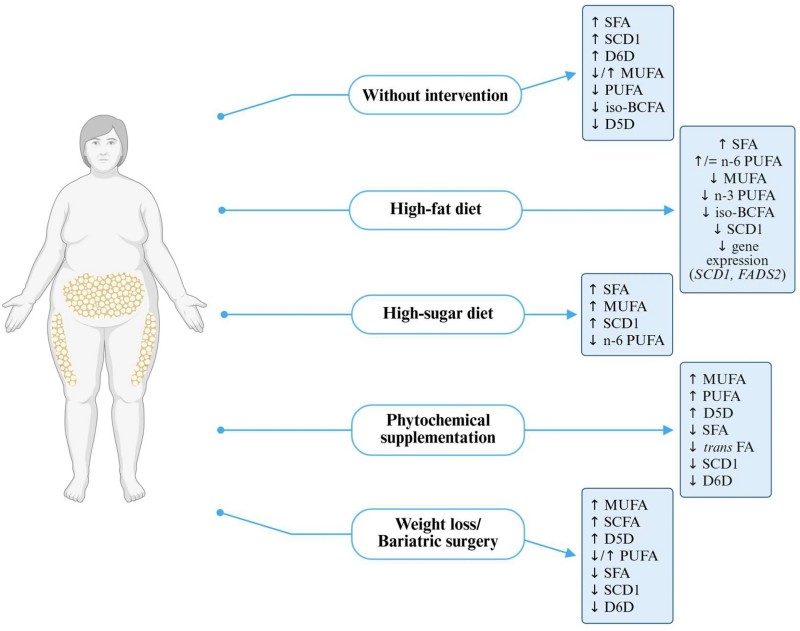 Fig.1 How no intervention, unhealthy diets, phytochemical supplements, and bariatric surgery alter fatty acid and desaturase profiles in obesity (Banaszak, et al., 2025)
Customer Review
Validating Candidate Selection via Adipose Remodeling
"Working with Protheragen systems was a turning point for our lead optimization program. Their ability to quantify subtle shifts in the omega-3/omega-6 ratio in our DIO mouse models provided the definitive evidence we needed to select our primary candidate. The level of detail in their bioinformatics report was exceptional, allowing us to map our drug's effect directly to SCD1 inhibition. We look forward to our next collaboration."
Dr. M. R., Emerging Biotech
Reliability in High-Stakes Preclinical Dossier Preparation
"The precision of the fatty acid profiling at Nuviox is unmatched. We had previously struggled with inconsistent data from other providers, but their standardized extraction and GC-MS workflow delivered the reproducibility our preclinical dossier required. Their expertise in the obesity field meant they didn't just give us numbers; they gave us insights into how our compound was actually remodeling adipose tissue. They are a true extension of our internal R&D team."
Dr. S. S., Pharmaceutical Development
Frequently Asked Questions
-
What sample types can Protheragen systems process?
We primarily process plasma, serum, liver tissue, adipose tissue (WAT/BAT), and fecal matter from common preclinical models like mice, rats, and non-human primates.
-
Can you distinguish between cis and trans fatty acid isomers?
Yes, our GC-MS platform is specifically configured to provide baseline separation of cis/trans isomers, which is critical for assessing metabolic health.
-
Do you provide absolute or relative quantification?
We offer both. For most drug efficacy studies, we recommend absolute quantification using isotope-labeled internal standards to ensure data robustness across different batches.
-
How do you ensure the stability of fatty acids during transport?
We provide detailed sample collection and shipping protocols involving flash-freezing in liquid nitrogen and shipment on dry ice to prevent lipid oxidation.
-
What is the minimum sample volume required for plasma analysis?
We can perform a comprehensive fatty acid profile on as little as 20–50 µL of plasma, making our service ideal for longitudinal studies in small animal models.
-
Can your service help calculate desaturase activity?
Absolutely. We provide calculated indices (e.g., C16:1n7/C16:0) as markers for SCD1 activity, which is a key target in anti-obesity research.
-
Is this service suitable for evaluating microbiome-related effects?
Yes, our SCFA analysis panel is specifically designed to quantify the metabolic output of the gut microbiota in obesity studies.
-
How do I interpret the complex lipidomics data provided?
Our reports include expert biological interpretation and visualization tools like PCA plots and metabolic pathway maps to help you pinpoint the drug's mechanism of action.
-
Can you handle large-scale screening projects?
Our high-throughput workflow is designed to handle hundreds of samples per week, ensuring your large-scale preclinical trials stay on schedule.
Contact Us
Protheragen is your dedicated partner in uncovering the metabolic complexities of obesity. Our fatty acid profile analysis service provides the depth of insight required to transform promising compounds into therapeutic breakthroughs. By combining cutting-edge mass spectrometry with deep biological expertise, we help you navigate the preclinical landscape with confidence.
Contact Protheragen for More Information and to Discuss Your Project
Reference
- Banaszak, M.; et al. Fatty Acid Profile and Desaturase Activity in Obesity: Roles, Mechanisms, and Clinical Relevance. Metabolites. 2025, 15, 595. (CC BY 4.0)
All of our services and products are intended for preclinical research use only and cannot be used to diagnose, treat or manage patients.