

Arachidonic Acid Profile Analysis Service
InquiryThe global surge in obesity and its associated cardiometabolic comorbidities has necessitated the development of next-generation therapeutics that go beyond simple caloric restriction. Emerging preclinical research has identified arachidonic acid (AA) metabolism as a central node linking nutrient excess, chronic low-grade inflammation, and metabolic dysfunction. As an omega-6 polyunsaturated fatty acid (PUFA) predominantly esterified in cell membrane phospholipids, AA serves as the precursor for a vast array of bioactive eicosanoids—including prostaglandins, leukotrienes, and epoxyeicosatrienoic acids—via the COX, LOX, and CYP450 enzymatic pathways.
Precision AA Profile Analysis for Anti-Obesity Drug Discovery
At Protheragen, we recognize that modulating the AA cascade is a pivotal strategy for enhancing the efficacy of anti-obesity agents, such as GLP-1 receptor agonists and multi-incretin mimetics. Our AA profile analysis service is specifically designed for preclinical researchers, providing high-resolution lipidomic snapshots that reveal how candidate drugs influence lipid homeostasis, adipose tissue inflammation, and systemic metabolic health. By quantifying both free AA and its downstream metabolites, Protheragen empowers biopharmaceutical partners to validate mechanisms of action and identify predictive biomarkers early in the discovery pipeline.
Core Technologies
Protheragen leverages a proprietary analytical suite tailored for the complex lipid environment of metabolic research. Our platform integrates:
- Ultra Performance Liquid Chromatography-Tandem Mass Spectrometry (UPLC-MS/MS) Lipidomics
Utilizing UPLC coupled with triple-quadrupole mass spectrometry to achieve femtomolar sensitivity for AA and its transient eicosanoid derivatives.
- Targeted Eicosanoid Panels
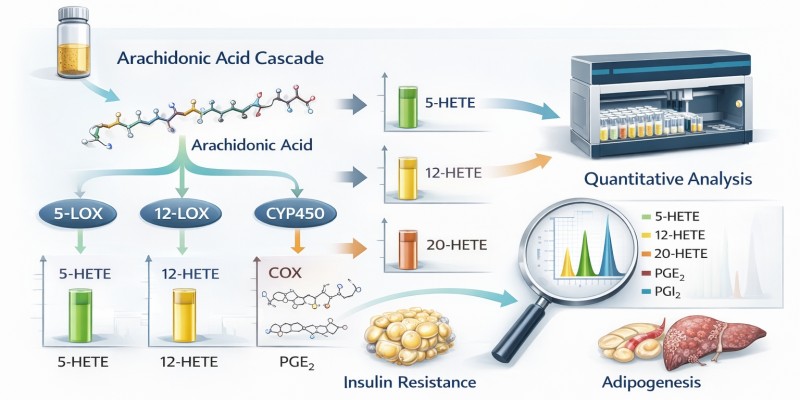
Specialized assays focusing on the "AA cascade," including quantitative analysis of 5-HETE, 12-HETE, 20-HETE, and various prostaglandins (PGE2, PGI2), which are critical mediators of insulin resistance and adipogenesis.
- Membrane Lipidomic Mapping
Advanced techniques to distinguish between free AA and AA incorporated into specific phospholipid classes (e.g., PC, PE, and PI), providing insights into phospholipase A2 (PLA2) activity and membrane fluidity changes.
- Bioinformatic Flux Analysis
Proprietary algorithms that model the flux through COX, LOX, and CYP450 pathways, allowing researchers to see which metabolic "branches" are being diverted by their therapeutic interventions.
Service Scope
Protheragen provides extensive coverage of the AA lipidome across various preclinical models:
- Tissue-Specific Profiling
Analysis of AA and its metabolites in the hypothalamus (satiety centers), liver (MASLD/MASH models), and skeletal muscle.
- Adipose Tissue Characterization
Evaluating the "whitening" or "browning" of adipose tissue by monitoring AA-derived specialized pro-resolving mediators (SPMs).
- Drug-Nutrient Interaction Studies
Assessing how different dietary backgrounds (high-fat vs. restricted) influence the lipidomic response to anti-obesity therapeutics.
Identifying AA-containing phosphatidylcholines (PCs) as early indicators of metabolic improvement or potential hepatotoxicity.
Contact Us to Customize a Comprehensive Lipidomic Panel for Your Research Needs.
Workflow
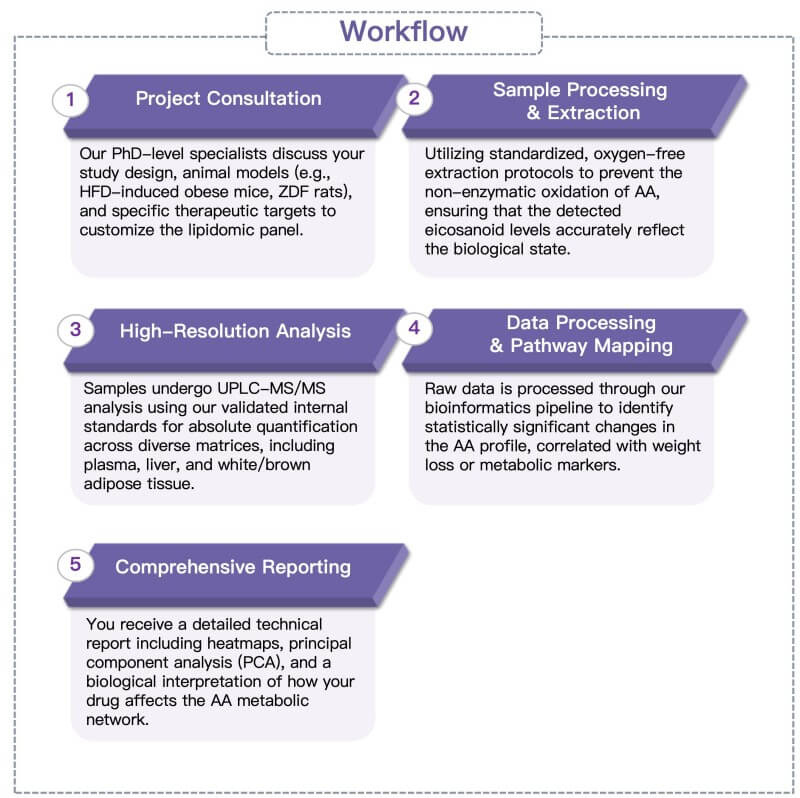
Our service process is streamlined to ensure rapid turnaround times while maintaining the uncompromising analytical rigor and data integrity essential for preclinical discovery.
Fields of Application
The versatility of our AA profiling platform allows preclinical researchers to decode the complex lipid signaling networks across a diverse array of metabolic and inflammatory disease models.
- Incretin Mimetic Optimization: Investigating how GLP-1/GIP/Glucagon tri-agonists realign the AA profile to reduce systemic inflammation.
- Metabolic Liver Disease (MASLD/MASH): Evaluating the resolution of liver fibrosis through the modulation of the AA-COX pathway.
- Adipocyte Biology: Studying the inhibition of adipogenesis and the enhancement of lipid oxidation via AA-derived signaling molecules.
- Cardiovascular-Metabolic (CKM) Syndrome: Monitoring AA-linked biomarkers of vascular health in Obesity Models.
Advantages
Choosing Protheragen means partnering with a leader in metabolic lipidomics. Our advantages include:
- Unrivaled Specificity
While standard platforms often provide aggregate data, Protheragen excels in the fine-grain resolution of isomeric eicosanoids. By distinguishing between structurally similar but functionally distinct lipid species, we eliminate the "noise" of overlapping pathways. This precision allows you to pinpoint exact pathway-specific modulations, ensuring that your drug's mechanism of action is accurately mapped rather than inferred.
- Preclinical Expertise
Animal models present unique matrix challenges—from limited sample volumes to high metabolic variability. Unlike clinical labs that "retrofit" their processes, our entire workflow is engineered for the preclinical phase. We utilize specialized extraction protocols and stabilization techniques optimized specifically for animal tissues and plasma, ensuring that your raw data is as robust as your hypothesis.
- Validated Accuracy
Our platform does more than describe a current state; it predicts future outcomes. By benchmarking our AA profiling against established longitudinal data, we have demonstrated the ability to identify early bio-signatures of metabolic improvement. We can detect shifts in insulin sensitivity and adipose tissue inflammation well before they manifest as phenotypic changes like weight loss, effectively shortening your "time-to-insight."
- Integrated Multi-Omics
Lipids do not act in a vacuum. We bridge the gap between metabolite flux and genetic drivers by correlating lipidomic shifts with the gene expression of key synthetic enzymes (such as FADS1/2) and their downstream receptors. This multi-layered approach provides a "systems biology" view of the metabolic landscape, allowing you to see not just what is changing, but how the underlying biological machinery is responding.
Discuss Your Preclinical Project with Us Today to Accelerate Your Metabolic Discovery.
Publication Data
Title: Distinct Gut Microbiota and Arachidonic Acid Metabolism in Obesity-Prone and Obesity-Resistant Mice with a High-Fat Diet
Journal: Nutrients, 2024
DOI: https://doi.org/10.3390/nu16111579
Summary: This study explores individual variations in obesity susceptibility by inducing obesity-prone (HFD-P) and obesity-resistant (HFD-R) phenotypes in C57BL/6J mice via a 16-week high-fat diet. Using 16S rRNA sequencing and widely targeted metabolomics, researchers compared gut microbiota composition, metabolic profiles, and physiological indicators between the two groups. Results show HFD-R mice have lower body/liver weight, less adipose accumulation, and reduced pro-inflammatory cytokines. Distinct gut microbiota signatures and altered AA metabolism were identified as core factors linked to obesity resistance, with strong correlations between differential bacteria, AA metabolites, and obesity-related traits. The findings offer new insights for targeted obesity prevention and treatment.
Key Findings
- Physiological Differences: HFD-R mice exhibit significantly lower final body weight (≈38g vs. HFD-P's 1.3x higher), reduced white adipose tissue accumulation, smaller liver weight, and lower levels of pro-inflammatory cytokines (TNF-α, IL-1β, IL-6) vs. HFD-P mice; anti-inflammatory cytokine IL-10 is higher in HFD-R mice.
- Gut Microbiota Signatures: HFD-P mice are enriched in genera Allobaculumbiota, SMB53, Desulfovibrio, and Clostridium (positively correlated with obesity traits), while HFD-R mice have more Streptococcus, Odoribacter, and Leuconostoc (negatively correlated with obesity). HFD-R mice also show higher gut microbiota α-diversity (Chao1, Shannon indexes) and distinct β-diversity vs. HFD-P.
- Metabolic Profiling: 166 differential metabolites are identified, with fatty acyls, glycerophospholipids, and amino acid derivatives as the most abundant. AA metabolism is the top enriched KEGG pathway, and all 11 key AA metabolites (e.g., PGF2α, LTB4, EETs, HETEs) are significantly downregulated in HFD-R mice.
- Strong Correlations: Differential gut bacteria, obesity-related parameters (body weight, adipose mass, cytokines), and AA metabolites exhibit robust correlations (r>0.6); pathogenic bacteria in HFD-P mice correlate positively with AA metabolites and obesity traits, while beneficial bacteria in HFD-R mice correlate negatively.
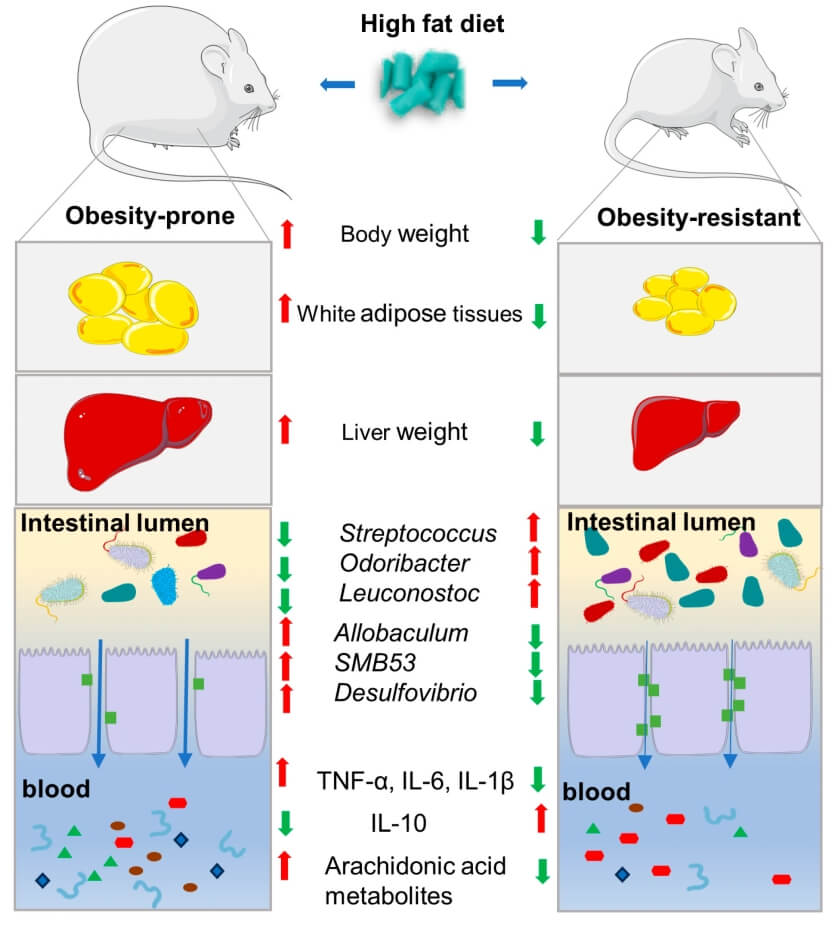 Fig.1 Key differences in gut microbiota, inflammatory cytokines, and AA metabolites between HFD-induced obesity-prone and obesity-resistant Mice. (Zhang, et al., 2024)
Customer Review
Mechanistic Validation of Multi-Incretin Candidates via Precision Lipidomics
"Working with Protheragen has transformed our approach to obesity research. Their ability to quantify the subtle shifts in the AA cascade gave us the mechanistic proof we needed to move our lead co-agonist candidate forward. The data clarity was exceptional, and the PhD-level support made interpreting the complex lipidomics results seamless."
Dr. A. V., Senior Principal Scientist
Uncovering Tissue-Specific Metabolic Flux in MASLD and Adipose Models
"We were struggling to understand why our compound showed anti-inflammatory effects in the liver but not in adipose tissue. Protheragen's tissue-specific AA profiling revealed a distinct difference in metabolic flux that we would have otherwise missed. We have already integrated their lipidomic services into our next three preclinical programs."
Dr. S. M., Head of Discovery
Frequently Asked Questions
-
Why is AA specifically important for anti-obesity drug testing?
AA is the precursor to both pro-inflammatory and pro-resolving mediators. Monitoring its profile helps determine if a drug is successfully shifting the environment from chronic inflammation to metabolic resolution.
-
Can you handle small sample volumes from mouse models?
Yes, our high-sensitivity UPLC-MS/MS platform is optimized for micro-volume samples (as low as 20µL of plasma), which is ideal for longitudinal preclinical studies.
-
Do you provide absolute quantification or just relative abundance?
We provide absolute quantification for key AA metabolites using deuterated internal standards, ensuring data reproducibility across different study phases.
-
How does AA profiling relate to GLP-1 receptor agonists?
Published data suggest GLP-1 activation may influence PLA2 activity, and our service can track whether your candidate enhances this anti-inflammatory lipid signaling.
-
Can you analyze AA in specific brain regions like the hypothalamus?
Absolutely. We have specialized micro-dissection and extraction protocols for brain tissue to study lipid-mediated satiety signals.
-
What is the typical turnaround time for a full AA profile?
Standard turnaround is 3-4 weeks from sample receipt, including bioinformatic analysis and reporting.
-
How do you prevent sample degradation of unstable eicosanoids?
We provide specialized collection kits with antioxidant cocktails and use rapid, cold-chain processing to "freeze" the lipidomic state.
-
Can this service help identify potential off-target effects?
Yes, shifts in the AA profile can signal unintended activation of inflammatory pathways or alterations in membrane integrity.
-
Is your service compatible with multi-agonist (GLP-1/GIP) studies?
Yes, our platform is designed to handle complex metabolic signatures associated with multi-target therapeutics.
Contact Us
Protheragen is committed to providing the precision analytical tools required to solve the world's most pressing metabolic challenges. Our AA profile analysis service offers the depth and accuracy necessary to validate your anti-obesity therapeutic strategies in the preclinical stage.
Contact Protheragen for More Information and to Discuss Your Project
Reference
- Zhang, H.; et al. Distinct Gut Microbiota and Arachidonic Acid Metabolism in Obesity-Prone and Obesity-Resistant Mice with a High-Fat Diet. Nutrients. 2024, 16, 1579. (CC BY 4.0)
All of our services and products are intended for preclinical research use only and cannot be used to diagnose, treat or manage patients.