
Obesity qPCR Array Service
InquiryObesity is a complex, polygenic metabolic disorder characterized by an imbalance between energy intake and expenditure, leading to excessive adiposity. At the molecular level, this condition is driven by intricate changes in the expression of genes involved in adipogenesis, thermogenesis, appetite regulation, and insulin signaling.
Obesity qPCR Array Service: High-Precision Transcriptomic Profiling for Preclinical Research
Protheragen offers a specialized obesity qPCR array service designed to provide researchers with a high-throughput, sensitive, and reproducible platform for profiling dozens of key genes simultaneously. Our service is specifically tailored for preclinical studies, enabling the identification of biomarkers, validation of therapeutic targets, and evaluation of drug efficacy in animal models and cell-based systems. By leveraging optimized primer sets and rigorous quality controls, we ensure that your transcriptomic data is both accurate and biologically meaningful.
Core Technologies
The foundation of our obesity qPCR array service lies in advanced SYBR green-based real-time PCR technology. Unlike traditional microarrays, which can suffer from lower sensitivity and dynamic range, our qPCR arrays combine the multi-gene profiling capability of discovery tools with the gold-standard quantification of real-time PCR.
- Pathway-Focused Primer Design
Our arrays utilize laboratory-verified primers targeting up to 84-370 genes per sample. These include orexigenic and anorectic neuropeptides, adipokines (such as Leptin and Adiponectin), and key transcription factors (like PPARγ and CEBPs).
- Precision Normalization
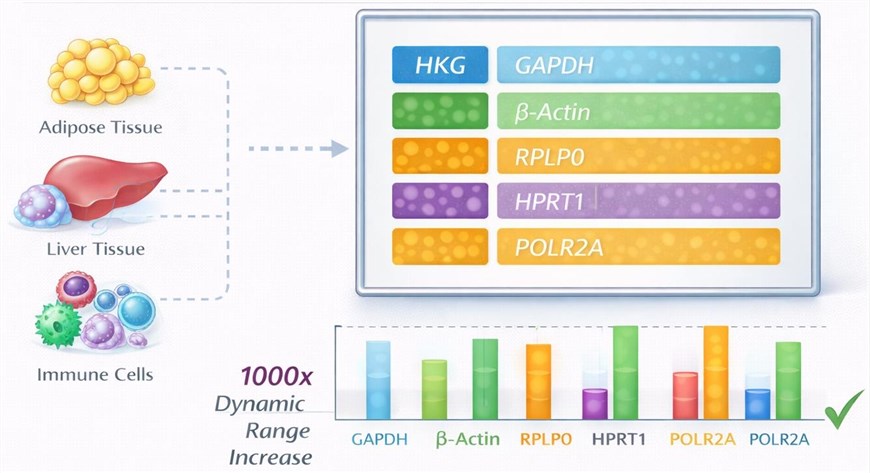
Each array includes a panel of five housekeeping genes (HKG) to ensure robust data normalization across different biological samples and experimental conditions.
- Integrated Quality Control
To guarantee technical reliability, our platform incorporates genomic DNA controls (GDC), reverse transcription controls (RTC), and positive PCR controls (PPC) to monitor for contamination and enzyme efficiency.
Service Scope
Our obesity qPCR array service covers a vast landscape of metabolic biology. We provide specialized panels for:
- Appetite & Feeding Behavior
Genes such as NPY, AGRP, POMC, and CARTPT.
- Energy Expenditure & Thermogenesis
Focusing on UCP1, PGC-1α, and adrenergic receptors.
- Adipocyte Differentiation
Monitoring the transition from preadipocytes to mature adipocytes via PPARG and FABP4.
- Metabolic Inflammation
Profiling pro-inflammatory cytokines like TNF-α, IL-6, and MCP-1 in the context of adipose tissue dysfunction.
- Insulin Signaling Pathways
Analyzing the expression of IRS1, INSR, and downstream effectors.
Contact Our Experts to Discuss Your Sample Requirements and Receive a Customized Project Timeline.
Workflow
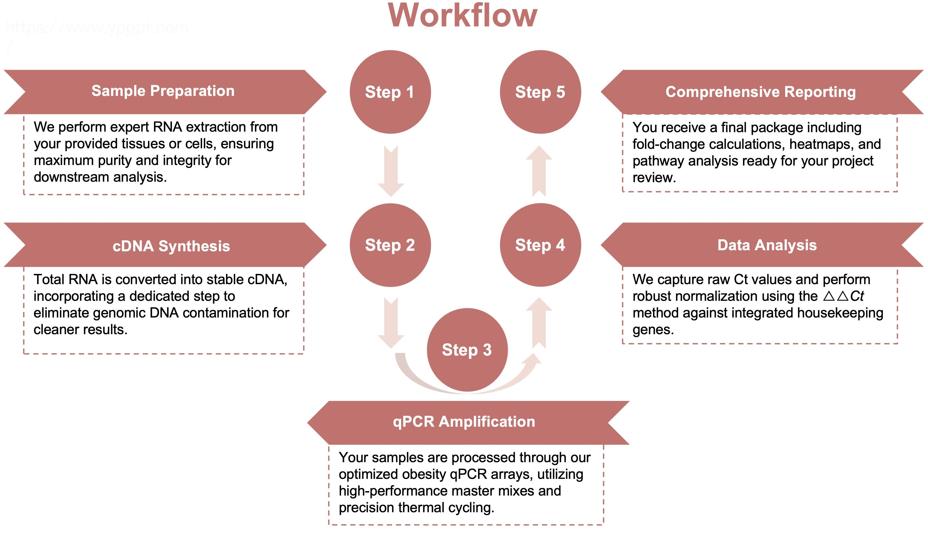
Protheragen provides a streamlined end-to-end workflow to accelerate your preclinical discovery timelines. Our process is designed to handle diverse sample types, including adipose tissue (SAT, VAT, EAT), liver, hypothalamus, and cultured cell lines.
Fields of Application
Our obesity qPCR array service is an essential tool across diverse research landscapes, providing the high-resolution transcriptomic data necessary to bridge the gap between initial metabolic hypotheses and validated preclinical outcomes.
- Anti-Obesity Drug Screening: Evaluate the impact of small molecules, RNAi therapeutics, or biologics on metabolic gene signatures.
- Mechanism of Action (MoA) Studies: Elucidate how a compound affects energy homeostasis or lipid metabolism.
- Biomarker Discovery: Identify early-stage transcriptomic markers of insulin resistance or metabolic syndrome.
- Nutraceutical Research: Assess the efficacy of dietary supplements and functional foods on adipogenesis and fatty acid oxidation.
Advantages
Choosing Protheragen for your obesity research provides several distinct competitive edges:
Exceptional Sensitivity
Obesity research often involves limited or precious samples, such as laser-capture micro-dissected adipose tissue or specific hypothalamic nuclei. Our system is optimized to detect nuanced changes in gene expression from as little as 25 ng of total RNA.
Proven Reproducibility
In longitudinal studies involving diet-induced obesity (DIO), distinguishing subtle biological trends from technical noise is critical. Our technical replicates consistently yield correlation coefficients >0.99.
Preclinical Specialization
We focus exclusively on in vitro and in vivo animal models (mouse, rat, human cell lines), aligning our expertise with the specific needs of drug discovery and toxicology.
Validated Analytical Reliability
Our microarray platform is engineered to meet the highest standards of data integrity, ensuring full compatibility with the rigorous requirements of top-tier metabolic research.
Contact Our Scientific Team Today to Receive a Customized Project Quote and Technical Consultation.
Customer Review
Efficiency and Clarity in Lead Optimization
"The team at Protheragen was instrumental in our recent lead optimization program. Their obesity qPCR array allowed us to quickly validate target engagement in our DIO mouse models. The data was extremely clean, and the heatmaps they provided were ready for our internal board presentation. We look forward to our next collaboration on our thermogenesis project."
Mr. S. P., Biotech Startup
Technical Excellence and Reliable Support
"Working with Protheragen has been a seamless experience. Their attention to RNA quality and the inclusion of multiple controls gave us the confidence we needed to move our candidate into the next phase of preclinical development. Their technical support is top-notch."
Mr. P. I., Academic Research Institute
Frequently Asked Questions
-
What sample types can I send for the obesity qPCR array?
We accept frozen tissue (adipose, liver, brain regions), cell pellets, and even stabilized RNA. Please contact us for specific shipping requirements.
-
Can you customize the gene list for my specific project?
Yes, while we have standard panels for obesity, we offer "custom plus" options where you can substitute or add specific genes of interest.
-
Is this service suitable for clinical diagnostic use?
No, our services are strictly for preclinical research and are not intended for human or animal diagnostic procedures.
-
How do you ensure no genomic DNA contamination occurs?
Every array includes a GDC well that specifically detects non-transcribed repetitive sequences. We also use a DNase treatment step during RNA preparation.
-
What is the typical turnaround time?
From sample receipt to the delivery of the final bioinformatics report, our standard turnaround is 2–3 weeks.
-
How do I interpret the fold-change data?
Our reports include a detailed guide on ΔΔCt analysis, along with visualization tools like heatmaps to make data interpretation intuitive.
-
Can I use this service for rat or mouse models?
Absolutely. We have species-specific arrays for human (cell-based), mouse, and rat models.
-
Do you provide the raw Ct data?
Yes, we provide full transparency. You will receive raw Ct values, normalized data, and the final processed results.
-
What is the minimum number of samples required?
There is no strict minimum, but we recommend at least 3 biological replicates per group for statistical significance.
-
How does this compare to next-generation sequencing (NGS)?
qPCR arrays are more cost-effective for focused pathway analysis, offer faster turnaround, and generally provide higher sensitivity for low-abundance transcripts.
Contact Us
Protheragen is committed to providing the high-quality genomic data you need to drive your metabolic research forward. Whether you are validating a novel target or screening a library of compounds, our obesity qPCR array service delivers precision and speed.
Contact Protheragen for More Information and to Discuss Your Project
All of our services and products are intended for preclinical research use only and cannot be used to diagnose, treat or manage patients.