
Obesity-Related Mitochondrial Purification Service
InquiryUnraveling metabolic disease mechanisms requires a deep look into cellular powerhouses. In obesity research, mitochondria are right at the center of the conversation. Whether you are studying how the MTCH2 (Mitch) protein regulates the fate of lipids by altering mitochondrial networks, or investigating how 3-mercaptopyruvate sulfurtransferase (MPST) maintains the crucial TIM/TOM complex for mitochondrial protein import, your downstream discoveries depend heavily on the quality of your isolated organelles.
Targeted Subcellular Fractionation and Mitochondrial Purification for Metabolic Disease Models
Getting clean, functional mitochondria out of white adipose tissue (WAT), brown adipose tissue (BAT), or insulin-resistant skeletal muscle is a notoriously difficult task. High lipid content often traps organelles, leading to heavy contamination and broken membranes. Protheragen provides a specialized obesity-related mitochondrial purification service designed specifically for preclinical research. We help labs bypass the tedious trial-and-error phase by delivering highly intact, ultra-pure mitochondrial fractions ready for functional assays, bioenergetic tracking, or proteomic profiling.
Core Technologies
Our platform relies on a blend of optimized biochemical separation methods and mechanical precision. We do not use cookie-cutter kits. Instead, we adapt our extraction matrices based on the physical properties of the target tissue.
We utilize tailored, density-adjusted isolation buffers that actively prevent lipid droplets from co-precipitating with the mitochondrial pellet.
By implementing specialized Percoll or sucrose step-gradients, we successfully separate functional mitochondria from lysosomes, peroxisomes, and endoplasmic reticulum fragments.
For ultra-pure requirements or specific sub-populations, we leverage antibody-targeted magnetic separation to isolate mitochondria without compromising their outer membrane integrity.
Every batch undergoes strict quality control, measuring respiratory control ratios (RCR) via oxygen consumption and western blotting for specific purity markers like TOM20, cyto-c, and cellular contaminants.
Service Scope
Our preclinical purification service covers an expansive array of tissue types and disease models to ensure your specific research goals are met seamlessly:
- Adipose Tissue Specialization
Expert isolation from inguinal, epididymal, and perirenal white adipose tissue (WAT) as well as interscapular brown adipose tissue (BAT).
- Metabolic Organ Targeting
High-yield extraction from high-fat diet (HFD) induced mouse liver and ob/ob or db/db rodent skeletal muscle samples.
- Downstream Functional Assays
Purified fractions are optimized immediately for Seahorse XF bioenergetic analysis, fatty acid oxidation (FAO) quantification, and mitochondrial membrane potential testing.
- Proteomic and Transcriptomic Readiness
Delivery of samples perfectly stabilized for mass spectrometry profiling of mitochondrial matrix proteins or membrane translocase assemblies.
Explore our full processing capabilities and request a custom purification plan today.
Workflow
Moving from raw tissue to assay-ready organelles requires a careful, temperature-controlled sequence that prevents structural degradation at every step.
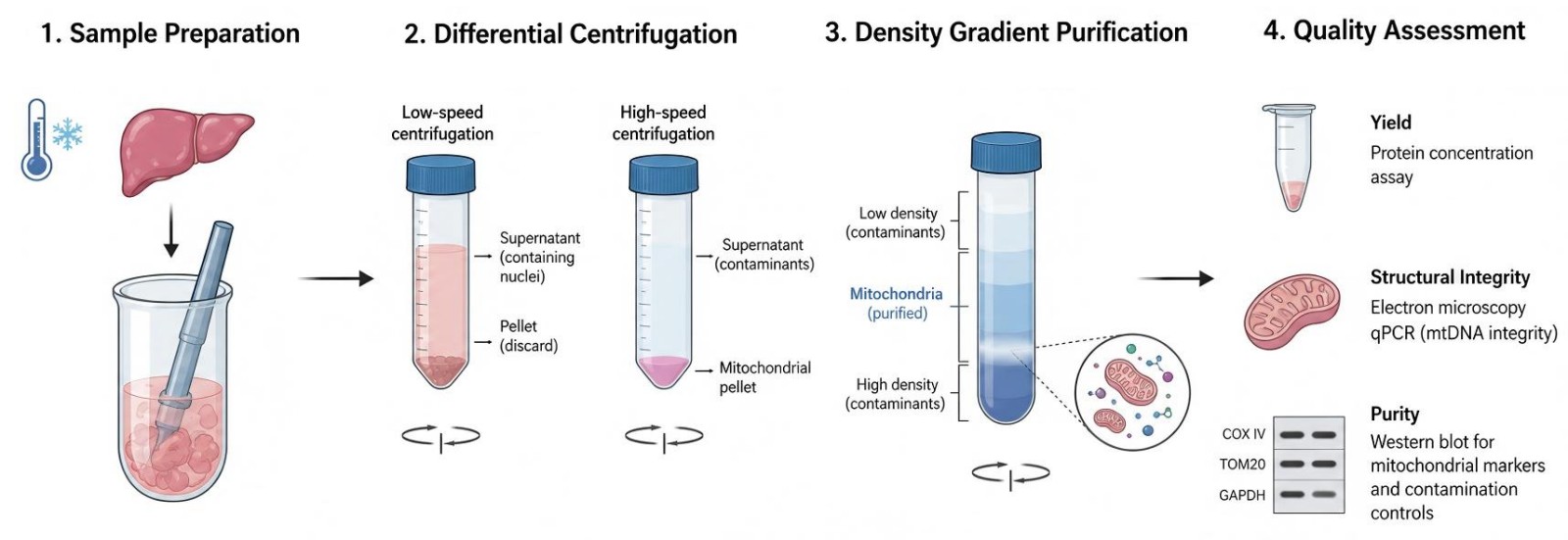
- Step 1: Tissue homogenization under strict temperature-controlled osmotic conditions to preserve organelle integrity.
- Step 2: Initial low-speed spinning to discard nuclei, followed byhigh-speed isolation of the mitochondrial pellet.
- Step 3: Utilizing sucrose or Percoll gradients to separate ultra-pure mitochondria from contaminated subcellular fractions.
- Step 4: Rigorous testing of yield, structural integrity, and purity through specific mitochondrial biomarker validation.
Fields of Application
Because mitochondrial dysfunction underpins almost every aspect of metabolic syndrome, these ultra-pure fractions serve as a versatile foundation across multiple areas of discovery.
- Anti-Obesity Drug Screening: Evaluating the direct impact of novel small molecules or biologics on mitochondrial uncoupling and energy expenditure pathways.
- Metabolic Flux Analysis: Tracing how lipid accumulation alters the tricarboxylic acid (TCA) cycle and oxidative phosphorylation dynamics.
- Mitochondrial Network & Fusion Research: Investigating proteins like MTCH2 that dictate whether mitochondria stay in connected networks or break into individual units.
- Protein Import Machinery Studies: Analyzing the suppression of TIM/TOM translocases under conditions of metabolic stress or enzymatic deficiency.
Advantages
Extracting clean organelles from lipid-dense tissue is notoriously difficult, but our specialized platform overcomes the common hurdles that cause standard commercial kits to fail.
Unmatched Purity in High-Lipid Environments
Adipose tissues are highly problematic because floating lipids contaminate the organelle pellets. Our proprietary buffer formulations completely break down lipid-protein traps without damaging the fragile outer mitochondrial membrane, yielding cleaner fractions than standard commercial kits.
Preserved Structural and Functional Integrity
We track respiratory control ratios to ensure the isolated mitochondria remain tightly coupled and metabolically active. Our optimized workflows consistently yield mitochondria with a significantly higher oxygen consumption rate compared to standard mechanical isolation protocols.
Customized Protocols for Preclinical Models
Whether your study involves transgenic mice lacking specific metabolic enzymes or rats on prolonged high-fat regimens, we fine-tune the homogenization shear force and gradient densities to match the altered tissue morphology of your specific model.
Connect with our technical specialists today to secure high-yield, functional mitochondria.
Publication Data
Title: Mitochondrial medicine in obesity: a scoping review
Journal: Open medicine (Warsaw, Poland), 2026
DOI: https://doi.org/10.1515/med-2026-1407
Summary: This 2026 scoping review maps obesity-driven multi-organ mitochondrial dysfunction, covering disrupted dynamics, mitophagy, ER-mitochondria crosstalk, and linked cardiometabolic, hepatic, reproductive, cancer risks. It evaluates lifestyle, mitochondrial-targeted drugs, microbiota therapies and identifies critical research gaps for mitochondrial obesity medicine.
Key Findings
- Mitochondria act as a unified therapeutic hub for obesity and its complications; excess nutrient intake sparks widespread oxidative/nitrosative stress across nearly all major organ systems.
- Obesity rewires mitochondrial architecture: fragmented organelle networks, impaired fusion/fission, faulty mitophagy, and harmful overgrowth of smooth ER-mitochondria MAM contacts that trigger toxic calcium overload.
- Tissue-specific mitochondrial damage drives distinct illnesses: adipose whitening, skeletal muscle insulin resistance, MASLD megamitochondria, renal/cardiac lipotoxicity, transgenerational female reproductive dysfunction, and obesity-linked cancer via the Warburg effect.
- Mitochondrial-targeted interventions (antioxidants, AMPK/SIRT1/PGC-1α activators, exercise, probiotics, natural bioactive compounds) reverse organelle damage, yet standard pharmaceuticals carry significant mitochondrial toxic risk.
- Chronic mitochondrial ROS activates NLRP3 inflammasomes, accelerating inflammaging and systemic low-grade inflammation that worsens insulin resistance and metabolic decline.
- Study limitations include narrow database searches, English-only inclusion, and heavy reliance on preclinical animal data, creating gaps for human clinical trials and non-invasive mitochondrial health biomarkers.
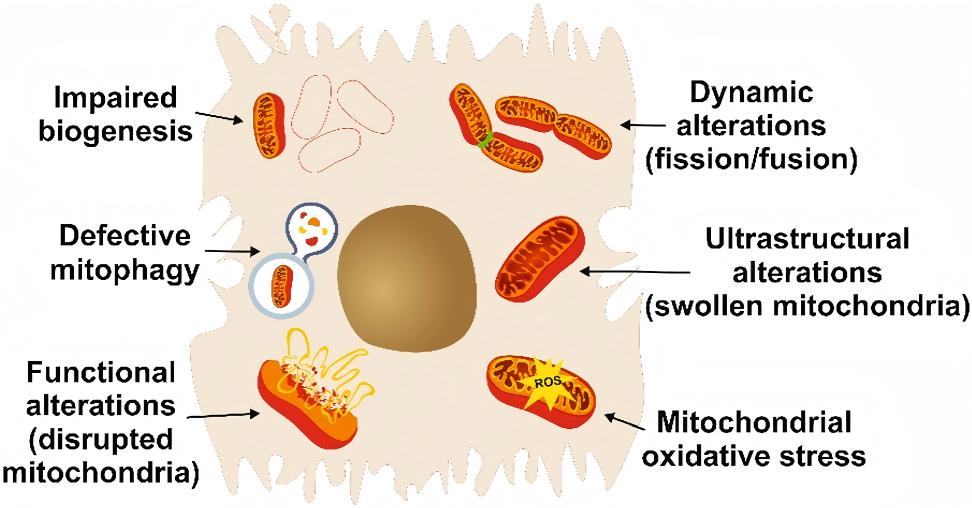 Fig.1 Key mitochondrial defects driving obesity-related fatty liver disease (MASLD). (Lonardo & Weiskirchen, 2026)
Customer Review
Overcoming Adipose Tissue Obstacles to Unlock Clean, High-Yield Metabolic Data
"We were struggling to get consistent mitochondrial yields from our high-fat diet mouse model because the lipid contamination kept messing up our downstream Western blots. Protheragen took over the isolation workflow and delivered beautifully clean fractions. It completely saved our project timeline."
Dr. H. V., Lead Metabolic Disease Researcher
Preserving Organelle Structural Integrity for Advanced Mitochondrial Fusion Analysis
"Our lab focuses on mitochondrial fusion proteins in adipose tissues, and we needed highly intact organelles for structural studies. The technical team at Protheragen customized a Percoll gradient protocol that gave us excellent structural integrity. We plan to keep working with them for our upcoming therapeutic screening screens."
Dr. M. T., Associate Professor of Physiology
Frequently Asked Questions
-
What types of animal models are compatible with this service?
We work with tissues from standard preclinical rodent models, including HFD-fed mice, ob/ob, db/db mice, and custom transgenic lines.
-
Can we ship whole frozen tissues to Protheragen?
Yes, though freshly harvested tissue yields the highest functional activity, we have validated protocols for flash-frozen tissues intended for proteomics and structural analysis.
-
How do you ensure the isolated mitochondria aren't contaminated with endoplasmic reticulum?
We verify sample purity using Western blotting against specific negative markers like Calnexin (ER) alongside positive mitochondrial markers like TOM20.
-
What is the minimum tissue amount required for a successful isolation?
It varies by tissue type, but generally, we request at least 100–200 mg of adipose tissue or 50 mg of liver/muscle tissue to ensure adequate yields.
-
Are the isolated mitochondria suitable for Seahorse XF analyzers?
Absolutely. We can deliver the mitochondria in specialized respiration buffers that keep them stable for immediate bioenergetic testing.
-
Do you offer clinical mitochondrial purification from human biopsies?
No, Protheragen focuses strictly on preclinical research services and does not process human clinical diagnostic samples.
-
How do your methods compare to standard spin-column kits?
Spin-column kits often suffer from low yields or high lipid carryover when handling fat tissue. Our gradient methods offer superior purity and preserve functional coupling much better.
-
Can we look at mitochondrial swelling and permeability transition pores with these samples?
Yes, our gentle isolation processes leave the inner and outer membranes intact, which is ideal for calcium-induced swelling assays.
-
What buffer system do you use for delivery?
We typically use standard sucrose/mannitol preservation buffers, but we can customize the solution based on your exact downstream applications.
Contact Us
Protheragen offers a dependable, scientifically rigorous approach to isolating mitochondria from complex, lipid-rich preclinical samples. By taking the technical burden of tissue processing off your shoulders, we allow your team to focus entirely on generating breakthrough metabolic data. Contact Protheragen for more information about our services.
Reference
- Lonardo, A.; Weiskirchen, R. Mitochondrial medicine in obesity: a scoping review. Open Medicine (Warsaw, Poland). 2026, 21(1), 20261407. (CC BY 4.0)
All of our services and products are intended for preclinical research use only and cannot be used to diagnose, treat or manage patients.