
Pull-down-based Obesity Target Screening Service
InquiryObesity is a complex, polygenic metabolic disorder characterized by chronic inflammation and dysregulated lipid metabolism. As the global prevalence of obesity-related comorbidities—such as type 2 diabetes and cardiovascular disease—continues to rise, the pharmaceutical industry faces an urgent need for novel therapeutic targets beyond traditional GPCRs.
Precision Proteomic Mapping for Obesity Drug Target Discovery
Protheragen provides a sophisticated pull-down-based obesity target screening service designed to identify and validate high-affinity interactions between small-molecule drug candidates and their intracellular protein targets. By utilizing advanced affinity purification coupled with high-resolution mass spectrometry (AP-MS), we enable researchers to map the interactome of metabolic regulators, providing a rigorous foundation for preclinical drug development and mechanistic studies.
Core Technologies
Protheragen leverages a multi-platform approach to ensure the highest sensitivity in target identification:
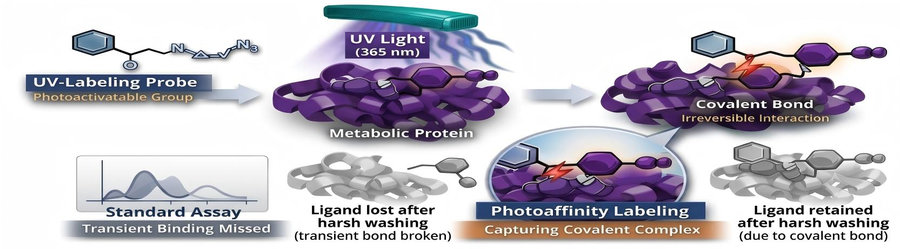
Integration of UV-activatable functional groups to create irreversible covalent bonds between ligands and metabolic proteins, capturing transient interactions often missed by standard assays.
Precise identification of pulled-down proteins with sub-ppm mass accuracy, allowing for the differentiation of isoforms within complex adipocyte or hepatic proteomes.
Post-pull-down kinetic analysis to determine the KD values and binding stoichiometry of identified obesity-related targets.
Isobaric labeling techniques to compare protein enrichment across different metabolic states or dosage groups, ensuring statistical rigor in target selection.
Solution Scope
Our screening services cover a broad range of biological mechanisms essential to obesity research:
- Adipogenesis Regulators
Identifying protein scaffolds that govern the differentiation of mesenchymal stem cells into white or brown adipocytes.
- Lipolysis & Thermogenesis Drivers
Screening for interactors of mitochondrial uncoupling protein 1 (UCP1) and other proteins involved in "browning" of white adipose tissue.
- Appetite Signaling Pathways
Mapping the interactome of neuropeptide receptors and peripheral signals (e.g., leptin, ghrelin analogs) within hypothalamic-like models.
- Insulin Sensitizers
Identifying novel intracellular targets that modulate the IRS-1/PI3K/Akt signaling cascade to counteract obesity-induced insulin resistance.
- Inflammatory Mediators
Screening for targets within the NLRP3 inflammasome and other pro-inflammatory pathways linked to metabolic syndrome.
Contact Protheragen today to define your project scope.
Workflow
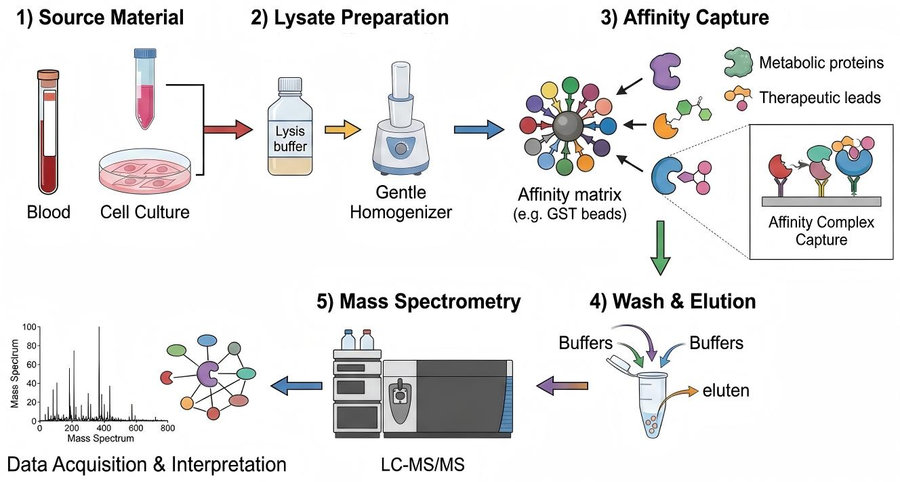
The Protheragen workflow is optimized for reproducibility and deep coverage of the metabolic proteome:
Fields of Application
Our pull-down-based obesity target screening service serves as a pivotal bridge between phenotypic discovery and molecular validation, providing the high-resolution interactome data necessary to advance drug candidates across diverse therapeutic landscapes.
- Small Molecule Target Identification: Uncovering the mechanism of action (MoA) for phenotypic screening hits.
- Off-target Profiling: Assessing the safety profile of lead compounds by identifying unintended binding partners.
- Biomarker Discovery: Identifying protein complexes that change in response to metabolic intervention.
- Drug Repurposing: Finding new metabolic applications for existing chemical entities through broad interactome screening.
Advantages
Protheragen differentiates itself through technical precision and metabolic expertise:
Superior Signal-to-Noise Ratios
Our proprietary blocking buffers and optimized washing parameters significantly reduce the identification of common "sticky" proteins, focusing strictly on high-affinity metabolic targets.
Preclinical Specialization
We offer deep expertise in handling lipid-rich tissues, which often pose significant challenges for standard proteomic workflows due to interference from high concentrations of triglycerides.
Validated Results
It is demonstrated that we are able to identify target proteins with lower abundance levels (pg/mL range) that are frequently overlooked by generic screening platforms.
Expert Consultation
Every project is overseen by PhD-level biologists with decades of experience in metabolic disease research, ensuring that data is interpreted within the correct physiological context.
Click Here to Request a Technical Consultation for Your Obesity Research Project
Customer Review
Discovery-Driven Success
"The team at Protheragen provided instrumental support in our recent project focusing on brown adipose tissue activation. Their pull-down platform identified a previously unknown regulatory protein that interacted with our lead candidate, which shifted our entire development strategy toward a more effective pathway. The depth of the MS data and the clarity of the bioinformatics report were exceptional."
Dr. E. N., Director of Early Discovery
Overcoming Technical Barriers
"Collaborating with Protheragen allowed us to bypass the technical hurdles of adipocyte proteomics. Their specialized protocols for handling lipid-heavy samples ensured we received clean, actionable data. We are already planning our next series of screens with them to further explore our compound's off-target profile."
Dr. C. X., Principal Scientist
Frequently Asked Questions
-
What types of tags do you support for pull-down assays?
We primarily utilize biotin-streptavidin systems, but we also offer HaloTag, GST, and Flag-tag options depending on your chemical synthesis requirements.
-
Can you perform pull-downs in vivo?
Our service focuses on ex vivo pull-downs using tissues derived from animal models or in vitro cell lysates to ensure controlled chemical labeling.
-
How do you handle the high lipid content in adipose tissue?
We employ specialized delipidation protocols that remove interfering fats while maintaining the integrity of the protein-ligand complexes.
-
What is the typical sample requirement?
Generally, we require 1-5 mg of total protein per replicate, though this varies based on the abundance of the expected target.
-
How do you distinguish between specific and non-specific binding?
We use competitive elution with "cold" (unlabeled) compounds and negative control probes to ensure statistical significance.
-
Do you provide bioinformatics analysis?
Yes, we provide full gene ontology (GO) enrichment, pathway analysis, and protein-protein interaction (PPI) network mapping.
-
Can this service identify targets for peptide-based drugs?
Absolutely. We can functionalize peptides for pull-down assays to identify their binding partners and chaperones.
Contact Us
Protheragen is committed to accelerating the discovery of next-generation obesity therapeutics through rigorous scientific methodology. Our pull-down-based obesity target screening service offers the precision and depth required to transform early-stage chemical entities into validated drug leads. Welcome to Contact Protheragen.
All of our services and products are intended for preclinical research use only and cannot be used to diagnose, treat or manage patients.