
Obesity-Related Exosome Characterization Service
InquiryObesity is a complex metabolic disorder characterized by chronic low-grade inflammation and significant alterations in intercellular communication. Central to this communication are exosomes—nanosized extracellular vesicles (EVs) that carry a bioactive cargo of proteins, lipids, and various RNA species. In the context of metabolic dysfunction, adipocyte-derived exosomes and those from resident immune cells in adipose tissue act as systemic mediators, influencing insulin sensitivity, glucose homeostasis, and lipid metabolism.
Adipose-Derived EV Profiling: Advanced Multi-Omic Characterization
Protheragen provides a specialized obesity-related exosome characterization service designed to decode these molecular messages. Our platform assists preclinical researchers in identifying biomarkers of metabolic syndrome and evaluating the efficacy of novel therapeutic compounds in modulating exosomal signaling.
Core Technologies
To provide high-resolution insights into the metabolic role of exosomes, Protheragen integrates a multi-layered suite of cutting-edge analytical platforms. Our core technologies are specifically calibrated to handle the unique challenges of obesity research, such as lipid interference and low-abundance signaling markers.
- Nanoparticle Tracking Analysis (NTA)
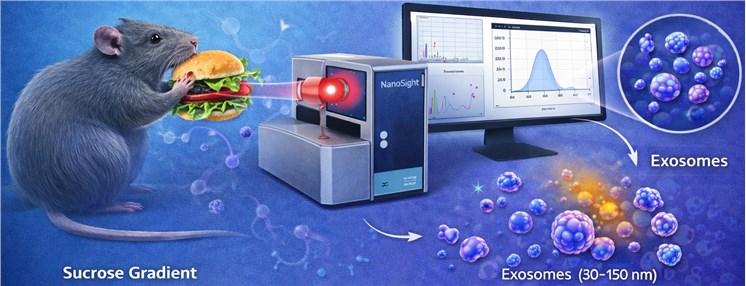
We utilize NTA as the gold standard for real-time visualization and quantification. By tracking the Brownian motion of individual particles via laser scattering, we provide precise measurements of exosome concentration and size distribution (typically ranging from 30 to 150 nm). This is critical for assessing how metabolic stressors, such as a high-fat diet, impact total exosomal biogenesis in preclinical models.
- High-Sensitivity Flow Cytometry
Our facility employs specialized flow cytometers capable of detecting sub-micron particles that fall below the detection limits of conventional instruments. This allows for single-particle profiling of surface markers, including universal tetraspanins (CD9, CD63, CD81) and tissue-specific markers (e.g., FABP4 for adipocyte-derived exosomes), enabling the identification of distinct vesicle subpopulations within a heterogeneous sample.
- Liquid Chromatography-Mass Spectrometry (LC-MS/MS)
To decode the protein landscape, we use label-free quantitative mass spectrometry. This high-depth proteomics platform identifies differentially expressed proteins involved in insulin signaling, lipid transport, and inflammatory pathways. We focus on identifying "metabolic cargo" that can serve as potential preclinical biomarkers for insulin resistance or NASH.
- Next-Generation Sequencing (NGS) & RNA Profiling
Recognizing that microRNAs (miRNAs) are potent mediators of inter-organ crosstalk in obesity, we offer comprehensive small RNA-seq. Our pipeline is optimized for low-input samples, providing a full transcriptomic profile of the exosomal cargo. This reveals the regulatory networks that exosomes use to influence gene expression in target organs like the liver and skeletal muscle.
- Cryo-Electron Microscopy (Cryo-EM)
For structural validation, we offer Cryo-EM to capture high-resolution images of exosomes in their near-native hydrated state. Unlike traditional TEM, Cryo-EM avoids dehydration artifacts, allowing for the clear visualization of the characteristic lipid bilayer and any membrane-associated proteins or receptors essential for metabolic targeting.
Service Scope
Protheragen offers a versatile range of services tailored to metabolic research:
- Adipocyte-Specific Exosome Analysis
Isolation and Characterization of EVs specifically from white, brown, or beige adipose tissues.
- Cargo Quantification
Absolute quantification of metabolic regulators, such as adiponectin, leptin, or specific lipometabolism-related enzymes within the exosomal lumen.
- Inflammatory Profiling
Assessment of pro-inflammatory cytokines and polarization markers (M1/M2) carried by exosomes in Obese Models.
- Therapeutic Delivery Assessment
Evaluation of how candidate drugs affect the biogenesis and secretion of exosomes in high-fat diet (HFD) models.
Workflow
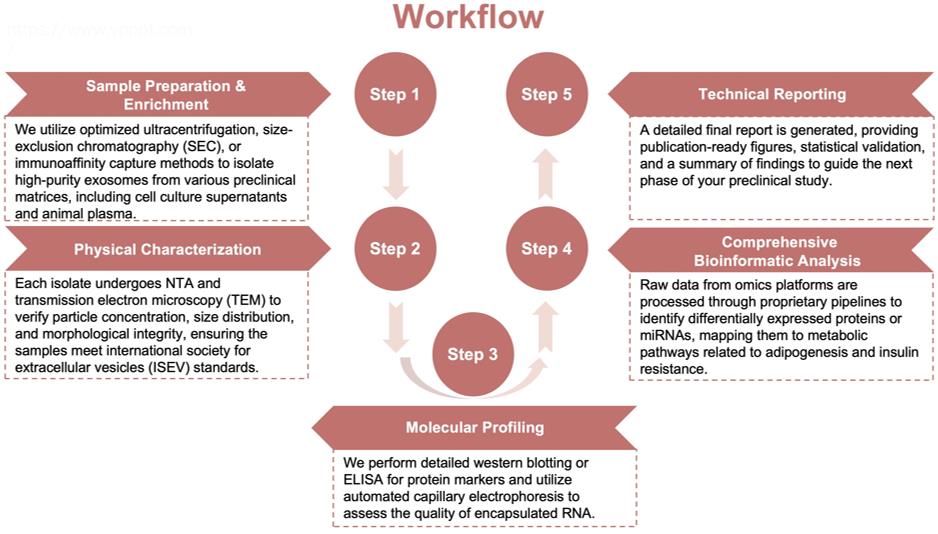
Our streamlined preclinical workflow ensures reproducible results and rigorous quality control at every stage:
Explore Our Step-by-Step Workflow Today.
Fields of Application
Our specialized characterization platform empowers researchers to translate complex extracellular data into actionable insights across a diverse range of preclinical metabolic studies.
- Metabolic Disease Modeling: Understanding the transition from simple obesity to type 2 diabetes.
- Drug Discovery: Identifying how small molecules or biologics influence the systemic "secretome" of adipose tissue.
- Non-Invasive Monitoring: Developing exosome-based molecular signatures to monitor disease progression in longitudinal animal studies.
- Cross-Organ Communication: Investigating the "crosstalk" between adipose-derived exosomes and the liver, skeletal muscle, or hypothalamus.
Advantages
Choosing Protheragen provides your research team with a competitive edge in the rapidly evolving field of "exosomics." Our protocols are specifically optimized for the high-lipid environment characteristic of obesity research, which often complicates standard isolation techniques.
Lipid-Contamination Mitigation
Standard isolation methods often fail to distinguish between extracellular vesicles (EVs) and lipid particles of similar size and density. We employ advanced density-gradient ultracentrifugation and size-exclusion chromatography (SEC) to effectively decouple exosomes from chylomicrons and very-low-density lipoproteins (VLDLs). This ensures your downstream proteomics and transcriptomics reflect true vesicular cargo, free from the "noise" of systemic metabolic lipids.
High Sensitivity
In the context of metabolic disorders, critical biomarkers are often sequestered or diluted. Our platforms utilize enhanced immuno-affinity capture and high-sensitivity Nanosight tracking, allowing for the detection of low-abundance signaling molecules—such as rare adipokines or microRNAs—that are typically lost or masked in conventional assays. This sensitivity enables the discovery of subtle paracrine shifts long before they manifest in clinical phenotypes.
Expert Consultation
We do not just deliver raw data; we deliver context. Our team of PhD-level biologists and bioinformaticians specializes in the intersection of EV biology and metabolic syndrome. We provide deep-dive interpretations of lipid-signaling pathways and endocrine crosstalk, helping you transform complex datasets into actionable biological insights and cohesive research narratives.
High-quality Data Support
Rigorous reproducibility is the cornerstone of high-impact research. Our methodologies strictly align with the minimal information for studies of extracellular vesicles (MISEV) guidelines. By providing comprehensive characterization (including TEM imaging, Western Blot markers, and NTA analysis), we ensure your preclinical results are robust, reproducible, and primed for seamless acceptance by top-tier peer-reviewed journals.
Explore Our Specialized Protocols—Inquire Today for a Custom Project Assessment
Publication Data
Title: The Potential Role of Exosomes in Child and Adolescent Obesity
Journal: Children, 2021
DOI: https://doi.org/10.3390/children8030196
Summary: Child and adolescent obesity is a major global public health threat, linked to long-term metabolic and cardiovascular complications. Exosomes, endosome-derived extracellular vesicles, mediate intercellular communication via their cargo (primarily miRNAs and lncRNAs) and play a pivotal role in the pathogenesis of obesity and related disorders. This review systematically explores the biogenesis, function of exosomes, and their interaction with adipose tissue physiology (white, brown, and beige adipose tissue). It highlights altered patterns of circulating exosomal miRNAs and lncRNAs in obese children and adolescents, compares these findings with adult studies, and discusses their mechanisms in adipocyte biology, inflammation, and metabolic dysregulation. Additionally, the review emphasizes the potential of exosomal RNAs as non-invasive cardiometabolic risk biomarkers and novel therapeutic targets for childhood and adolescent obesity, while noting current research gaps (e.g., limited pediatric data, technical challenges in exosome isolation).
Key Findings
- Exosomes as Critical Intercellular Messengers: Exosomes (30–120 nm) are secreted by various cells (including adipocytes) and transport miRNAs, lncRNAs, and other molecules. Their biogenesis involves ESCRT-dependent/independent pathways, and they regulate physiological/pathological processes via autocrine, paracrine, or endocrine signaling.
- Adipose Tissue-Exosome Crosstalk: Adipose tissue (WAT, BAT, beige AT) secretes exosomes that modulate energy metabolism, adipogenesis, and inflammation. For example, BAT-derived exosomal miR-99b regulates glucose homeostasis, while WAT-derived exosomes promote pro-inflammatory macrophage polarization.
- Abnormal Exosomal RNAs in Pediatric Obesity: Obese children/adolescents show dysregulated circulating miRNAs (e.g., miR-222, miR-143, miR-122) and lncRNAs (e.g., RP11-20G13.3, HCP5). These RNAs are linked to adipocyte differentiation, insulin resistance, and inflammation, with some differing from adult obesity profiles.
- Clinical Potential of Exosomes:
- Biomarkers: Exosomal miRNAs (e.g., miR-122 for NAFLD) and lncRNAs enable early diagnosis, risk stratification, and monitoring of weight-loss interventions.
- Therapeutics: Targeting exosomal cargo (e.g., miRNA mimetics, anti-miRNA oligonucleotides) or lncRNAs (e.g., Blnc1) could ameliorate insulin resistance, inflammation, and promote WAT browning. - Research Gaps & Future Directions: Limited pediatric studies, technical hurdles in exosome isolation/characterization, and unclear tissue origin of circulating RNAs need addressing. Larger cohort studies in children/adolescents (with fewer comorbidities) are essential to unravel obesity mechanisms.
![Figure 1 Diagram illustrating exosome biogenesis, secretion, and intercellular interaction: Depicts a 'Cell of Origin' (with nucleus, early/late endosomes, lysosome, MVB [multivesicular body]) where exosomes form via ESCRT-dependent/independent pathways (pink symbols). MVBs undergo fates like fusion with the plasma membrane (releasing exosomes, step 1), lysosomal fusion (degradation, step 2), antigen presentation (step 3), or recycling (step 4). Released exosomes (yellow vesicles with cargo: RNA/proteins) interact with a 'Recipient Cell' (with nucleus) via 4 mechanisms: phagocytosis/endocytosis (step 1), direct membrane fusion (step 2), membrane protein-receptor binding (step 3), or protease cleavage (step 4). Visualizes how exosomes mediate intercellular communication (relevant to processes like pediatric obesity pathogenesis). (Maligianni, et al., 2021)](https://www.obesityscientific.com/wp-content/themes/obesity/img/2-4-7-13-3-obesity-related-exosome-characterization-service-3.jpg) Fig.1 Exosome biogenesis, secretion pathways, and target cell interactions: core mechanisms for intercellular communication in child and adolescent obesity. (Maligianni, et al., 2021)
Fig.1 Exosome biogenesis, secretion pathways, and target cell interactions: core mechanisms for intercellular communication in child and adolescent obesity. (Maligianni, et al., 2021)
Customer Review
Overcoming Data Gaps in Insulin Resistance Research
"Working with Protheragen transformed our approach to studying insulin resistance. Their ability to isolate high-purity exosomes from our HFD mouse models allowed us to identify a key miRNA signature we had previously missed. The technical support was exceptional, guiding us through the complexities of the bioinformatic data. We are already planning our next series of experiments to evaluate our lead compound’s impact on these vesicles."
Mr. P. M., Metabolic Research Institute
Advanced Solutions for High-Lipid Sample Purification
"The resolution of the NTA and proteomics data provided by Protheragen was impressive. In the past, we struggled with lipid contamination in our EV preparations, but their specialized purification workflow solved this bottleneck. Their reports are publication-ready, saving us significant time. We look forward to a long-term partnership as we expand our preclinical pipeline."
Dr. J. H., Biopharmaceutical Development Group
Frequently Asked Questions
-
What sample volume is required for preclinical exosome isolation?
Volumes vary by matrix; however, we have optimized micro-isolation protocols for small animal plasma (200-500µL) and cell culture supernatants.
-
How do you ensure the isolated particles are actually exosomes?
We follow MISEV guidelines, providing NTA, TEM, and western blot data for positive (e.g., TSG101) and negative (e.g., Calnexin) markers.
-
Can you characterize exosomes from frozen adipose tissue samples?
Yes, we have validated extraction protocols for interstitial fluid and EVs from cryopreserved tissue samples.
-
How do you handle the high lipid content in samples from obese models?
We utilize a dual-step purification process combining density gradient centrifugation and SEC to remove interfering lipoproteins.
-
Is NGS included in the standard characterization?
Small RNA-seq is available as a specialized add-on to provide a complete view of the exosomal transcriptome.
-
What is the typical turnaround time?
Standard characterization is usually completed within 3-4 weeks, depending on the complexity of the cargo analysis.
-
Do you provide assistance with data interpretation?
Absolutely. Our reports include pathway analysis and biological context relevant to obesity and metabolism.
-
Can you distinguish between exosomes and other extracellular vesicles?
While there is overlap, our size-selection and marker-profiling techniques specifically enrich for the endosomal-origin exosome population.
Contact Us
Protheragen offers a premier, end-to-end obesity-related exosome characterization service. By combining high-resolution isolation techniques with advanced omics and expert metabolic insights, we empower preclinical researchers to uncover the hidden drivers of obesity and metabolic syndrome.
Contact Protheragen for More Information and to Discuss Your Project
Reference
- Maligianni, I.; et al. The Potential Role of Exosomes in Child and Adolescent Obesity. Children. 2021, 8, 196. (CC BY 4.0)
All of our services and products are intended for preclinical research use only and cannot be used to diagnose, treat or manage patients.