
Obesity-Related Exosome Engineering Service
InquiryObesity is no longer viewed merely as a storage of excess lipids but as a complex endocrine dysfunction characterized by chronic low-grade inflammation and systemic metabolic imbalance. At the heart of this pathophysiology are exosomes—nanoscale extracellular vesicles (EVs) that facilitate critical inter-organ communication between adipose tissue, the liver, and the skeletal muscles.
Engineering Advanced Exosome Therapeutics for Obesity and Metabolic Disorders
Protheragen specializes in the preclinical engineering of these vesicles to reverse metabolic dysfunction. By leveraging the natural homing abilities of adipose-derived exosomes, we develop sophisticated delivery vehicles capable of transporting regulatory miRNAs, proteins, and small molecules directly to metabolic hubs. Our services are designed for biopharmaceutical researchers seeking to bridge the gap between basic vesicle biology and therapeutic preclinical candidates for obesity, insulin resistance, and NAFLD.
Core Technologies
To address the complexity of metabolic diseases, Protheragen employs a suite of high-precision technologies:
- Tunable Resistive Pulse Sensing (TRPS)
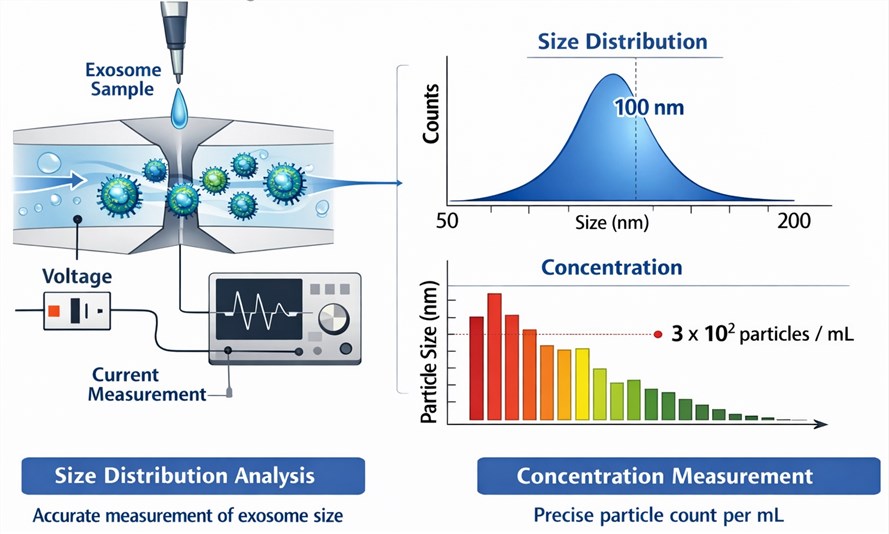
We utilize TRPS for high-resolution characterization, ensuring every engineered exosome batch meets stringent standards for size distribution and concentration, which is vital for reproducible preclinical dosing.
- Surface Functionalization Platform
Our proprietary chemical and biological conjugation methods allow for the "decoration" of exosomal membranes with ligands that target specific adipocyte receptors or hepatic markers.
- Active Cargo Loading
Beyond passive incubation, we utilize electroporation and sonication protocols optimized for delicate exosomal membranes to ensure high encapsulation efficiency of anti-obesity oligonucleotides.
- Adipocyte-Specific Enrichment
We utilize specialized isolation techniques to harvest exosomes from brown adipose tissue (BAT) or white adipose tissue (WAT), providing a native bio-template that inherits specific metabolic-regulatory properties.
Service Scope
Protheragen provides a modular suite of services tailored to obesity research:
- Custom Exosome Loading
Specialized loading of siRNA, miRNA mimics, or small molecule inhibitors.
- Targeting Ligand Integration
Modification of exosomes to enhance uptake by visceral adipose tissue or inflamed hepatic cells.
- Exosome-Based Biomarker Discovery
Analyzing the protein and RNA cargo of obesity-related exosomes to identify new therapeutic targets.
- Metabolic Flux Analysis
Evaluating how engineered exosomes alter the metabolic rate and oxygen consumption in Preclinical Models.
Workflow
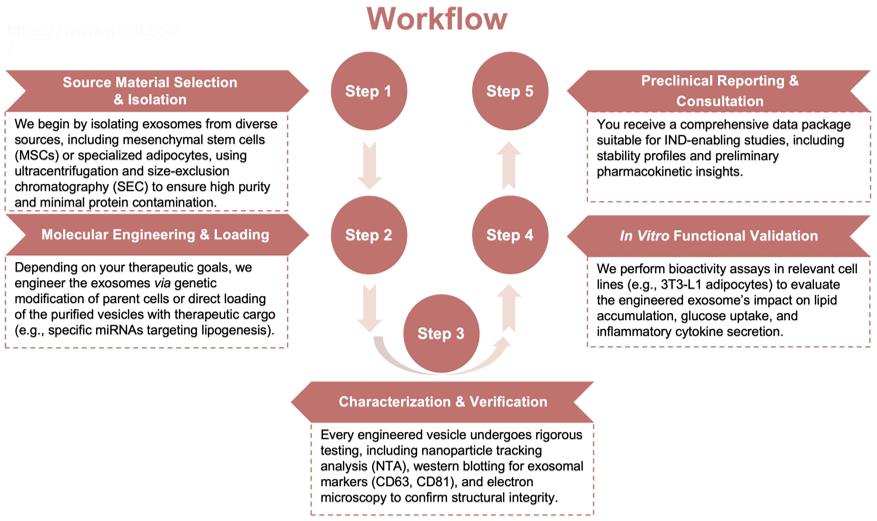
Our streamlined preclinical workflow ensures that your project moves from concept to data-rich results with maximum efficiency:
Fields of Application
The engineered exosomes produced by Protheragen are vital for several preclinical research areas:
- Type 2 Diabetes: Developing vesicles that enhance insulin sensitivity in skeletal muscle.
- Non-Alcoholic Fatty Liver Disease (NAFLD): Targeting exosomes to the liver to reduce steatosis and fibrosis.
- Thermogenesis Regulation: Utilizing BAT-derived exosomes to promote "browning" of white fat.
- Appetite Control Research: Exploring the blood-brain barrier (BBB) crossing capabilities of engineered vesicles to target hypothalamic hunger centers.
Advantages
Partnering with Protheragen provides your research program with unmatched technical depth and reliability. Our obesity-related exosome engineering service stands out due to:
Purity-First Approach
We employ advanced purification protocols to rigorously eliminate "noise" from non-vesicular proteins and lipoproteins. By ensuring a high particle-to-protein ratio, we guarantee that the biological responses observed in your models are truly exosome-mediated, removing the ambiguity often found in crude isolates.
Expertise in Metabolic Pathways
Unlike generalist CROs, our team specializes in the specific inter-organ communication pathways central to obesity. We focus on the intricate signaling between extracellular vesicles (EVs) and insulin-sensitive tissues. This expertise allows us to offer more than just a service; we provide a collaborative partnership to help you decode EV-cargo impacts on glucose homeostasis and thermogenesis.
Scalable Solutions
Our platform is designed for seamless transition from bench to preclinical application. Whether you require milligram quantities for initial high-throughput screening or large-scale batches for longitudinal in vivo studies, we scale our production without compromising vesicle integrity, size distribution, or bioactivity.
Specialized Functional Assays
Our platform enables high-resolution evaluation of engineered vesicles, focusing on their capacity to reduce lipid droplets in hypertrophic adipocytes and modulate systemic inflammatory markers.
Inquire Today to Receive a Customized Technical Proposal for Your Obesity Project.
Publication Data
Title: Exosomes Engineering and Their Roles as Therapy Delivery Tools, Therapeutic Targets, and Biomarkers
Journal: Int. J. Mol. Sci., 2021
DOI: https://doi.org/10.3390/ijms22179543
Summary: This review systematically explores exosomes—nanosized extracellular vesicles (30–100 nm)—as versatile therapeutic biomaterials. It covers exosome classification (natural, modified, synthetic), isolation/modification/production techniques, cargo incorporation (hydrophilic/hydrophobic therapeutic agents), administration routes, biomedical applications, and commercial developments. The paper highlights exosomes' unique advantages (biocompatibility, stability, ability to cross biological barriers like the blood–brain barrier) over synthetic nanocarriers, while also comparing the pros and cons of different preparation methods for the first time. It emphasizes exosomes' potential in drug/gene delivery, disease diagnosis (as biomarkers), tissue regeneration, and vaccine development, with a focus on treating cancer, neurodegenerative diseases, and cardiovascular disorders. Additionally, it profiles leading global companies advancing exosome-based therapeutics into preclinical and Phase 1 trials.
Key Findings
- Classification & Core Traits: Exosomes (30–100 nm) are divided into natural (from body fluids/plants), modified (engineered for targeting/cargo), and synthetic (lab-made) types. They're biocompatible, stable in bodily fluids, and can cross biological barriers like the blood–brain barrier.
- Preparation Methods: Isolation uses ultracentrifugation (high yield), microfluidics (high purity), etc. Modifications include cargo loading (co-incubation, sonication) and surface engineering—each with tradeoffs (e.g., sonication loads well but may damage membranes). Synthetic exosomes balance scalability (cell-based) and purity (lipid-based).
- Cargo Loading: Hydrophobic drugs (curcumin, paclitaxel) fit into the lipid bilayer; hydrophilic cargo (RNA, antibiotics) loads into the core, protecting unstable therapeutics.
- Therapeutic Uses:
- Drug/gene delivery: Effective for cancer, Parkinson's, and MRSA infections.
- Biomarkers: Early detection of Alzheimer's, cancer, and cardiovascular diseases.
- Tissue regeneration: MSC-derived exosomes aid bone/nerve repair.
- Vaccines: Potential for cell-free cancer or SARS-CoV-2 vaccines. - Administration Routes: Intravenous, oral, intranasal and intratumoral delivery modes meet different research and treatment demands.
- Commercial Progress: Multiple biotech enterprises have pushed exosome therapy into preclinical and early clinical research stages.
- Pros & Challenges: Exosomes avoid synthetic nanocarrier toxicity but face variable loading efficiency and manufacturing complexity—more clinical trials are needed for widespread use.
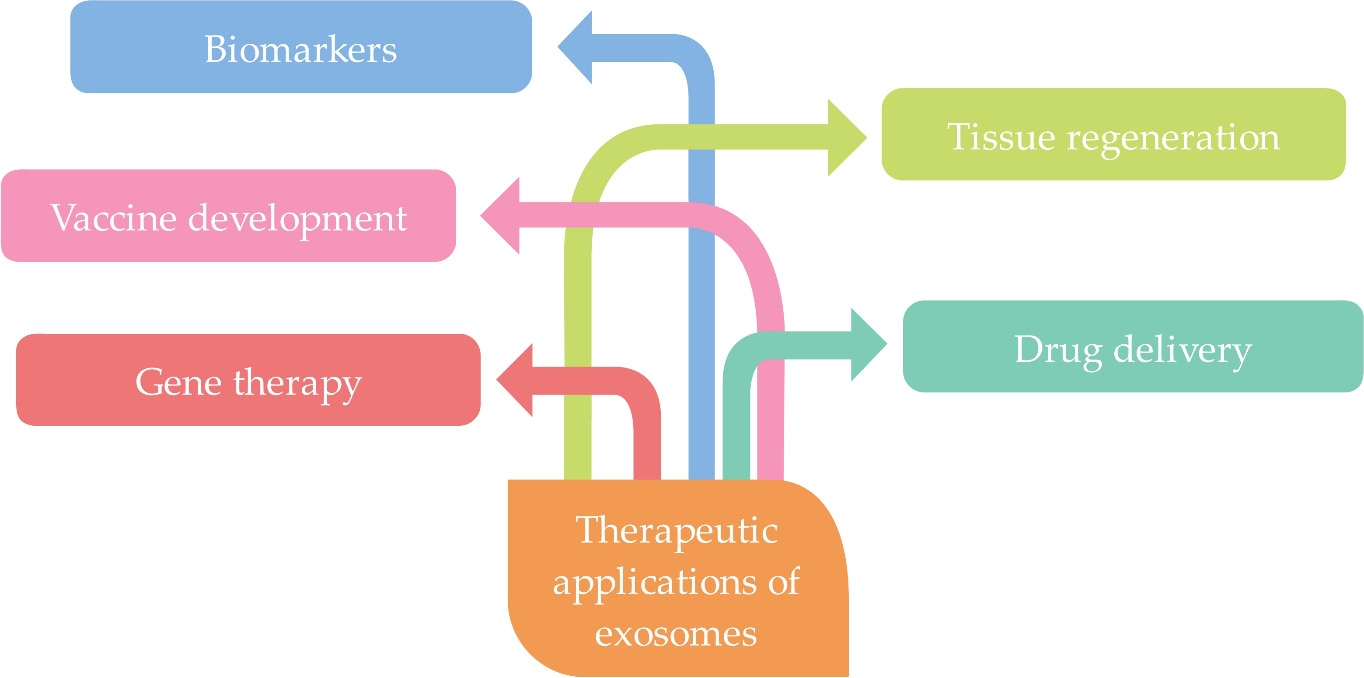 Fig.1 Key therapeutic applications of exosomes: from drug delivery to disease diagnosis. (Kuˇcuk, et al., 2021)
Customer Review
Revolutionizing Metabolic Drug Delivery and Targeted miRNA Loading Efficiency
"Working with Protheragen has transformed our approach to metabolic drug delivery. Their ability to load our specific miRNA mimics into adipocyte-targeted exosomes allowed us to see a significant reduction in inflammatory markers in our 3D cell culture models. The data provided was exceptionally clean and ready for our internal reporting."
Dr. P. S., Metabolic Research Institute
Achieving Unmatched Consistency in Exosome Purity for Preclinical Success
"We struggled with exosome purity for months until we outsourced our production to Protheragen. Their TRPS characterization and SEC isolation protocols provided a level of consistency we couldn't achieve in-house. We are already planning our next series of preclinical studies with their engineered vesicles."
Dr. K. D., Emerging Biotech Firm
Frequently Asked Questions
-
What cell sources do you recommend for obesity-related exosome production?
We typically recommend adipose-derived mesenchymal stem cells (AD-MSCs) due to their inherent immunomodulatory properties and high vesicle yield.
-
How do you ensure the stability of loaded cargo?
Our engineered membranes protect cargo from RNases and proteases. We also offer stability testing under various storage temperatures.
-
Can I provide my own proprietary compounds for loading?
Yes, we regularly work with client-provided molecules under strict confidentiality.
-
How do you verify that the exosome is actually targeting the adipocyte?
We use fluorescent labeling and uptake assays to quantify the internalization of vesicles by target cells.
-
What is the typical turnaround time for an engineering project?
Most projects are completed within 4 to 8 weeks, depending on the complexity of the cargo and targeting requirements.
-
Are your services limited to human-derived exosomes?
No, we offer species-specific exosome services, including murine and porcine-derived models, etc., to support diverse preclinical metabolic research.
-
Do you provide control vesicles?
Yes, we provide non-loaded and scrambled-cargo vesicles as essential controls for your experiments.
-
How does your TRPS technology compare to standard NTA?
TRPS provides higher resolution for heterogeneous samples, allowing us to distinguish between individual vesicles and aggregates more accurately.
-
Can engineered exosomes be used to study inflammation?
Absolutely. We specialize in engineering vesicles that carry anti-inflammatory cytokines to modulate the M1/M2 macrophage balance in adipose tissue.
Contact Us
Protheragen is dedicated to providing the high-end engineering required to turn extracellular vesicles into powerful tools for metabolic research. From isolation to complex cargo loading, our team ensures your preclinical studies are built on a foundation of scientific excellence.
Contact Protheragen for More Information and to Discuss Your Project
Reference
- Kuˇcuk, N.; et al. Exosomes Engineering and Their Roles as Therapy Delivery Tools, Therapeutic Targets, and Biomarkers. Int. J. Mol. Sci. 2021, 22, 9543. (CC BY 4.0)
All of our services and products are intended for preclinical research use only and cannot be used to diagnose, treat or manage patients.