
Obesity-related Proteins and Peptides
InquiryThe rapid increase in obesity and associated metabolic conditions, including type 2 diabetes, metabolic dysfunction-associated steatohepatitis (MASH), and cardiovascular disease, has driven metabolic research into an unprecedented phase. From early insights into energy homeostasis to the recent clinical success of multi-target GLP-1, GIP, and glucagon receptor agonists, proteins and peptides remain the primary tools for dissecting physiological pathways and engineering therapeutics.
Metabolic control relies on an interconnected network of gut hormones, adipokines, central appetite signals, and peripheral tissue regulators. To support academic research groups and drug discovery teams in target validation, high-throughput screening, and structural analysis, Protheragen provides a comprehensive portfolio of high-purity, biologically active obesity-related proteins and peptides.
Obesity-Related Proteins and Peptides: Unlocking Metabolic Regulation and Drug Discovery
Our selection of recombinant proteins and synthetic peptides supports the study of obesity-related mechanisms, metabolic signaling, and associated biological processes across a range of research applications.
- Gut-Brain Axis and Gastrointestinal Hormones
Includes glucagon-like peptide-1 (GLP-1), glucose-dependent insulinotropic polypeptide (GIP), peptide YY (PYY), oxyntomodulin, and ghrelin variants. These molecules support research into glucose-dependent insulin secretion, appetite and satiety signaling, and receptor interactions. Available forms may include native sequences and modified analogs, depending on product specifications.
- Adipokines and Systemic Metabolic Regulators
Features leptin, adiponectin, resistin, retinol-binding protein 4 (RBP4), and visfatin. These proteins are relevant to studies of adipose tissue function, insulin sensitivity, energy homeostasis, and inflammation. Product-specific information on biological activity, oligomeric state, and characterization is available where provided by the supplier.
- Fibroblast Growth Factors and Metabolic Signaling
Includes fibroblast growth factor 21 (FGF21), fibroblast growth factor 19 (FGF19), and the co-receptor β-Klotho. These molecules are involved in the regulation of glucose and lipid metabolism and support research into fatty liver disease, metabolic dysfunction, and energy homeostasis.
- Central Melanocortin and Neuropeptide Pathways
This range features pro-opiomelanocortin (POMC)-derived peptides, agouti-related protein (AgRP), neuropeptide Y (NPY), and melanocortin 4 receptor (MC4R)-associated molecules, offering resources for examining hypothalamic neural circuits and neuroendocrine control of feeding patterns.
Obesity-related Proteins
This product range features proteins linked to fat cell function, hormone-mediated communication, and the biochemical processes that influence metabolic health. These research materials enable the investigation of protein function, cellular communication, lipid processing, and inflammatory responses linked to obesity and related metabolic conditions.
Representative targets include leptin, adiponectin, fibroblast growth factor 21 (FGF21), uncoupling protein 1 (UCP1), peroxisome proliferator-activated receptor gamma (PPARG), fatty acid-binding protein 4 (FABP4), tumor necrosis factor alpha (TNF-α), and interleukin-6 (IL-6), as well as POMC, AgRP, and NPY-related products.

Obesity-related Peptides
This peptide collection supports research into hormonal communication, appetite-related pathways, and the molecular factors influencing energy utilization. Available research materials may include endogenous peptide hormones, synthetic analogs, receptor-modulating peptides, and blocking peptides for antibody specificity testing and competitive binding assays.
Representative products include GLP-1, GIP, PYY, ghrelin, amylin, alpha-melanocyte-stimulating hormone (α-MSH), apelin-13, oxyntomodulin, selected receptor-targeting peptides, etc. Blocking peptides may also be included for applications such as antibody specificity testing and competitive binding assays, depending on the target and validated product design.
Applications
- Structural and Biophysical Characterization: Applying X-ray crystallography, cryogenic electron microscopy (cryo-EM), surface plasmon resonance (SPR), and bio-layer interferometry (BLI) to examine molecular structures, binding affinity, and receptor engagement.
- Preclinical Metabolic Assessment: Using animal models to characterize changes in feeding behavior, body weight, body composition, and energy expenditure following acute or sustained interventions.
- Glucose and Lipid Metabolism Studies: Examining cellular responses to insulin, liver glucose output, and lipid deposition to characterize metabolic changes in relevant in vitro models.
- Adipocyte and Hepatocyte Model Development: Exploring how selected adipokines and growth factors influence adipocyte differentiation and cellular processes associated with metabolic dysfunction-associated steatohepatitis (MASH).
- Peptide Candidate Assessment: Characterizing engineered multi-agonist peptides and benchmarking their functional performance against established reference compounds.
Advantages
High Batch-to-Batch Consistency
Production is managed through controlled cell banking and standardized purification protocols. Each lot undergoes side-by-side comparability testing to support consistent physical characteristics, binding kinetics, and biological activity across different study phases.
Flexible Scale & Bulk Supply
Our production setup supports transitions from milligram quantities for initial target validation up to multi-gram batches for high-throughput screening (HTS) and preclinical lead optimization. Lot reservation options are also available to maintain supply continuity for extended projects.
Ultra-Low Endotoxin Levels
To minimize non-specific inflammatory background in sensitive systems, cell-culture and in vivo grade reagents are processed using specialized endotoxin removal procedures. Standard specifications require endotoxin levels below 1.0 EU/μg, helping reduce TLR4-mediated signaling artifacts in primary cells, organoids, and animal models.
Publication Data
Title: Adipokines as Clinically Relevant Therapeutic Targets in Obesity
Journal: Biomedicines, 2023
DOI: https://doi.org/10.3390/biomedicines11051427
Summary: This review examines the clinical potential of adipokines as biomarkers and therapeutic targets for obesity and its associated metabolic and cardiovascular complications. It summarizes clinical studies investigating their diagnostic and therapeutic applications, alongside experimental evidence on adipokines that may offer future clinical benefits. The review highlights fibroblast growth factors FGF-19 and FGF-21, as well as leptin, as promising candidates for the treatment of obesity and related comorbidities. It also identifies adiponectin, vaspin, resistin, chemerin, visfatin, bone morphogenetic protein 7 (BMP-7), and tumor necrosis factor alpha (TNF-α) as potential candidates for future clinical application, although further research is needed to establish their effectiveness and clarify their underlying regulatory mechanisms. These findings underscore the value of adipokines in advancing the understanding of obesity-related metabolic dysfunction and supporting the development of more targeted diagnostic and therapeutic strategies.
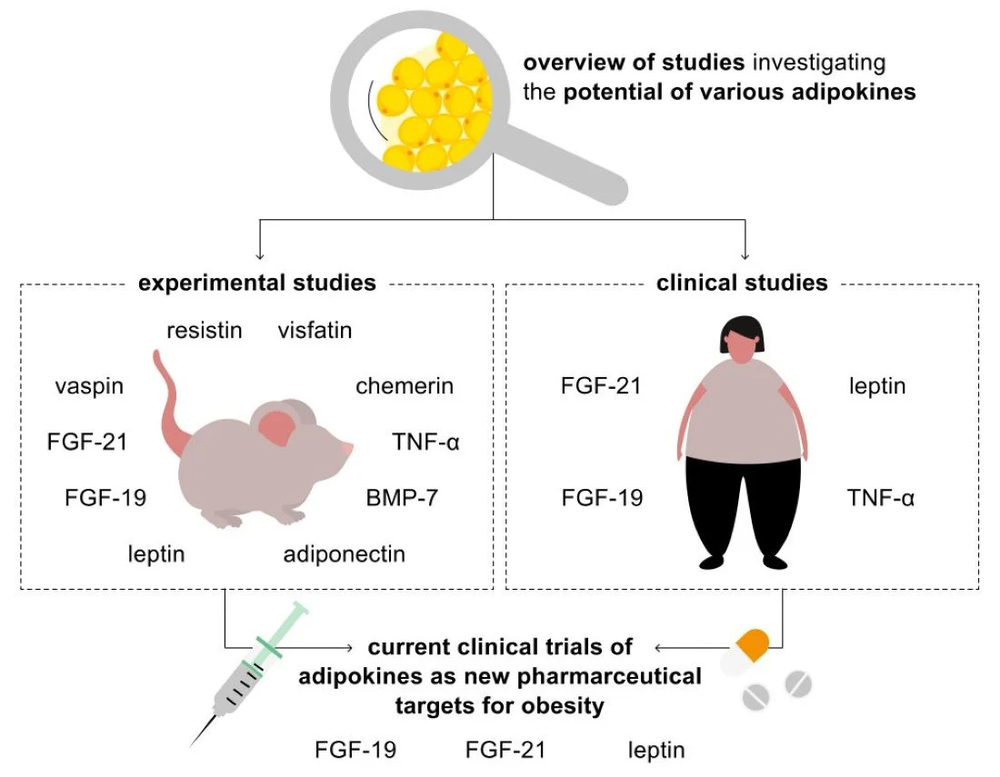 Fig. 1 Studies exploring the clinical potential of different adipokines. (Würfel, et al., 2023)
Customer Review
A Useful Resource for Obesity Research
"The obesity-related proteins and peptides met our research needs. Product details were easy to understand, and the purchasing process went smoothly, making the overall experience convenient for our lab."
E. C., Research Scientist
Reliable Products and Helpful Service
"We were able to source relevant research materials for obesity-related protein and peptide selection. The team provided helpful information, and the purchasing experience was efficient from start to finish."
S. M., Research Associate
Frequently Asked Questions
-
Which host expression systems are used for your metabolic proteins?
Mammalian systems, including HEK293 and CHO cells, are primarily used for proteins requiring complex post-translational modifications. Escherichia coli is generally selected for simpler protein domains that do not require glycosylation.
-
What formatting options are available for reconstituted stability?
Products are supplied as lyophilized powders with optimized carrier-free buffer compositions, ensuring rapid reconstitution and minimal aggregation upon storage.
-
Do you offer carrier-free options suitable for in vivo animal studies?
Yes, all in vivo grade products are formulated without BSA, HSA, or additives that could trigger unwanted immune or physiological responses in test subjects.
-
What is the typical shelf life and recommended storage condition for these products?
Lyophilized products are stable for at least 12 months when stored at -20°C to -80°C. Once reconstituted, aliquots should be stored at -80°C to avoid repeated freeze-thaw cycles.
Translating complex metabolic mechanisms into effective therapeutics requires biological tools designed with precision and structural fidelity. Whether you are probing central appetite circuits, mapping metabolic growth factor signaling, or validating novel multi-target therapeutics, the obesity-related proteins and peptides at Protheragen offer the reliability required for breakthrough discovery. We welcome you to contact us to discuss tailored solutions for your research pipeline.
Reference
- Würfel, M.; et al. Adipokines as clinically relevant therapeutic targets in obesity. Biomedicines. 2023, 11(5): 1427. (CC BY 4.0)
