
NK Cell Therapy Development Service
InquiryObesity is a lot more complex than just caloric imbalance. Over the last decade, immunology has shown us that chronic low-grade inflammation driven by adipose tissue dysregulation lies at the heart of metabolic syndrome. In lean individuals, adipose tissue houses healthy, active natural killer (NK) cells that help clear out stressed cells and maintain metabolic equilibrium. However, metabolic stress shifts this dynamic. Obesity changes things for the worse, impairing resident NK cell function and leaving the body vulnerable to systemic inflammation, insulin resistance, and an increased risk of malignancy.
Preclinical NK Cell Therapy Development for Obesity and Metabolic Dysfunction
Protheragen provides a specialized, end-to-end preclinical pipeline designed specifically for developers targeting this exact bottleneck. By designing specialized approaches to target senescent adipocytes, restore cytokine profiles, and counteract obesity-induced immune exhaustion, we help advance therapeutic candidate molecules through rigorous, reproducible in vitro and in vivo models. Our platforms focus entirely on the preclinical phases of discovery, optimizing NK cell function, viability, and homing characteristics prior to translational clinical testing.
Core Technologies
Our preclinical platform leverages an array of advanced methodologies to isolate, modify, and evaluate NK cells under conditions that mimic metabolic stress.
This system maps the shifting phenotypic landscape of metabolic tissue. We screen and isolate specific surface markers on hypertrophic, stressed, or senescent adipocytes to make sure that engineered NK therapeutic candidates can target damaged fat tissue while leaving healthy tissue alone.
Obesity creates an incredibly harsh, lipid-heavy microenvironment packed with suppressive factors like TGF-beta and free fatty acids. Our specialized culture setups mimic this state, giving you an accurate look at how your candidate cells will function inside an actual metabolic niche.
To understand NK cell behavior, you need granular detail. Our high-parameter flow panels monitor activation status, exhaustion markers such as PD-1 or TIM-3, and cytotoxic granule production like perforin and granzyme B inside metabolic tissue models.
Solution Scope
Navigating the intersection of immunology and metabolic disease requires a highly specific set of tools, which is why our capabilities span every phase of early-stage discovery from initial tissue isolation to complete preclinical validation.
Isolating functional NK cells from obese donors or metabolic tissue can be tricky because the cells are often functionally exhausted and fragile. Protheragen has refined high-yield isolation protocols that pull viable NK subsets from peripheral blood mononuclear cells (PBMCs) or direct adipose tissue digests. Following extraction, cells are grown using custom expansion formulas. These mixtures keep cell populations dividing without pushing them into premature senescence, yielding clean, active cells ready for functional screening.
Before scaling up any cell-based therapy, you need hard numbers on how it performs. We handle comprehensive functional testing, including real-time killing assays against stressed adipocytes, cytokine secretion analysis (IL-2, IFN-γ, TNF-α), and metabolic exhaustion profiling under hyperlipidemic conditions. By exposing cells to elevated free fatty acids and suppressive factors, we determine exactly how well your therapeutic candidate stands up to the metabolic pressures it will face in vivo.
Taking a therapy from an abstract idea to a concrete preclinical candidate requires custom engineering. We assist clients with engineering modifications, non-viral transfection methods, and receptor-targeting tweaks aimed at improving peripheral NK cell survival and tissue homing. This service covers everything from optimizing receptor density to engineering resistance against the suppressive factors found in inflamed adipose tissue, delivering a polished candidate package backed by strong preclinical proof-of-concept data.
Submit Your Project Details to design a customized preclinical evaluation study.
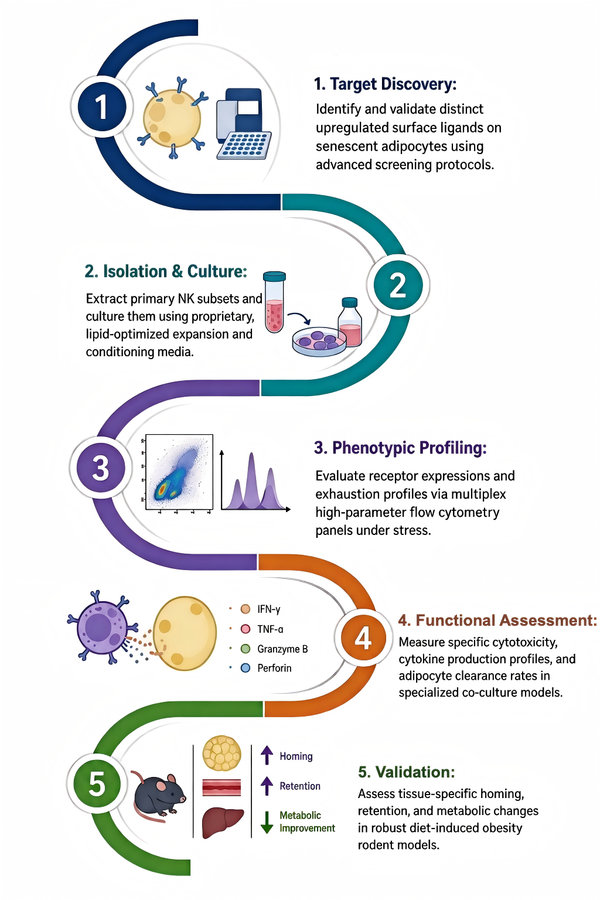
Workflow
Moving a therapeutic candidate from a conceptual design to a validated preclinical asset requires a structured, step-by-step pathway that systematically de-risks your molecule at every turn.
Fields of Application
The therapeutic utility of targeting and restoring NK cell function extends far beyond simple weight management, offering a powerful lever across a variety of interconnected metabolic and inflammatory disorders.
- Chronic Adipose Tissue Inflammation
Reversing the pro-inflammatory macrophage shift by targeting and clearing senescent, stressed adipocytes that drive systemic cytokine dysfunction. - Insulin Resistance Mitigation
Investigating how targeted NK cell interventions can lower local tissue stress and restore insulin receptor sensitivity in peripheral tissues. - Obesity-Linked Malignancy Subsets
Studying how restoring NK cell activity can overcome metabolic immune suppression to protect against obesity-associated tumor development. - Metabolic Syndrome Profiling
Evaluating broad immune-system changes and systemic biomarker shifts following targeted NK-based immune-modulatory therapies.
Advantages
Lipid-Tolerant Expansion Platforms
Standard cell culture media fail to replicate the lipotoxic environment typical of metabolic disorders, leading to misleading preclinical results. Protheragen utilizes specialized lipid-supplemented culture systems that prepare engineered NK cells to function effectively within fat tissue, showing superior survival rates.
Deep Adipose Immunology Domain Expertise
Our specialized scientific team has spent years mapping how immune cells behave in inflamed, hypertrophic fat tissue. We do not just run generic assay templates; instead, we customize every experimental layout to address the distinct receptor profiles and cellular stresses unique to chronic metabolic inflammation.
Validated High-Translational Rodent Models
Our diet-induced obesity models mirror the real physical changes seen in metabolic syndrome. This provides dependable data on how candidate therapies affect tissue-specific homing, systemic inflammation reduction, and overall insulin sensitivity metrics, backed comprehensively by our data records.
Strict Quality and Reproducibility Standards
We eliminate batch-to-batch variation through strict quality control protocols across all isolation, modification, and screening assays. Every dataset we deliver is rigorous, fully auditable, and structured to seamlessly support your regulatory filing goals and downstream development planning.
Inquire Directly About Our Specialized Preclinical Capabilities
Publication Data
Title: Natural Killer Cells: Friend or Foe in Metabolic Diseases?
Journal: Front. Immunol., 2021
DOI: https://doi.org/10.3389/fimmu.2021.614429
Summary: This 2021 review dissects dual NK cell roles in obesity-linked metabolic disorders (T2DM, NAFLD, atherosclerosis, hypertension). NK cells fuel adipose chronic inflammation via macrophage crosstalk yet show tissue/disease-stage functional shifts, highlighting NK-targeted immunotherapy potential and unresolved research gaps.
Key Findings
- NK cell distribution shifts in obesity: peripheral NK counts drop, while visceral adipose tissue (VAT) NKs accumulate with elevated activating receptors NKG2D, NKp46. Adipocytes secrete MCP-1 to recruit NKs and upregulate NKp46/NKG2D ligands to trigger NK activation.
- NKs drive adipose inflammatory loops: NK-derived IFN-γ pushes anti-inflammatory M2 adipose macrophages to pro-inflammatory M1 phenotype; M1 macrophages reciprocally release IL-12/IL-15 to sustain NK activity. NK depletion reduces macrophage infiltration and insulin resistance in obese murine models.
- Stage-dependent NK dysfunction: Early obesity leptin boosts NK cytotoxicity; chronic obesity induces NK lipid overload via PPAR pathways, crippling antitumor killing. Adiponectin suppresses NK inflammatory cytokine production.
- Disease-specific divergent NK effects: NKs promote insulin resistance/T2DM and hypertension via IFN-γ-mediated vascular inflammation; dual protective/profibrotic NK activity exists in NAFLD; atherosclerosis NK roles conflict, worsened by IL-15 overactivation.
- Therapeutic outlook: Block NKG2D/NKp46 ligand signaling or macrophage-NK crosstalk via targeted liposomal delivery may mitigate metabolic inflammation; KIR haplotype heterogeneity requires further clinical validation.
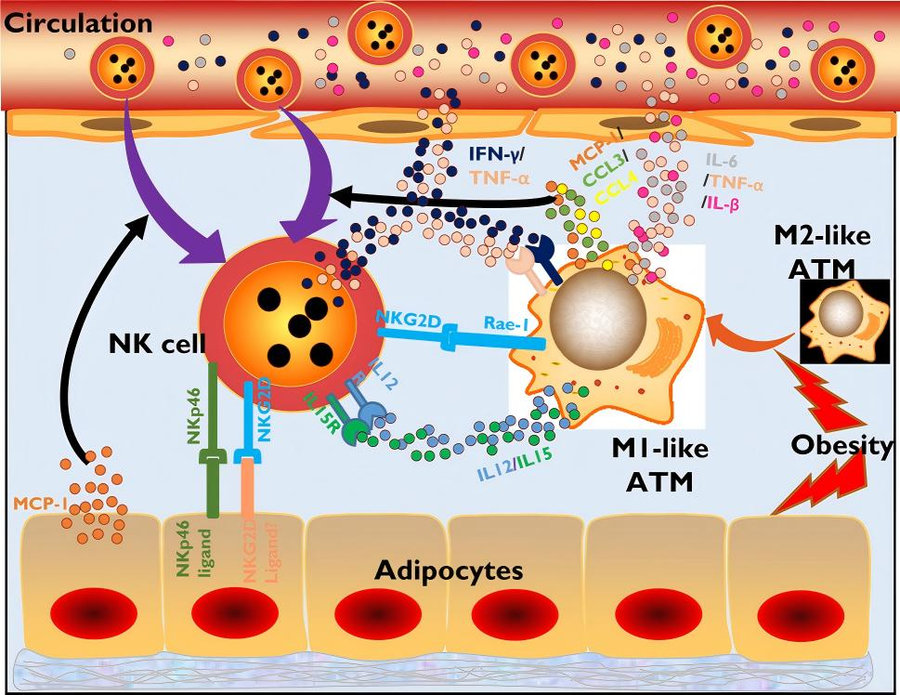 Fig.1 Crosstalk between NK cells, adipocytes and macrophages drives obesity chronic inflammation. (Li, et al., 2021)
Customer Review
Overcoming Lipotoxic Exhaustion in Candidate Selection
"Our development pipeline was stuck trying to get primary NK cells to remain functional in high-lipid culture setups. The team at Protheragen stepped in and customized a phenotypic screening platform that perfectly mirrored the adipose microenvironment. The data was incredibly clean, highly reproducible, and gave our team the clear direction we needed to select our lead therapeutic candidate molecule. We are already planning our next round of in vivo animal studies with them."
Dr. T. S., Senior Director of Immunology Discovery
Accelerating Discovery via Specialized Tissue Isolation Platforms
"We needed specialized tissue-resident isolation expertise that most standard service providers just do not offer. Protheragen delivered high-purity cells from complex fat tissues and managed our entire functional testing process seamlessly. Their deep understanding of metabolic exhaustion profiles saved our team months of trial-and-error design work."
Dr. P. I., Metabolic Disease Biotech
Frequently Asked Questions
-
Why should we target NK cells for an obesity or metabolic disorder project?
Obesity causes a distinct loss of normal NK cell function, allowing senescent fat cells to accumulate and drive chronic, systemic inflammation. Restoring or engineering these cells lets you target the root cause of this tissue stress, helping clear out those problematic cells and calm down systemic metabolic inflammation.
-
What exact cell sources do you work with for isolation services?
We regularly isolate cells from primary human PBMCs, healthy or diseased donor tissues, and specific rodent tissue samples. We can also handle specialized tissue-derived extractions, such as isolating tissue-resident subsets from adipose stromal vascular fractions.
-
How do your platforms simulate the harsh environment of metabolic tissue?
We introduce specific free fatty acid cocktails, elevated glucose levels, and high concentrations of suppressive cytokines like TGF-beta right into our assay setups. This ensures your therapeutic cells are tested against the actual lipotoxic conditions they will meet inside the body.
-
Can you assist with gene-editing or receptor-modification protocols?
Yes, we provide extensive preclinical development support for engineering modifications, including optimizing CAR constructs or non-viral delivery approaches. Our focus is squarely on making sure these modifications improve both homing and survival within target metabolic tissues.
-
What specific data points do you deliver from your testing assays?
You will receive comprehensive analysis reports covering specific cytotoxicity percentages, multiplexed cytokine secretome profiles, high-parameter flow data for exhaustion markers, and real-time cell tracking metrics over extended co-culture periods.
-
Do your services extend into human clinical trial phases?
No, we focus entirely on the preclinical phases of discovery. We specialize in in vitro screening, assay design, characterization, and in vivo animal model studies to help build a rock-solid data package before you transition into clinical work.
-
How do you prevent primary cell exhaustion during long expansion cycles?
We use proprietary, precisely timed cytokine mixes and specialized growth factors that keep cells multiplying without pushing them over the edge into exhaustion, ensuring your cells remain functional and highly active throughout testing.
-
What animal models do you run for metabolic in vivo validations?
Our primary approach uses validated diet-induced obesity models, typically using mice on high-fat regimens that display human-like metabolic symptoms, including weight gain, insulin resistance, and visceral fat inflammation.
Contact Us
Developing effective cellular therapies for complex metabolic disorders demands highly specialized, reliable platforms that reflect actual tissue pathology. Protheragen integrates deep scientific expertise in adipose immunobiology with optimized cell development platforms to help you advance your promising candidates from early-stage discovery toward successful translational development. Welcome to Contact Protheragen today to see how we can bring your project requirements to life.
Reference
- Li, Y.; et al. Natural Killer Cells: Friend or Foe in Metabolic Diseases? Front. Immunol. 2021, 12:614429 (CC BY 4.0).
All of our services and products are intended for preclinical research use only and cannot be used to diagnose, treat or manage patients.