
Proximity Labeling-based Obesity Membrane Protein Screening Service
InquiryObesity is a multi-faceted metabolic disorder characterized by the dysfunctional expansion of adipose tissue and systemic hormonal imbalances. At the heart of this pathology lie membrane proteins—receptors, transporters, and ion channels—that dictate how adipocytes, hepatocytes, and hypothalamic neurons respond to metabolic cues. Despite their importance, membrane proteins remain notoriously difficult to study due to their hydrophobic nature and transient interaction profiles.
Spatial Proteomic Mapping of Obesity-Related Membrane Interactomes
Protheragen provides a specialized proximity labeling (PL)-based obesity membrane protein screening service designed to map the spatial proteome of the "obese interactome." By utilizing advanced enzymatic tagging systems, we enable the identification of membrane-associated protein-protein interactions (PPIs) and organelle-specific surface markers in their native cellular environment. This platform is specifically engineered to support preclinical research into lipid metabolism, insulin signaling, and thermogenesis, providing high-resolution data that traditional biochemical assays cannot capture.
Core Technologies
Our platform centers on high-efficiency proximity-dependent biotinylation. Unlike traditional yeast two-hybrid or affinity purification methods, proximity labeling captures weak and transient interactions by covalently tagging neighboring proteins with biotin in vivo.
Utilizing an ultra-fast engineered biotin ligase, Protheragen achieves robust labeling in as little as 10 minutes. This prevents the "over-labeling" of non-specific proteins and allows for the capture of highly dynamic signaling events in metabolic pathways.
A smaller, more targeted ligase used for precise localization to restricted membrane domains or tight junctions, ensuring minimal structural interference with the fusion protein.
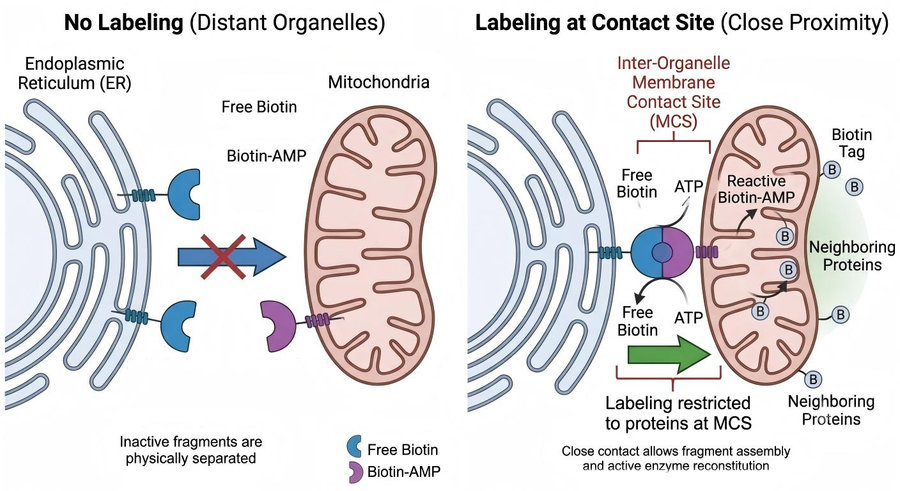
For investigating inter-organelle membrane contact sites (e.g., ER-mitochondria contacts in fatty liver models), we utilize split-enzyme systems that only reconstitute and label when two specific membranes are in close proximity.
Integrated TMT (tandem mass tag) or LFQ (label-free quantification) workflows allow for the comparative analysis of membrane proteomes between lean and obese Cellular Models.
Solution Scope
Our screening service is tailored to the unique challenges of metabolic research, focusing on the following areas:
- Adipocyte Surface Proteomics
Mapping the changes in the surfaceome of white versus brown adipose tissue during high-fat diet simulations.
- GPCR Interactome Profiling
Identifying the signaling complexes of orphan G protein-coupled receptors involved in appetite regulation and energy expenditure.
- Organelle Contact Site Mapping
Quantifying protein bridges between the endoplasmic reticulum and mitochondria, which are vital for calcium signaling and lipid droplet formation.
- Transporter Trafficking
Tracking the translocation of glucose transporters (e.g., GLUT4) and fatty acid transporters from intracellular vesicles to the plasma membrane.
- Insulin Receptor Substrate (IRS) Mapping
Defining the localized protein environment of insulin signaling components to identify novel nodes of insulin resistance.
Unlock high-resolution spatial insights to identify novel therapeutic targets.
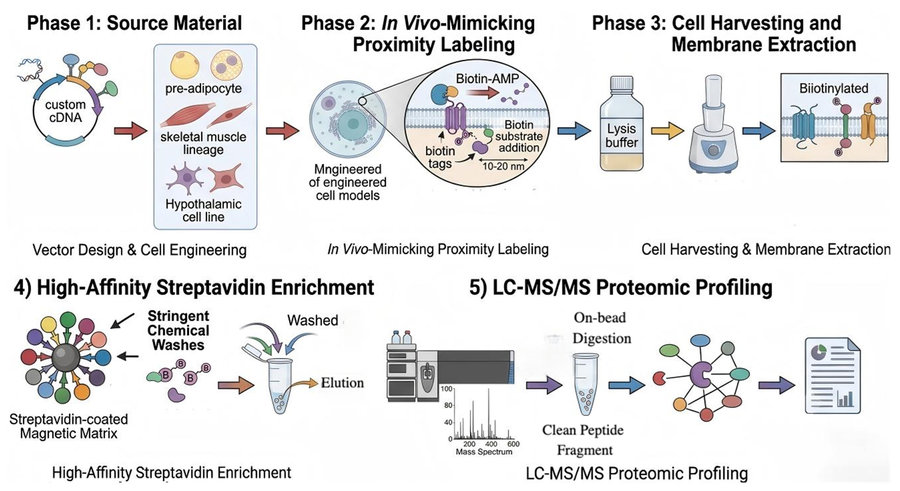
Workflow
Protheragen follows a rigorous, phase-gated workflow to ensure the highest data fidelity for your preclinical metabolic studies.
Fields of Application
Our proximity labeling-based obesity membrane protein screening service is designed to bridge the gap between static protein lists and dynamic functional maps, providing actionable data across diverse preclinical metabolic research areas.
- Drug Target Discovery: Identifying novel membrane receptors that can be targeted by small molecules or biologics to modulate lipid storage.
- Biomarker Identification: Discovering shed membrane proteins or extracellular vesicle markers associated with obesity-driven inflammation.
- Mechanism of Action (MoA) Studies: Elucidating how candidate anti-obesity compounds alter the spatial organization of metabolic enzymes.
- Insulin Resistance Research: Mapping the "interactome" of insulin-sensitive tissues to find pathways that bypass blocked signaling nodes.
Advantages
Protheragen differentiates itself through technical precision and metabolic expertise.
Superior Temporal Resolution
Our TurboID-based systems capture "snapshots" of membrane signaling, allowing us to see how protein networks change within minutes of metabolic activation.
Membrane-Specific Optimization
We utilize specialized detergent buffers that ensure even the most hydrophobic multi-pass transmembrane proteins are effectively recovered and identified.
Preclinical Relevance
Our protocols are optimized for primary cell cultures and complex tissue lysates, moving beyond simple immortalized cell lines to provide physiologically relevant data.
End-to-End Integration
From molecular cloning to advanced bioinformatics, we provide a seamless pipeline that requires minimal client intervention.
Click Here to Request a Project Consultation Today
Customer Review
Breakthroughs in GPCR Signaling and Hypothalamic Mapping
"Working with Protheragen transformed our approach to studying GPCR signaling in the hypothalamus. Their TurboID platform identified three novel regulatory proteins that we had missed for years using standard pull-down assays. The data was clean, and the bioinformatic report was ready for publication use."
Dr. C. O., Principal Investigator
Quantifying Inter-Organelle Communication in Lipid Stress Models
"The expertise Protheragen brought to our ER-mitochondria contact site project was invaluable. They handled the complex split-enzyme system with ease, and the results provided a clear mechanistic link between lipid stress and mitochondrial dysfunction in our obesity model. We are already planning our next series of screenings with their team."
Dr. D. K., Senior Scientist
Frequently Asked Questions
-
Why choose proximity labeling over traditional co-immunoprecipitation (Co-IP)?
Co-IP often fails with membrane proteins due to the need for mild detergents that may not fully solubilize the protein or, conversely, harsh detergents that break the very interactions you seek to study. PL uses covalent tagging, allowing for the use of the harshest denaturants while preserving the "history" of the interaction.
-
What is the minimum amount of starting material required?
While it varies by protein expression levels, we generally require 107 to 108 cells for a comprehensive membrane proteome screen.
-
Can you perform this service in primary adipocytes?
Yes, we have optimized viral delivery systems to express proximity ligases in primary mouse and human adipocytes.
-
How do you minimize "background" biotinylation?
We include rigorous control groups, such as cells expressing the ligase alone (non-fused) or "empty" vectors, to distinguish specific interactors from stochastic collisions.
-
How long does a typical project take?
A standard project from construct design to final report typically spans 8 to 12 weeks.
-
Does the TurboID tag interfere with protein function?
We offer multiple linker lengths and both N- and C-terminal fusion options to ensure the tag does not obstruct functional domains or localization signals.
-
Is this service suitable for studying lipid droplet-associated proteins?
Absolutely. Proximity labeling is the gold standard for studying the proteome of non-membrane-bound organelles like lipid droplets.
-
What bioinformatic support do you provide?
We provide full statistical analysis, including FDR filtering, enrichment analysis, and pathway mapping tailored to metabolic disease.
-
Can we use this for secreted proteins involved in obesity?
Yes, by targeting the ligase to the secretory pathway, we can label and identify proteins that interact during the trafficking process.
Contact Us
Protheragen is dedicated to providing the most advanced proximity labeling tools to unravel the complexities of membrane protein networks in obesity. Our specialized focus on preclinical metabolic models ensures that your research is supported by industry-leading expertise and cutting-edge proteomic technology. Welcome to Contact Protheragen.
All of our services and products are intended for preclinical research use only and cannot be used to diagnose, treat or manage patients.