
Nematode Gene Microarray Service
InquiryObesity is a complex metabolic disorder characterized by excessive lipid accumulation and dysregulated energy homeostasis. At Protheragen, we leverage the powerful Caenorhabditis elegans model to provide high-resolution insights into the genetic architecture of metabolic diseases. Our nematode gene microarray service offers a robust preclinical platform for identifying gene expression profiles associated with fat storage, endocrine signaling, and dietary response.
Nematode Gene Microarray Service for Obesity Research
Because C. elegans shares over 65% of its genes with humans—including key metabolic pathways like insulin/IGF-1 signaling and TGF-β—it serves as an ideal high-throughput model for obesity research. Our service enables researchers to analyze thousands of transcripts simultaneously, facilitating the identification of novel biomarkers and the evaluation of anti-obesity compounds before transitioning to more complex vertebrate models.
Core Technologies
Protheragen utilizes cutting-edge transcriptomic tools designed specifically for the nematode genome. Our core technology integrates high-density oligonucleotide microarrays with advanced bioinformatics pipelines.
- Precision Microarray Fabrication
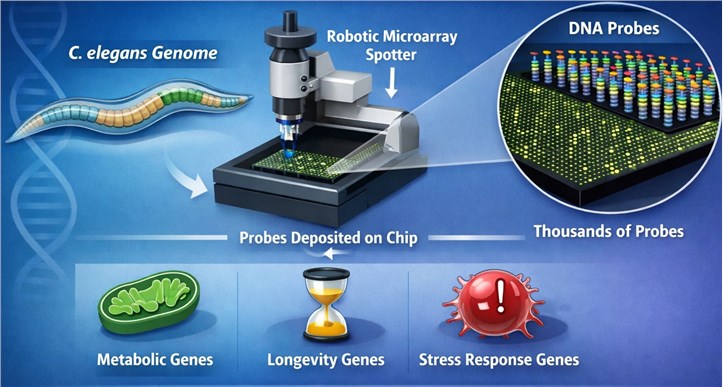
We utilize specialized chips containing probes for the entire C. elegans genome, ensuring comprehensive coverage of metabolic, longevity, and stress-response genes.
- Fluorescent Labeling & Hybridization
Optimized RNA extraction and dual-color labeling protocols minimize noise and maximize the detection of low-abundance transcripts involved in lipid metabolism.
- GWAS-Guided Analysis
By integrating findings from human genome-wide association studies (GWAS) with nematode transcriptomics, we help clients map human obesity-risk orthologs to functional pathways in C. elegans.
Service Scope
Our services cover a broad spectrum of obesity-related inquiries, ensuring a comprehensive preclinical evaluation:
- Lipid Metabolism Profiling
Monitoring the expression of genes involved in fatty acid synthesis, desaturation, and β-oxidation.
- Endocrine Signaling Studies
Analyzing the impact of insulin-like peptides and nuclear hormone receptors on adiposity.
Evaluating how natural products or synthetic compounds modulate metabolic gene expression.
- Longevity and Healthspan Correlation
Investigating the link between metabolic health and lifespan extension.
Workflow
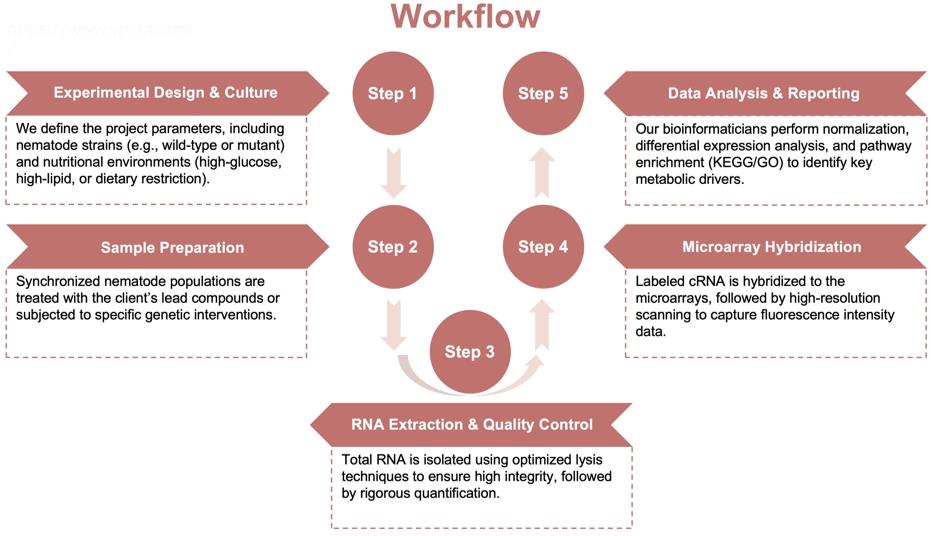
Our streamlined workflow is designed to move your obesity research from hypothesis to actionable data with maximum efficiency.
Fields of Application
Our nematode gene microarray service provides a versatile platform for dissecting the molecular mechanisms of lipid regulation across a diverse array of scientific disciplines.
- Pharmaceutical Discovery: Identifying targets for metabolic syndrome and type 2 diabetes.
- Nutraceutical Testing: Screening functional foods and supplements for lipid-lowering effects.
- Toxicology: Assessing the metabolic disruptions caused by environmental endocrine disruptors.
- Basic Genetic Research: Mapping the regulatory networks of fat accumulation and energy expenditure.
Advantages
Choosing Protheragen provides your research program with unparalleled precision and speed.
Unmatched Orthology
We leverage the high evolutionary conservation of metabolic pathways. With approximately 60–80% of human genes having a C. elegans ortholog, our platform focuses on these conserved metabolic nodes. This ensures that the insights gained regarding gene function and pathway regulation have a high probability of direct translation to mammalian systems.
High-Throughput Capabilities
Our automated platform allows for the simultaneous processing of hundreds of experimental conditions—including various drug concentrations, genetic backgrounds, and environmental stressors. This massively parallel approach compresses timelines that would take months in mouse models into just a few weeks, accelerating your lead optimization phase.
Cost-Efficiency
Nematode studies offer a "fail fast, fail cheap" advantage. By utilizing C. elegans, you can obtain deep mechanistic insights and toxicity profiles at approximately 10% of the cost of traditional vertebrate preclinical trials. This allows for a broader initial funnel in your drug discovery pipeline without exhausting your R&D budget.
Proven Success
Our methodology is not just theoretical; it is validated by a track record of excellence. We have successfully identified novel lipid-regulatory genes through our nematode screens that were subsequently confirmed in mammalian cell lines and higher organisms. This "Nematode-to-Mammal" pipeline minimizes the risk of late-stage attrition in your development program.
Consult with Our Scientists Today to Design Your Obesity Study.
Publication Data
Title: Genes in human obesity loci are causal obesity genes in C. elegans
Journal: PLOS Genetics, 2021
DOI: https://doi.org/10.1371/journal.pgen.1009736
Summary: This study aims to identify causal obesity genes from human genome-wide association study (GWAS) candidates using the model organism C. elegans. Researchers conducted high-throughput in vivo RNAi screening on 293 C. elegans orthologs of human obesity-linked genes, testing two feeding regimens: regular diet (RD) and a newly developed high-fructose diet (HFrD) for diet-induced obesity (DIO). The study validated 17 genes that regulate fat storage in C. elegans, with conserved associations in mouse and human datasets. Additionally, it demonstrated that silencing three DIO-suppressor genes not only prevents fat accumulation but also improves healthspan and lifespan in fructose-fed worms, highlighting their potential as anti-obesity drug targets.
Key Findings
- Causal Obesity Genes in C. elegans: RNAi screening identified 14 genes that promote obesity (e.g., puf-8, glp-1, pop-1) and 2 genes that induce leanness (e.g., Y71H10B.1, let-767) when silenced in worms on a regular diet.
- High-Fructose Diet (HFrD) Model: Worms fed 10mg/mL fructose showed hallmark obesity traits—increased fat content (in primary/ectopic tissues), larger lipid droplets, reduced locomotion, and 69% shorter median lifespan—mimicking human DIO.
- DIO-Suppressor Genes: Three genes (pho-1, let-767, Y71H10B.1) were confirmed to prevent fructose-induced obesity. Silencing these genes restored lipid homeostasis, locomotor function, and lifespan in HFrD-fed worms.
- Cross-Species Conservation: Expression patterns of human/mouse orthologs of the C. elegans hits (e.g., NT5C2 for Y71H10B.1, ACP2 for pho-1) correlated with obesity traits (BMI, waist-hip ratio) in human (METSIM) and mouse (HMDP) cohorts, supporting conserved causal roles.
- Therapeutic Potential: 11 of the 17 validated genes are novel obesity regulators, and their orthologs in humans are linked to metabolic traits (e.g., insulin resistance, cardiovascular disease), making them promising druggable targets.
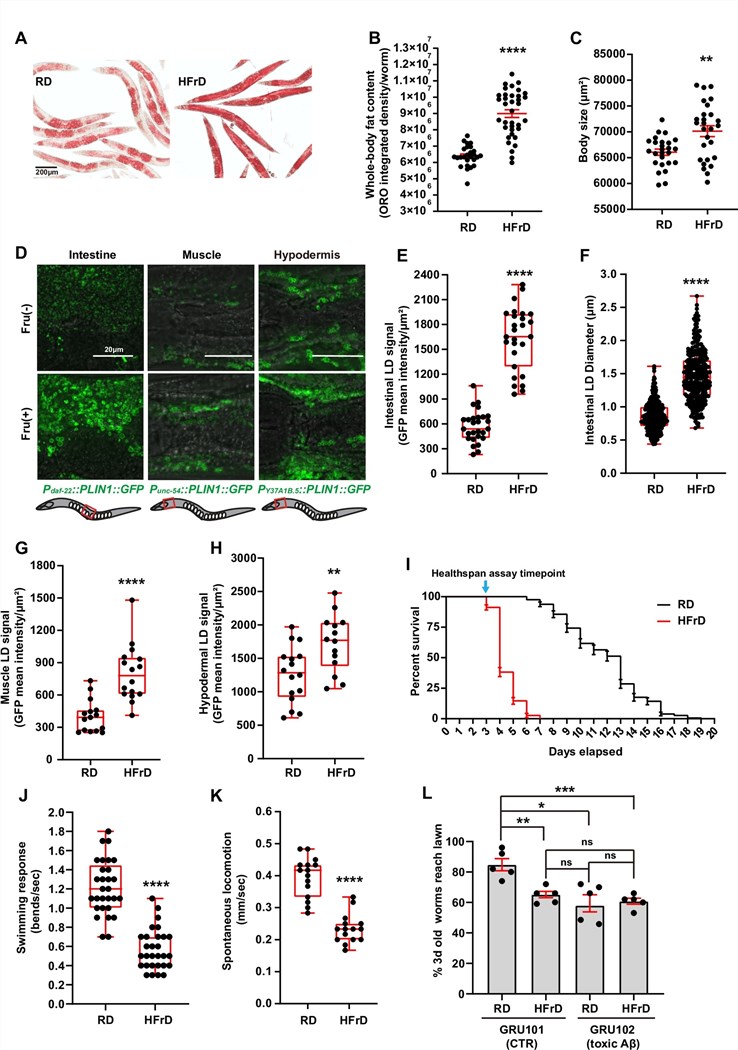 Fig.1 High-fructose diet triggers diet-induced obesity in C. elegans: increased fat accumulation, impaired healthspan, and shortened lifespan. (Ke, et al., 2021)
Customer Review
Accelerating Lead Optimization Through High-Resolution Genetic Mapping
"Working with Protheragen revolutionized our early-stage screening process. Their microarray service identified a set of previously unknown desaturase regulators that were pivotal for our metabolic pipeline. The depth of the bioinformatic report allowed us to move straight into validation studies with high confidence. We plan to integrate their platform into all our future lead-optimization phases."
Dr. S. P., Metabolic Health Institute
Seamless Translation from Nematode Orthologs to Human Metabolic Targets
"The precision and reliability of the data provided by Protheragen were exceptional. We were particularly impressed by how their team mapped nematode gene expression changes to human GWAS data, providing us with a clear roadmap for our obesity research. Their expertise in C. elegans biology is truly world-class."
Dr. D. B., BioPharma Corp
Frequently Asked Questions
-
Why use C. elegans microarrays instead of RNA-Seq?
While both are powerful, our microarray service offers a cost-effective, highly standardized, and rapid turnaround for established genomic sequences, making it ideal for large-scale screening.
-
Can you handle mutant strains?
Yes, we work with various transgenic and knockout strains to study specific gene-environment interactions.
-
How much sample material is required?
We have optimized protocols for low-input RNA, typically requiring only a small population of synchronized worms.
-
How do you ensure data reproducibility?
We utilize technical replicates and rigorous normalization processes to ensure "published data" quality results.
-
Is this service applicable to aging research?
Absolutely; obesity and aging are closely linked through metabolic signaling, and our arrays cover both sectors.
-
Can you test hydrophobic compounds?
Yes, our culture methods allow for the delivery of various compound types, including those with low water solubility.
-
What is the typical turnaround time?
Most projects are completed within 4–6 weeks from sample receipt to final report.
-
Do you provide bioinformatic support?
Yes, every project includes a full bioinformatic analysis, including volcano plots and pathway mapping.
-
Are the results translatable to humans?
While preclinical, the high degree of genetic orthology provides a strong foundation for subsequent clinical hypotheses.
Contact Us
Protheragen is committed to accelerating your metabolic research through innovative nematode technologies. Our team of experts is ready to help you navigate the complexities of gene expression and lipid metabolism.
Contact Protheragen for More Information and to Discuss Your Project
Reference
- Ke, W.; et al. Genes in human obesity loci are causal obesity genes in C. elegans. PLoS Genet. 2021, 17(9): e1009736. (CC BY 4.0)
All of our services and products are intended for preclinical research use only and cannot be used to diagnose, treat or manage patients.