
Mouse Gene Microarray Service
InquiryObesity is a complex, polygenic disorder characterized by chronic low-grade inflammation and profound metabolic dysregulation. At Protheragen, we recognize that traditional phenotypic measurements often fail to capture the subtle molecular shifts that precede clinical symptoms or drive drug resistance.
Mouse Gene Microarray Service for Obesity Research
Our mouse gene microarray service for obesity research provides a high-resolution window into the murine transcriptome, allowing researchers to decode the genetic architecture of adipogenesis, insulin signaling, and energy homeostasis. By utilizing advanced hybridization platforms, we enable the simultaneous analysis of tens of thousands of transcripts across multiple tissues—including white adipose tissue (WAT), liver, and hypothalamus—providing a systems-level understanding of metabolic disease progression and therapeutic efficacy in preclinical models.
Core Technologies
Protheragen utilizes industry-leading microarray platforms optimized for the mouse genome. Our core technology integrates high-density oligonucleotide probes that ensure exceptional specificity and sensitivity, even for low-abundance transcripts involved in hormonal regulation.
- High-Resolution Hybridization
We employ advanced surface chemistry to minimize non-specific binding, ensuring that fold-change data in obesity models is both accurate and reproducible.
- Tissue-Specific Optimization
Recognizing the heterogeneity of metabolic tissues, we utilize specialized lysis and stabilization protocols for lipid-rich samples (adipose) and glycogen-heavy samples (liver).
- Bioinformatics Pipeline
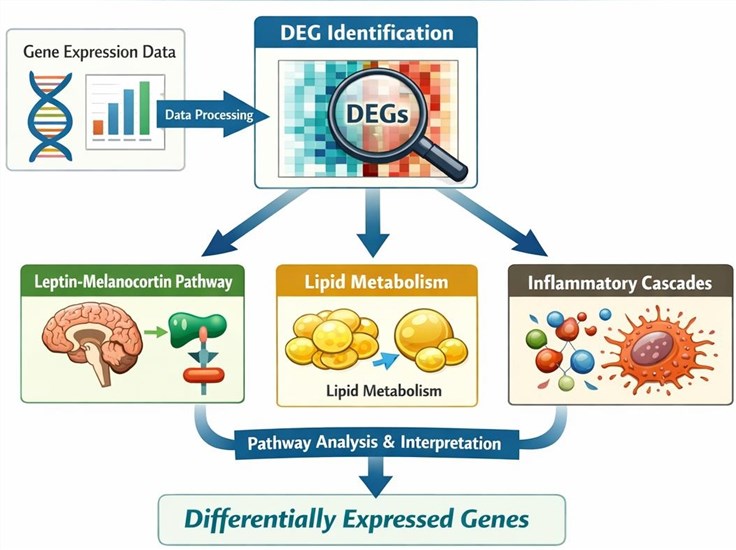
Our proprietary data normalization and pathway analysis tools are tailored to identify differentially expressed genes (DEGs) specifically linked to the leptin-melanocortin pathway, lipid metabolism, and inflammatory cascades.
Service Scope
The Protheragen service covers a broad spectrum of preclinical obesity research needs:
- Diet-Induced Obesity (DIO) Profiling
Analyze gene expression changes in C57BL/6J or other strains across varying fat-content diets (e.g., 45% vs. 60% kcal fat).
- Genetic Model Analysis
Deep-dive into the transcriptomes of monogenic models such as ob/ob (leptin-deficient) and db/db (leptin receptor-deficient) mice.
- Therapeutic Screening
Evaluate the molecular impact of GLP-1 agonists, SGLT2 inhibitors, or novel phytochemicals on hepatic and adipocyte gene expression.
- Tissue-Specific Studies
Comprehensive profiling of epididymal, inguinal, and brown adipose tissues, as well as liver, skeletal muscle, and brain regions.
Connect with Our Biology Specialists Today to Initiate Your Study.
Workflow
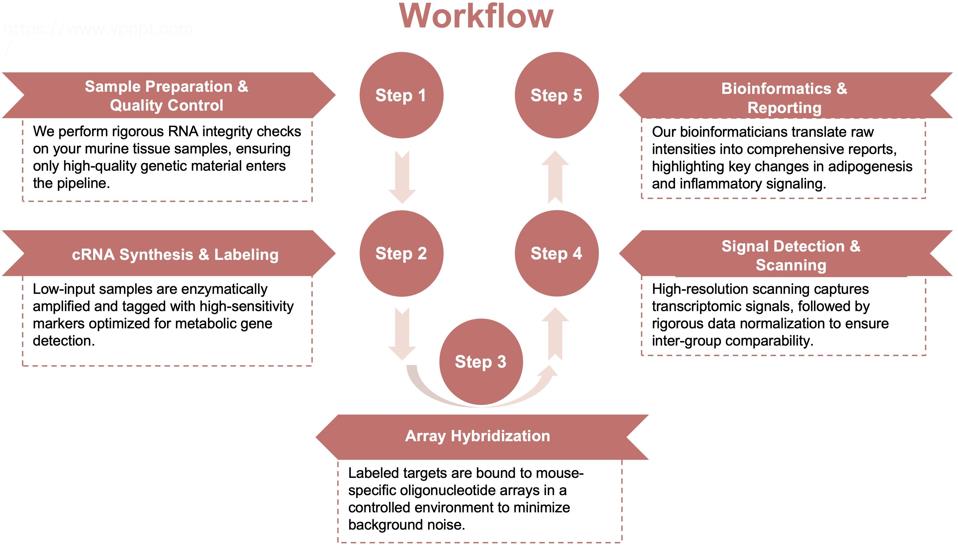
Our streamlined workflow is designed to maximize data integrity from sample reception to final reporting.
Fields of Application
Our mouse gene microarray service provides critical molecular insights across diverse therapeutic areas, enabling researchers to map complex metabolic networks and validate novel interventions in a preclinical setting.
- Drug Discovery: Identification of novel drug targets by analyzing pathways upregulated in obesity-resistant vs. obesity-prone mouse strains.
- Biomarker Identification: Discovering circulating or tissue-specific mRNA signatures that correlate with insulin resistance or NAFLD progression.
- Nutrigenomics: Investigating how specific dietary components influence gene expression patterns related to thermogenesis and lipid oxidation.
- Endocrinology: Mapping the cross-talk between the gut-brain axis and peripheral metabolic organs at the transcriptomic level.
Advantages
Choosing Protheragen provides your research with a competitive edge through precision and depth.
Data Reliability
Our protocols are rigorously modeled after peer-reviewed, gold-standard methodologies. By ensuring stringent quality control and technical reproducibility, we bridge the gap between raw experimental data and validated scientific findings.
Sensitivity to Subtle Changes
In metabolic research, the most critical breakthroughs often hide in the margins. We specialize in detecting low-fold changes in regulatory genes and metabolic flux that standard platforms frequently overlook. This heightened sensitivity is indispensable for researchers investigating the early-stage progression of metabolic syndrome, where subtle molecular shifts precede overt clinical phenotypes.
Expert Consultation
Data is only as valuable as the insights derived from it. Our team consists of doctorate-level biology specialists with decades of collective experience in metabolic physiology. We go beyond automated reports, providing bespoke consultation to help you interpret complex "big data" within the nuanced context of hormonal signaling, enzymatic regulation, and systemic homeostasis.
End-to-End Integration
We provide a comprehensive research pipeline that minimizes technical friction. From the pre-clinical experimental design and sample preparation to advanced pathway mapping and bioinformatic analysis, Protheragen manages every logistical and technical detail. This full-spectrum integration allows you to offload the operational burden and maintain your focus on high-level hypothesis testing and discovery.
Contact Our Specialist Team Today to Receive a Customized Project Quote and Technical Consultation.
Publication Data
Title: Identification of a specific set of genes predicting obesity before phenotype appearance
Journal: iScience, 2025
DOI: https://doi.org/10.1016/j.isci.2025.112377
Summary: This study aims to identify early predictive gene markers for obesity predisposition before phenotypic signs appear. Using two mouse models—one investigating innate interindividual variability in obesity susceptibility and another exploring maternal nutritional stress-induced metabolic imprinting—the researchers analyzed transcriptomic data from white adipose tissue (WAT). They identified a set of genes whose expression correlates with obesity susceptibility, validated the genes across species (mice and humans), sexes, and adipose tissue depots via integration with public human datasets, and developed predictive models with high accuracy. These genes hold potential for early diagnosis of obesity risk and advancing personalized prevention strategies.
Key Findings
- Innate and Induced Obesity Susceptibility: In inbred mice, a high-fat diet (HFD) challenge revealed three distinct groups (resistant, intermediate, prone to diet-induced obesity [DIO]), with no pre-challenge physical parameters predicting susceptibility. Maternal nutritional stress (e.g., low-protein or high-fat diets during gestation/lactation) also induced stable DIO susceptibility or resistance in offspring.
- Early Predictive Gene Set: Transcriptomic analysis of perigonadal WAT identified 197 common genes whose expression is altered in obesity-prone mice before HFD exposure (prior to phenotypic changes). These genes were derived from overlapping signatures of the two mouse models.
- Cross-Species/Context Discriminative Power: Integrating mouse data with four human datasets (lean vs. obese individuals, diverse WAT depots, both sexes) showed 143 orthologous genes effectively discriminate obesity status. The optimized predictive model (109 genes) achieved an AUC of 0.818, with low balanced error rates (0.131), demonstrating robustness across confounding factors (age, ethnicity, tissue type).
- Top Candidate Genes with Metabolic Relevance: Leading genes (e.g., Glul, SFRP4, ITIH5) are previously linked to metabolic diseases—their expression is dysregulated in obese humans and correlates with glutamine metabolism, Wnt signaling, and inflammation in adipose tissue.
- Epigenetic Imprinting Insight: The gene signature is likely shaped by perinatal epigenetic modifications (supported by DOHaD hypothesis), as genetic variability was minimized in inbred mice. The signature remains stable over time and is independent of maternal obesity.
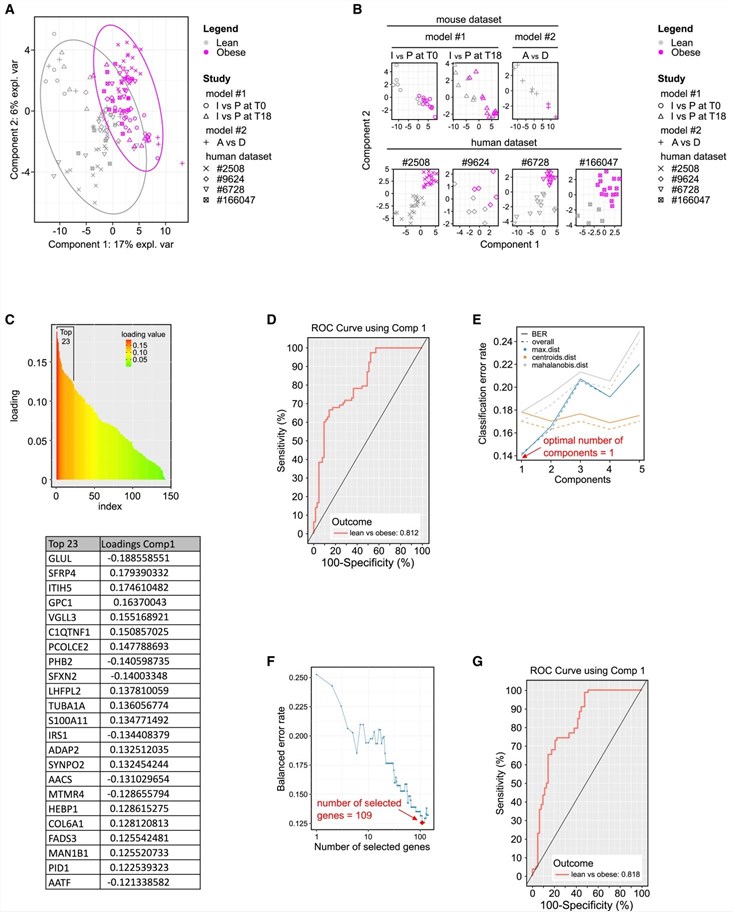 Fig.1 Translational obesity biomarkers: Mouse-identified genes distinguish lean/obese phenotypes in humans regardless of sex or adipose depot. (Jousse, et al., 2025)
Customer Review
Breakthroughs in Insulin Resistance Target Identification
"The team at Protheragen provided invaluable support during our study on diet-induced insulin resistance. Their ability to handle difficult adipose samples and provide such clear, pathway-focused reporting allowed us to identify a novel inflammatory marker that we are now moving into lead optimization. We look forward to our next collaboration on our upcoming thermogenesis project."
Dr. D. S., Metabolic Research Institute
Seamless Integration of Complex Transcriptomic Data
"Working with Protheragen has been a seamless experience. The depth of their technical knowledge in mouse genetics and the quality of the microarray data surpassed our expectations. The bioinformatics report was not just a list of genes but a true biological narrative."
Dr. P. R., University Biotech Spin-off
Frequently Asked Questions
-
How many samples do I need for a statistically significant obesity study?
We typically recommend a minimum of 3-5 biological replicates per group (e.g., lean vs. DIO) to account for natural biological variation and ensure robust statistical power.
-
Can you process lipid-rich adipose tissue effectively?
Yes, Protheragen uses specialized extraction kits specifically designed to remove high lipid content, which can otherwise interfere with RNA purity.
-
What is the turnaround time for a standard project?
Most projects are completed within 3-4 weeks from the receipt of samples to the delivery of the final bioinformatics report.
-
Do you offer custom array designs for specific metabolic pathways?
While our whole-genome arrays are comprehensive, we can provide focused analysis on specific gene sets relevant to your research goals.
-
Is microarray analysis more cost-effective than RNA-Seq for obesity research?
For many established mouse models, microarrays offer a highly cost-effective and standardized approach with simplified data analysis compared to the complexities of RNA-Seq.
-
Can you help me choose the right mouse model for my study?
Absolutely. Our specialists can provide insights into the transcriptomic characteristics of various models, from DIO to specialized genetic strains.
-
What format will the data be delivered in?
You will receive raw data files, normalized data spreadsheets, and a comprehensive PDF report featuring interactive visualizations and pathway analysis.
-
Do you provide validation services like qPCR?
Yes, we offer follow-up qPCR services to validate the top differentially expressed genes identified in the microarray study.
-
How do you ensure the privacy of my research data?
Protheragen adheres to strict confidentiality protocols and secure data handling practices to protect your intellectual property.
Contact Us
Protheragen provides a comprehensive, high-precision mouse gene microarray service specifically tailored for obesity and metabolic disease research. Our end-to-end solutions—from expert sample processing to advanced bioinformatics—empower researchers to uncover the molecular drivers of obesity with confidence and clarity.
Contact Protheragen for More Information and to Discuss Your Project
Reference
- Jousse, C.; et al. Identification of a specific set of genes predicting obesity before phenotype appearance. iScience. 2025, 28(5), 112377. (CC BY 4.0)
All of our services and products are intended for preclinical research use only and cannot be used to diagnose, treat or manage patients.