
Rat Gene Microarray Service
InquiryObesity is a multifaceted metabolic disorder characterized by excessive adipose tissue accumulation and systemic physiological dysfunction. In preclinical research, the rat model remains the gold standard for studying the molecular underpinnings of obesity due to its physiological similarity to human metabolic syndromes.
Rat Gene Microarray Service for Obesity Research
Protheragen offers a specialized rat gene microarray service tailored specifically for obesity and metabolic research. This high-throughput platform enables researchers to simultaneously monitor the expression of tens of thousands of genes, providing a holistic view of the transcriptomic landscape in tissues such as white adipose tissue (WAT), brown adipose tissue (BAT), liver, and hypothalamus.
Core Technologies
Our service utilizes the industry’s most reliable microarray platforms, ensuring high sensitivity and reproducibility for detecting subtle changes in gene expression.
- High-Density Oligonucleotide Microarrays
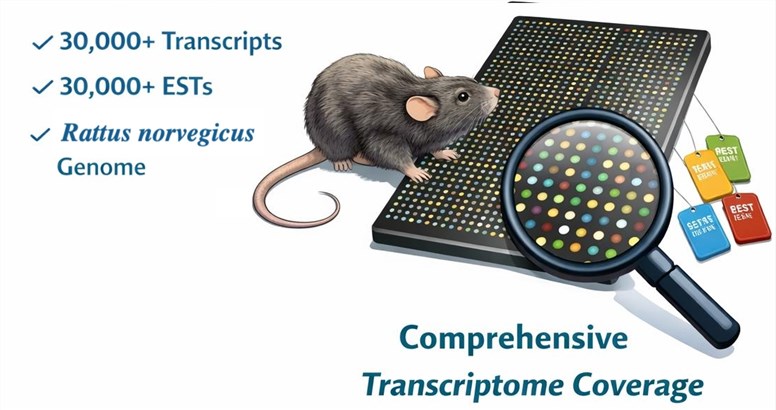
We utilize platforms featuring over 30,000 well-annotated transcripts and expressed sequence tags (ESTs) for the Rattus norvegicus genome, ensuring comprehensive coverage of the transcriptome.
- Targeted Obesity Arrays
In addition to whole-genome profiling, we offer specialized arrays focusing on 80+ key genes involved in adipogenesis, insulin signaling, and lipid transport (e.g., Leptin, SREBP-1, PPAR-γ).
- Advanced Signal Detection
Utilizing dual-color fluorescence (Cy3/Cy5) and high-resolution scanning, we provide a wide dynamic range to detect both highly expressed metabolic enzymes and low-abundance transcription factors.
Inquire About Our Technology Platform
Service Scope
Our service covers a broad spectrum of research needs within the preclinical obesity space:
- Tissue-Specific Profiling
Detailed transcriptomic analysis across the "metabolic axis," including liver, skeletal muscle, and diverse adipose depots.
- Model Validation
Comparing gene expression signatures across different rat models (e.g., Wistar vs. Sprague-Dawley on cafeteria diets) to ensure model relevance.
- Temporal Gene Expression
Longitudinal studies tracking the progression from insulin resistance to full-blown metabolic syndrome.
- Mechanism of Action (MoA) Studies
Evaluating how experimental compounds influence key pathways like fatty acid β-oxidation or thermogenesis.
Workflow
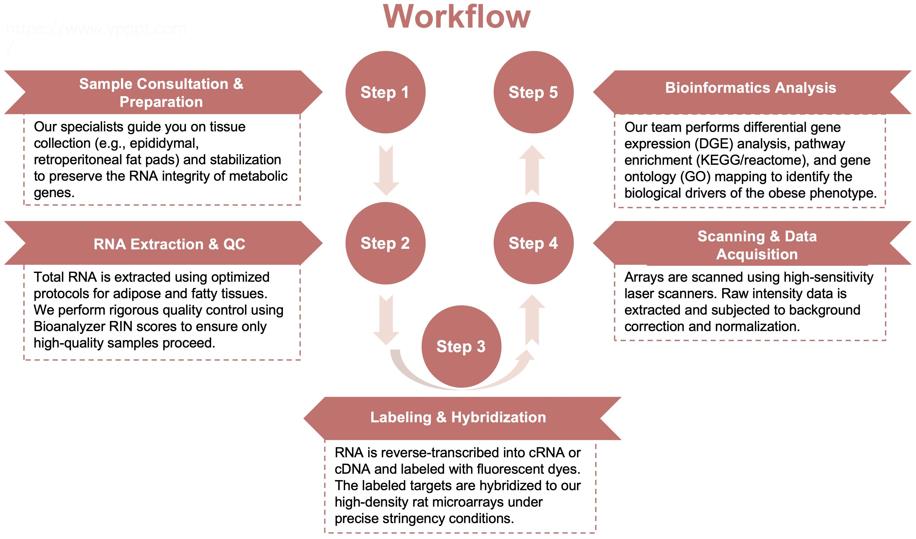
Protheragen provides a seamless end-to-end workflow to transform your biological samples into actionable metabolic insights.
Fields of Application
Our rat gene microarray service serves as a versatile engine for metabolic discovery, providing high-resolution genomic insights across diverse disciplines of preclinical obesity and endocrine research.
- Drug Discovery: Identifying gene expression "reversals" in rats treated with anti-obesity candidates.
- Nutrigenomics: Studying how specific dietary components (e.g., high-fructose vs. high-fat) alter the expression of genes involved in lipogenesis.
- Endocrinology: Investigating the crosstalk between the gut-brain axis and peripheral adipose tissue through ghrelin and leptin signaling pathways.
- Developmental Programming: Analyzing how maternal obesity affects the metabolic gene expression profile of offspring in rat models.
Advantages
Choosing Protheragen for your obesity research provides several distinct technical and strategic benefits:
Expertise in Adipose Transcriptomics
We have extensive experience handling difficult, lipid-rich samples, ensuring high RNA yields and minimal degradation—a common bottleneck in obesity studies. Our lysis buffers are optimized to partition lipids from nucleic acids efficiently, preventing the "clogging" effect of triglycerides that often leads to low purity in standard preps.
Translational Relevance
We maximize the predictive power of animal models by mapping gene signatures against human metabolic orthologs. By contextualizing results with human tissue datasets (e.g., GTEx), we ensure your preclinical findings correlate directly with human obesity and insulin resistance states.
Enhanced Sensitivity
Our platform can detect subtle fold-changes in regulatory genes like C/EBP-α and Adiponectin that are often missed by standard RNA-seq at lower depths. By employing high-depth sequencing and advanced noise-reduction algorithms, we capture the nuances of transcriptional "drift" in early-stage metabolic dysfunction.
Comprehensive Reporting
Receive a publication-ready report featuring heatmaps, volcano plots, and detailed pathway maps (e.g., PPAR signaling, Insulin signaling). Our reports include high-resolution gene ontology (GO) and KEGG pathway enrichment, providing a "systems biology" view of how your treatment affects lipid metabolism and inflammatory cascades.
Request a Customized Quote for Your Project Today
Publication Data
Title: Gene Monitoring in Obesity-Induced Metabolic Dysfunction in Rats: Preclinical Data on Breast Neoplasia Initiation.
Journal: J. Mol. Sci., 2025
DOI: https://doi.org/10.3390/ijms26157296
Summary: This study develops an immunocompetent rat model of obesity-induced luminal breast cancer using a cafeteria diet mimicking Western obesogenic nutrition, aiming to address the inadequacy of existing preclinical models. Female Sprague–Dawley rats were fed either a cafeteria diet or standard chow from weaning, with longitudinal evaluations of metabolic parameters, plasma biomarkers, mammary gland histology, tumor incidence, and gene expression profiles. A subgroup also underwent dietary reversal to test the reversibility of molecular changes. The model successfully recapitulates key metabolic, histological, and molecular features of obesity-associated luminal breast cancer, offering a valuable platform for studying early tumorigenic mechanisms and prevention strategies without carcinogen-induced confounders.
Key Findings
- Metabolic Effects: The cafeteria diet induced significant obesity (mean weight 426.76 g vs. 263.09 g in controls, p < 0.001), increased leptin levels, and elevated perigonadal fat weight and gross fat volume, without altering insulin, IGF-1, or inflammatory markers like CRP.
- Histological Alterations: Cafeteria-fed rats showed higher incidence of ductal ectasia (20% vs. 8% in controls, p < 0.001) and earlier onset of benign lesions (fibroadenomas) and luminal carcinomas, with tumors exhibiting luminal phenotype, low Ki67 (<1%), and strong PAI-1 expression.
- Gene Expression Changes: Gene alterations were time-specific—early downregulation of ID1 and COX2 (16 weeks) was followed by upregulation of MMP2, THBS1, TWIST1, and PAI-1 (25 weeks, coinciding with fibroadenoma emergence); short-term dietary reversal normalized several gene expression changes (e.g., COX-2, PAI-1).
- Tumor Incidence: Overall malignant tumor incidence was modest (~12%), reflecting early tumor-promoting microenvironmental changes rather than aggressive carcinogenesis, with a threefold higher incidence in middle-aged cafeteria-fed rats compared to controls.
- Model Advantages: The immunocompetent model avoids carcinogen confounders, maintains physiological relevance and reversibility of metabolic effects, and supports long-term preclinical observation of tumor development.
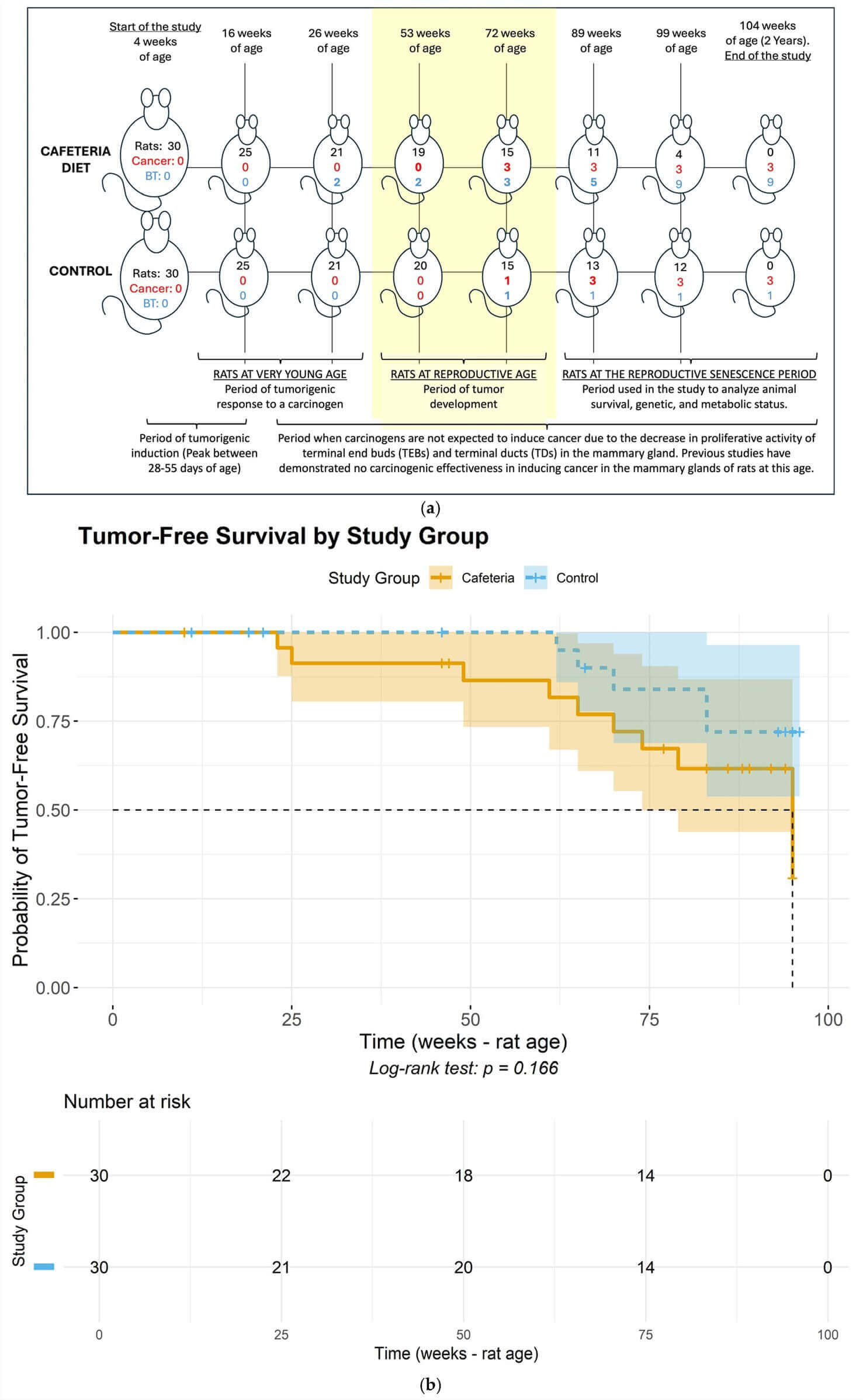
Fig.1 Lifespan-associated mammary gland pathological progression, tumor-free, and cancer-free survival: a comparison between cafeteria diet-induced obese and control rats. (Claro, et al., 2025)
Customer Review
Streamlining Drug Discovery through Precision Adipose Transcriptomics
"Working with Protheragen significantly accelerated our anti-obesity drug screening program. Their ability to extract high-quality RNA from our DIO rat adipose samples was impressive, and the pathway analysis clearly identified the lipid metabolism clusters our compound was targeting. We are already planning our next longitudinal study with their team."
Dr. A. H., Metabolic Disease Group
Uncovering Novel Metabolic Pathways with Expert Bioinformatic Support
"The depth of the rat gene microarray report provided by Protheragen was exceptional. Not only did we see the expected changes in leptin signaling, but their team also highlighted novel changes in redox stress proteins that we hadn't previously considered. Their expert support made the data interpretation seamless."
Dr. R. D., University Pharmacology Department
Frequently Asked Questions
-
What is the minimum amount of tissue required for the microarray?
Generally, we require 20–50mg of adipose or liver tissue to ensure high-quality RNA extraction.
-
Can you handle samples from diet-induced obesity (DIO) models?
Yes, we have extensive experience with DIO models using various high-fat and "cafeteria" diets.
-
How do you handle the high lipid content in adipose samples?
We use specialized lysis buffers and purification columns specifically designed for fatty tissues to prevent lipid interference.
-
Is your platform compatible with the latest rat genome builds?
Absolutely. We use the most recent R. norvegicus annotations to ensure accurate gene mapping.
-
What is the typical turnaround time?
Our standard turnaround time is 3–4 weeks from sample receipt to final bioinformatic report.
-
Can you help with the interpretation of the KEGG pathway results?
Yes, our senior biologists provide a consultation to discuss the biological significance of the enriched pathways.
-
Do you offer validation services?
We recommend and offer RT-qPCR validation for your top 5–10 candidate genes to confirm microarray findings.
-
How does microarray compare to RNA-seq for obesity research?
Microarrays offer a highly cost-effective and standardized way to screen known metabolic genes with high reproducibility and simpler data analysis.
-
Can you differentiate between white and brown adipose tissue expression?
Yes, our probes cover markers specific to both WAT (e.g., Lep) and BAT (e.g., Ucp1).
Contact Us
Protheragen is committed to providing the high-resolution transcriptomic data you need to drive your obesity research forward. Our specialized rat gene microarray service offers a cost-effective, reliable, and deeply insightful platform for preclinical metabolic studies.
Contact Protheragen for More Information and to Discuss Your Project
Reference
- Claro, F.; et al. Gene Monitoring in Obesity-Induced Metabolic Dysfunction in Rats: Preclinical Data on Breast Neoplasia Initiation. Int. J. Mol. Sci. 2025, 26, 7296. (CC BY 4.0)
All of our services and products are intended for preclinical research use only and cannot be used to diagnose, treat or manage patients.