

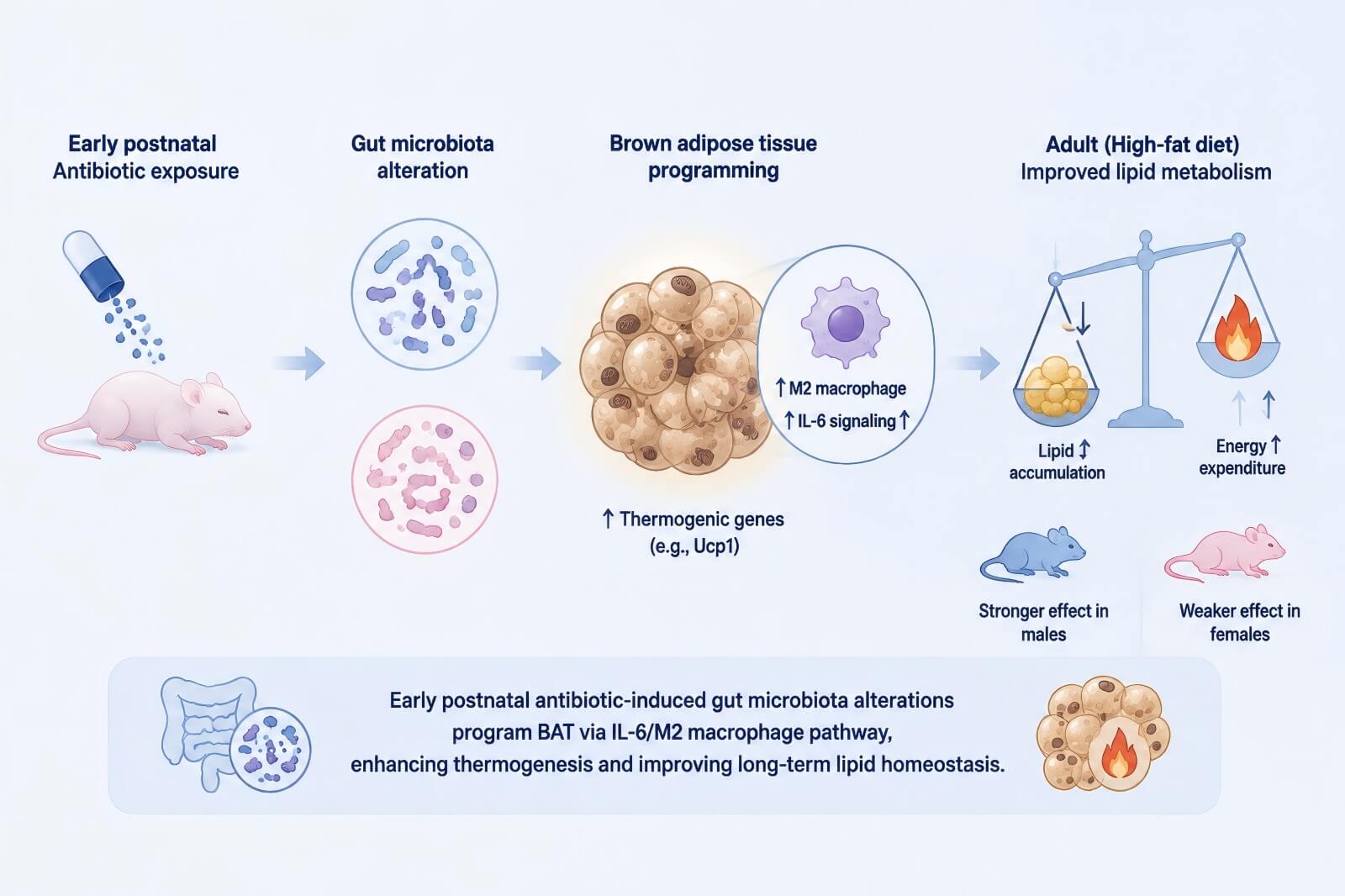
Beyond the Gut: How Early Postnatal Antibiotic Exposure Programs Brown Adipose Tissue and Adult Lipid Metabolism
September 16, 2026

September 16, 2026
Obesity and associated metabolic disorders, including type 2 diabetes mellitus (T2DM) and non-alcoholic fatty liver disease (NAFLD), constitute escalating global public health challenges. While high-fat diets and genetic predispositions are established drivers, the human gut microbiota has emerged as a fundamental regulator of host energy expenditure, adiposity, and immune homeostasis. Antibiotics are among the most frequently administered antimicrobial agents worldwide, yet their clinical and environmental exposure serves as a major driver of gut microbial dysbiosis.
Published in Frontiers in Microbiology, this comprehensive review systematically evaluates how antibiotic exposure reprograms host metabolic phenotypes through gut microbiota perturbations. Although prior literature linked antimicrobial administration to altered microbial composition, critical research gaps remained regarding how specific antibiotic classes, dosage regimens, and developmental exposure windows differentially modulate host metabolic pathways. This review addresses these gaps by synthesizing epidemiological data, animal model mechanistic experiments, and multi-omics findings to map the biochemical cascade connecting antibiotic usage to metabolic disease.
Epidemiological studies establish that antibiotic-associated obesity risk depends on exposure timing, cumulative dosage, and antimicrobial spectrum. A multicenter case-control study demonstrated that school-aged children exposed to antibiotics, particularly florfenicol from environmental or food-chain sources, exhibited a significantly elevated risk of overweight or obesity. Environmental monitoring confirmed that elevated urinary concentrations of tetracycline and sulfamethoxazole positively correlated with childhood obesity risk, showing pronounced effects even at low-to-moderate exposure levels. Furthermore, cohort data established a clear dose-response relationship: higher cumulative antibiotic classes, increased exposure frequency, and earlier age at first exposure directly correlated with higher childhood body mass index (BMI) and obesity incidence.
As summarized in Tab.1, consequences vary substantially across antibiotic classes:
Tab.1 Microbiome and metabolic effects of different antibiotic classes. (Zhu, et al., 2026)
| Antibiotic class | Representative drugs | Target mechanism | Antimicrobial spectrum | Core microbiota alterations | Metabolic effects | Representative studies |
|---|---|---|---|---|---|---|
| β-lactams | Penicillin, amoxicillin, cephalosporins | Inhibition of bacterial cell wall synthesis | Gram-positive and some Gram-negative bacteria | Perturbation of bacterial and bacteriophage communities; reduction of early colonizing taxa such as Lactobacillus under early-life low-dose exposure | Altered metabolic profiles; early-life low-dose exposure associated with increased adiposity and altered intestinal lipid metabolism signaling | Cox et al., 2014; Shelton et al., 2023; d'Humières et al., 2024 |
| Tetracyclines | Chlortetracycline, doxycycline | Inhibition of protein synthesis (30S ribosomal subunit) | Broad-spectrum | Restructuring of gut microbial community and altered SCFA-related metabolism; no consistent taxonomic pattern reported | Subtherapeutic exposure associated with increased fat mass and altered energy harvest | Cho et al., 2012; Schell and Carmody, 2025; Vallianou et al., 2021 |
| Macrolides | Azithromycin, tylosin | Inhibition of protein synthesis (50S ribosomal subunit) | Broad-spectrum | Long-lasting alterations in microbial community structure; some compositional changes may persist for several years | Associated with increased obesity risk; experimental models show lipid accumulation and reduced adipose thermogenesis. | Mulder et al., 2020; Yu et al., 2022; Ni et al., 2025 |
| Fluoroquinolones | Ciprofloxacin | Inhibition of DNA gyrase and topoisomerase IV | Strong activity against Gram-negative bacteria | Rapid reduction in microbial diversity and restructuring of gut microbial communities; accompanied by resistome alterations | Associated with altered growth and obesity risk in some epidemiological studies; microbiome-mediated metabolic mechanisms remain incompletely understood. | Anthony et al., 2022; Shan et al., 2022; Yaffe et al., 2025 |
Animal models confirm direct causality. Experimental studies demonstrated that subtherapeutic penicillin, vancomycin, or chlortetracycline administration in young mice increased fat mass and shifted SCFA ratios without decreasing total bacterial density. Further research showed that low-dose penicillin during pregnancy or weaning induced persistent fat accumulation; transplanting this perturbed microbiota into germ-free recipient mice transferred the adiposity phenotype.
At the molecular level, mechanistic studies showed that early-life low-dose penicillin reduced Lactobacillus murinus, decreasing its metabolite PLA in the small intestine. Under high-fat diet conditions, PLA depletion suppressed epithelial peroxisome proliferator-activated receptor gamma (PPARγ) signaling, enhancing lipid absorption and weight gain—an effect eliminated by intestinal epithelial PPARγ knockout. Additionally, macrolides like azithromycin directly impair mitochondrial respiration and downregulate thermogenic markers, including uncoupling protein 1 (UCP1) and peroxisome proliferator-activated receptor gamma coactivator 1-alpha (PGC1α), in brown and beige adipocytes while elevating reactive oxygen species (ROS) generation.
Antibiotic exposure triggers a multi-step metabolic cascade. Decreased SCFA production (particularly butyrate and propionate) compromises colonocyte energy, weakening tight junctions and increasing intestinal permeability. Translocated lipopolysaccharides (LPS) induce metabolic endotoxemia and activate toll-like receptors (TLRs) on immune cells, initiating the nuclear factor kappa B (NF-κB) inflammatory cascade.
This systemic inflammation elevates cytokines like tumor necrosis factor-alpha (TNF-α) and interleukin-6 (IL-6). In liver and adipose tissue, these mediators induce serine phosphorylation of insulin receptor substrate 1 (IRS-1), directly disrupting downstream insulin signaling and causing systemic insulin resistance. Dysbiosis also enriches families such as Lachnospiraceae, causing luminal accumulation of host-accessible monosaccharides that further drive lipid storage and inflammation. Concurrent disruption of the bile acid-FXR and TGRa5 signaling axis impairs hepatic fatty acid oxidation and glucose tolerance.
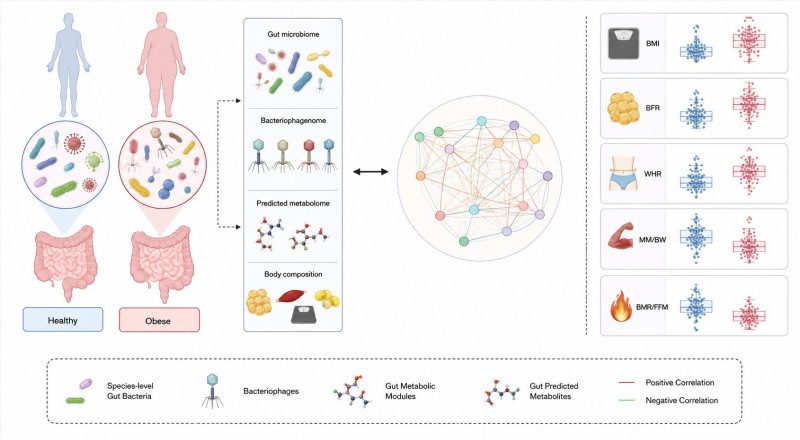
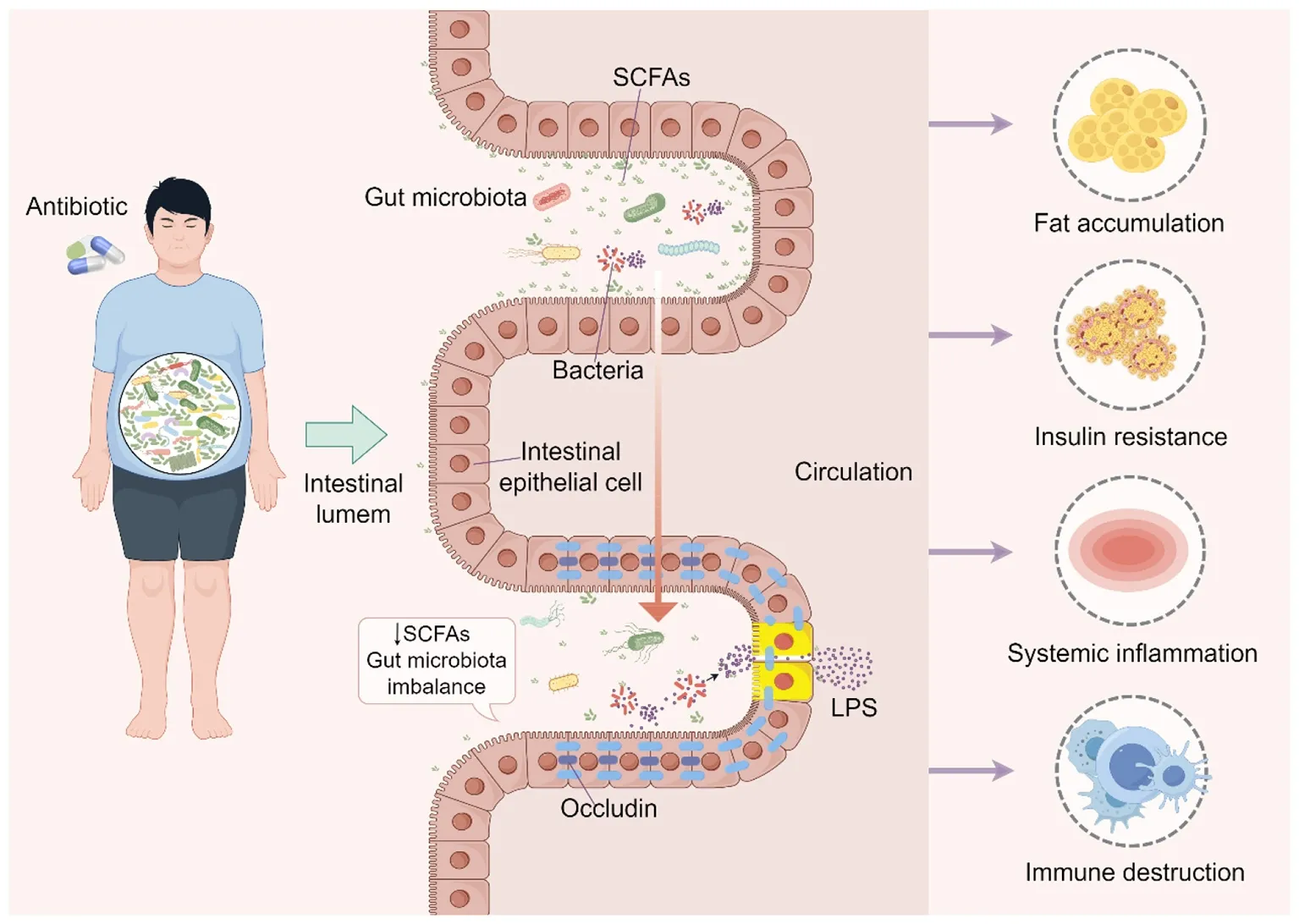 Fig.1 Impact of antibiotics on obesity-related metabolic outcomes via gut microbiota modulation. (Zhu, et al., 2026)
Infancy represents a critical window for gut microbiome maturation. A prospective cohort study of 5,128 children revealed that recurrent antibiotic exposure within the first 12 months of life significantly increased BMI and obesity risk at age 4.5 years. Sequencing confirms that early exposure reduces beneficial taxa (Bifidobacterium, Lactobacillus) while expanding opportunistic Proteobacteria and Enterobacteriaceae. Early exposure also suppresses colonic regulatory T cells (Tregs) and downregulates ileal immune expression pathways, impairing intestinal immune maturation.
Metagenomic evidence demonstrates that antibiotic exposure expands ARGs under selective pressure. Clinical and cohort studies show that antibiotic administration or cesarean delivery significantly elevates infant ARG burdens. Crucially, even after taxonomic composition partially recovers post-treatment, ARGs remain elevated long-term, highlighting a clear dissociation between microbial structural recovery and persistent resistance traits.
Further investigation of gut microbiota dysbiosis, metabolic phenotypes, and microbiome-based interventions requires integrated approaches combining microbial profiling, metabolic characterization, and translational validation. Protheragen supports these efforts through comprehensive preclinical microbiome and multi-omics capabilities, including high-throughput metagenomic sequencing, targeted metabolomics for short-chain fatty acids and bile acids, customized germ-free and microbiome-associated mouse models, and advanced bioinformatics workflows. These integrated approaches enable researchers to characterize microbiome–host interactions, identify metabolic signatures, and evaluate potential therapeutic strategies for metabolic disease research.
This review demonstrates that antibiotic exposure acts as a potent external modifier of host metabolic health through gut microbiota restructuring, barrier impairment, metabolite depletion, and systemic inflammation. These findings emphasize the necessity of rigorous antibiotic stewardship during early developmental windows and highlight the potential of targeted microecological interventions, such as strain-specific probiotics (Lactobacillus plantarum L11 or Lactobacillus reuteri LR via AMPK activation), synbiotics, and metabolite replenishment (PLA, butyrate, propionate), to mitigate antibiotic-induced metabolic disorders.
Reference
September 16, 2026
June 22, 2026
November 15, 2025
Copyright © Protheragen. All rights reserved.