
Obesity-Related Mitochondrial Membrane Potential Assay Service
InquiryAdipose tissue acts as a central hub for energy storage and endocrine signaling across the entire body. In obesity, this system undergoes severe pathological remodeling, shifting from a balanced regulatory network into a site of chronic, low-grade inflammation and lipotoxicity. At the center of this cellular decline is the progressive failure of mitochondrial homeostasis. The mitochondrial membrane potential (ΔΨm), generated by the proton gradient across the inner mitochondrial membrane, provides the fundamental driving force for ATP synthesis, metabolic adaptation, and adipocyte differentiation.
Decoding Adipose Bioenergetics: Obesity-Related Mitochondrial Membrane Potential Assay Services
When overnutrition floods adipocytes with excess nutrients, it forces the electron transport chain into a state of hyperpolarization or sudden collapse. This disruption compromises cellular bioenergetics and triggers an overproduction of reactive oxygen species (mtROS). Elevated mtROS alters insulin signaling and drives the release of pro-inflammatory adipokines. These downstream effects promote insulin resistance and systemic metabolic decline. For therapeutic developers targeting obesity, non-alcoholic steatohepatitis (NASH), or type 2 diabetes, monitoring ΔΨm variations serves as a critical indicator for assessing drug efficacy and safety. Protheragen provides specialized preclinical contract research services designed to precisely evaluate mitochondrial membrane potential in complex, disease-modeled adipose systems.
Core Technologies
Standard lipophilic dyes often accumulate non-specifically in the extensive lipid droplets of mature white adipocytes, causing high background noise and false positives. We overcome this challenge by employing a sophisticated testing platform tailored specifically for high-fat cell types.
We utilize advanced JC-10 and JC-1 fluorophore systems. In healthy mitochondria with a high membrane potential, the dye forms J-aggregates emitting intense red fluorescence (590 nm). When the potential collapses due to metabolic stress, the dye reverts to monomers, shifting emission to green (525 nm). Calculating the 590 nm/525 nm ratio provides an internal control independent of cell density or lipid volume.
Our proprietary washing and masking steps minimize the non-specific trapping of dyes inside neutral lipid cores, isolating pure mitochondrial signals without signal distortion from cellular fat.
We pair potentiometric dyes (including TMRE) with automated imaging platforms. This allows our team to track single-cell dynamics, functional changes, and mitochondrial networks in real time.
Beyond basic fluorescence intensity, our platform quantifies structural metrics—such as mitochondrial fragmentation, aspect ratio, and network connectivity—to link physical shape shifts directly to bioenergetic status.
Service Scope
Protheragen offers a flexible suite of contract research services tailored for metabolic drug discovery and phenotypic screening. Because our operations focus entirely on the preclinical stage, we specialize in high-yield isolation, cultivation, and multi-parametric analysis using diverse in vitro and ex vivo tissue models.
- Primary Adipocyte and Stromal Vascular Fraction (SVF) Assays
We isolate primary preadipocytes and SVF cells from customized animal models, including high-fat diet (HFD) fed rodents and genetically obese mice (ob/ob, db/db). These cells are differentiated in vitro to replicate authentic metabolic disease states.
- Human Adipocyte Cell Line Platforms
Continuous testing using validated human cell models, such as Simpson-Golabi-Behmel syndrome (SGBS) cells and differentiated JennyPO-9 / 3T3-L1 systems, to evaluate translational drug responses.
- Browning and Thermogenesis Screening
Specialized assays designed to monitor mitochondrial biogenesis and UCP1-mediated uncoupling potential. We measure changes in ΔΨm during the induction of beige or brown adipocytes, helping to identify novel thermogenic drug candidates.
- Lipotoxicity and Inflammatory Co-Culture Models
To simulate the chronic inflammatory microenvironment of obese adipose tissue, we offer co-culture assays combining mature adipocytes with metabolically activated macrophages. This setup allows clients to track how candidate molecules rescue inflammation-induced mitochondrial depolarization.
- Combination Safety and Mechanistic Profiling
Multiplexed assessments that combine ΔΨm tracking with parameters such as ATP production, real-time mtROS generation, oxygen consumption rate (OCR), and early-stage apoptotic markers.
Discover Our Specialized Assays – Connect with a Scientist Today
Workflow
Moving a project from initial concept to finalized quantitative metrics requires a highly reproducible, structured sequence that handles fragile metabolic samples with extreme care.
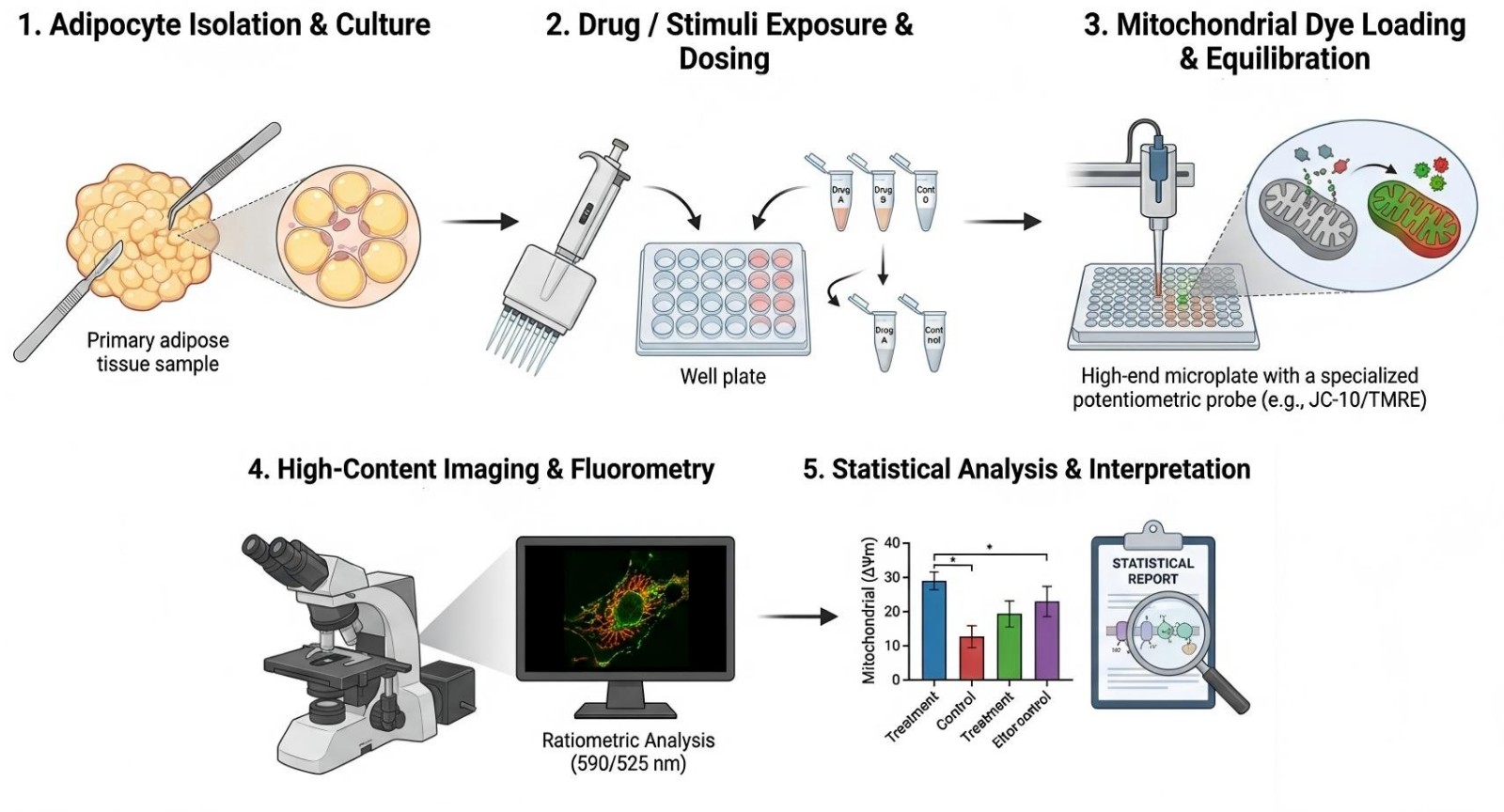
- Step 1: Adipocytes or primary SVF cultures are seeded and differentiated within optimized multi-well microplates.
- Step 2: Cultures are incubated with specialized potentiometric dyes under strictly controlled, serum-free conditions.
- Step 3: Candidate molecules, vehicle controls, and reference uncouplers are introduced at customized concentrations.
- Step 4: Real-time ratiometric fluorescence and automated image capturing are executed across multiple optical channels.
- Step 5: Raw fluorescence data undergoes automated background filtering and statistical analysis to quantify absolute ΔΨm shifts.
Fields of Application
Understanding how candidate molecules interact with adipose bioenergetics allows researchers to apply these precise assays across several distinct stages of therapeutic discovery and metabolic research.
- Anti-Obesity Therapeutics Discovery: Identifying small molecules, biologics, or natural extracts that restore mitochondrial health or selectively induce energy expenditure via thermogenic uncoupling.
- Insulin Sensitization Screening: Assessing how target compounds protect the inner mitochondrial membrane from lipid-induced stress, helping to restore normal insulin receptor signaling pathways.
- NASH and Hepatic Steatotic Research: Evaluating metabolic crosstalk by monitoring how adipokine secretions from depolarized adipocytes influence downstream target tissues like hepatocytes.
- Preclinical Mitochondrial Toxicity Profiling: Screening early-stage structural leads to eliminate drug candidates that cause unintended mitochondrial depolarization, helping to avoid late-stage safety failures.
Advantages
Overcoming the unique technical hurdles of adipocyte imaging requires specialized methods, and Protheragen brings a highly optimized set of capabilities to every preclinical project.
Adipose-Optimized Assay Matrices
Our protocols use advanced background-filtering techniques that prevent lipid-droplet interference. This approach eliminates the non-specific dye binding that frequently skews data in conventional mitochondrial assays, ensuring dependable results for high-fat samples.
High-Content Structural Quantification
We go beyond basic microplate reader measurements. Our imaging platform tracks single-mitochondrion dynamics alongside morphological metrics, such as fragmentation, aspect ratio, and network connectivity, providing a complete picture of organelle health.
Verification
All assay configurations are strictly validated using established standard reference agents, including FCCP and oligomycin. Our platform consistency matches high standards, delivering excellent Z'-factors and low coefficient of variation values across high-throughput screens.
Deep Bioenergetic Scientific Support
Our team brings decades of specialized experience in metabolic disease biology. We don't just hand over raw datasets; we provide comprehensive interpretative reporting to help contextualize your compound's mechanism of action within complex metabolic pathways.
Request a Detailed Study Design for Your Target Compound
Publication Data
Title: Improvement of obesity-associated disorders by a small-molecule drug targeting mitochondria of adipose tissue macrophages
Journal: Nat Commun, 2021
DOI: https://doi.org/10.1038/s41467-020-20315-9
Summary: This pre-clinical study characterizes IR-61, a near-infrared small-molecule fluorophore that targets mitochondria in adipose-tissue macrophages. Via the ROS-Akt-Acly pathway, it boosts oxidative phosphorylation, curbs pro-inflammatory M1 macrophage activity and improves obesity-linked insulin resistance, hepatic steatosis and weight gain in high-fat-diet-fed mice.
Key Findings
- IR-61 is a lipophilic cationic near-infrared heptamethine cyanine small molecule that preferentially accumulates within mitochondria of pro-inflammatory adipose-tissue macrophages (ATMs) after intraperitoneal injection; M1-polarized macrophages take up more IR-61 than M2 macrophages.
- Mechanistically, IR-61 triggers transient mitochondrial ROS elevation, activating the ROS-Akt-Acly signalling axis. This increases abundance and activity of mitochondrial respiratory chain complexes, enhancing oxidative phosphorylation to suppress M1 pro-inflammatory macrophage activation.
- In high-fat-diet obese mice, IR-61 reduces adipose and systemic pro-inflammatory cytokine levels, lowers crown-like macrophage structures and shrinks adipocyte size.
- IR-61 mitigates diet-induced weight gain, visceral fat accumulation, insulin resistance and hepatic steatosis in mice; benefits are absent in lean chow-fed animals and show no obvious in-vivo toxicity.
- The anti-inflammatory and metabolic improvements depend on Acly activity; blocking Acly abolishes IR-61 therapeutic effects. Results highlight ATM-mitochondria as a promising drug target for obesity-related metabolic disease.
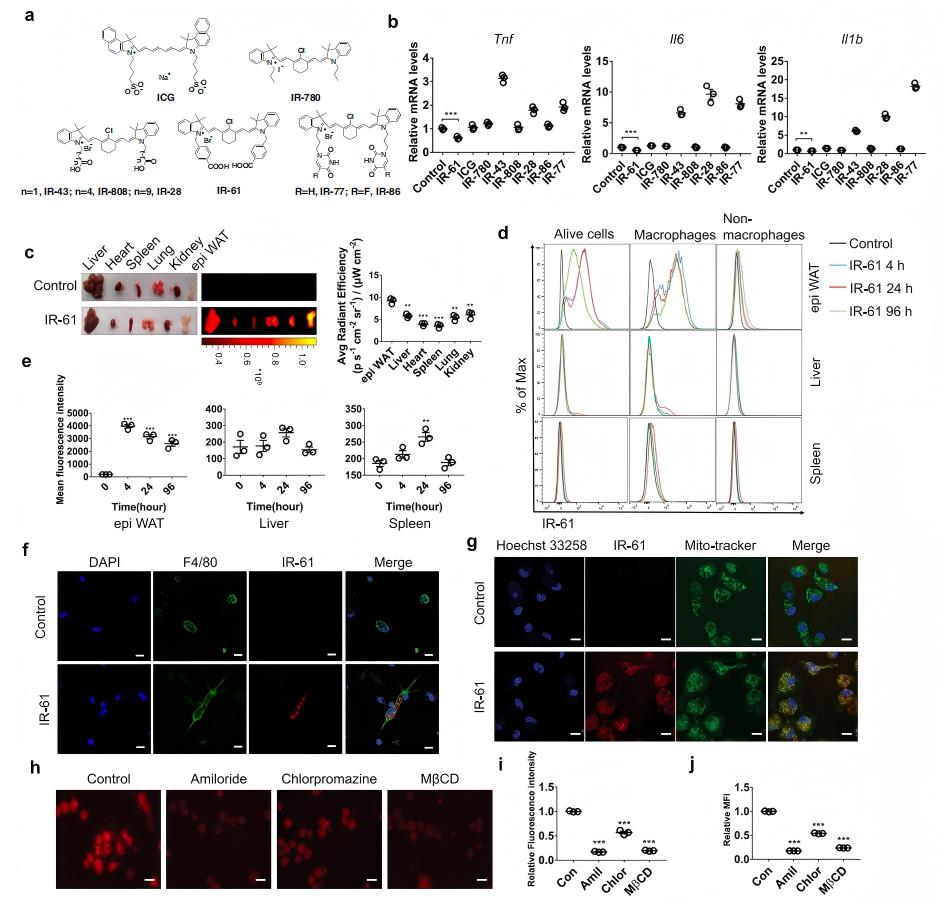 Fig.1 A small-molecule agent that targets mitochondria in adipose tissue macrophages. (Wang, et al.; 2021)
Customer Review
Overcoming Lipid Interference: Transforming Metabolic Lead Discovery
"Evaluating mitochondrial dynamics in mature, lipid-heavy adipocytes had been a major hurdle in our metabolic discovery pipeline. The team at Protheragen solved this by delivering clean, reliable ratiometric data that clearly demonstrated our lead candidate's mechanism of action. Their data and scientific support allowed us to advance our program on schedule."
Dr. L. P., Metabolic Disease Therapeutics Division
High-Content Structural Quantification: Validating Complex Inflammation Co-Cultures
"We turned to Protheragen for specialized co-culture screening to evaluate macrophage-induced adipocyte stress. Their high-content imaging platform gave us clear insights into single-cell mitochondrial membrane potential shifts. The clarity of their reporting made them an invaluable preclinical partner, and we are already planning our next screening campaign with them."
Dr. E. V., Biopharmaceutical Research Group
Frequently Asked Questions
-
How do you prevent lipophilic dyes from trapping inside large lipid droplets?
We use optimized wash cycles combined with specific masking formulations and brief dye incubation periods. This strategy allows the ratiometric dyes to cleanly cross the mitochondrial membrane before they can accumulate non-specifically in the cell's neutral lipid cores.
-
Can this platform evaluate both white and brown adipocyte models?
Yes, we work with both systems. Our white adipocyte models focus on tracking metabolic rescue and stability under lipotoxic stress. For brown or beige adipocytes, our assays are tailored to measure active uncoupling processes and changes in thermogenic capacity.
-
What is the typical turnaround time for a 10-point dose-response screen?
Most standard high-content screening runs are completed within 3 to 4 weeks from sample delivery. This timeline covers everything from cell culture setup and compound treatment to final data interpretation.
-
Are these mitochondrial membrane potential assays compatible with primary human tissue?
While we focus entirely on preclinical testing, we can run assays using primary human preadipocytes or SVF lines sourced from reputable commercial tissue repositories.
-
How does JC-10 perform compared to traditional JC-1 or TMRE?
JC-10 offers better water solubility and chemical stability than original JC-1, reducing the risk of dye precipitation. When used alongside TMRE, it provides a reliable ratiometric readout that self-corrects for variations in cell density.
-
Do you provide screening for mitochondrial biogenesis alongside membrane potential?
Yes, we can combine potential assays with mitochondrial DNA (mtDNA) copy number quantification or western blotting for key OXPHOS proteins to track total organelle biogenesis.
-
What positive and negative control compounds do you use?
We routinely use protonophores like FCCP or CCCP to induce full membrane depolarization, alongside ATP synthase inhibitors like oligomycin to drive hyperpolarization, ensuring robust assay controls.
-
Can this assay help identify specific mechanisms of insulin resistance?
By tracking shifts in membrane potential alongside real-time mtROS generation, we can help show whether your compound prevents the mitochondrial stress that typically disrupts downstream insulin receptor substrate (IRS) signaling.
Contact Us
Protheragen delivers high-quality, reproducible preclinical assay services designed to advance your metabolic drug discovery programs. Our specialized adipose mitochondrial platform provides the clear data and deep bioenergetic insights needed to confidently select and advance your lead compound candidates. Contact Protheragen!
Reference
- Wang, Y.; et al. Improvement of obesity-associated disorders by a small-molecule drug targeting mitochondria of adipose tissue macrophages. Nat Commun. 2021, 12, 102. (CC BY 4.0)
All of our services and products are intended for preclinical research use only and cannot be used to diagnose, treat or manage patients.