
ScFv Generation Service
InquiryObesity is no longer viewed simply as a lifestyle issue. It is a complex metabolic disease driven by intricate endocrine pathways, receptor interactions, and tissue-specific signaling networks. Therapeutic targets like GLP-1, GIP, glucagon receptors, and emerging pathways involving the TGF-beta superfamily—such as Activin E and its receptor ALK7—require precise molecular intervention. Traditional full-length monoclonal antibodies often struggle to penetrate dense adipose tissue effectively or carry unwanted effector functions that complicate preclinical readouts.
Next-Generation ScFv Generation Service for Obesity Preclinical Research
At Protheragen, we have spent years engineering targeted antibody fragments to solve these exact pharmacokinetic hurdles. Single-chain variable fragments (ScFvs) provide a highly agile alternative. By linking the variable heavy (VH) and light (VL) chains with a flexible peptide linker, ScFvs retain the complete antigen-binding specificity of a full antibody while shrinking the molecular weight down to about 25 kDa. This compact architecture enables superior tissue penetration, rapid systemic clearance, and straightforward genetic formatting into multi-specific constructs or cell-based delivery platforms. Our ScFv Generation Service for obesity is custom-tuned to help preclinical researchers identify, screen, and optimize high-affinity binders against challenging metabolic targets, setting a seamless foundation for downstream therapeutic development.
Core Technologies
To successfully discover functional ScFvs against complex metabolic targets, relying on a single screening methodology rarely suffices. Protheragen integrates multiple advanced platforms to ensure we capture the most diverse and high-affinity binders possible.
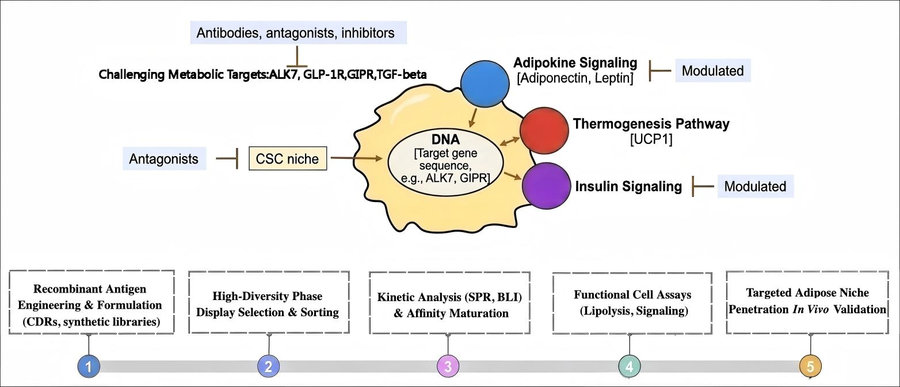
We maintain proprietary, ultra-high-diversity ScFv phage display libraries. These libraries are meticulously engineered to minimize framework bias while maximizing structural diversity within the complementarity-determining regions (CDRs). This allows for the rapid isolation of rare binders against highly conserved metabolic receptors without the limitations of host immune tolerance.
Screening for obesity therapeutics often requires differentiating between closely related receptor isoforms, such as selectively targeting ALK7 while avoiding cross-reactivity with ALK4 or ALK5. Our advanced biopanning strategies employ stringent negative and counter-selection steps using soluble decoy receptors or non-target cell lines. This process filters out non-specific binders early in the discovery phase.
Isolating a binder that attaches to a purified protein is one thing; finding an antibody fragment that alters cellular signaling in a physiological environment is another. Our platform includes high-throughput, cell-based assays using engineered reporter cell lines to directly measure downstream signaling events, such as cAMP modulation or Smad2/3 phosphorylation, right after the initial panning rounds.
When initial hits require a potency boost to meet strict preclinical criteria, our computational biology team utilizes structure-guided mutagenesis and core-property profiling. By predicting key contact residues, we construct targeted secondary libraries to systematically drive binding affinities down to the sub-nanomolar range while preserving structural stability.
Solution Scope
Protheragen offers an exhaustive, end-to-end service portfolio for obesity-related ScFv discovery. We handle every step from initial sequence design up to the delivery of fully validated, assay-ready fragments.
- Recombinant Antigen Design and Preparation
Challenging targets like multi-pass transmembrane G-protein coupled receptors (GPCRs) or labile growth factors require specialized handling. We express and purify high-purity recombinant proteins, biotinylated targets, and virus-like particles (VLPs) or nanodiscs to present extracellular loops in their native conformations.
- Custom Library Construction and Biopanning
In addition to our premade libraries, we can build custom immune ScFv libraries from animals immunized with your specific target. We perform highly customized biopanning protocols, alternating between immobilized proteins, cell-surface antigens, and solution-phase kinetics to enrich for functional binders.
- High-Throughput Kinetic Screening
Using advanced surface plasmon resonance (SPR) and bio-layer interferometry (BLI) platforms, we skip the guesswork. We characterize hundreds of primary hits simultaneously, obtaining real-time data on association kon and dissociation koff rates, along with overall affinity KD.
- Sequence Analysis and Bioinformatic Clustering
We utilize next-generation sequencing (NGS) to monitor library enrichment and cluster unique clones based on CDR sequence diversity. This ensures you do not waste resources evaluating redundant sequences and helps protect your future intellectual property portfolio.
- In Vitro Efficacy and Signaling Functional Assays
We validate the biological activity of isolated ScFvs by evaluating their behavior in Cellular Metabolic Models. This includes tracking adipocyte differentiation, lipolysis activation, lipid accumulation, and receptor internalization rates to ensure true therapeutic potential.
Contact our experts to customize a comprehensive ScFv generation scope.
Workflow
Our preclinical ScFv generation service flows through five tightly integrated, milestone-driven phases designed to maximize candidate success.
Fields of Application
Our custom ScFv generation services support a wide variety of exploratory and proof-of-concept projects within metabolic research:
- Adipokine Signaling Modulation
Developing neutralizing or agonistic ScFvs to study pathways controlling adipocyte browning, energy expenditure, and fat loss without muscle wasting. - Satiety and Appetite Regulation
Targeting central and peripheral receptors involved in hunger signaling pathways, including gut hormone receptors and hypothalamic targets. - Adipose Tissue Target Delivery
Utilizing localized ScFvs as targeting moieties to deliver conjugated small molecules, siRNA, or nanoparticles directly to white adipose tissue, minimizing systemic toxicity. - Preclinical Diagnostic Biomarkers
Creating highly sensitive, non-cross-reactive fragments for quantifying low-abundance circulating metabolic biomarkers in animal serum or tissue lysates.
Advantages
Partnering with Protheragen gives your preclinical pipeline a distinct competitive edge, combining proprietary methodologies with an experienced team that understands metabolic disease biology.
Unrivaled Specificity for Complex Pathways
Targeting metabolic pathways like the TGF-beta superfamily requires exceptional precision to avoid systemic side effects. Our sophisticated counter-selection protocols consistently isolate ScFvs that differentiate between highly homologous receptors. It is demonstrated that we are able to achieve selectivity differences between closely related receptor subtypes, ensuring clean data in your subsequent animal models.
Optimized Biophysical Stability and Solubility
ScFvs are notorious for aggregation and short shelf lives if not engineered correctly. Protheragen applies a proprietary framework optimization process that replaces problematic residues with stability-enhancing alternatives. Our delivered ScFvs exhibit high thermal stability (with melting temperatures consistently above 65°C) and excellent solubility profiles, preventing aggregation during downstream formulation and storage.
Deep Preclinical Specialization and Insight
Because we do not provide clinical trial services, 100% of our focus, instrumentation, and scientific capital are funneled into perfecting preclinical discovery. We understand the specific milestones, purity levels, and endotoxin-free requirements needed to make your in vivo rodent studies succeed on the first attempt, saving you months of troubleshooting.
Seamless Formatter Flexibility for Multi-Specifics
The ScFvs we deliver are structurally validated and ready for genetic fusion. Whether your long-term goal is to build bispecific T-cell engagers, construct CAR-T architectures for targeting inflamed adipose tissue, or fuse the ScFv to an Fc domain for extended half-life, our sequences transition smoothly without losing binding affinity.
Inquire Today to schedule a detailed technical consultation.
Publication Data
Title: Identification of Highly Specific scFvs against Total Adiponectin for Diagnostic Purposes
Journal: Biology (Basel), 2017
DOI: https://doi.org/10.3390/biology6020026
Summary: This 2017 study published in Biology used phage display technology to isolate and characterize single-chain variable fragment antibodies (scFvs) targeting total adiponectin, a key adipokine linked to obesity, metabolic syndrome and type 2 diabetes. Adiponectin levels in blood drop alongside insulin resistance and metabolic disorders, making it a critical diagnostic biomarker.
Key Findings
- Biomarker & Existing Limitations Adiponectin is a key biomarker for obesity, metabolic syndrome and type 2 diabetes. Standard monoclonal antibodies for its detection are expensive and difficult to produce in bacteria.
- Phage Display Screening Results Three rounds of phage display bio-panning successfully enriched antibody candidates, and eight high-activity scFv clones were picked.
- scFv Expression & Binding Performance Most scFvs accumulated in bacterial periplasm for correct folding. The top candidate scFvH5 had strong, dose-dependent binding to adiponectin with high sensitivity.
- High Binding Specificity scFvH5 showed excellent specificity: no cross-reaction with similar proteins, and it bound all forms of adiponectin.
- Clinical Sample Validation Tests on human plasma confirmed scFvH5 works well for detecting adiponectin in clinical samples.
- Application & Technical Advantages Phage display and bacterial expression offer a low-cost, scalable way to make antibody fragments. scFvH5 is a promising tool for metabolic disease diagnostic assays.
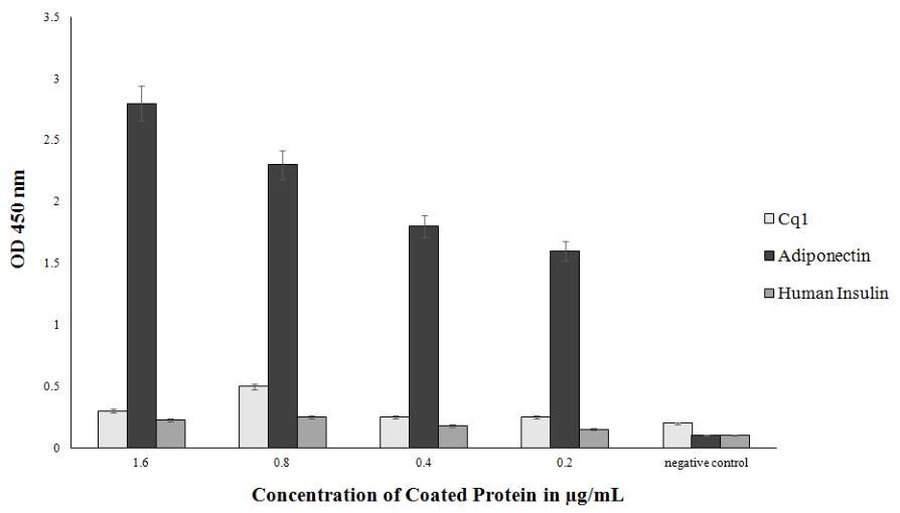 Fig.1 Sensitivity and specificity of scFvH5 for detecting adiponectin, with C1q and insulin as negative controls. (Wilton, et al., 2017)
Customer Review
Overcoming Cross-Reactivity Hurdles in Multi-Isoform Targeting
"Our lab was struggling to find an antibody that could selectively bind our target receptor without triggering cross-reactivity with an abundant sister isoform. The team at Protheragen designed a custom counter-selection strategy that delivered three highly specific ScFv candidates. Their biophysical profiling data was incredibly clean, and the fragments performed beautifully in our adipose tissue penetration assays. We are already planning our next screening project with them."
Dr. A. T., Metabolic Diseases Group
Accelerating Preclinical Timelines with High-Stability Engineering
"We needed a fast turnaround for an ScFv candidate against an engineered adipokine target to validate an in-house delivery vehicle. Not only did Protheragen deliver high-purity, low-endotoxin fragments ahead of schedule, but their technical insights regarding linkers saved us from a major aggregation issue we hadn't anticipated. Having access to their 20 years of antibody engineering experience made a huge difference for our preclinical program."
Dr. E. R., Innovative Therapeutics
Frequently Asked Questions
-
Why choose an ScFv over a traditional monoclonal antibody for obesity research?
ScFvs are much smaller (~25 kDa) compared to full antibodies (~150 kDa), allowing them to penetrate dense, vascularly challenged adipose tissues far more effectively. They also lack an Fc region, which eliminates non-specific background signals caused by Fc-receptor binding on immune cells during inflammatory metabolic studies.
-
Can you generate ScFvs against targets that are highly conserved between mice and humans?
Yes, absolutely. Traditional animal immunization often fails for highly conserved targets due to immune tolerance. Our synthetic and human phage display libraries bypass host immune systems entirely, allowing us to successfully isolate binders against identical human/murine epitopes.
-
How do you ensure the delivered ScFv won't aggregate during my in vivo mouse studies?
Stability is a key part of our screening platform. We screen candidates early on for thermal stability, solubility, and hydrophobicity. We filter out clones prone to self-association, delivering sequences optimized for robust performance in physiological buffers.
-
We need an ScFv that blocks a specific ligand-receptor interaction. How do you screen for this?
We set up competitive biopanning and ELISA screening protocols. By introducing the natural ligand during the washing or elution phases, we selectively isolate and enrich only those ScFv clones that directly compete for the exact binding pocket you are targeting.
-
What expression systems do you use to produce the generated ScFvs?
We routinely utilize bacterial (E. coli) expression systems for cost-effective, rapid production of ScFvs. If a particular fragment requires specific post-translational modifications or benefits from mammalian secretion systems, we can seamlessly transition production to our optimized HEK293 or CHO platforms.
-
Can Protheragen assist with formatting the ScFv into a bi-specific or ScFv-Fc format later?
Yes, we can handle that easily. We provide full downstream molecular biology support. Once a lead clone is identified, we can genetically fuse it to various Fc domains, linkers, or secondary antibody fragments to match your evolving project specifications.
-
What is the typical timeline from target sequence submission to ScFv delivery?
A standard discovery campaign using our phage display libraries generally takes between 12 and 16 weeks. This timeline covers antigen validation, multiple panning rounds, clone screening, sequencing, and pilot-scale purification of the final leads.
-
Are your deliverables suitable for direct use in animal models?
Yes. We offer specialized scale-up and purification options that include stringent endotoxin removal and sterile filtration. This ensures the fragments are fully prepared for safe administration in fragile rodent models or metabolic in vivo assays.
-
Do you provide the physical plasmid vectors along with the purified protein?
We certainly do. Transparency and complete handoffs are central to our service. You receive the purified ScFv protein, the complete annotated sequence data, and the expression plasmids containing your optimized antibody genes.
Contact Us
Protheragen brings together two decades of advanced antibody engineering, cutting-edge phage display technology, and deep preclinical expertise to help you break through the unique challenges of metabolic disease research. Our custom ScFv generation services provide the high affinity, biophysical stability, and tissue-penetration capabilities required to move your discovery pipeline forward with confidence. Contact Protheragen today.
Reference
- Wilton, P.; et al. Identification of Highly Specific scFvs against Total Adiponectin for Diagnostic Purposes. Biology (Basel). 2017, 6(2):26 (CC BY 4.0).
All of our services and products are intended for preclinical research use only and cannot be used to diagnose, treat or manage patients.