
In Vitro CAT-T Construction Service
InquiryChimeric antigen receptor T-cell (CAR-T) engineering is rapidly transitioning from a cancer-specific modality into a highly versatile platform for chronic, systemic pathologies. Obesity is a primary driver of metabolic syndrome, chronic low-grade inflammation, and cardiovascular decline. It presents a clear cellular target: senescent, hypertrophic, or dysfunctional adipocytes that perpetuate insulin resistance and tissue stress.
In Vitro CAR-T Construction to Address Metabolic Disease
Protheragen provides an integrated in vitro CAR-T engineering service optimized for preclinical metabolic disease models. While traditional oncology frameworks focus on total target elimination, cellular reprogramming for obesity demands highly tunable, precise signaling architectures. This is necessary to avoid systemic toxicities like severe cytokine release syndrome (CRS) while modifying adipose tissue biology. Our platform supports the design, synthesis, and in vitro validation of metabolic-targeted CAR structures, helping therapeutic developers establish a strong proof of concept before moving into animal models.
Core Technologies
To successfully target metabolic tissues like white adipose tissue (WAT), developers must look beyond standard CAR designs. Protheragen combines advanced computational screening with precise molecular biology to engineer receptors tailored for Metabolic Targets.
Adipocytes share many surface markers with normal stromal cells. To achieve highly specific targeting, we use AI-driven structural modeling to design single-chain variable fragments (scFvs) and alternative binding scaffolds. These designs target proteins that are highly upregulated on overstuffed, inflamed, or senescent fat cells. This fine-tuning helps ensure that engineered cells can distinguish between healthy tissue and problematic, disease-driving targets.
Standard CARs use strong costimulatory elements like 4-1B1 or CD28 to drive aggressive cell multiplication and target destruction. In contrast, metabolic applications often require milder, sustained activation or a non-lytic, immunomodulatory approach. We build custom intracellular signaling chains using a variety of costimulatory domains, including modified ICOS, OX40, and CD27 components. These variants are designed to alter the way cytokines are released and promote a stable, long-lived T-cell phenotype that can handle the lipid-rich microenvironment of adipose tissue.
Getting efficient gene transfer into primary T-cells destined for lipid-dense environments can be technically challenging. Our platform features optimized viral vector systems and advanced non-viral electroporation methods. These approaches are engineered to maintain high cell viability and robust receptor expression, even when exposed to the metabolic stressors commonly found in In Vitro Adipose Models.
Solution Scope
Protheragen delivers a comprehensive, bench-ready portfolio of in vitro services designed to take your therapeutic concept from sequence design through validation. Our capabilities are focused on the unique challenges of metabolic disease biology.
- Custom Antigen Screen and Single-Chain Variable Fragment (scFv) Optimization
We build or optimize scFv sequences to target specific surface proteins on dysfunctional or senescent adipocytes. This work helps ensure your therapy can cleanly distinguish target tissue from healthy cells in non-adipose organs.
- Combinatorial CAR Library Construction
We build diverse structural libraries featuring various spacer lengths (hinge regions), transmembrane zones, and novel combinations of costimulatory domains. This allows you to screen multiple configurations to find the optimal balance of target affinity and cytokine release.
- Multi-Lineage T-Cell Sourcing and Isolation
We isolate specific T-cell subsets, such as CD4+, CD8+, or naive/memory populations, from human or rodent donors. This step helps you evaluate how different cell types behave in metabolic environments.
- Adipocyte Co-Culture and Functional Testing
We set up specialized in vitro test environments where engineered T-cells are mixed with primary adipocytes or pre-adipocyte cell lines. These assays allow us to measure specific cell activation, targeted destruction of fat cells, or metabolic shifts in real time.
The high concentration of free fatty acids in obese tissue can often suppress immune cell function. We test your candidate cells under metabolic stress conditions, checking for signs of cell exhaustion and evaluating how well they maintain functional activity over time.
Reach out to our specialist team to map out your experimental scope.
Workflow
Protheragen delivers a comprehensive, bench-ready portfolio of in vitro services designed to take your therapeutic concept from sequence design through validation. Our capabilities are focused on the unique challenges of metabolic disease biology.
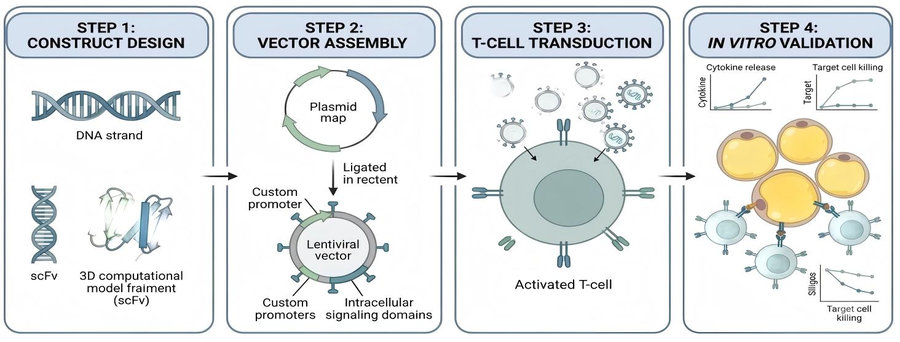
Fields of Application
Our engineered cell models are designed to fit seamlessly into diverse preclinical metabolic research workflows.
- Adipose Tissue Senescence and Chronic Inflammation
Researchers can use these custom models to study the targeted clearance of senescent cells within fat tissue. This helps uncover new ways to break the cycle of chronic, low-grade inflammation that often drives full-body insulin resistance. - Fibrosis and Tissue Remodeling Modifiers
In chronic obesity, the extracellular matrix of fat tissue frequently becomes stiff and fibrotic. Custom-designed receptors can be engineered to target activated myofibroblasts, allowing teams to explore how to reverse tissue stiffness and improve metabolic health. - Ectopic Lipid Storage and Insulin Sensitivity Profiling
By selectively clearing dysfunctional fat cells in vitro, research teams can analyze how surrounding cells recover their capacity to store lipids normally. This provides valuable insights into improving systemic insulin sensitivity and reducing harmful fat accumulation in organs like the liver and muscle.
Advantages
Partnering with Protheragen gives you access to an advanced preclinical development platform specifically optimized for metabolic engineering.
Adipose-Specific Customization
Our platforms are designed from the ground up to handle the specific challenges of metabolic targets, including working with lower target densities and managing the immunosuppressive effects of lipid-rich environments.
Tunable Kinetic Control
Our structural libraries allow you to balance target cell killing against steady, long-term immunomodulatory effects. It has been demonstrated that adjusting these receptor configurations helps minimize excessive cytokine release while maintaining clear functional activity in fat tissue models.
Fully Documented Quality Controls
Every batch of constructed cells undergoes rigorous testing, including detailed vector copy number analytics, multi-parameter flow cytometry for phenotype verification, and thorough sterility screening. This comprehensive documentation ensures you receive reliable, reproducible data for your regulatory filings.
Deep Preclinical Specialty
Because we focus exclusively on research-use-only platforms, our scientific teams are highly specialized in optimization and target discovery. This focused expertise helps streamline your project timeline and allows you to avoid the high overhead and long wait times associated with clinical manufacturers.
Contact our applications team for a detailed program overview and technical quote.
Publication Data
Title: Harnessing the potential of CAR-T cell therapy: progress, challenges, and future directions in hematological and solid tumor treatments
Journal: Journal of Translational Medicine, 2023
DOI: https://doi.org/10.1186/s12967-023-04292-3
Summary: This 2023 review summarizes CAR-T success in blood cancers via CD19/BCMA-targeted therapies, outlines solid tumor barriers including poor infiltration and antigen scarcity, details CAR generations, toxicities like CRS, and proposes sequencing, AI, multi-antigen CARs to expand CAR-T to solid tumors.
Key Findings
- Hematological Clinical Success: Six CD19/BCMA CAR-T products are for ALL, lymphoma, multiple myeloma, delivering high complete remission rates for relapsed/refractory blood cancers, yet tumor antigen escape drives frequent relapse post-treatment.
- Solid Tumor Core Barriers: Unlike uniform blood tumor antigens, solid tumors lack specific TAAs, feature hypoxic, immunosuppressive TMEs, dense stroma blocking CAR-T trafficking, and on-target/off-tumor lethal toxicities (e.g., HER2 CAR lung injury).
- CAR Generations Evolution: 1st–5th gen CARs add co-stimulatory domains, transgenic cytokines, JAK-STAT signaling and safety switches to boost persistence and controllable toxicity.
- Mitigation Strategies: Bispecific/tandem CARs counter antigen escape; armored CARs resist TME suppression; steroids manage CRS/ICANS; local infusion improves tumor infiltration.
- Cutting-Edge Tools: Single-cell RNA-seq profiles CAR-T exhaustion signatures; AI multi-omics/radiomics predicts patient response; CRISPR enables off-the-shelf allogeneic CAR-T to lower production costs.
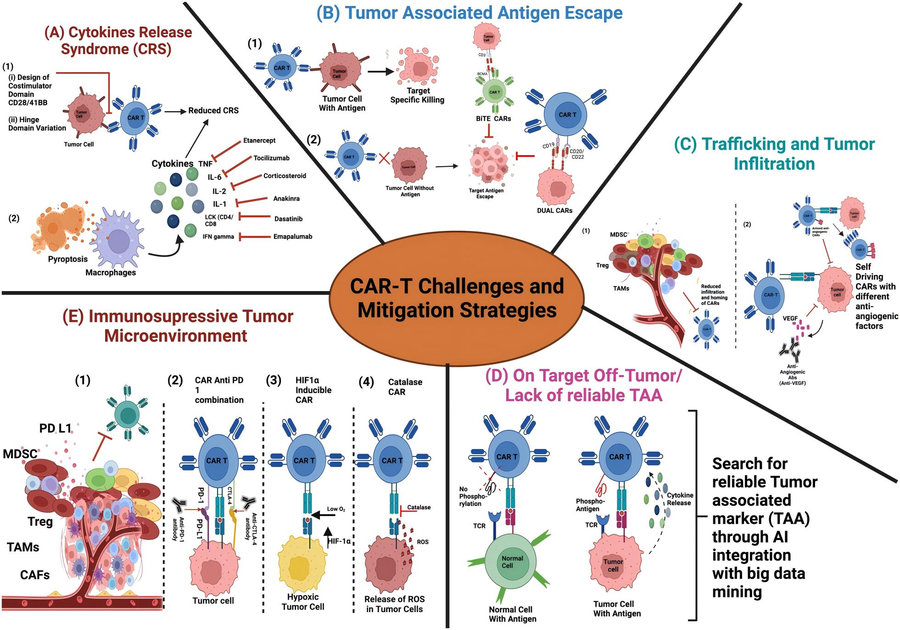 Fig.1 Key barriers of CAR-T cell therapy & corresponding engineering/clinical mitigation strategies. (Dagar, et al., 2023).
Customer Review
Validating Selective Senescent Adipocyte Clearance with Custom Receptor Libraries
"We needed to test whether targeting specific senescent stromal populations in fat tissue could improve local insulin signaling. The team at Protheragen engineered a custom structural library that allowed us to identify a candidate with excellent specificity and minimal background activity. Their clear technical data and reliable cell quality saved our lab months of troubleshooting."
Dr. P. S., Metabolic Discovery Unit
Adapting T-Cell Assays for High-Fat Microenvironments to Save Months of Troubleshooting
"Developing cellular models for non-oncology indications is always challenging because standard protocols rarely fit. Protheragen adapted their validation assays to include lipid-stress conditions, giving us the exact data we needed to move our program forward. We continue to rely on them for our ongoing receptor optimization work."
Dr. P. D., Biotherapeutics Startup
Frequently Asked Questions
-
Can we utilize established CAR constructs for obesity targets?
In most cases, standard designs prove too aggressive. They are typically optimized for complete target destruction and high inflammation, which can cause severe side effects in metabolic models. Our team focuses on engineering milder, tunable activation pathways that are better suited for metabolic modulation.
-
What types of cells serve as the starting material for validation?
We routinely work with both human and rodent primary cells, including isolated peripheral blood mononuclear cells (PBMCs) and specific T-cell subsets. This flexible approach allows you to match your in vitro target validation with your planned animal models.
-
How does Protheragen manage the effects of lipotoxicity during cell validation?
Our testing assays can incorporate specific concentrations of free fatty acids, such as palmitate or oleate. This allows us to simulate the metabolic stress of obese tissue and ensure your engineered cells remain functional in these challenging environments.
-
What methods are used to deliver the receptor genes into the cells?
We offer high-titer lentiviral transduction as well as non-viral transposon and electroporation methods. The choice depends on your timeline, budget, and the specific structural design of your construct.
-
Do you offer screening services for novel adipose tissue markers?
Yes. We can design and build custom pilot libraries to help you screen and validate scFvs against newly identified surface targets on adipocytes or stromal vascular cells.
-
How do you evaluate the activation of these engineered cells in culture?
We track activation through several complementary readouts, including surface expression of markers like CD25 and CD69, multiplex cytokine analysis, and detailed cell proliferation tracking.
-
Can these constructs be engineered to act without destroying the target cells?
Yes. By using non-lytic costimulatory domains, we can design receptors that release specific immunomodulatory molecules upon binding, rather than triggering immediate target cell death.
-
What is the typical turnaround time for a custom construction project?
Most projects take between 6 and 12 weeks, depending on the complexity of the molecular designs and the specific functional assays required for validation.
-
Do you provide in vivo animal testing services?
No, Protheragen focuses exclusively on in vitro construction and discovery tools. We do not provide in vivo testing or any clinical-grade production services.
Contact Us
Protheragen delivers advanced in vitro tools designed to help you explore new therapeutic strategies for complex metabolic conditions. By combining targeted binder design with validation assays tailored for lipid-rich environments, our platforms help you generate clear, reproducible data for your early-stage discovery programs. Welcome to Contact Protheragen to discuss how we can support your experimental design.
Reference
- Dagar, G.; et al. Harnessing the potential of CAR-T cell therapy: progress, challenges, and future directions in hematological and solid tumor treatments. J Transl Med. 2023, 21, 449 (CC BY 4.0).
All of our services and products are intended for preclinical research use only and cannot be used to diagnose, treat or manage patients.