Anti-Inflammatory Effects of L-Fucose in Adipocytes A New Angle on Metabolic Balance in Obesity
October 8, 2025

June 22, 2026
Obesity is a major global public health challenge driven by systemic metabolic dysfunction, where adipose tissue crucially regulates metabolic homeostasis. Specifically, brown adipose tissue (BAT) has emerged as a promising therapeutic target. In a 2026 review in Current Obesity Reports, entitled "Decoding Adipose Tissue Phenotypic Switching: From Mechanisms to Computational Drug Discovery," the authors examine the therapeutic potential of BAT, focusing on whitening, a process where thermogenic BAT loses its specialized phenotype and function due to cellular plasticity. Although previous studies cataloged environmental triggers of this phenotypic switch, the underlying mechanistic interconnections remain poorly understood. This review directly addresses this clinical translation gap by integrating multi-tiered metabolic pathways with advanced computational screening.
An in-depth exploration of the multi-layered molecular mechanisms driving brown adipose tissue decline reveals 4-HBA as a promising, computationally identified multi-target therapeutic agent.
The review presents a highly detailed, multi-dimensional view of BAT physiology, highlighting its extensive systemic impact on energy expenditure, glucose clearance, and anti-inflammatory pathways. As illustrated in the comprehensive structural mapping in Fig. 1, active BAT acts as a critical buffer for blood glucose and lipids. Retrospective clinical analyses link the presence of active BAT with optimized metabolic profiles, minimized hepatic fat content, and decreased cardiometabolic risk in obese individuals. Fig. 1 details how the classic interscapular BAT of middle-aged rodent models closely resembles human supraclavicular BAT, which resolves historical debates regarding translational model validity. To track these changes in vivo, Fig. 1 highlights the rise of Cr-CEST MRI as a radiation-free, highly reproducible alternative to conventional 18F-fluorodeoxyglucose positron emission tomography-computed tomography (18F-FDG PET/CT) imaging.
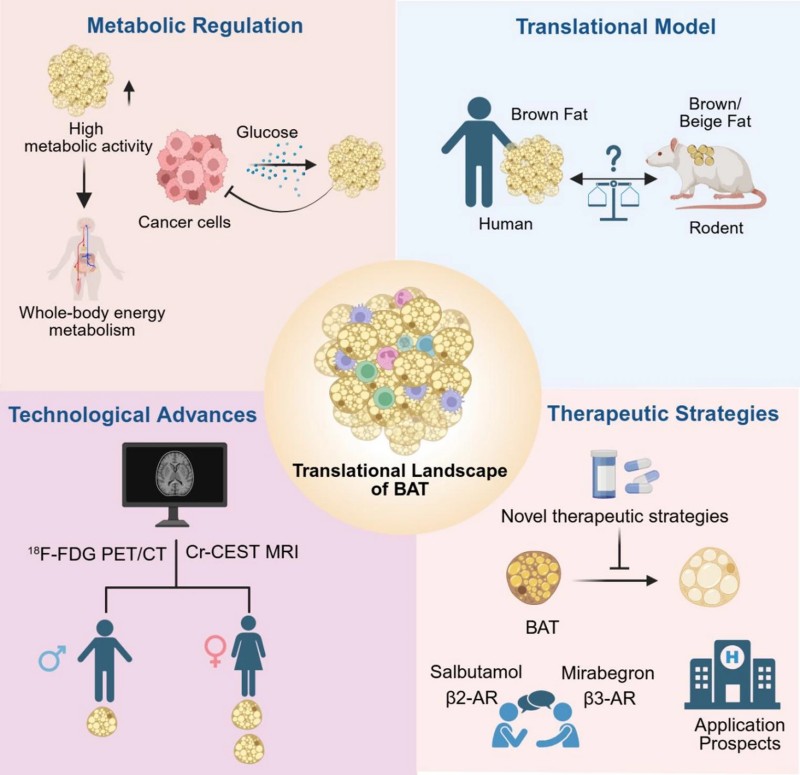 Fig.1 Brown adipose tissue translation spans metabolic function, experimental modeling, imaging technologies, and therapeutic development. (Ye, et al., 2026)
Furthermore, Fig. 1 introduces the primary therapeutic strategies for targeting BAT, which are split into activating existing tissues or preventing their conversion into white fat. The pharmacodynamics of current therapeutic drugs are also listed. For example, the dual agonist tirzepatide preserves BAT morphology by optimizing mitochondrial dynamics and suppressing endoplasmic reticulum (ER) stress, whereas the senolytic combination of dasatinib and quercetin clears senescent cells to sustain thermogenesis. Other agents, such as imeglimin, shift substrate utilization toward lipids, while dotinurad activates uncoupling protein 1 (UCP1) to restore BAT structures. The probiotic Roseburia hominis provides protection via nicotinamide riboside, which elevates NAD+ to activate the Sirtuin1 and mammalian target of rapamycin pathways, reducing intracellular lipid accumulation.
The complex network of factors that drive BAT whitening is systematically studied. Ambient warmth between 27 and 30 degrees Celsius suppresses sympathetic nervous activity, promoting lipid deposition and macrophage infiltration. Dietary stressors, particularly a long-term high-fat diet (HFD) or a high-fat/high-sucrose diet (HFSD), impair UCP1-mediated oxidation and shift cellular metabolism toward triglyceride synthesis. Chronic environmental exposure to fine particulate matter (PM2.5), dechlorane plus (DP), prothioconazole (PTC), or bisphenol S (BPS) precipitates whitening via ER stress, mitochondrial injury, and epigenetic modifications. On the other hand, healthy lifestyle habits like exercise counteract whitening by releasing lactate, which triggers the G protein-coupled receptor 81 (GPR81) and Ca2+/calmodulin-dependent protein kinase (CaMK) pathway to upregulate mitochondrial DNA (mtDNA) and UCP1 expression.
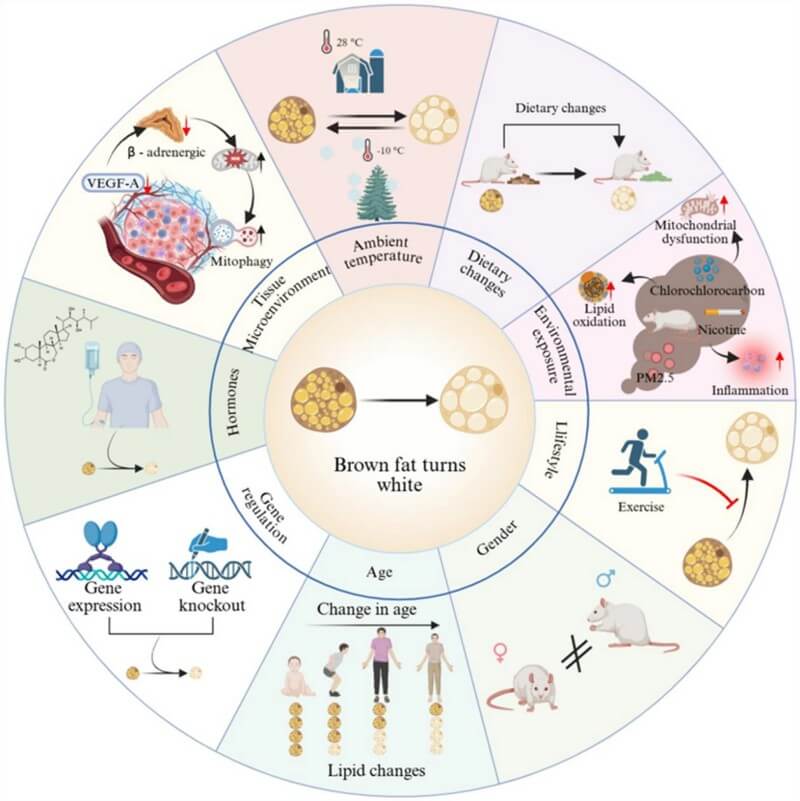 Fig.2 Brown fat whitening is shaped by environmental, metabolic, hormonal, and genetic influences that alter thermogenic activity. (Ye, et al., 2026)
Physiological aging driving the decline of BAT is mediated by T cell-derived interferon-gamma (IFN-gamma) and complex competing endogenous RNA (ceRNA) networks, where long non-coding RNAs (lncRNAs) and circular RNA (circRNA) regulate cellular pathways through MAPK and Rat sarcoma virus oncogene homolog (Ras) signaling. Locally, tissue microenvironment stability depends on vascular endothelial growth factor A (VEGFA); its deficiency lowers capillary density, increases mitochondrial reactive oxygen species (mtROS), and triggers mitophagy. On a genetic level, key factors such as MLXIPL, which is encoded by ChREBP-beta, act as negative regulators. Conversely, positive regulators like transcription factor EB (TFEB), mitochondrial transcription factor A (TFAM), estrogen-related receptor gamma (ERR-gamma), family with sequence similarity 195 member A (FAM195A), adipose triglyceride lipase (ATGL), miRNA-processing enzyme Dicer (Dicer), UCP1, apolipoprotein O (APOO), and noggin maintain tissue identity, with their genetic loss initiating systemic BAT whitening.
To identify therapeutic compounds capable of preventing this multi-tiered genetic degradation, researchers targeted eleven essential regulatory proteins. Applying a strict binding energy threshold of ≤ -5.0 kcal/mol, an intersection analysis presented in the UpSet plot identified 4-hydroxybenzoic acid (4-HBA) as the sole compound in the FDA-approved library that binds significantly to all eleven target proteins. Fig. 3 visualizes the PyMOL MD models, displaying the precise binding poses, hydrogen bonds, and interacting residues within the active pockets of MLXIPL, TFEB, TFAM, ERR-gamma, histone demethylase KDM5A (KDM5A), FAM195A, ATGL, Dicer, UCP1, APOO, and Noggin. This gut microbiota-derived metabolite, synthesized via tyrosine metabolism or dietary polyphenol fermentation, acts as a precursor for coenzyme Q10 (CoQ10) and has been shown to activate the AMP-activated protein kinase (AMPK) and dynamin-related protein 1 (DRP1) pathway to promote adipose browning.
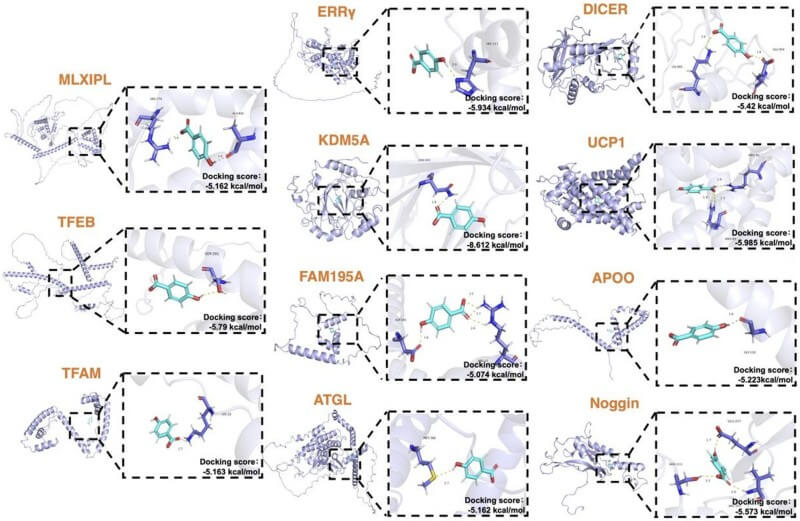 Fig.3 Molecular docking analysis illustrates potential interactions between 4 Hydroxybenzoic acid and multiple metabolism-related protein targets. (Ye, et al., 2026)
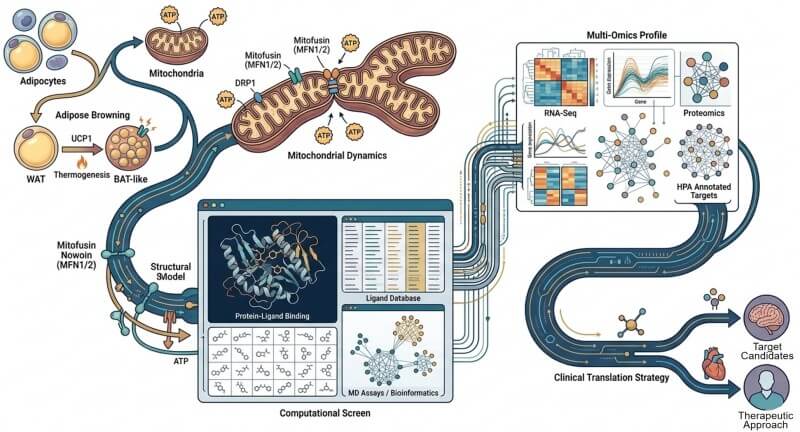
A mitochondria-focused model of BAT whitening highlights the drug discovery potential of 4 HBA screening. Nonetheless, bridging the preclinical-clinical gap requires overcoming key limitations: target selection bias, the static nature of molecular docking (MD) models, polypharmacological off-target risks, and the absence of human safety or pharmacokinetic data. Overcoming these barriers requires future studies to focus on biophysical target validation, cross-species efficacy comparisons, and multi-omics tissue profiling.
For researchers interested in exploring adipose browning, mitochondrial dynamics, or computational drug screening, Protheragen offers comprehensive preclinical and translational services. We provide systematic target panel selection utilizing Human Protein Atlas (HPA) database annotations, advanced MD assays, and multi-omics profiling to support your experimental design, bioinformatic analysis, and clinical translation strategies.
|
||
Reference
Copyright © Protheragen. All rights reserved.