
Mesenchymal Stem Cell (MSC)-based Adipocyte Induction Service
InquiryObesity isn't just about carrying extra weight anymore; it's a deeply complex metabolic disorder rooted in how fat cells grow, multiply, and talk to the rest of the body. To really understand things like insulin resistance or find molecules that can actually stop weight gain, researchers need reliable, high-fidelity cellular models. That is where our mesenchymal stem cell (MSC)-based adipocyte induction service comes in.
Mesenchymal Stem Cell (MSC)-based Adipocyte Induction Service for Obesity
At Protheragen, we transform raw mesenchymal stem cells into highly functional, mature adipocytes (fat cells). This specialized preclinical service gives your lab a direct window into adipogenesis—the complex process where stem cells commit to becoming fat tissues. By recreating these metabolic cellular environments in vitro, we help drug discovery teams and academic labs study lipid accumulation, screen potential anti-obesity compounds, and map out the genetic switches that drive metabolic dysfunction. It's a precise, scalable alternative to jumping straight into an unpredictable Animal Model.
Core Technologies
Getting an MSC to reliably turn into a functional fat cell requires more than just dropping a standard cocktail into a dish. We have spent years refining our proprietary differentiation media and environmental protocols to ensure high-efficiency conversion:
Our specialized setups rely on precisely timed, chemically defined induction media containing advanced PPARγ agonists, specialized glucocorticoids, and specific hormonal modulators that mimic natural body signals.
We utilize advanced lipophilic staining protocols—like automated Oil Red O and fluorescent neutral lipid tracking—to accurately quantify lipid droplet sizes and spatial distributions.
We integrate quantitative real-time PCR (qPCR) and automated protein expression assays to verify that key mature adipocyte markers—such as FABP4, adiponectin, and leptin—are being expressed at physiological levels.
Solution Scope
Our preclinical service handles the heavy lifting of cellular modeling so your team can focus entirely on data interpretation and drug discovery. Protheragen provides a completely customizable menu of options tailored to the exact parameters of your obesity research project.
- Custom Cell Source Differentiation
We work with a wide array of starting materials. Whether your project demands mouse adipose-derived stem cells (mADSCs) to match an ongoing rodent study, or human solid-tissue vs. lipoaspirate-derived MSCs, we optimize the protocol to fit the donor profile.
- White vs. Brown Adipocyte Induction
Obesity research is rapidly shifting toward understanding how we "brown" fat to burn energy. We provide distinct induction routes to generate classic white adipocytes (for energy storage and hypertrophy modeling) or beige/brown adipocytes (characterized by high UCP1 expression for thermogenesis and metabolic rate testing).
- High-Throughput Screening (HTS) Ready Plates
If you are running large chemical library screens, we differentiate cells directly in 96-well or 384-well formats, delivering stable, mature fat cells ready for your automation pipeline.
- Phenotypic and Secretome Profiling
We don't just ship cells back; we analyze what they are producing. This includes measuring key adipokines (leptin, adiponectin, IL-6) in the cell supernatant to study the inflammatory profile of obese states.
Customize your model: Contact our team to configure your custom cell layout.
Workflow
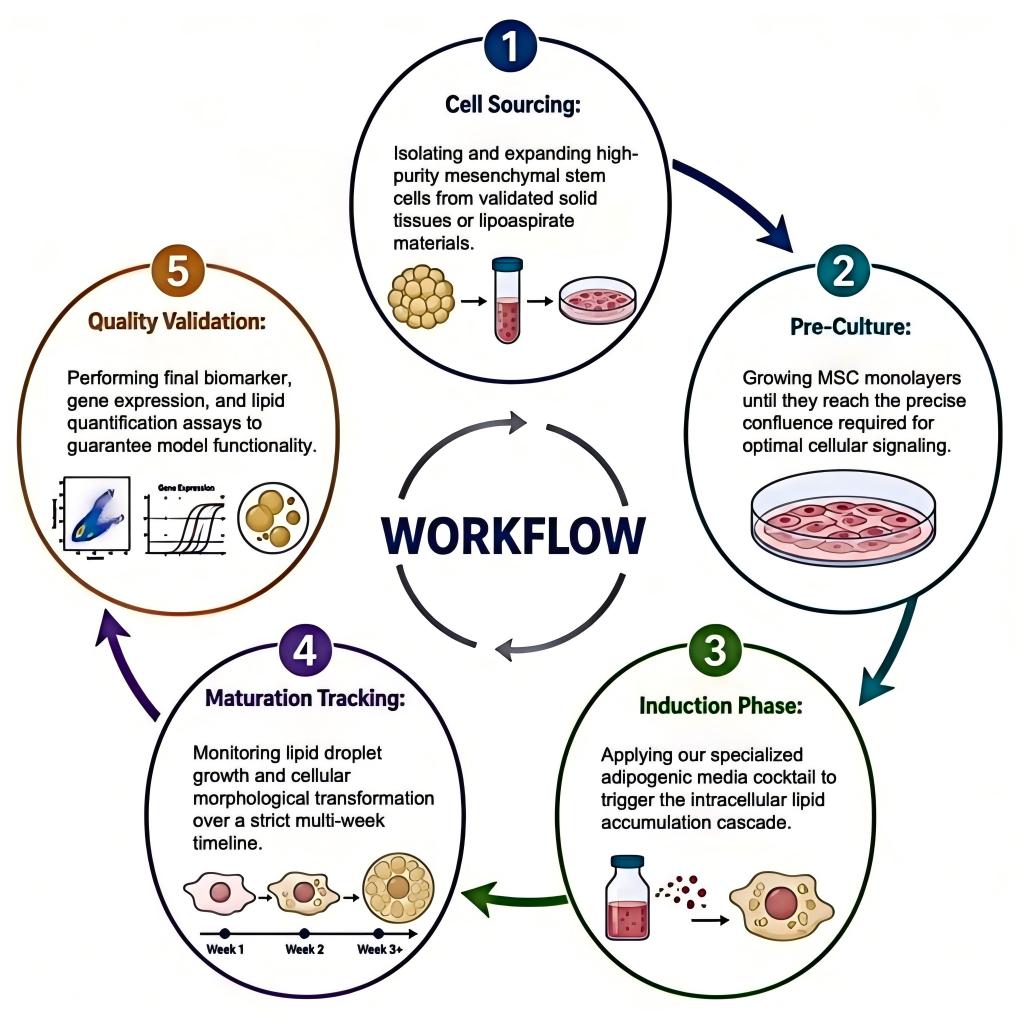
Translating stem cells into reliable metabolic models requires a highly orchestrated, multi-stage protocol where timing and chemical precision are everything.
Fields of Application
Our MSC-derived adipocyte models are highly versatile and fit seamlessly into several major areas of metabolic and pharmacological research:
- Anti-Obesity Drug Screening
Evaluating the capacity of novel small molecules or natural compounds to inhibit adipogenesis, reduce lipid storage, or enhance fat breakdown (lipolysis).
- Insulin Resistance and Diabetes Modeling
Treating mature adipocytes with high levels of insulin or free fatty acids to induce state-of-the-art In Vitro Models of type 2 diabetes and metabolic syndrome.
- Adipokine Secretion Studies
Investigating how fat cells release signaling proteins that influence systemic inflammation, cardiovascular health, and appetite regulation.
- Adipogenic Gene Expression Mapping
Tracking epigenetic shifts, microRNA influences, and transcriptional networks that govern how stem cells choose to become fat rather than bone or cartilage.
Advantages
While many labs attempt to handle adipogenesis in-house, partnering with Protheragen gives your team access to uniquely optimized standards that eliminate experimental noise.
Exceptional Differentiation Efficiency
We routinely achieve over 85% mature adipocyte conversion across our cell lines. This high consistency minimizes background noise from uninduced stem cells, ensuring your metabolic assays yield clear, reproducible data every single time.
Data Verification Standards
We don't ask you to just take our word for it. Every single batch we deliver is backed by comprehensive quality control documentation, utilizing data validation techniques for lipid accumulation metrics, transcriptomic verification of PPARγ pathways, and functional insulin-stimulated glucose uptake capacity.
Tailored Metabolic Microenvironments
We can modify the induction environment to mimic specific pathological states. For instance, we can induce cells under hypoxic conditions or add inflammatory cytokines to create an in vitro model that actually behaves like the dysfunctional tissue found in clinical obesity.
Accelerated Preclinical Timelines
Setting up reliable adipogenic lines takes weeks of trial, error, and media balancing. By outsourcing your model generation to Protheragen, you cut out months of assay development and troubleshooting, moving your lead compounds into validation much faster.
Connect with our specialists today for high-efficiency screening models.
Publication Data
Title: The therapeutic effects of adipose-derived mesenchymal stem cells on obesity and its associated diseases in diet-induced obese mice
Journal: Scientific Reports, 2021
DOI: https://doi.org/10.1038/s41598-021-85917-9
Summary: This study tested human AD-MSCs intraperitoneally on high-fat diet obese mice. Dual stem cell injections lowered blood glucose, HbA1c, atherogenic index AIP and pro-inflammatory TNF-α/IL-6, improved glucose tolerance, and reduced fat mass via anti-inflammatory macrophage modulation against obesity-linked diabetes and cardiovascular risk.
Key Findings
- High-fat diet (HFD) successfully established a diet-induced obese (DIO) mouse model: After 15 weeks of feeding, DIO mice had drastically higher body weight and fat mass, elevated fasting blood glucose, impaired glucose tolerance, elevated cardiovascular risk marker AIP, and overproduced pro-inflammatory TNF-α and IL-6; food intake did not differ between obese and lean groups.
- Two intraperitoneal human AD-MSC injections (4.2×10⁷ cells/kg, 10 weeks apart) improved metabolic dysfunction in obese mice: Treatment significantly reduced blood glucose and HbA1c, and restored glucose clearance during IPGTT testing.
- AD-MSC therapy eliminated elevated cardiovascular risk: Plasma atherogenic index (AIP) in treated obese mice dropped to levels comparable to healthy normal-diet controls.
- AD-MSCs exerted potent anti-inflammatory effects: Serum TNF-α and IL-6 concentrations were markedly suppressed after stem cell administration.
- While terminal total body weight was similar between treated and untreated obese groups, AD-MSCs significantly lowered percentage body fat mass.
- Proposed therapeutic mechanism: AD-MSCs drive adipose tissue macrophage polarization from pro-inflammatory M1 to anti-inflammatory M2 phenotypes, resolving local inflammatory environments that fuel insulin resistance and atherosclerosis.
- Preclinical conclusion: Human AD-MSCs show promising translatable therapeutic value for obesity-linked type 2 diabetes and cardiovascular disease, with further human research required.
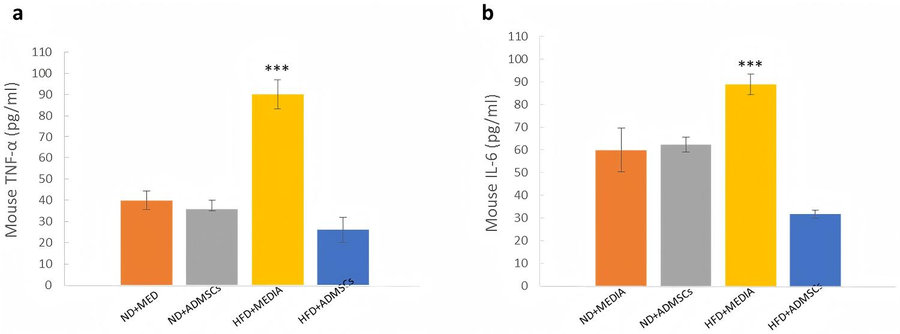 Fig.1 Adipose-derived stem cells reverse obesity diabetes & heart risk in preclinical mouse study. (Jaber, et al., 2021)
Customer Review
Eliminating Experimental Noise in High-Throughput Screening
"We were struggling with massive well-to-well variability when trying to induce mouse ADSCs in-house for our compound screening pipeline. Handing that phase over to Protheragen completely transformed our workflow. Their team delivered highly consistent, heavily lipidated adipocytes in 96-well plates that let us generate clean, publication-quality data on our lead anti-obesity molecules. We're already planning our next project with them using human tissue lines."
Dr. A. P., Metabolic Research Scientist
Accelerating Breakthroughs in Brown Fat Thermogenesis Research
"Our lab studies the genetic switches behind brown fat thermogenesis, but optimizing the browning protocols was eating up all our funding and time. Protheragen provided fully validated, UCP1-positive beige adipocyte models tailored precisely to our assay timelines. Their technical support was incredibly thorough, walking us through the exact post-delivery maintenance steps so we didn't lose a single well."
Dr. M. T., Department of Endocrinology
Frequently Asked Questions
-
What cell types do you typically use for this obesity induction service?
We generally utilize adipose-derived mesenchymal stem cells (ADMSCs) from both human and rodent sources, as they show an inherent bias toward high-efficiency fat differentiation compared to bone marrow stem cells. However, we can adapt our protocols to bone marrow or umbilical cord MSCs if your study design requires it.
-
Can we send you our own primary MSC lines for differentiation?
Yes, absolutely. We regularly receive patient-derived or custom genetically modified MSC lines from clients. Our team will run a preliminary pilot expansion and test our induction formulas to ensure your unique cells differentiate optimally.
-
How do you verify that the cells have truly become mature adipocytes?
We check multiple milestones. Visually, we track intracellular lipid droplet formation via Oil Red O or Nile Red staining. Molecularly, we use qPCR and Western blotting to verify the upregulation of master regulatory genes like PPARγ, CEBPA, and mature functional markers like FABP4.
-
Is it possible to generate brown or beige fat cells instead of just white fat?
It is. We have separate, highly specialized induction media cocktails that promote thermogenic profiles. We confirm brown/beige differentiation by measuring the expression of Uncoupling Protein 1 (UCP1) and mitochondrial density markers.
-
Can you deliver these models in a format ready for high-throughput screening?
We definitely can. We can perform the entire differentiation process directly within multi-well plates (96-well or 384-well setups). This allows you to jump straight into your screening protocols immediately upon delivery.
-
What is the typical turnaround time for a standard adipocyte induction project?
Because true adipogenesis requires an absolute biological timeline for cell expansion, induction, and lipid accumulation, a standard project usually takes about 4 to 6 weeks from cell thawing to final quality control analysis.
-
Do you provide functional metabolic assays alongside the induction service?
Yes. Beyond generating the cells, Protheragen can perform secondary functional readouts for you, such as insulin-stimulated glucose uptake assays, lipolysis rate measurements, and multiplex adipokine profiling.
-
How stable are the mature adipocytes once they reach full differentiation?
Mature adipocytes can be maintained in a stable, functional state for several weeks in specific maintenance media. We provide clear handling protocols and specialized maintenance reagents to ensure your cells stay healthy during testing.
Contact Us
In summary, Protheragen offers a highly reliable, meticulously validated path to obtaining high-fidelity adipocyte models for your preclinical obesity and metabolic disease research. By taking the complexity of stem cell culture and differentiation off your hands, we empower your team to focus on what matters most: generating breakthroughs in metabolic science. Welcome to Contact Protheragen to request a personalized quote or to receive comprehensive technical documentation.
Reference
- Jaber, H.; et al. The therapeutic effects of adipose-derived mesenchymal stem cells on obesity and its associated diseases in diet-induced obese mice. Scientific Reports. 2021, 11(1), 6291 (CC BY 4.0).
All of our services and products are intended for preclinical research use only and cannot be used to diagnose, treat or manage patients.