
Induced Pluripotent Stem Cell (iPSC)-based Adipocyte Induction Service
InquiryObesity is a massive global health challenge. It is no longer looked at as just a cosmetic issue but as a complex metabolic disorder that drives type 2 diabetes, cardiovascular problems, and fatty liver diseases. For a long time, researchers have relied on Rodent Models or immortalized cell lines like 3T3-L1 preadipocytes to understand how fat tissue works. These options do have their place, but they often fail to replicate human physiology accurately. This disconnect makes a lot of promising anti-obesity drugs fail when they transition from early testing to human systems.
Induced Pluripotent Stem Cell (iPSC)-based Adipocyte Induction Service for Obesity Preclinical Research
To fix this gap, human induced pluripotent stem cells (iPSCs) have emerged as an incredible tool. Because they can turn into any cell type while keeping the donor's exact genetic code, iPSCs let us build highly accurate human metabolic models. Protheragen provides a specialized iPSC-based adipocyte induction service tailored specifically for preclinical obesity research. We take human iPSCs and guide them down a targeted path to become mature, functional adipocytes. These cells display all the critical features of human fat tissue, such as storing lipids, responding to insulin, and secreting adipokines. By mimicking human tissue dynamics in a dish, our service allows you to explore metabolic mechanisms and screen compound libraries with deep biological relevance.
Core Technologies
Our specialized adipocyte induction platform brings together advanced genetic reprogramming and highly controlled chemical biology to build robust, human-relevant metabolic models.
We utilize non-integrating episomal vectors and modified mRNA transfection methods to generate high-quality pluripotent lines. This avoids random genomic integration, keeping the baseline genetics of your donor models entirely clean and undisturbed.
Our protocols completely skip the unpredictable embryoid body stage. By driving differentiation in highly efficient monolayer cultures, we eliminate spatial signaling blockages and ensure every cell receives uniform exposure to induction cues.
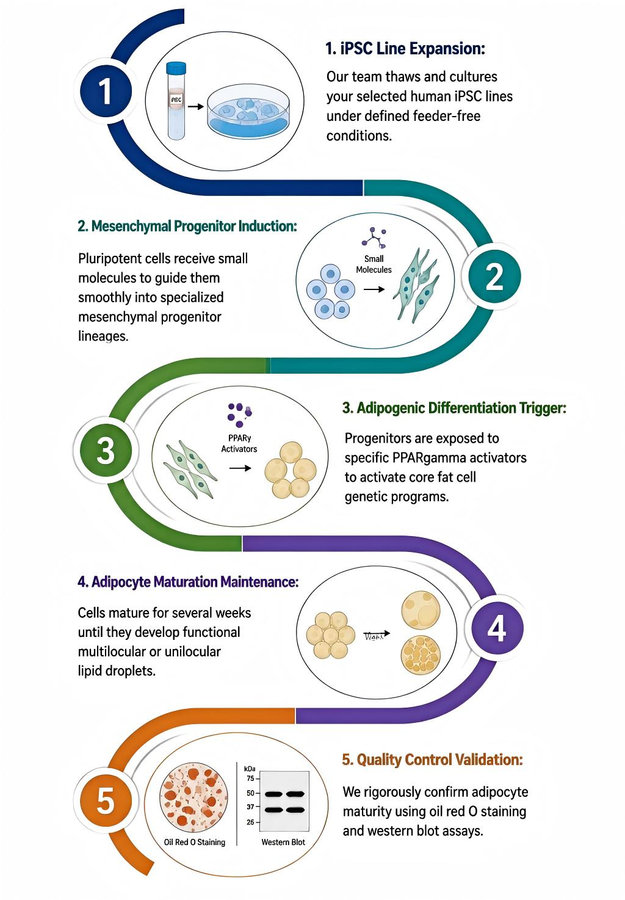
We use precise, timed combinations of small molecules and recombinant growth factors to control cell fate. Fine-tuning the balance of PPARγ activators, specialized glucocorticoids, and insulin allows us to steer cells specifically toward white, brown, or beige adipocyte lineages.
Our platforms incorporate strict metabolic checkpoints during the maturation phase. We monitor and verify that the resulting cell clusters display authentic human lipid storage mechanisms, active insulin-stimulated glucose transport, and typical adipokine secretion profiles.
Solution Scope
Protheragen offers an extensive suite of preclinical induction services designed to fit into your existing discovery pipelines. We manage everything from initial sourcing to final validation assays.
- Custom iPSC-to-Adipocyte Induction
We work with your proprietary iPSC lines or help you select appropriate donor lines from major biobanks. This covers healthy controls as well as specific lines carrying genetic risk factors for obesity or insulin resistance.
- Lineage-Specific Differentiation
Fat isn't all the same. We differentiate your cells into classic white adipocytes for lipid storage studies, or brown and beige adipocytes to explore thermogenesis and energy expenditure.
- Phenotypic High-Throughput Screening Support
We set up your induced cells in multi-well formats (94-well or 384-well configurations) optimized for automated imaging and high-throughput drug screening.
- Metabolic Function and Assay Validation
Our laboratory performs a broad array of functional tests on the derived cells. We measure glucose uptake stimulated by insulin, analyze lipolysis rates through glycerol release, and profile adipokine secretions like leptin and adiponectin.
Tell our scientists about your target profile to receive a customized screening strategy.
Workflow
Discover how our streamlined, five-stage differentiation process transforms pluripotent stem cells into highly functional, assay-ready human adipocytes.
Fields of Application
Our human iPSC-derived adipocytes serve as robust testing grounds across several key areas of preclinical discovery:
- High-Throughput Screen Campaigns
Deploy our multi-well-formatted human fat cells to screen extensive Small Molecule or biological libraries, allowing you to rapidly identify novel compounds that successfully block lipid accumulation or accelerate fat breakdown.
- Target Identification and Validation
Utilize CRISPR-engineered iPSC lines alongside our induction protocols to knock out or overexpress specific metabolic genes, giving you clear insight into how specific pathways control human adipocyte development and function.
- Thermogenesis and Energy Expenditure Research
Leverage our highly functional brown and beige adipocyte models to track UCP1 expression and monitor mitochondrial respiration rates, helping you discover effective therapeutic strategies focused on burning calories rather than storing them.
- Early Safety and Metabolic Toxicity Profiling
Evaluate candidate drugs early in development to detect potential off-target toxicities, such as drug-induced insulin resistance or lipodystrophy, before advancing to costly in vivo testing phases.
Advantages
Partnering with Protheragen provides your pipeline with elite biological fidelity and highly reproducible performance metrics that traditional models lack.
Unmatched Biological Relevance to Human Physiology
Our specialized induction protocols generate adipocytes that capture the complex genetics of human tissue. They consistently outperform traditional rodent cell lines by expressing authentic human surface receptors and metabolic pathways. This biological fidelity ensures your preclinical screening results translate reliably to downstream human systems.
High Efficiency and Monolayer Uniformity
By leveraging optimized monolayer culture systems, we eliminate the inherent batch-to-batch variability associated with embryoid body methods. Our platform reproducibly delivers over 80% differentiation efficiency across independent runs—minimizing experimental noise and safeguarding your drug discovery timelines.
Flexible Multi-Lineage Differentiation Options
Our team gives you the ability to generate white, brown, or beige adipocytes within the same genetic background. This flexibility allows you to compare energy-storing models directly against energy-burning models. It opens up new avenues for discovering therapeutics focused on browning white fat.
Contact our scientific team today to receive a detailed technical proposal.
Publication Data
Title: Efficient Differentiation of Human Induced Pluripotent Stem Cell (hiPSC) Derived Mesenchymal Progenitors Into Adipocytes and Osteoblasts
Journal: Bio-protocol, 2023
DOI: https://doi.org/10.21769/BioProtoc.4885
Summary: This study finds lipid metabolism inhibition boosts obese donors' MPLA FastDC vaccine function. Orlistat lowers suppressive IL-10, raises IL-12p70/IL-10 ratios, and amplifies NK/T cell tumour immunity. Lipase/FASN blockers relieve IL-10 autocrine suppression, offering a tumour immunotherapy strategy for poorly-vaccinating obese populations.
Key Findings
- Obesity creates impaired dendritic cell (DC) vaccine efficacy: Obese donors' MPLA FastDC produce high inhibitory IL-10, driving autocrine/paracrine immune suppression; obese people also have weak vaccination responses and higher cancer risk.
- MPLA-matured FastDC exhibit a lipid-rich metabolic phenotype: They take up more fatty acids, accumulate intracellular lipids and have active mitochondria, which promotes excess IL-10 release.
- Early orlistat lipid inhibition during monocyte differentiation rescues DC function in obese donors: While slightly lowering DC maturation markers, orlistat drastically boosts NK/T cell degranulation, IFN-γ secretion and lymphocyte proliferation.
- BMI stratification reveals a unique therapeutic benefit for obese subjects: Only obese donors show a significant rise in the anti-tumour IL-12p70/IL-10 cytokine ratio after orlistat treatment.
- IL-10 suppression is not the sole working mechanism: Anti-IL-10 neutralising antibodies partially restore immune activity but cannot replicate orlistat's full effector cell activation.
- Comparative lipid inhibitor testing shows lipase blockers (orlistat, Cay10499) outperform FASN inhibitor C75 at enhancing anti-tumour immunity, with distinct impacts on lipid uptake and cytokine balance.
- Overall translational takeaway: Targeting lipid metabolism during DC generation is a viable strategy to reverse obesity-related immune defects and optimise DC cancer vaccines for obese patient populations.
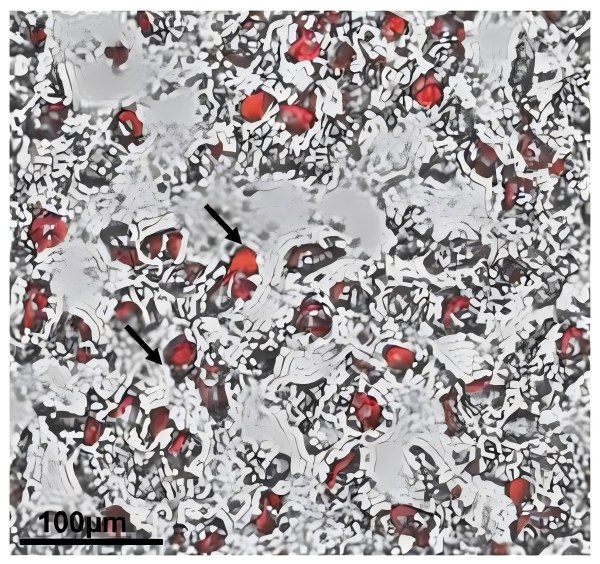 Fig.1 Step-by-step protocol: differentiate hiPSC mesenchymal progenitors into adipocytes & osteoblasts. (Diaz-Hernandez, et al., 2023)
Customer Review
Overcoming Rodent Cell Variability to Identify Novel Lipolysis Regulators
"Our laboratory was struggling with the high background noise and poor translation of mouse preadipocyte lines during a major small-molecule screening campaign. We turned to Protheragen to differentiate our patient-specific iPSC lines into mature white adipocytes. The batch-to-batch consistency was outstanding, showing over eighty percent differentiation efficiency. This allowed us to identify two novel regulators of lipolysis with clear human translation. We are already mapping out our next project with their team to look at brown fat thermogenesis."
Dr. M. D., Biopharma Corporation
Accelerating CRISPR Target Validation with Assay-Ready Beige Adipocytes
"Working with Protheragen for our target validation work completely transformed our timeline. They took our engineered iPSC lines and delivered fully characterized, assay-ready 96-well plates of beige adipocytes right when we needed them. The cells showed excellent insulin responsiveness and clear UCP1 expression. Having a reliable partner handle the complex cell culture allowed our team to focus entirely on downstream functional assays."
Dr. P. I., Metabolic Research Institute
Frequently Asked Questions
-
What starting materials do you require for this service?
We can readily accept healthy or diseased human iPSC lines provided by your institution, or we can assist in sourcing verified donor lines from reputable international cell repositories.
-
Can you induce adipocytes from patient lines with specific metabolic diseases?
Yes. Our protocol is highly adaptable and works efficiently across various patient-derived lines, including those with genetic backgrounds tied to severe insulin resistance, type 2 diabetes, or monogenic obesity.
-
How do you verify that the induced cells are truly mature adipocytes?
We perform rigorous quality control checks on every single batch. This includes visual tracking of lipid droplets via Oil Red O staining, along with quantitative analysis of key fat markers like PPARγ, CEBPA, and FABP4.
-
Do you offer brown adipocyte induction for thermogenesis research?
We certainly do. We have distinct protocols optimized specifically to yield functional brown or beige adipocytes that express high levels of uncoupling protein 1 (UCP1) for your energy expenditure studies.
-
What plate formats are available for delivery or assaying?
We can customize the output to fit your exact screening workflow. Options include standard 6-well plates for molecular biology testing or high-density 96-well and 384-well plates ready for automated screening.
-
How long does the complete induction process typically take?
A typical project takes about 4 to 6 weeks from the initial expansion of pluripotent stem cells to the final validation of mature, assay-ready adipocytes, depending on the line's characteristics.
-
Can these cells respond dynamically to insulin stimulation?
Yes, our induced adipocytes exhibit clear metabolic functionality, including significant increases in glucose uptake and AKT phosphorylation when exposed to physiological levels of human insulin.
-
Does Protheragen provide any clinical-grade cells or diagnostic services?
No, our services are strictly limited to preclinical in vitro research applications. We do not provide clinical trial materials, cellular therapeutics, or any patient diagnostic testing.
-
How do these cells compare to standard rodent 3T3-L1 cells?
Human iPSC-derived fat cells express true human metabolic networks and drug-receptor dynamics. This makes them far more predictive of human drug responses than traditional mouse cell lines.
Contact Us
Human iPSC-derived adipocytes represent a major step forward for preclinical obesity research, providing the human biological context that older rodent models simply cannot match. Protheragen delivers fully validated, reliable, and assay-ready cell models tailored to your specific drug discovery goals. By taking over the tedious and specialized differentiation process, we help your team save time and generate high-quality, reproducible screening data. Please feel free to Contact Protheragen to our technical team to discuss how we can support your experimental design.
Reference
- Diaz-Hernandez, M.E.; et al. Efficient Differentiation of Human Induced Pluripotent Stem Cells (hiPSCs) Derived Mesenchymal Progenitors into Adipocytes and Osteoblasts. Bio-protocol. 2023, 13(22): e4885 (CC BY 4.0).
All of our services and products are intended for preclinical research use only and cannot be used to diagnose, treat or manage patients.