Chrono-Metabolism: An Exhaustive Meta-Analysis of Time-Restricted Feeding in Rodent Models
December 19, 2025

June 22, 2026
The cardio-kidney-metabolic (CKM) syndrome is a progressive, bidirectional cascade linking metabolic dysfunction, chronic kidney disease (CKD), and cardiovascular disease (CVD). Advanced CKM, specifically Stages 3 and 4, carries a highly elevated risk of mortality. While obesity and elevated body mass index (BMI) accelerate this decline, identifying modifiable behavioral factors remains critical. Circadian rhythms, which represent intrinsic 24-hour biological cycles, are key regulators of metabolic and cardiovascular health. A longitudinal study published in the journal Nutrition and Metabolism analyzed 2011 to 2014 National Health and Nutrition Examination Survey (NHANES) data to address a vital scientific gap: how circadian misalignment combines with excess weight to drive advanced CKM progression and impact overall survival.
The research team performed a granular evaluation of the baseline characteristics, cross-sectional CKM risks, and longitudinal survival probabilities of the cohort. The final study sample of 5,335 overweight or obese adults had a mean age of 51.8 years, with males constituting 49.3 percent of the sample. Hypertension was prevalent in 50.3 percent of the participants, diabetes was present in 22.8 percent, and 18.6 percent of the cohort met the clinical criteria for advanced CKM syndrome.
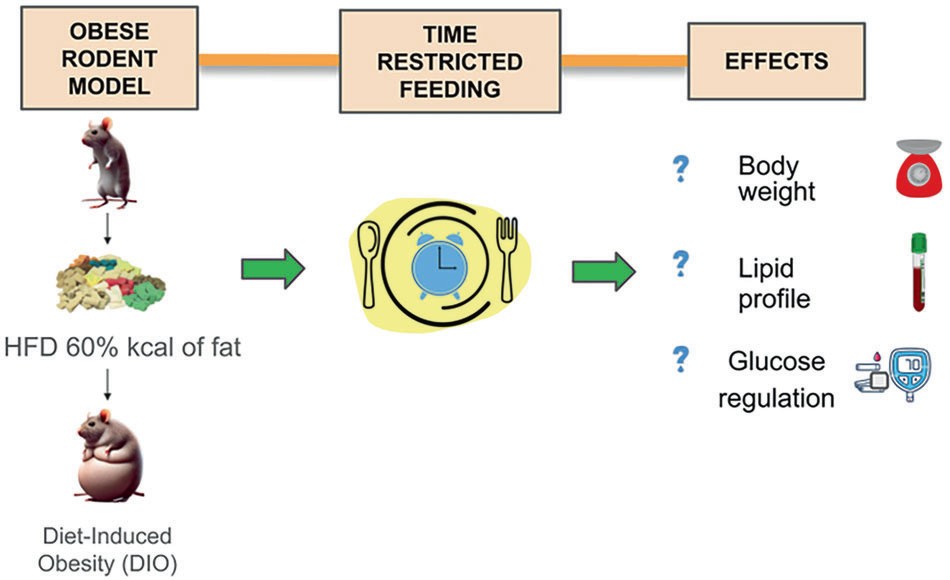
The transparency of the evidence presented is rooted in the systematic selection process detailed. This figure illustrates the various phases of the systematic review and meta-analysis, detailing the number of records identified (607), screened (180), and assessed for eligibility, ultimately leading to the 12 core publications used for data collection. This visual representation highlights the rigorous exclusion of studies that did not involve obesity induction or that focused on other forms of intermittent fasting, like alternate-day fasting (ADF) or the 5:2 diet. By following this funneling process, the authors ensured that the findings regarding body weight and lipid profiles are derived from a "clean" dataset specifically targeting time-restricted feeding within the context of established rodent obesity.
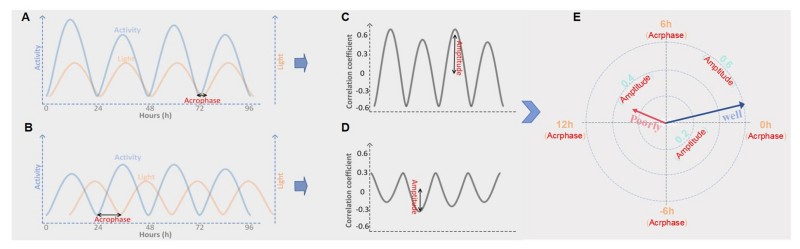 Fig.1 Circadian alignment between light exposure and activity patterns was evaluated using phasor analysis. (Zhang, et al., 2026)
The cross-sectional risk associations adjusted across multiple models are illustrated. Lower phasor magnitude was systematically linked to a higher prevalence of advanced CKM stages, as shown. In the fully adjusted Model 4, which controlled for age, sex, race, education, household income, smoking, alcohol use, hypertension, and diabetes, individuals in the lowest phasor magnitude quartile, labeled Q1, had a significantly higher risk of advanced CKM syndrome compared to those in the highest quartile, labeled Q4, with an odds ratio (OR) of 1.77 and a 95 percent confidence interval (CI) of 1.17 to 2.68.
The non-linear trend of this relationship is mapped via restricted cubic splines, demonstrating a continuous, inverse association where lower phasor magnitude corresponds to elevated odds of advanced disease. Subgroup evaluations further refined these risks. The results reveal that while the inverse relationship was consistent across age groups, the absolute risk curve was markedly higher for older adults aged 60 years and older. Concurrently, the results show that males exhibited a steeper risk gradient compared to females, suggesting a higher vulnerability to circadian dampening. Conversely, phasor acrophase showed no significant association with CKM stages, as detailed.
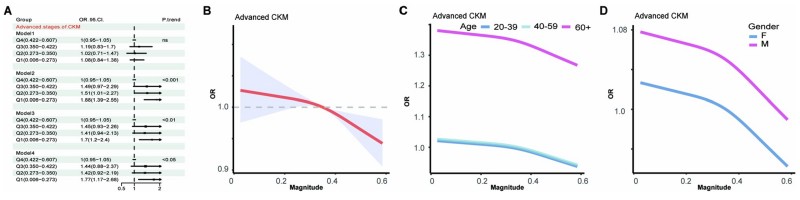 Fig.2 Stronger circadian synchronization was associated with a lower risk of advanced cardio-kidney metabolic syndrome. (Zhang, et al., 2026)
As shown in Figure 3, lower phasor magnitude strongly predicted mortality. In Model 4, individuals in the lowest quartile Q1 faced a two-fold higher risk of all-cause mortality compared to Q4, with a hazard ratio (HR) of 2.12 and a 95 percent confidence interval (CI) of 1.52 to 2.95. The restricted cubic spline confirms this inverse trend, which subgroup analyses show is most pronounced in older adults and males.
Cardiovascular mortality was highly sensitive to circadian amplitude loss. Q1 participants experienced a dramatic increase in cardiovascular death risk compared to Q4, with an HR of 7.63 and a 95 percent CI of 2.82 to 20.63. Spline curves and subgroup assessments show this risk was amplified in older adults and males. Premature mortality before age 70 years was also elevated in Q1, with an HR of 1.89 and a 95 percent CI of 1.07 to 3.36. Conversely, phasor acrophase showed no significant mortality correlation.
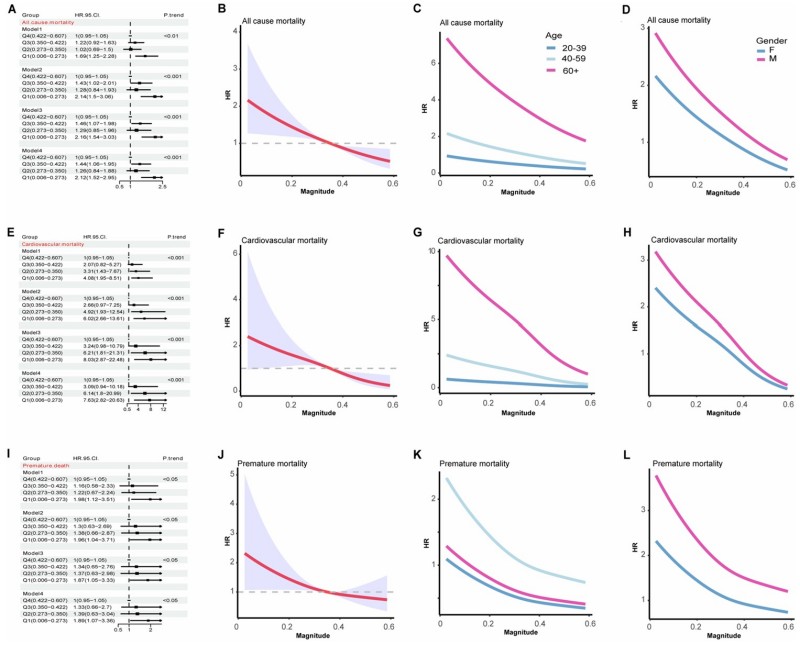 Fig.3 Reduced circadian rhythm alignment was linked to higher risks of all-cause and cardiovascular mortality. (Zhang, et al., 2026)
Kaplan-Meier survival curves reinforce these findings. Over the 100-month follow-up, Q1 participants had the lowest survival probability for all-cause mortality. This step-wise decline across decreasing quartiles was sharper for cardiovascular mortality and consistent for premature death.
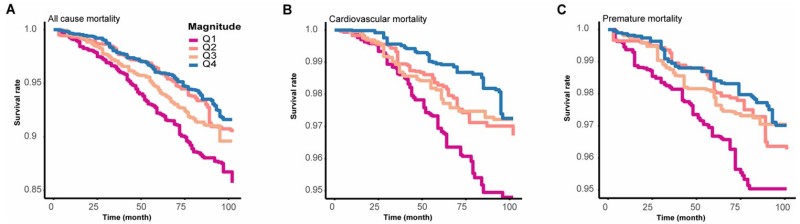 Fig.4 Higher phasor magnitude was associated with improved long-term survival outcomes. (Zhang, et al., 2026)
These findings hold profound implications for the clinical management of obesity and metabolic health. The independent association between dampened circadian amplitude and advanced CKM outcomes suggests that maintaining strong daily behavioral cycles is essential for systemic health. Mechanistically, a flat light-activity rhythm disrupts the synchronized transcription of metabolic genes, leading to impaired glucose tolerance, insulin resistance, autonomic imbalance, and chronic inflammation. This systemic strain ultimately accelerates renal filtration decline and arterial stiffness.
From a clinical standpoint, objective circadian tracking using consumer or clinical wearables could serve as a valuable tool for risk stratification, identifying high-risk individuals before overt cardiovascular or renal damage occurs. Furthermore, clinical trials are needed to evaluate the therapeutic efficacy of amplitude-enhancing interventions, such as timed bright light exposure, standardized sleep schedules, and time-restricted feeding, specifically tailored for high-risk demographic groups.
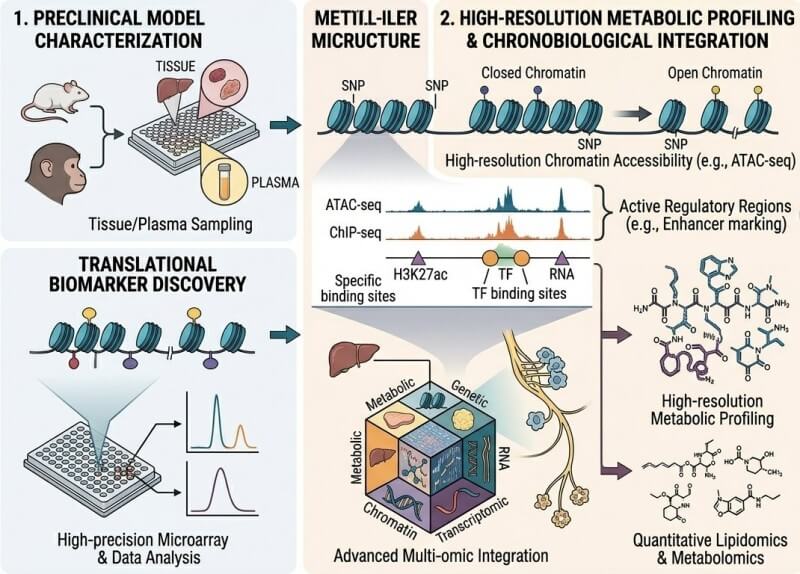
For investigators and clinical trialists seeking to explore the therapeutic potential of circadian biology, metabolic pathways, or renal health, Protheragen provides comprehensive, state-of-the-art translational research services. We specialize in high-resolution metabolic profiling, biomarker analysis, preclinical model characterization, etc., to help accelerate your therapeutic pipelines and validate novel chronobiological interventions.
Reference
Copyright © Protheragen. All rights reserved.