
Circadian Alignment as a Key Protector Against Advanced Cardio-Kidney-Metabolic Deterioration in Overweight and Obese Cohorts
June 22, 2026

December 19, 2025
The quest to combat the global obesity epidemic has led researchers to explore not just what we eat but when we eat, shifting the focus toward the intersection of circadian rhythms and metabolic health. This critical systematic review and meta-analysis, titled "Time-restricted feeding in rodent obesity models: impact on body weights, lipid profile and glucoregulation," was published in January 2025 in the International Journal of Obesity by a collaborative team led by G. Cavallini. The research addresses a fundamental challenge in nutritional science: while several feeding windows ranging from 4 to 12 hours have been reported in the literature, there remains a lack of consensus on which protocol most impactfully improves metabolic profiles. By evaluating research articles published between 2009 and 2024, the authors aimed to bridge the gap between individual laboratory findings and universal metabolic truths, focusing specifically on how TRF resets the physiological stages of fasting from the post-absorptive state to gluconeogenesis to combat diet-induced obesity (DIO).
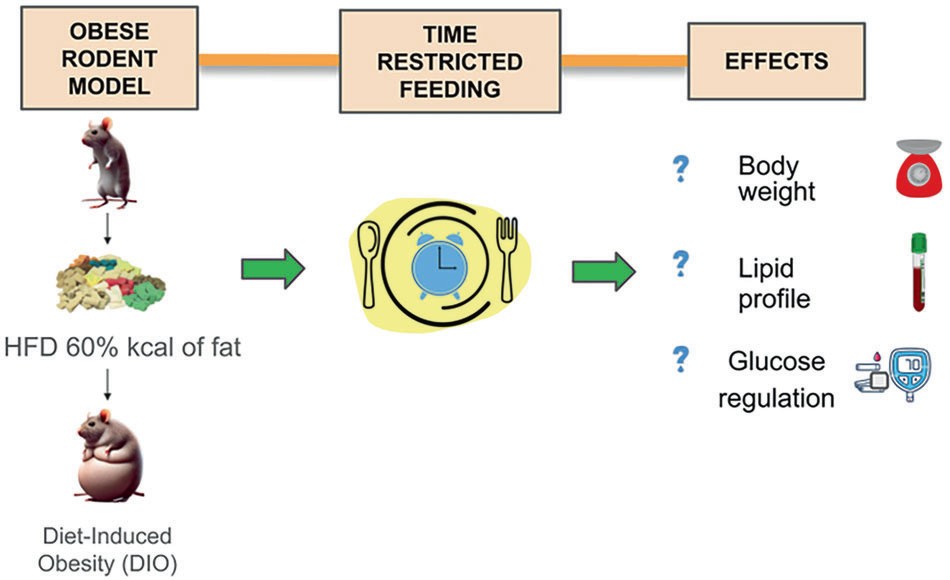
The results of this meta-analysis provide an exhaustive and highly detailed map of the physiological transformations induced by TRF, validated through the synthesis of standardized experimental protocols.
The transparency of the evidence presented is rooted in the systematic selection process detailed in Fig. 1. This figure illustrates the various phases of the systematic review and meta-analysis, detailing the number of records identified (607), screened (180), and assessed for eligibility, ultimately leading to the 12 core publications used for data collection. This visual representation highlights the rigorous exclusion of studies that did not involve obesity induction or that focused on other forms of intermittent fasting, like alternate-day fasting (ADF) or the 5:2 diet. By following this funneling process, the authors ensured that the findings regarding body weight and lipid profiles are derived from a "clean" dataset specifically targeting time-restricted feeding within the context of established rodent obesity.
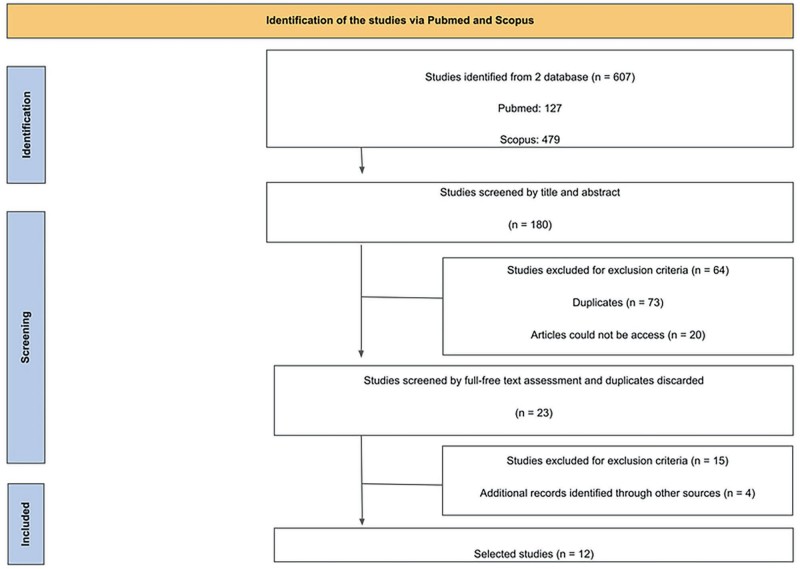 Fig.1 This figure outlines the overall process of study screening and inclusion in systematic reviews and meta-analyses. (Argaistieng, et al., 2025)
The analysis revealed that obesity was successfully induced within 6 weeks for 100% weight gain in C57BL/6 mice when fed a 60% HFD, while Sprague-Dawley rats achieved a staggering 300% weight gain within 12 weeks. According to the synthesized data in Table 4, the impact of TRF on these models was significant and duration-dependent. For instance, in mice, the shortest impactful TRF intervention was identified as a 10-hour feeding window over 6 weeks, resulting in a 17.1% weight reduction. In rats, the highest weight loss was observed with an 8-hour feeding window conducted over 6 weeks. These quantitative findings demonstrate a consistent trend: extending the fasting duration facilitates a metabolic switch from glucose oxidation to fat metabolism. As hepatic glycogen is diminished during the 14 to 16-hour fasting periods, the body initiates gluconeogenesis and lipolysis, which not only reduces body weight but also protects against the "metabolic tipping point" of chronic fat storage.
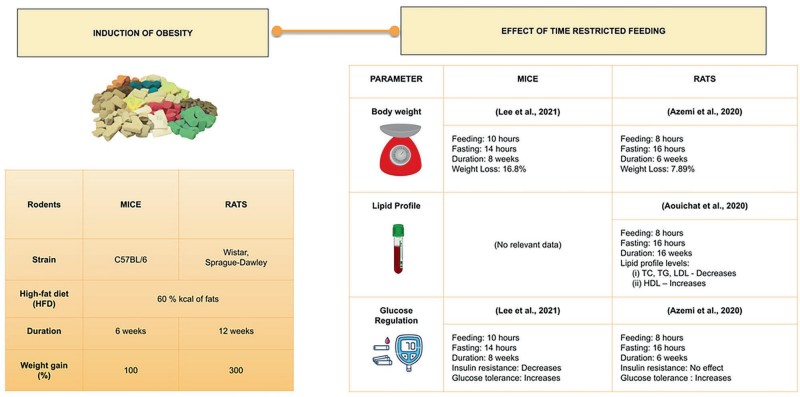 Fig.2 Time-restricted feeding improved body weight changes, lipid levels, and glucose metabolism in different ways among HFD-induced obese rodents. (Argaistieng, et al., 2025)
The meta-analysis further explored the secondary outcomes of glucose and lipid homeostasis with remarkable detail. In the majority of studies assessed, TRF was consistently associated with increased glucose tolerance and enhanced insulin sensitivity. Specifically, a 10-hour feeding window impactfully normalized blood glucose levels and reduced insulin resistance in C57BL/6 mice. The synthesized data reveal that the periodic fasting inherent in TRF allows the insulin-signaling pathways to remain responsive even under the pressure of a 60% fat diet. Regarding lipid profiles, the analysis showed a consistent reduction in total cholesterol (TC) and triglycerides (TG) in several models, particularly when the feeding window was restricted to 8 hours. While some heterogeneity was noted, such as in middle-aged models where TG levels remained stable, the overall evidence suggests that TRF acts as a systemic "reset," improving the health of the liver and endocrine system by preventing the lipotoxic accumulation of fats.
The findings of this meta-analysis provide a powerful scientific foundation for the application of chrononutrition as a robust, non-pharmacological intervention for obesity and type 2 diabetes. By demonstrating that the most impactful regimen identified is a 10-hour feeding window over 8 weeks in C57BL/6 mice, this research suggests that the timing of food intake can recalibrate the metabolic clock and restore insulin sensitivity even when the diet remains high in fat. For the field of drug and therapy development, these insights highlight the importance of the "fasting-feeding" cycle in driving systemic metabolic reprogramming and compensating for circadian misalignment. From a public health perspective, TRF represents an accessible strategy that leverages the body's natural post-absorptive and gluconeogenic stages to improve long-term cardiovascular health. Ultimately, this research positions TRF as a promising chrono-nutritional intervention that targets the underlying mechanisms of obesity through simple temporal organization.
For researchers inspired by this systematic review to further explore the intricacies of metabolic regulation or to validate new dietary protocols, Protheragen provides world-class Preclinical Support. We offer exhaustive services, including the development of diet-induced obesity (DIO) models in C57BL/6J mice and Sprague-Dawley rats, along with advanced metabolic cage monitoring and high-sensitivity assays for glucose, insulin, and lipidomic profiling. Whether you are investigating the 10-hour feeding window or exploring different metabolic challenges, we provide the technical expertise and infrastructure to support your experimental design and data analysis, ensuring your research progresses smoothly.
Reference
Copyright © Protheragen. All rights reserved.