
Macrophage Cell Gene Editing Service
InquiryObesity is no longer viewed simply as a metabolic storage issue. It is fundamentally a chronic, low-grade inflammatory state driven by immune dysregulation within adipose tissue. As fat tissue expands, resident macrophages undergo a dramatic phenotypic shift from an anti-inflammatory, tissue-remodeling state (M2) to a pro-inflammatory, tissue-destructive phenotype (M1). This chronic inflammation drives insulin resistance, metabolic syndrome, and systemic lipotoxicity.
Advanced Macrophage Cell Gene Editing in Preclinical Obesity Therapy Development
At Protheragen, we recognize that reversing this immune imbalance requires precise intervention. Our macrophage cell gene editing service provides preclinical researchers with the tools to reprogram these key immune cells. By precisely knocking out inflammatory hubs or overexpressing protective metabolic pathways, we help teams design next-generation macrophage therapies tailored to correct the underlying biology of obesity.
Core Technologies
Modifying primary macrophages has historically been challenging due to their robust antiviral defense mechanisms and resistance to standard transfection methods. Protheragen has optimized a specialized suite of preclinical technologies to overcome these hurdles:
We utilize ribonucleoprotein (RNP) formulations that bypass cellular pattern recognition receptors, yielding exceptional knockout efficiencies in primary murine and human macrophages without triggering unintended activation.
Our platforms support simultaneous multi-loci editing, allowing researchers to study complex polygenic metabolic traits and multi-checkpoint inhibitions in a single cell line.
For stable transgene integration, we offer engineered pseudotyped lentiviral vectors specifically optimized to evade macrophage restriction factors, ensuring sustained expression of therapeutic metabolic regulators.
We integrate automated functional screening with machine learning pipelines to predict and confirm post-edit phenotypic shifts, ensuring the edited macrophages remain locked in the desired functional state.
Solution Scope
The therapeutic utility of macrophages rests on their plasticity, but exploiting this requires deep customization. Protheragen provides a comprehensive suite of preclinical editing strategies explicitly focused on metabolic and inflammatory reprogramming:
- Pro-Inflammatory Pathway Disruption
Chronic M1 activation in adipose tissue is sustained by specific signaling loops. We provide high-efficiency knockout services for key inflammatory regulators such as TNF-ɑ, IL-1β, NLRP3 inflammasome components, and upstream NF-kB signaling links. Disrupted signaling allows researchers to study how blocking these pathways prevents tissue fibrosis and restores insulin sensitivity in fat depots.
- Metabolic Reprogramming & Lipolysis Enhancement
Macrophages can be edited to actively clear lipid excesses. We offer knock-in and overexpression strategies for genes involved in fatty acid oxidation, lipid transport, and thermogenesis, such as ABCA1, CPT1A, or specific uncoupling proteins. These edits encourage macrophages to consume local lipids, breaking down excess fat accumulation and reducing lipotoxicity in the surrounding tissue environment.
- Phenotypic Polarization Stabilization
A major risk in macrophage therapy is the in vivo reversion of anti-inflammatory cells back into dangerous pro-inflammatory states. We specialize in editing transcription factors and epigenetic regulators—such as PPAR-γ, STAT6, and specific histone demethylases—to lock macrophages into a stable, anti-inflammatory M2 phenotype that resists the harsh, inflammatory microenvironment of obese adipose tissue.
- Adipose Tissue Homing Customization
To maximize local therapeutic impact while avoiding systemic side effects, macrophages must find their way to expanding fat tissue. Protheragen edits chemokine receptors (such as CCR2 and CX3CR1) to enhance the homing capabilities of modified macrophages toward chemotactic gradients secreted by stressed adipocytes.
Contact our scientific team to customize your preclinical macrophage editing strategy.
Workflow
Our streamlined preclinical service workflow ensures rapid turnaround times while maintaining rigorous quality control at every single step:
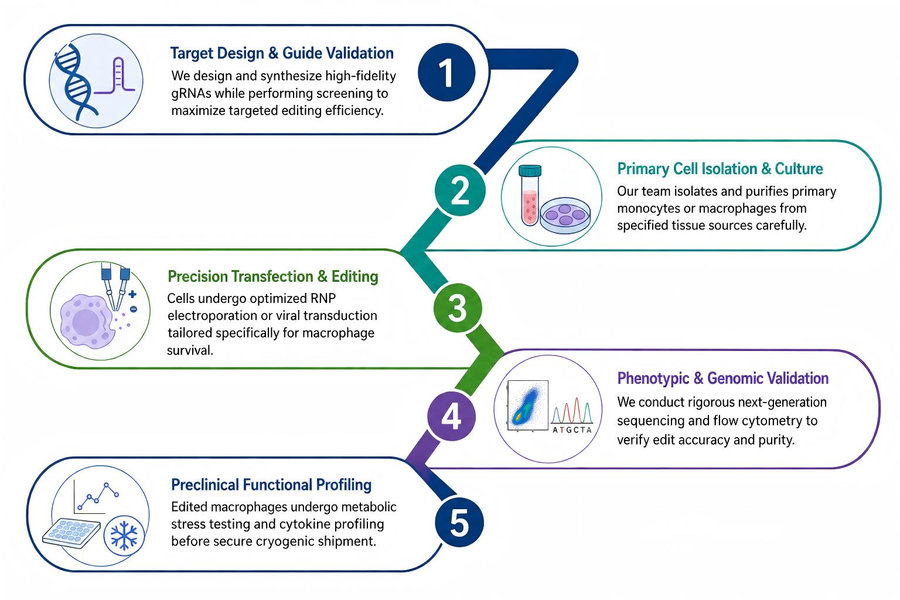
Fields of Application
Our preclinical macrophage gene editing services empower research teams across several key domains:
- Adipose Tissue Microenvironment Modeling
Investigating the complex cross-talk between modified immune cells, adipocytes, and vascular networks during weight gain or weight loss phases. - Insulin Resistance & Type 2 Diabetes Studies
Evaluating how the targeted reduction of macrophage-derived inflammatory cytokines restores glucose transporter function in peripheral tissues. - NASH and Metabolic Liver Disease Therapeutics
Exploring how edited macrophages can clear hepatic lipid deposits and resolve tissue fibrosis in non-alcoholic steatohepatitis models. - Screening Novel Metabolic Targets
Utilizing engineered macrophage lines to identify completely new downstream targets for Small Molecule or biologic combination therapies.
Advantages
Partnering with Protheragen gives your preclinical pipeline immediate access to industry-leading technical expertise and specialized infrastructure:
Exceptional Primary Cell Viability
Macrophages are notoriously sensitive to foreign genetic material and electric fields, frequently undergoing apoptosis during processing. Our optimized protocol maintains over 85% post-editing cell viability, ensuring you receive robust, functional cells ready for immediate downstream testing.
Validated Phenotypic Stability
A frequent problem in macrophage research is phenotypic drifting, where cells lose their target traits. It is confirmed that our epigenetically stabilized M2-reprogrammed macrophages maintain their anti-inflammatory profile for extended durations under severe metabolic stress conditions.
Off-Target Minimization Guarantee
Using deep sequencing and high-fidelity Cas enzymes, we comprehensively map the genomic landscape post-edit. We guarantee virtually undetectable off-target modification rates, providing clear, reliable data that simplifies your eventual regulatory filings.
End-to-End Functional Characterization
We do not just return edited cells; we provide a full functional dossier including detailed metabolic flux analyses, lipid-droplet clearance quantification, and multiplexed cytokine tracking data to prove the edits worked.
Inquire to Discuss Your Preclinical Project Customization Options with Our Science Team
Publication Data
Title: Macrophages: Redefining extracellular matrix architecture through phenotypic switches as therapeutic targets
Journal: Biomaterials, 2026
DOI: https://doi.org/10.1016/j.biomaterials.2026.124063
Summary: This 2026 Biomaterials review covers macrophage origin, M1/M2 polarization, ECM mechanoregulation, and macrophage roles across metabolic, cancer, cardiovascular, neural, liver and musculoskeletal diseases, plus biomaterial, CAR-M, pharmacological targeted therapies and translational gaps.
Key Findings
- Macrophage developmental diversity Tissue-resident macrophages (TRMs) arise from embryonic yolk sac progenitors independent of bone marrow HSCs; distinct tissue subsets (microglia, Kupffer cells) carry unique biomarkers and tissue-specific homeostatic roles.
- Dynamic polarization spectrum Macrophages shift continuously between pro-inflammatory M1 (NF-κB driven) and repair-focused M2 (STAT6 regulated); ECM biophysics (stiffness, fiber alignment) controls phenotype via Piezo1-YAP mechanotransduction.
- Disease-driving dysfunction Dysregulated macrophage secretion of proteases and cytokines triggers ECM fibrosis, tumor progression, atherosclerosis, fatty liver, neurodegeneration and musculoskeletal inflammatory damage.
- Multi-modal therapeutic pipelines Cover CSF-1R blockers, small-molecule drugs, CRISPR gene editing, CAR-M cell therapy, immunomodulatory scaffolds, and synergistic nanoparticle-macrophage delivery platforms.
- Major translational gaps Systemic off-target immune risks, sparse human clinical trial data, and poor spatiotemporal precision limit widespread clinical use of novel macrophage-targeted treatments.
- Future innovation roadmap Integrate multi-omics, AI-assisted biomaterial design and synthetic biology to create smart, precision therapeutics for hard-to-treat inflammatory, fibrotic and malignant illnesses.
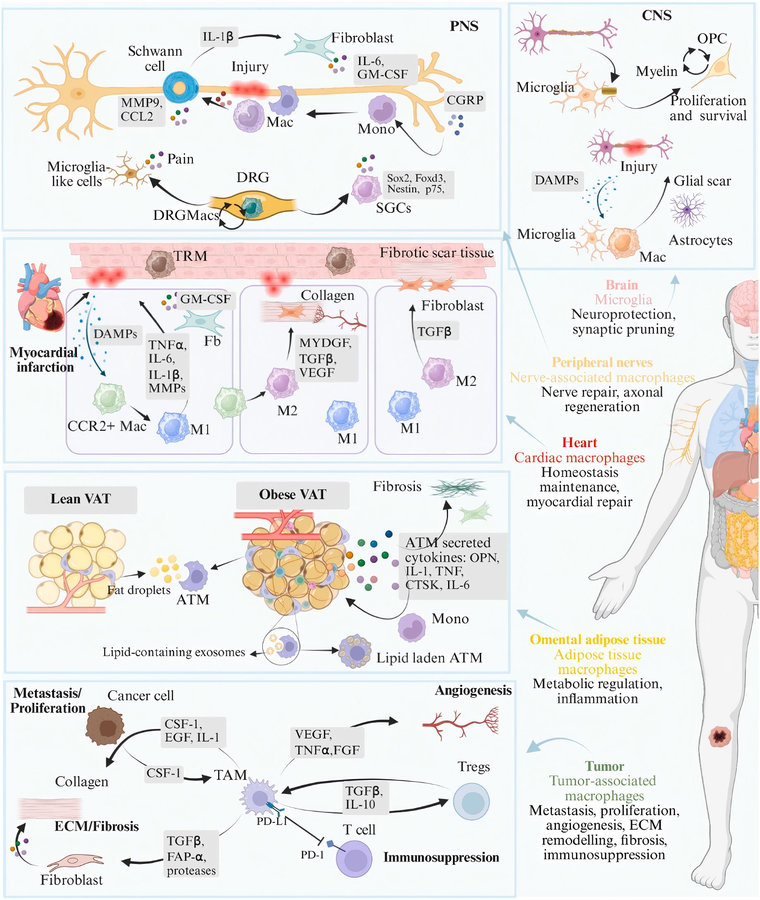 Fig.1 Macrophage polarization & ECM remodeling: targeted biomaterial immunotherapy for chronic diseases. (Dai, et al., 2026)
Customer Review
Overcoming Technical Hurdles in Primary Cell Modification
"Our lab was struggling for nearly a year to achieve meaningful knockout efficiencies in human primary macrophages without completely killing the cells in the process. Protheragen stepped in and delivered highly viable, stably edited cells that allowed us to publish our metabolic homing data way ahead of schedule. The functional assay data they included was incredibly detailed, and we are already planning our next multiplexed project with their team."
Dr. A. T., Laboratory Director
Achieving Unprecedented Phenotypic Stability Under Severe Metabolic Stress
"The phenotypic stability of the M2 macrophages provided by Protheragen was a game-changer for our preclinical anti-inflammatory screening. Even after prolonged exposure to free fatty acids, the cells held their polarization perfectly. Their customer support team spent hours walking us through the post-thaw handling protocols, which gave us immense confidence in our downstream results. We highly recommend their services to any group working in the immunometabolism space."
Dr. E. R., R&D Scientist
Frequently Asked Questions
-
Why choose macrophages over T-cells for preclinical obesity therapy research?
Macrophages are the dominant immune population inside expanding fat tissue and are directly responsible for the chronic inflammation that causes insulin resistance. T-cells don't interact with lipid droplets or adipocytes the same way macrophages do, making macrophages the logical choice for treating metabolic tissue inflammation directly. Please contact our technical team to see how this approach fits your current research model.
-
Can Protheragen handle multiplexed editing for multiple metabolic pathways at once?
Yes, absolutely. We have successfully optimized protocols to knock out or knock in multiple targets simultaneously without compromising cell viability or causing excessive off-target effects. Reach out to us today to discuss your specific target combination.
-
How do you verify that the edited macrophages maintain their phenotype in inflammatory settings?
We challenge every batch of edited cells in vitro with pro-inflammatory cocktails like LPS and IFN-γ, followed by flow cytometry and cytokine secretion profiling. This ensures that the engineered phenotypic traits are stable. We invite you to request our baseline validation protocols for more details.
-
Do you offer work with human primary cells or just murine models?
We provide services for both human peripheral blood mononuclear cell (PBMC)-derived macrophages and various murine tissue-derived macrophages. The protocols are fully customized for each species. Contact our team to select the right cell source for your project.
-
What is the typical turnaround time for a standard knockout service?
Most standard single-gene knockout projects take between 4 and 6 weeks from initial design confirmation to final cryopreserved cell delivery, depending on the complexity of the target. We can provide a detailed timeline once you share your project goals with us.
-
Are your macrophage gene editing services suitable for clinical trial applications?
Our services are strictly for preclinical research and discovery validation stages. Protheragen does not offer clinical manufacturing or clinical services, but the high-quality data generated can significantly strengthen your early-stage regulatory dossiers.
-
How do you ensure low off-target editing rates in primary cells?
We rely on short-lived, high-fidelity RNP complexes rather than plasmids, which means the editing machinery degrades quickly after making the desired cut. This drastically minimizes the window for off-target events. Let us know if you want to see our standard sequencing validation data.
-
Can we provide our own proprietary gRNAs or vectors for the service?
We are very flexible. We can work with your pre-validated materials or design everything from scratch using our internal bioinformatics pipeline. Send us an inquiry to discuss material transfer arrangements.
Contact Us
In summary, Protheragen delivers highly specialized, robust preclinical macrophage cell gene editing services that remove the technical friction from immunometabolism research. By optimizing primary cell transfection, guaranteeing high viability, and providing thorough functional validation, we give your team the precise tools required to unlock the therapeutic potential of modified immune cells against obesity-driven metabolic disorders. Welcome to Contact Protheragen today to discover how our high-performance molecular tools can accelerate your discovery process.
Reference
- Dai, B.; et al. Macrophages: Redefining extracellular matrix architecture through phenotypic switches as therapeutic targets. Biomaterials. 2026, 330, 124063 (CC BY 4.0).
All of our services and products are intended for preclinical research use only and cannot be used to diagnose, treat or manage patients.