
Anti-obesity Dendritic Cell Vaccine Development Service
InquiryObesity isn't just about weight anymore; it is a complex, chronic inflammatory condition driving a global metabolic crisis. Traditional interventions frequently fall short because they fail to address the underlying immunological environment driving chronic tissue inflammation. At Protheragen, we look at the problem through a different lens. Chronic overnutrition triggers a low-grade inflammatory response in adipose tissue, where immune cells like macrophages and T cells become dysregulated. Dendritic cells (DCs) act as the crucial link here, bridging the innate and adaptive immune systems. By harnessing these antigen-presenting cells, our preclinical platform aims to reprogram the body's immune response against specific metabolic targets, such as specific adipokines or inflammatory pathways, to achieve sustainable metabolic resetting.
Anti-Obesity Dendritic Cell Vaccine Development Service
Our platform focuses entirely on the preclinical stages of anti-obesity vaccine development. We help therapeutic developers design, pulse, and evaluate dendritic cell vaccines using advanced in vitro cultures and specialized animal models of metabolic disease. By modifying DC presentation, we can selectively target or downregulate pathways that promote fat storage and tissue inflammation. This opens a brand-new frontier for biopharma companies looking to build a pipeline beyond standard daily or weekly injections.
Core Technologies
To successfully build a functional dendritic cell vaccine, you need a precise blend of immunology and metabolic engineering. Protheragen has spent years refining a suite of core tools specifically optimized for metabolic targets rather than traditional oncology pathways.
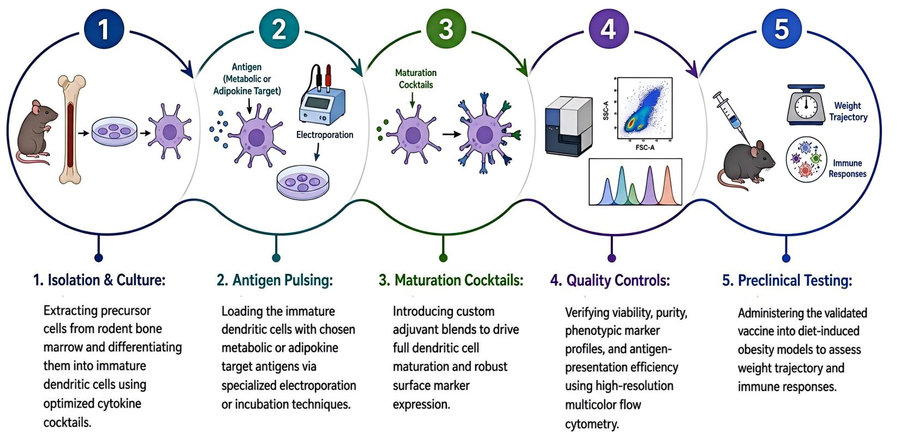
We utilize advanced electroporation and viral vector systems to introduce specific metabolic antigens, such as hormone receptors or inflammatory cytokines, directly into immature dendritic cells.
Developing proprietary combinations of toll-like receptor (TLR) agonists that prime DCs to promote regulatory or protective T-cell responses specifically within visceral fat depots.
Automated flow cytometry panels that analyze DC maturation markers (like CD80, CD86, and MHC class II) to confirm optimal antigen presentation before in vivo testing.
Utilizing real-time cellular respiration tracking to monitor the metabolic shift of dendritic cells during activation, ensuring they possess the energetic fitness required to survive post-injection.
Solution Scope
Our development services cover every phase of early-stage preclinical research, making sure your therapeutic candidates are thoroughly vetted before any translational milestones.
- Antigen Selection and Optimization
We do not just take any target off the shelf. We analyze how specific metabolic targets interact with the immune system, looking closely at stability and expression profiles. Our team designs and synthesizes custom peptide or nucleic acid antigens that will trigger the precise immune response needed to modify metabolic pathways without causing systemic toxicity.
- Primary Dendritic Cell Generation
We handle the heavy lifting of cell biology. Our labs isolate primary monocytes or bone marrow-derived cells from custom animal strains. We then differentiate them into high-yielding populations of functional dendritic cells, tailoring the culture conditions to match the unique requirements of your target disease model.
- Formulation and Adjuvant Screening
An antigen is only as good as the signal that accompanies it. We screen a vast library of immune stimulants and adjuvants to find the exact mix that pushes dendritic cells into the right activation state. This step ensures that the resulting T-cell response is directed precisely at modifying metabolic dysfunction.
- In Vivo Efficacy and Metabolic Profiling
This is where the data comes together. We test the engineered vaccines in validated diet-induced obesity (DIO) or genetic Mouse Models. Over the course of the study, we track key metabolic metrics including body composition (lean vs. fat mass), glucose tolerance, insulin sensitivity, and energy expenditure via indirect calorimetry.
- Immunological and Histological Readouts
We dig deep into the tissues to see exactly what changed. Our services include harvesting adipose tissues and lymphoid organs to run single-cell analysis, cytokine profiling, and immunohistochemistry. We map out the immune cell infiltration in fat depots to prove your vaccine is hitting its target and reducing tissue inflammation.
Our pipeline delivers the data needed to advance your therapeutic candidates.
Workflow
Mapping out an effective cellular vaccine requires a tightly controlled sequence of steps where timing and cell handling dictate the ultimate quality of your preclinical data.
Fields of Application
Our preclinical vaccine development platform is designed to support a wide range of forward-thinking research initiatives across biopharma and academia.
- Next-Generation Therapeutics
Validating entirely new classes of biologics aimed at treating severe obesity by targeting fat tissue inflammation rather than suppressing appetite. - Metabolic Syndrome Interventions
Testing how immunotherapies can simultaneously address weight gain, fatty liver changes, and insulin resistance in multi-disease models. - Cardiovascular Risk Mitigation
Evaluating the secondary benefits of anti-obesity vaccines on blood vessel health, plaque stability, and systemic inflammatory markers. - Academic and Discovery Research
Providing premium, scalable cell sourcing and deep immune profiling for proof-of-concept projects looking into metabolic tissue pathways.
Advantages
Navigating the intersection of immune modulation and metabolic disease is notoriously tricky, which is why our platform is engineered to bypass the common bottlenecks of standard screening pipelines.
Unmatched Metabolic Expertise
Our lab focuses heavily on metabolic immunology, meaning we understand how immune cells behave in a high-lipid environment. This specific focus allows us to design screening assays that conventional, oncology-centric contract research organizations often miss completely.
High-Yield Custom Protocols
We have optimized our isolation and differentiation methods to consistently achieve high yields of viable, mature dendritic cells from small animal tissue samples. Our cytokine and maturation blends improve antigen-loading efficiency by up to 40% compared to standard techniques.
End-to-End Deep Phenotyping
We don't just stop at weighing the animals; we track the entire immune mechanism. Our multi-laser flow cytometry panels and tissue-specific extraction protocols give you a granular look at exactly how T cells are being reprogrammed in visceral fat.
Fully Tailored Assay Designs
Every therapeutic concept has its own quirks, so we avoid rigid, one-size-fits-all testing templates. We build custom in vitro co-culture assays and adjust animal dosing schedules around your molecule's unique kinetics to give you the most relevant data possible.
Leverage our specialized metabolic insights to generate high-quality data for your program.
Publication Data
Title: Enhanced function of vaccine dendritic cells from obese donors upon inhibition of the lipid metabolism
Journal: Clin. Transl. Med., 2022
DOI: https://doi.org/10.1002/ctm2.557
Summary: This study finds lipid metabolism inhibition boosts obese donors' MPLA FastDC vaccine function. Orlistat lowers suppressive IL-10, raises IL-12p70/IL-10 ratios, and amplifies NK/T cell tumour immunity. Lipase/FASN blockers relieve IL-10 autocrine suppression, offering a tumour immunotherapy strategy for poorly-vaccinating obese populations.
Key Findings
- Obesity creates impaired dendritic cell (DC) vaccine efficacy: Obese donors' MPLA FastDC produce high inhibitory IL-10, driving autocrine/paracrine immune suppression; obese people also have weak vaccination responses and higher cancer risk.
- MPLA-matured FastDC exhibit a lipid-rich metabolic phenotype: They take up more fatty acids, accumulate intracellular lipids and have active mitochondria, which promotes excess IL-10 release.
- Early orlistat lipid inhibition during monocyte differentiation rescues DC function in obese donors: While slightly lowering DC maturation markers, orlistat drastically boosts NK/T cell degranulation, IFN-γ secretion and lymphocyte proliferation.
- BMI stratification reveals a unique therapeutic benefit for obese subjects: Only obese donors show a significant rise in the anti-tumour IL-12p70/IL-10 cytokine ratio after orlistat treatment.
- IL-10 suppression is not the sole working mechanism: Anti-IL-10 neutralising antibodies partially restore immune activity but cannot replicate orlistat's full effector cell activation.
- Comparative lipid inhibitor testing shows lipase blockers (orlistat, Cay10499) outperform FASN inhibitor C75 at enhancing anti-tumour immunity, with distinct impacts on lipid uptake and cytokine balance.
- Overall translational takeaway: Targeting lipid metabolism during DC generation is a viable strategy to reverse obesity-related immune defects and optimise DC cancer vaccines for obese patient populations.
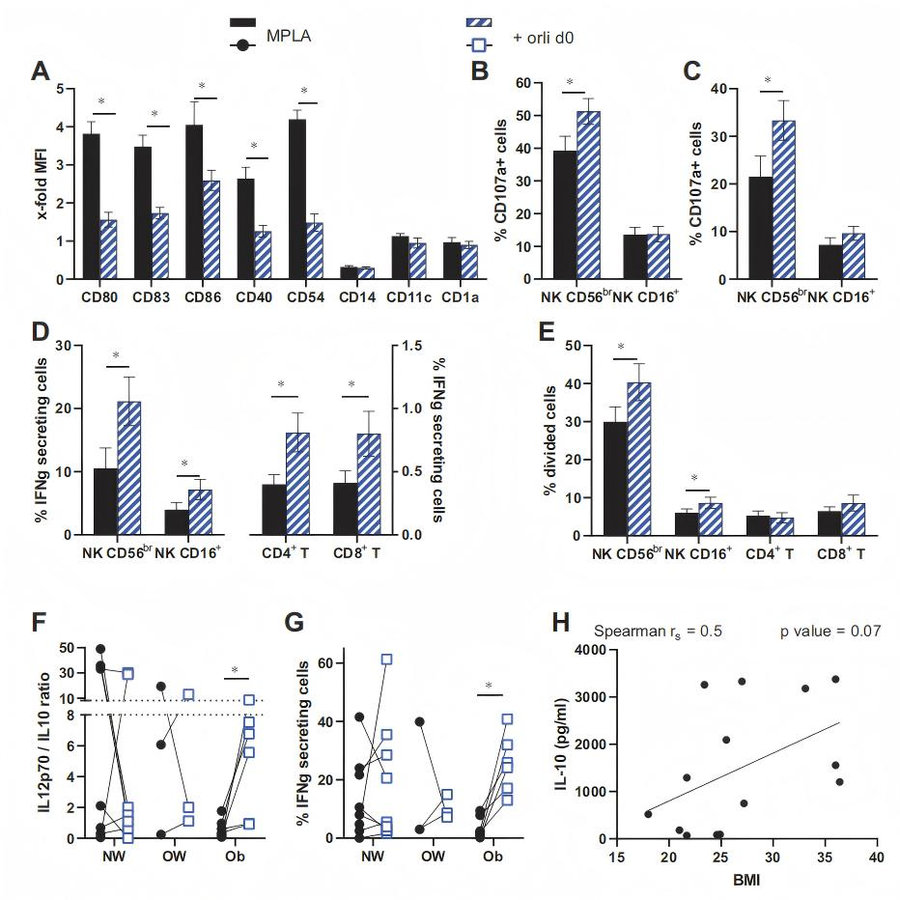 Fig.1 Lipid metabolism inhibition boosts dendritic cell vaccine function in obese cancer patients. (Massa & Seliger, 2022)
Customer Review
Overcoming In-House Yield Bottlenecks to Secure Reliable Preclinical Data
"We were struggling to get consistent dendritic cell yields from our internal metabolic tissue preparations, which was holding up our whole discovery timeline. The team at Protheragen stepped right in and optimized the entire antigen-loading process for our novel peptide targets. The clarity of their flow cytometry data and the regular updates during the 16-week mouse study gave us total confidence in the results. We are already planning our next batch of multi-target studies with them."
Dr. A. T., Pharmacologist
Finding a Partner Who Truly Understands the Nuances of Metabolic Immunology
"What sets Protheragen apart is their deep understanding of metabolic disease. They didn't just treat our anti-obesity vaccine like an oncology project; they knew exactly how a high-fat diet affects immune presentation. Their custom adjuvant screening assay helped us save months of guesswork in animal modeling. They have become a key preclinical partner for our pipeline."
Dr. A. K., Lead Immunologist
Frequently Asked Questions
-
What specific metabolic targets can you use in these dendritic cell vaccines?
We can engineer vaccines against a wide variety of targets, including specific fat-tissue cytokines, lipid-binding proteins, or receptors involved in energy balance. We work closely with your team to determine the safest and most effective target for your specific molecule.
-
Can Protheragen supply human-derived dendritic cells for these preclinical assays?
Our focus is purely on preclinical research, meaning we primarily work with rodent models (such as mouse and rat primary cells). However, we can run in vitro discovery work using commercially sourced human peripheral blood mononuclear cells (PBMCs) if your project requires human cell screening.
-
How do you prevent systemic autoimmune reactions when targeting metabolic pathways?
Safety screening is a core part of our service scope. We design our in vitro screens and in vivo tissue reviews to catch any off-target immune activation early, checking non-fat tissues thoroughly for signs of unwanted inflammation or autoantibody production.
-
What animal models of obesity do you regularly use on your platform?
We mostly rely on diet-induced obesity (DIO) models using high-fat or high-fructose diets, as these closely mimic human metabolic syndrome. We also run studies in genetic models like ob/ob or db/db mice when clients need to look at specific pathway mechanisms.
-
How long does a typical in vivo vaccine efficacy study take?
Because metabolic changes and immune remodeling take time to develop, a standard study usually runs between 12 and 24 weeks. This timeline includes the initial diet acclimation, vaccine dosing schedules, and long-term metabolic tracking.
-
Do you provide standard analytical data alongside the cell cultures?
Yes, every project comes with a comprehensive data package. You will receive complete flow cytometry files, metabolic tracking sheets (like glucose and insulin curves), cytokine data, and high-resolution histology images of the adipose tissues.
-
Can we send you our own proprietary adjuvants to test with the vaccine?
We welcome that approach. Our platform is fully modular, meaning we can easily integrate your proprietary adjuvants or delivery technologies into our cell production and testing workflows to see how they perform against standard controls.
-
How do you verify that the dendritic cells are fully mature before injection?
We use strict quality control gates based on surface marker expression. We measure the upregulation of key molecules like CD80, CD86, and MHC-II via flow cytometry, ensuring the cells have the costimulatory signals required to successfully prime T cells.
Contact Us
Protheragen delivers advanced, specialized preclinical platforms designed to turn complex metabolic targets into validated immunotherapeutic strategies. From initial antigen screening through detailed in vivo metabolic and tissue evaluation, our specialized teams provide the high-quality, reproducible data required to advance your drug discovery pipeline. Welcome to Contact Protheragen to discuss your specific requirements and explore potential collaboration opportunities.
Reference
- Massa, C.; Seliger, B. Enhanced function of vaccine dendritic cells from obese donors upon inhibition of the lipid metabolism. Clinical and Translational Medicine. 2022, 12(2), e557 (CC BY 4.0).
All of our services and products are intended for preclinical research use only and cannot be used to diagnose, treat or manage patients.