
White Adipocyte Cell Therapy Development Service
InquiryObesity remains one of the most stubborn global health challenges, driven largely by the energy-storing capacity of white adipose tissue (WAT). Traditionally, white fat cells simply hoard excess calories as large, single lipid droplets. However, recent advances in translational biology have completely reframed our understanding of these cells. We now know that white adipocytes possess an inherent plastic capacity, meaning they can be reprogrammed or converted into energy-burning cells through a process widely known as "browning" or "beiging." This physiological shift from energy storage to active thermogenesis (heat production) opens up entirely new avenues for therapeutic intervention.
White Adipocyte Cell Therapy Development Service for Obesity
At Protheragen, we offer a specialized, fully comprehensive platform dedicated strictly to preclinical White Adipocyte Cell Therapy Development. We support biotechnology firms, academic research labs, and pharmaceutical companies in exploring these cellular pathways. By focusing deeply on the mechanism of turning energy-storing white fat into active, energy-burning beige or brown-like fat, we build robust cellular models that can validate your target compounds or gene editing approaches long before clinical implementation.
Core Technologies
To successfully guide anti-obesity cell therapies through early-stage evaluation, you need tools that accurately mimic human fat tissue biology. Our platform brings together several high-end core technologies specifically tailored for evaluating adipocyte destiny and metabolic activity.
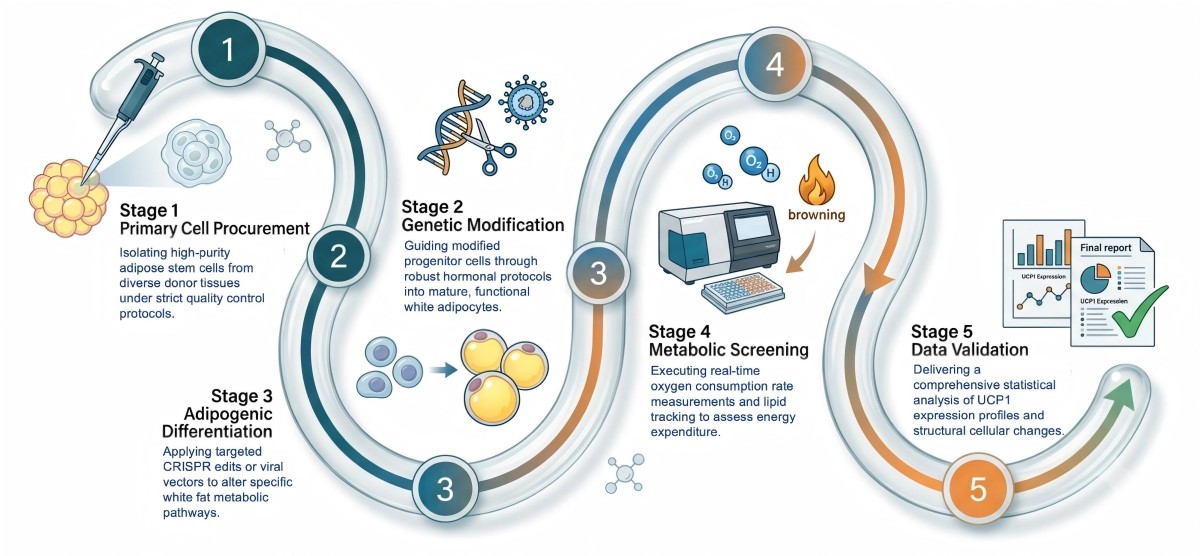
We maintain robust pipelines for isolating high-viability human adipose-derived stem cells (ADSCs) from donor tissue samples. These cells serve as an ideal starting point because they readily differentiate into mature, functional white adipocytes that behave much more realistically than immortalized cell lines.
Modifying the fate of fat cells often requires precise genetic modulation. Our labs utilize optimized CRISPR-Cas9 ribonucleoprotein (RNP) complexes and lentiviral vectors to knock out fat-storing genes or overexpress master browning regulators, such as PRDM16 or PGC-1ɑ.
We evaluate cell behavior using real-time metabolic flux analyzers and automated high-content imaging systems. This lets us measure cellular oxygen consumption rates (OCR) and trace changes in lipid droplet morphology simultaneously across multi-well formats.
Understanding the downstream markers of white-to-beige conversion is critical. We use customized droplet digital PCR (ddPCR) panels and multiplexed western blotting to quantitatively track UCP1 induction, fatty acid oxidation enzymes, and specific adipokine secretion profiles.
Solution Scope
Protheragen provides an all-inclusive spectrum of preclinical development services designed to unpack every element of white adipocyte modulation. Whether you are looking at a small molecule screen, a biological agent, or an ex vivo gene therapy candidate, our customizable modules can fit directly into your pipeline.
- Progenitor Cell Sourcing and Characterization
A great Preclinical Model starts with reliable biological building blocks. We handle the sourcing, isolation, and immunophenotypic characterization of human adipose-derived mesenchymal stem cells. Every batch undergoes extensive quality testing to verify classic surface markers like CD90, CD73, and CD105, while ensuring the absence of hematopoietic markers. This ensures that the downstream differentiation assays remain highly consistent across different projects.
- Custom Browning and Beiging Screening Assays
If your primary goal is to turn energy-storing white fat into active, energy-burning cells, we can run large-scale phenotypic screens to identify the most potent browning modulators. We cultivate mature white adipocytes and expose them to your target treatments, monitoring the physiological shift carefully. We look for a decrease in unilocular lipid droplet sizes and an increase in multilocular structures, which is classic behavior for beige fat.
For projects exploring the frontier of ex vivo cell therapies, we engineer and validate genetic tools that can alter cell fate permanently. Our technical team constructs custom CRISPR/Cas9 configurations or short-hairpin RNA (shRNA) constructs aimed at silencing key anti-browning mechanisms or accelerating thermogenic signaling paths. We then assess how effectively these edits alter the functional transcriptomic landscape of the cell.
- Comprehensive Bioenergetic and Thermogenic Profiling
An increase in UCP1 mRNA is a good sign, but what really matters is whether the cells are actually burning calories. We perform deep bioenergetic tracking using advanced extracellular flux analysis. This allows us to quantify basal respiration, ATP-linked respiration, and maximum uncoupled respiration. By measuring how much oxygen the cells consume in real time after stimulation, we show whether your therapy triggers authentic, heat-producing uncoupled respiration.
Connect with a Protheragen Specialist to Define Your Preclinical Study Scope
Workflow
Developing an effective adipocyte-focused therapeutic requires a systematic, reproducible experimental framework. Our preclinical service process is structured into five distinct, tightly controlled stages to ensure your data is robust and fully translatable.
Fields of Application
Our preclinical white adipocyte development services support a wide range of therapeutic angles within metabolic disease research.
- Ex Vivo Cell Therapy Evaluation
Validating engineered adipocytes designed for autologous transplantation to increase systemic energy expenditure.
- Small Molecule Screening
High-throughput testing of compound libraries aimed at activating β-3 adrenergic pathways or PPAR-γ modulation.
- RNA Therapeutics Research
Assessing the impact of siRNA, miRNA, or mRNA candidates on metabolic regulators inside fat tissue.
- Biologics and Monoclonal Antibodies
Evaluating how novel secretable peptides or antibody treatments alter adipokine signaling or receptor cross-talk.
Advantages
Partnering with an experienced team can save months of trial-and-error in the lab. Protheragen delivers unique preclinical advantages that ensure your development program is built on verified, high-quality data.
Human-Derived Physiological Relevance
Rather than relying on standard rodent cell lines that often display vastly different metabolic properties compared to human tissue, we build our assays using authentic human primary ADSCs. It has been demonstrated that human-derived screening models provide a significantly higher correlation with downstream translation, dropping candidate attrition rates substantially during early testing.
Highly Optimized Differentiation Protocols
Achieving reliable, uniform maturation of white fat cells in vitro can be notoriously tricky, with poor differentiation often skewing experimental results. Our specialized media formulations achieve a consistent differentiation efficiency of greater than 85 percent across multi-well configurations, ensuring that your compound testing occurs on uniform cellular populations.
Multi-Parametric Phenotypic Tracking
We do not just look at a single parameter like gene expression or lipid volume; we capture the full bioenergetic picture. Our platform cross-references real-time oxygen consumption rates directly with high-content visual tracking of lipid droplet remodeling, providing an incredibly thorough assessment of white-to-beige functional transformation.
Bespoke Preclinical Experimental Design
Every anti-obesity therapeutic strategy has unique mechanism-driven needs, so we never force your project into a rigid, one-size-fits-all protocol. Our experienced biology specialists collaborate directly with your team to fine-tune culture conditions, gene-editing targets, and downstream metabolic challenges to align perfectly with your technical milestones.
Submit a preclinical project inquiry to receive a detailed experimental design draft
Publication Data
Title: Unraveling White Adipose Tissue Heterogeneity and Obesity by Adipose Stem/Stromal Cell Biology and 3D Culture Models
Journal: Cells, 2023
DOI: https://doi.org/10.1101/565168
Summary: This review unpacks white adipose tissue heterogeneity via depot/layer-specific adipose stem cells (ASCs) and 3D culture models. Visceral/deep subcutaneous ASCs drive inflammation, while superficial SAT ASCs support adipogenesis. Spheroids, organoids, and organ-on-chips advance obesity research and anti-obesity drug screening.
Key Findings
- White adipose tissue (WAT) functional diversity originates from depot-specific adipose stem/stromal cell (ASC) subpopulations: visceral adipose tissue (VAT) ASCs are highly pro-inflammatory with weak adipogenic capacity and raise type 2 diabetes risk, while subcutaneous adipose tissue (SAT) ASCs have opposite baseline traits.
- SAT splits into two fascia-separated layers with distinct ASC phenotypes: superficial SAT ASCs support robust adipogenesis and angiogenesis; deep SAT ASCs mirror VAT's inflammatory profile and elevated lipolysis. Fascial tissue holds unique adipogenic progenitor niches that shape superficial SAT function.
- Bidirectional crosstalk between dermal fibroblast subpopulations and ASCs regulates skin ECM turnover, wound repair, and anti-fibrotic effects, with CD74+ ASCs showing superior anti-fibrotic activity for radiation-damaged skin.
- Standard 2D monolayer cultures and animal models poorly recapitulate human obese WAT physiology; 3D platforms resolve this limitation, including scaffold constructs, ASC spheroids, and stromal vascular fraction (SVF)-derived adipose organoids.
- 3D adipose models replicate core obesity pathologies (adipocyte hypertrophy, insulin resistance, fibrosis, chronic inflammation) via fatty acid or pro-inflammatory cytokine stimulation; co-cultures with macrophages/endothelial cells better mimic native tissue cell crosstalk.
- Adipose organ-on-a-chip microfluidic systems improve experimental reproducibility, support multi-organ co-culture (liver/pancreas), and enable high-throughput anti-obesity drug screening using patient-derived obese ASC organoids for personalized metabolic research.
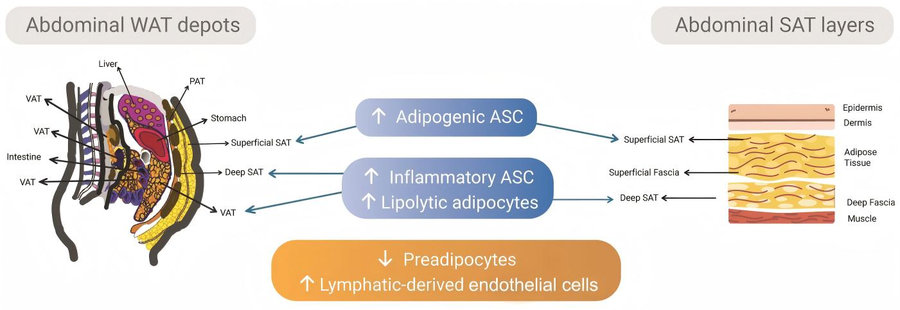 Fig.1 Adipose stem cell heterogeneity & 3D culture models unlock obesity mechanisms in white fat tissue. (Baptista, et al., 2023)
Customer Review
Case Study: Overcoming Differentiation Bottlenecks in Small Molecule Validation
"We were having a massive amount of trouble getting consistent differentiation with our in-house primary white fat cell cultures, which kept stalling our compound validation timeline. The team at Protheragen stepped in and handled the entire optimization and screening workflow, providing beautifully clear oxygen consumption data that clearly proved our small molecule's browning mechanism. We are already mapping out our next phase of gene-knockout studies with them."
Dr. A. V., Principal Scientist
Case Study: Streamlining Ex Vivo Gene Editing and Bioenergetic Profiling
"Switching our ex vivo cell therapy evaluation over to Protheragen's primary human ADSC platform completely transformed the quality of our data package. Their custom CRISPR editing efficiency was incredibly impressive, and the multi-parametric bioenergetic tracking gave us the exact quantitative evidence we needed to select our lead candidate. Their collaborative scientific approach makes them feel like a natural extension of our own research lab."
Dr. J. H., Scientific Researcher
Frequently Asked Questions
-
Can Protheragen provide cells or processing for clinical use or patient transplantation?
No, we focus entirely on preclinical development and discovery services. Our facilities, equipment, and protocols are explicitly designed to support early-stage research, compound screening, and validation. We do not provide clinical or therapeutic services of any kind.
-
What starting materials do you use for your white adipocyte development services?
We primarily work with well-characterized human primary adipose-derived stem cells (ADSCs) obtained from approved tissues. This ensures excellent translational relevance compared to immortalized lines, giving you cleaner data for your early pipeline.
-
How do you confirm that white adipocytes have successfully transitioned into beige fat cells?
We track multiple established hallmarks of beiging. This includes looking for a shift toward multilocular lipid structures, measuring elevated UCP1 expression at both the transcript and protein levels, and verifying increased uncoupled cellular respiration rates.
-
Can we supply our own proprietary gene targets or guide RNA sequences for CRISPR testing?
We encourage that. Our technical team seamlessly integrates your specific targets, sequences, or compounds into our optimized cell culture and editing workflows to validate your unique intellectual property.
-
What makes your primary adipocyte differentiation protocol better than commercial kits?
Our proprietary hormonal media cocktails yield high differentiation efficiency and excellent long-term cellular stability. This minimizes the baseline variability that frequently plagues adipocyte cultures, giving you highly reliable screening numbers.
-
Do you offer real-time metabolic tracking, or is it mostly endpoint assays?
We offer both. We utilize real-time extracellular flux monitoring to track changes in oxygen consumption and extracellular acidification dynamically, alongside traditional endpoint assays like western blotting, ddPCR, and fixed-cell imaging.
-
How long does a typical white adipocyte browning assay project take from start to finish?
Timelines generally vary based on the specific scope and complexity of the gene modifications required. Usually, a standard compound screening or validation run takes about 4 to 8 weeks once all cells and test items are ready in our lab.
-
Are you able to perform co-culture assays with other cell types found in fat tissue?
Yes, we can establish complex co-culture environments, involving components like endothelial cells or macrophage populations. This allows you to explore how inflammatory or vascular environments impact adipocyte behavior.
Contact Us
Protheragen provides a robust, highly reliable preclinical testing platform specifically designed to advance white adipocyte cell therapy development. By pairing premium human-derived cell models with high-content metabolic and genetic editing tools, we give you the precise, translatable insights needed to derisk your anti-obesity therapeutic programs early on. Let us handle the complex cellular biology so you can focus on building the next generation of metabolic treatments. Welcome to Contact Protheragen to discuss your specific requirements and explore potential collaboration opportunities.
Reference
- Baptista, L.S.; et al. Unraveling White Adipose Tissue Heterogeneity and Obesity by Adipose Stem/Stromal Cell Biology and 3D Culture Models. Cells. 2023, 12, 1583 (CC BY 4.0).
All of our services and products are intended for preclinical research use only and cannot be used to diagnose, treat or manage patients.