Products
Online Inquiry

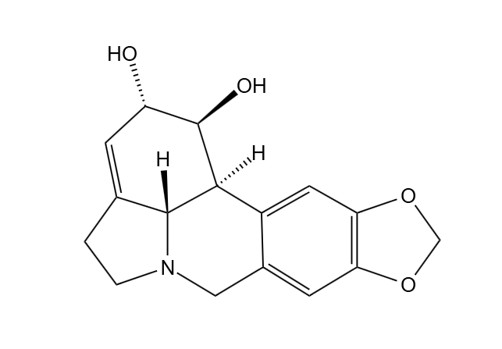
Lycorine
Cat. No.:
OB0225LY-0007
Appearance:
Solid
Purity:
≥99%
Identity:
Confirmed by NMR and HPLC.
Size:
Add to basket
Product Overview
Description:
Lycorine is a natural alkaloid that inhibits protein synthesis and ascorbic acid biosynthesis.
Synonym:
Galanthidine; Narcissine; Amarylline; Belamarine; 476-28-8; Amarylline; Lycoran-1alpha,2beta-diol, 3,3a-didehydro-; 9,10-(Methylenedioxy)-3,12-didehydrogalanthan-1alpha,2beta-diol
CAS No.:
476-28-8
Compound CID:
72378
Formula:
C16H17NO4
Formula Weight:
287.31
Specification
Targets&IC50:
SCAP: 15.24 nM (Kd)
Relative Density:
1.53 g/cm3
Stability:
3 years in powder form.
Storage:
Storage at -20°C.
Applications:
Lycorine can be used to study its effects on cell signaling pathways and potential oncology applications.
Library Information
Targets:
Metabolic enzymes; Neurotransmitter receptors; Microbiology targets
Receptors:
AChR; Fatty acid synthase; Virus protease
Pathways:
Neuronal signaling; Metabolism; Apoptosis; Microbiology/Virology
Plate Number:
AOCL-1
Plate Location:
a8
Empty Location:
a1-h1; a12-h12
Container:
96-well plate
Formulation:
10 mM DMSO
DMSO Max Solubility:
5.63 mg/mL; 19.58 mM