

One Carbon Metabolism Analysis
InquiryOne-carbon (1C) metabolism is a highly sophisticated biochemical network that orchestrates the transfer of methyl, methylene, and formyl groups to fuel critical physiological processes. At the heart of metabolic homeostasis, this pathway integrates the folate and methionine cycles to regulate nucleotide biosynthesis, amino acid balance, and epigenetic modifications through DNA and histone methylation.
One-Carbon Metabolism Analysis for Anti-Obesity Therapeutics
In the context of obesity research, 1C metabolism has emerged as a pivotal nutrient-sensing hub. Emerging preclinical evidence suggests that 1C flux directly influences lipid metabolism, adipocyte thermogenesis, and mitochondrial bioenergetics. Dysregulation in this pathway—often manifested as altered S-adenosylmethionine (SAM) levels or hyperhomocysteinemia—is closely linked to insulin resistance, non-alcoholic fatty liver disease (NAFLD), and impaired energy expenditure. Protheragen provides specialized analysis of 1C metabolic signatures to help researchers identify novel therapeutic targets and validate the efficacy of anti-obesity compounds in preclinical models.
Core Technologies
Protheragen utilizes an advanced analytical suite to provide high-resolution mapping of the one-carbon landscape:
- Targeted Liquid Chromatography-tandem Mass Spectrometry (LC-MS/MS) Metabolomics
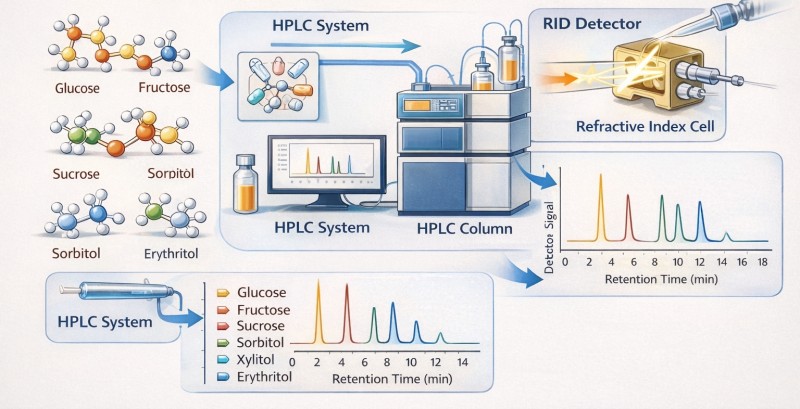
Our ultra-high-performance LC-MS/MS platform, featuring the AB QTRAP 6500+ system, delivers absolute quantification of 28+ key metabolites, including folates, SAM, and S-adenosylhomocysteine (SAH), with ng/mL sensitivity.
- Stable Isotope Tracing
We employ [U-13C]-serine and [U-13C]-glucose labeling to track carbon flux through mitochondrial and cytosolic pathways, enabling the measurement of metabolic turnover rather than just static concentrations.
- High-Resolution Nuclear Magnetic Resonance (NMR) Spectroscopy
This technology is utilized for structural elucidation of novel metabolites and investigating molecular interactions between 1C intermediates and enzymes such as MTHFD2 and SHMT2.
- Bioinformatics Integration
We combine metabolomic data with multi-omics datasets (transcriptomics/proteomics) to provide a holistic view of how 1C metabolism influences metabolic phenotypes in obesity.
Service Scope
Our expansive analytical suite offers a comprehensive mapping of the one-carbon landscape, delivering granular insights into the metabolic flux and metabolite concentrations that drive adipocyte function and systemic energy balance.
- Folate Cycle Profiling
Quantification of THF, 5-methyl-THF, 10-formyl-THF, and DHF.
- Methionine Cycle Analysis
Measurement of methionine, SAM, SAH, and homocysteine levels.
- Transsulfuration Pathway Tracking
Monitoring of cysteine, glutathione (GSH), and taurine to assess redox status.
- Mitochondrial 1C Metabolism
Specific analysis of MTHFD2, MTHFD1L, and SHMT2-driven pathways.
- Anti-Obesity Compound Screening
Evaluating the impact of GLP-1 agonists, mitochondrial uncouplers, or MGAT2 inhibitors on 1C metabolic flux.
Contact Our Specialist Team Today to Optimize Your Obesity Research Pipeline.
Workflow
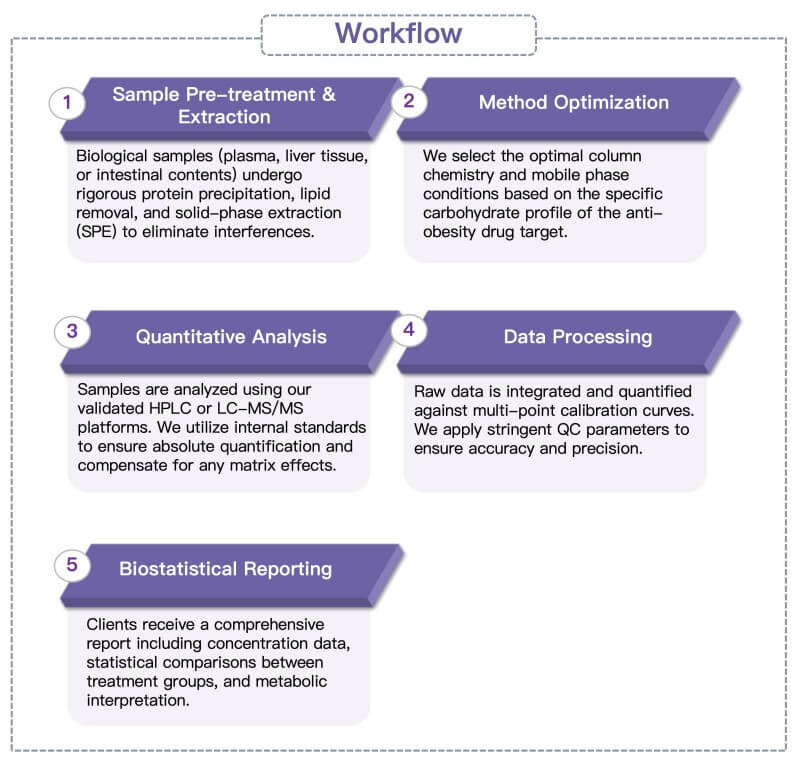
Our service process is designed to ensure maximum data integrity and translational relevance for preclinical studies:
Contact Our Experts to Start Your Project Consultation Today.
Fields of Application
The analytical precision of one-carbon metabolism profiling extends across a diverse spectrum of metabolic research, providing critical insights wherever nutrient sensing and epigenetic regulation intersect with disease pathology.
- Therapeutic Target Discovery: Identifying 1C enzymes that regulate lipid oxidation and adiposity.
- Mechanism of Action (MoA) Studies: Elucidating how anti-obesity drugs influence epigenetic markers and cellular redox balance.
- Biomarker Identification: Developing 1C-related signatures (e.g., SAM:SAH ratio) to predict treatment response in metabolic syndrome models.
- Nutritional Intervention Research: Assessing how dietary methyl donors (choline, betaine) mitigate obesity-related pathologies.
Advantages
Protheragen offers unparalleled expertise in metabolic phenotyping:
- Unmatched Sensitivity
By achieving detection limits in the low picomolar range, we provide a high-definition view of metabolic "bottlenecks"—those critical points where enzyme saturation or inhibition causes a precursor buildup.
- Absolute Quantitation
Through the use of internal stable isotope-labeled standards, we provide precise molar concentrations, essential for Pharmacokinetic and Pharmacodynamic Modeling.
- Preclinical Specialization
Protheragen focuses exclusively on the rigorous demands of early-stage laboratory research, providing the high-fidelity data necessary to bridge the gap between basic discovery and advanced therapeutic development. Our specialized protocols are optimized for animal models and cell-based systems, ensuring that every metabolic signature we detect is reproducible and scientifically robust for validating new anti-obesity mechanisms.
Customer Review
Deciphering Complex Mechanisms of Action through Precision Flux Analysis
"Protheragen provided us with a level of detail in 1C flux analysis that we couldn't find elsewhere. Their ability to track isotope incorporation into nucleotides helped us prove the mechanism of action for our lead anti-obesity candidate. We look forward to our next phase of collaboration."
Dr. E. M., Senior Scientist
Unlocking Data-Driven Breakthroughs in Metabolic Syndrome and Lead Optimization
"As a startup focused on novel SGLT2 inhibitors, we needed a partner who understood the nuances of glucose and polyol flux in the kidney. Protheragen provided not just the raw data, but the biological context we needed to present our findings to investors. Their precision in measuring trace sugars in tissue was instrumental in our recent successful funding round. Their communication is seamless, and they truly function as an extension of our own lab."
Mr. M. T., R&D Director
Frequently Asked Questions
-
Why is one-carbon metabolism relevant to obesity specifically?
1C metabolism serves as a nutrient integrator; alterations in this pathway can lead to SAM deficiency, which impairs the methylation of genes involved in lipid metabolism, promoting fat storage.
-
Can you distinguish between cytosolic and mitochondrial 1C flux?
Yes, our stable isotope tracing techniques allow us to specifically monitor mitochondrial-derived formate and its contribution to cytosolic biosynthesis.
-
What sample types do you accept?
We process various preclinical samples, including adipose tissue, liver biopsies, plasma, and cultured primary adipocytes.
-
How do you ensure the stability of folate intermediates?
We provide specific collection buffers containing antioxidants and use rapid-thaw/cold-chain protocols during extraction.
-
Is your service suitable for screening large libraries of compounds?
We offer high-throughput targeted 1C profiling optimized for lead optimization phases.
-
Can 1C analysis help in studying NAFLD?
Absolutely. 1C flux is a primary regulator of VLDL export and hepatic glutathione levels, both of which are critical in NAFLD progression.
-
Do you provide statistical analysis of the data?
Yes, our reports include PCA, heatmaps, and pathway enrichment analysis tailored to your study goals.
-
How does this analysis compare to global untargeted metabolomics?
Targeted 1C analysis provides much higher sensitivity and absolute quantification for specific, low-abundance metabolites that are often "lost in the noise" of untargeted scans.
-
What is the typical turnaround time?
Standard projects are typically completed within 4-6 weeks from sample receipt.
Contact Us
Protheragen is a leader in providing high-precision one-carbon metabolism analysis tailored for the development of anti-obesity therapeutics. By combining cutting-edge LC-MS/MS and NMR technologies with deep biological expertise, we empower preclinical researchers to uncover the metabolic drivers of obesity and validate novel interventions with confidence.
Contact Protheragen for More Information and to Discuss Your Project
All of our services and products are intended for preclinical research use only and cannot be used to diagnose, treat or manage patients.