

Anti-Obesity Drug Tissue Distribution Study Service
InquiryObesity profoundly alters human physiology, reshaping organ blood flow, body composition, and metabolic capacity. These changes directly impact how anti-obesity drugs are absorbed, distributed into tissues, metabolized, and eliminated, and the impact is particularly strong on tissue distribution profiles in adipose depots, liver, muscle, and metabolically active organs. Published clinical pharmacokinetic (PK) reviews demonstrate that dosing extrapolated from normal-weight adults can lead to under- or overexposure in people living with obesity, because volume of distribution and clearance no longer correlate simply with total body weight.
Tissue Distribution Analysis for Anti-Obesity Drug Candidates
Protheragen offers a dedicated anti-obesity drug tissue distribution study service that integrates Obesity-Specific Models, advanced bioanalytical platforms, and mechanistic PK/PD and physiologically based PK (PBPK) modeling. Our goal is to help you:
- Understand how your candidate partitions into adipose depots, liver, muscle, pancreas, brain, and other key tissues under obese conditions.
- De-risk safety and off-target accumulation early, especially for long-acting biologics, depot formulations, and nanomedicines.
- Translate preclinical drug distribution into robust, obesity-appropriate first-in-human and late-stage dosing strategies.
Core Technologies for Tissue Distribution in Obesity
Protheragen combines complementary technologies to obtain a precise, multi-dimensional view of drug distribution in lean and obese settings.
- Advanced Bioanalytical Quantification
- Liquid chromatography-tandem mass spectrometry (LC-MS/MS) and high-performance liquid chromatography (HPLC)-based quantitation for small molecules and peptide drugs in plasma, tissues, and excreta, enabling sensitive and selective measurement over a wide concentration range. Similar platforms have been used in published stereoselective PK and metabolism work on novel Anti-Obesity Small Molecules.
- Ligand-binding and hybrid assays for large molecules, antibody-based therapies, and complex conjugates.
- Metabolite profiling and identification to understand active vs inactive species in adipose tissue and metabolic organs.
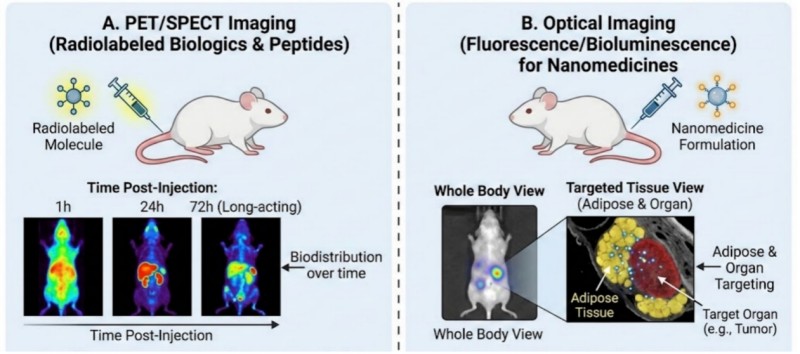
- Molecular Imaging (PET/SPECT/Optical)
- PET/SPECT imaging for radiolabeled biologics and peptides
-Enables non-invasive monitoring of biodistribution over time in the same animal, particularly useful for long-acting injectables. - Fluorescence or bioluminescence imaging for nanomedicine formulations and targeted delivery systems
-Supports qualitative and semi-quantitative assessment of adipose and organ targeting.
- PET/SPECT imaging for radiolabeled biologics and peptides
- In Vitro & Ex Vivo Obesity-Relevant Systems
- Primary hepatocytes, adipocytes, and co-culture systems mimicking obese metabolic environments, enabling mechanistic studies of uptake, metabolism, and efflux.
- Permeability and transporter assays (e.g., intestinal and blood-brain barrier models) to understand absorption and CNS exposure under altered physiology.
- Adipose tissue slices or explants to probe direct drug penetration and retention.
- PK/PD and PBPK Modeling for Obese Populations
- Non-compartmental and compartmental PK Analysis to derive classical parameters in lean vs obese models.
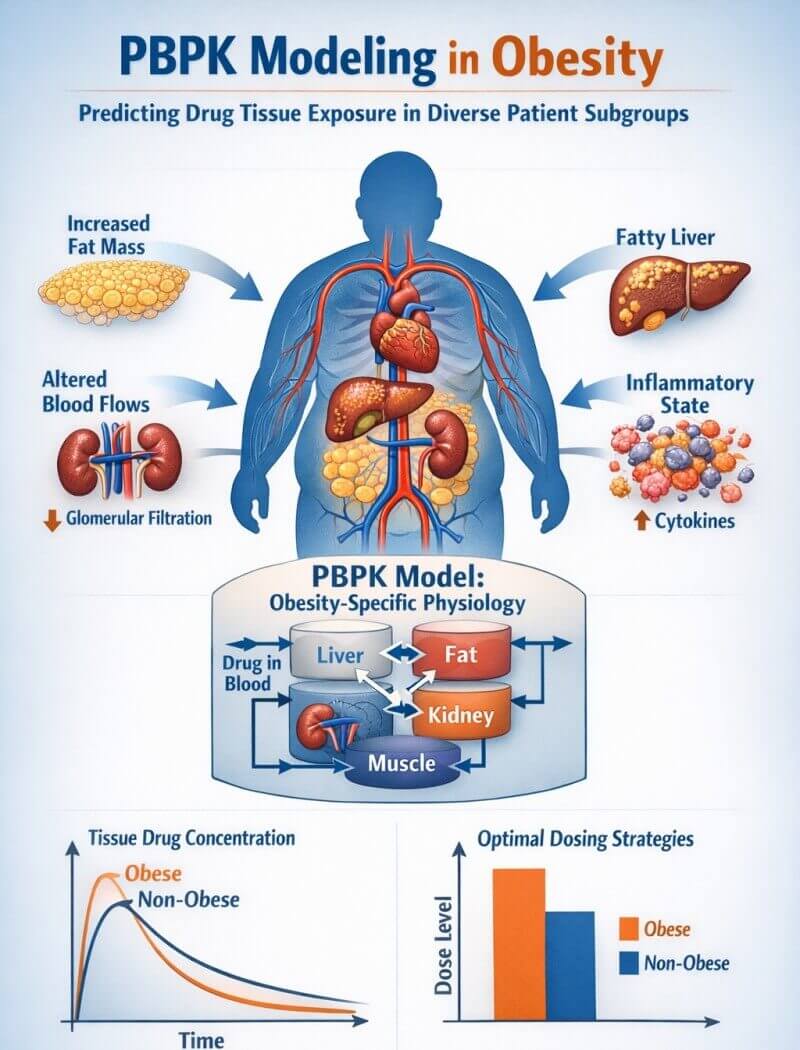
- PBPK modeling with obesity-specific physiology (fat mass, tissue blood flows, altered GFR, hepatic steatosis) to predict tissue exposure in diverse patient subgroups. Published reviews emphasize that obesity changes multiple physiologic drivers (cardiac output, liver fat, inflammatory state), making mechanistic models especially informative for dose optimization.
To explore which combination of technologies best suits your development stage — reach out to Protheragen.
Workflow: From Question to Translational Answer
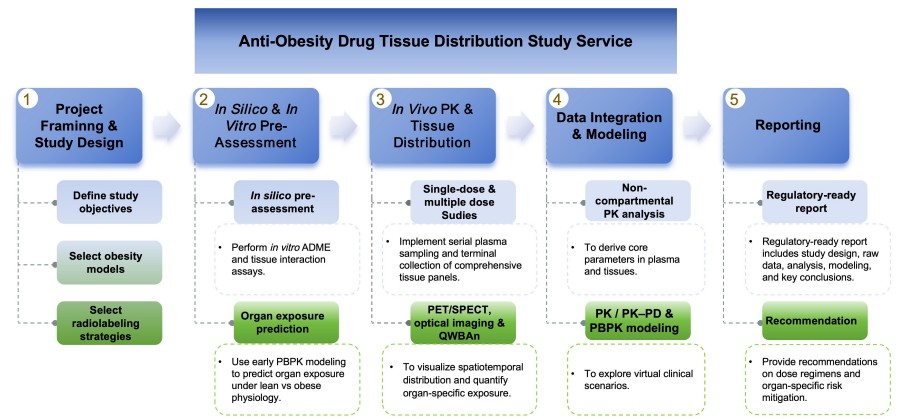
Protheragen follows a structured yet flexible workflow to design and execute anti-obesity drug tissue distribution programs. We begin with a deep-dive consultation to select the ideal obesity models and administration routes tailored to your specific molecule. Our experts then manage the precise in-life phase and sample collection, followed by high-sensitivity bioanalysis. The process culminates in a comprehensive data report, interpreting complex distribution patterns to drive your translational decision-making.
Fields of Application
Protheragen's tissue distribution expertise supports diverse research and development scenarios:
- First-in-Class Metabolic Targets
Assess organ exposure for novel targets discovered through genetics and systems biology, guiding rational dose selection and safety margins.
- Next-Generation Hormone-Based Therapies
Characterize the distribution of long-acting peptide agonists and multi-receptor polyagonists to understand their impact on adipose, liver, and muscle while minimizing unwanted organ exposure.
- Adipose-Targeted Nanomedicines
Quantify enrichment in adipose tissue versus other organs, de-risking accumulation, and optimizing carrier design for sustained, localized pharmacology.
- Combination Therapies and Co-Morbid Conditions
Support programs combining anti-obesity agents with treatments for type 2 diabetes, dyslipidemia, or cardiovascular risk factors, where tissue distribution may interact with organ dysfunction.
- Life-Cycle Management and Differentiation
Generate robust tissue distribution evidence to differentiate your asset from competitors by demonstrating more favorable organ targeting profiles or reduced off-target exposure.
Connect with our scientists to align tissue distribution studies with your current and future development strategy.
Advantages
Obesity-Centered Experimental Design
Our platforms and models are built specifically around obesity biology, incorporating diet-induced and genetic obesity models, metabolic comorbidities, and organ changes such as fatty liver and altered cardiac output. This aligns with published evidence showing that obesity affects virtually all aspects of pharmacokinetics and tissue distribution.
Multimodal View of Drug Distribution
By combining bioanalysis, QWBA, PET/SPECT, optical imaging, and PBPK modeling, we deliver a multidimensional picture of:
- How much drug reaches each organ;
- How long it stays there;
- How those patterns differ between lean and obese conditions and across dose levels.
This approach mirrors modern translational studies of long-acting peptide therapies, where joint imaging and autoradiography have revealed unexpected organ retention and informed safer dose selection.
End-to-End Integration with Anti-Obesity Drug Discovery
Drawing insights from comprehensive reviews of anti-obesity pipelines and investigational agents, we know where tissue distribution data can shift the probability of success:
- Early candidate triage based on adipose versus off-target organ exposure.
- Optimization of multi-receptor agonists with complex pharmacology, where tissue exposure patterns strongly influence efficacy and tolerability.
Data Quality and Published Evidence
Our methods are aligned with standards seen in published data using LC-MS/MS and translational modeling in obesity research, allowing you to benchmark your results against contemporary science and regulatory expectations.
Other Services
Beyond, Protheragen’s obesity study service covers a wide spectrum of modalities, study designs, and biologic questions.
Publication Data
Title: Pharmacokinetics, Tissue Distribution, and Anti-Lipogenic/Adipogenic Effects of Allyl-Isothiocyanate Metabolites
Journal: PLOS ONE, 2015
DOI: https://doi.org/10.1371/journal.pone.0132151
Summary: This article explores the pharmacokinetics, tissue distribution, and anti-lipogenic/adipogenic effects of allyl-isothiocyanate (AITC) metabolites. AITC, abundant in cruciferous vegetables, is metabolized via the mercapturic acid pathway, with GSH-AITC and NAC-AITC identified as key metabolites.
Key Findings
- Metabolism and Pharmacokinetics: After oral administration to rats, AITC is rapidly and almost completely metabolized into GSH-AITC and NAC-AITC. Both metabolites reach peak plasma concentration at 0.5h, with NAC-AITC being the main circulating metabolite. NAC-AITC is primarily excreted in urine within 8h.
- Tissue Distribution: GSH-AITC accumulates most in the liver, followed by the kidney, spleen, heart, and lung. NAC-AITC is most concentrated in the kidney, with distribution mainly dependent on organ blood flow.
- Anti-adipogenic and Anti-lipogenic Effects: In vitro experiments show GSH-AITC and NAC-AITC inhibit adipogenic differentiation of 3T3-L1 preadipocytes by suppressing PPAR-γ, C/EBPɑ, and FAS expression. They also reduce oleic acid-induced lipid accumulation in hepatocytes and regulate mTORC1 and AMPK signaling pathways.
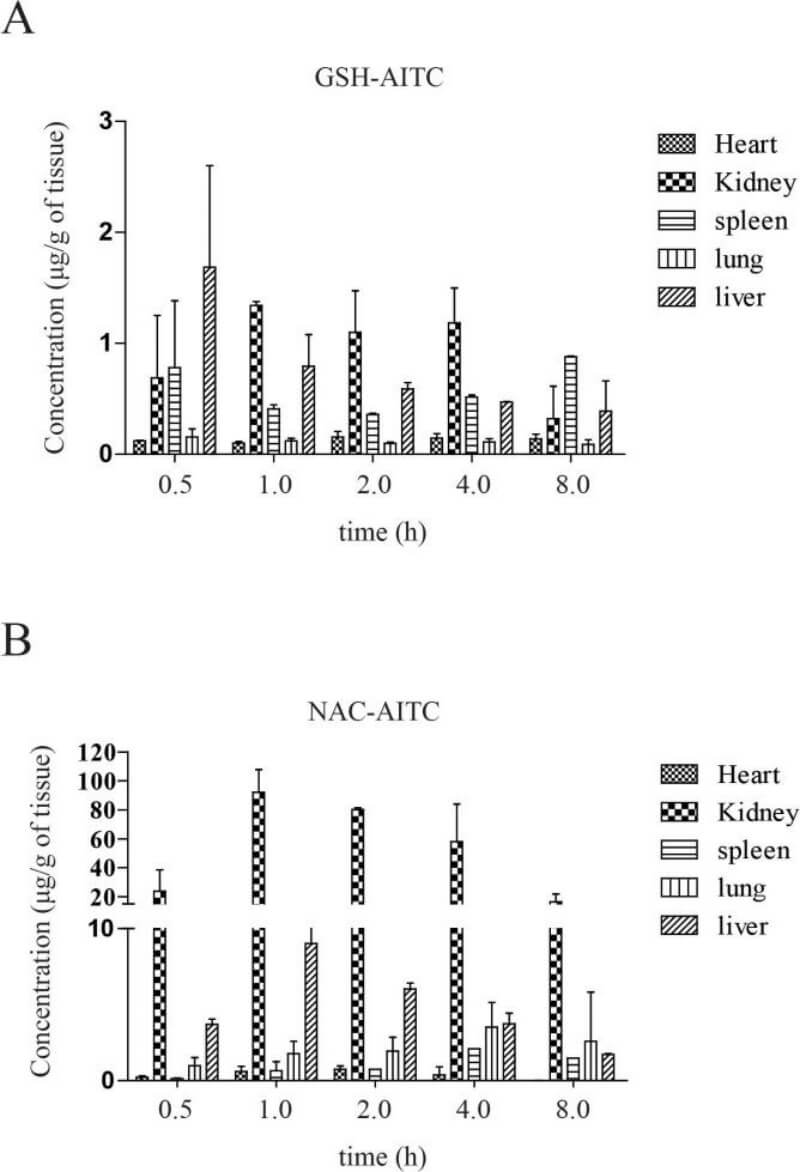 Fig.1 Tissue distribution of AITC metabolites after oral administration of GSH/NAC-AITC. (Kim, et al., 2015)
Customer Review
Peptide Polyagonist
"We partnered with Protheragen to understand how our long-acting peptide polyagonist distributed across adipose tissue and liver in obese animal models. Their combination of imaging, tissue quantitation, and PBPK modeling gave us a precise picture of organ exposure and helped us refine our dose levels. The team was proactive, transparent, and always ready to discuss new data. We plan to continue working with Protheragen as we expand into combination regimens."
Dr. E. R., Biotech Program Director
Adipose-Targeted Nanomedicine
"Our nanomedicine platform needed robust evidence of adipose targeting without unwanted accumulation in other organs. Protheragen designed an elegant tissue distribution study that included radiolabeling, QWBA, and ex vivo analysis. The results directly influenced our formulation choices and research supported. Their scientists felt like an extension of our internal team, and we have already initiated a follow-up program on our next-generation candidates."
Prof. J. T., Pharma Project Lead
Frequently Asked Questions
-
Why is tissue distribution so critical for anti-obesity drugs?
Obesity changes body composition, organ size, and blood flow, which can significantly modify how drugs partition into adipose tissue, liver, muscle, and other organs. Plasma PK alone may miss local accumulation that drives efficacy or toxicity. Tissue distribution studies reveal organ-specific exposure, helping to optimize dosing, predict safety signals, and select the right candidate earlier.
-
Can you model differences between lean and obese subjects?
Yes. We combine lean and obese animal data with PBPK and population PK models incorporating obesity-specific physiology, such as increased fat mass, altered hepatic blood flow, and changes in glomerular filtration. These animal models can support the following clinical translation to diverse patient populations and prospective dose optimization.
-
Which species and models do you usually recommend?
For most programs, we start with diet-induced obese rodents and matched lean controls, then add a second species if needed. Choice depends on modality, target tissues, and your intended clinical population.
-
How do you evaluate the distribution of long-acting peptides and depot formulations?
We combine serial blood sampling with imaging (PET/SPECT or optical) and QWBA where appropriate, capturing both systemic and local depot kinetics. This allows us to monitor prolonged tissue retention and understand how extended half-life translates into organ exposure and safety margins.
-
Can you handle highly lipophilic small molecules?
Yes. For lipophilic agents that preferentially partition into adipose tissue and membranes, we carefully design sampling timepoints and tissue panels and may recommend radiolabeling to capture low-level distribution in non-adipose organs. Modeling strategies also account for slow redistribution from fat.
-
What type of data package will I receive?
You receive a comprehensive report with study design, raw data tables, PK parameters, tissue-to-plasma ratios, modeling outputs, and interpretation, along with high-quality figures suitable for internal decision-making.
-
How do we get started, and how quickly can we initiate a project?
Simply share a brief dossier on your molecule (modality, target, existing data, and timelines). We can then schedule a scientific discussion, finalize the study design, and mobilize our team. Start-up timelines are kept as short as possible to match your development needs.
If your question is not listed here, please contact Protheragen directly—our scientists are happy to discuss your specific challenges and design a tailored solution. We provide comprehensive support for anti-obesity drug distribution studies, utilizing high-resolution imaging and specialized bioanalysis to map compound behavior across complex obesity models. Let us help you characterize target engagement in specific adipose depots and optimize your lead candidates.
Reference
- Kim, Y.J.; et al. Pharmacokinetics, Tissue Distribution, and Anti-Lipogenic/Adipogenic Effects of Allyl-Isothiocyanate Metabolites. PLOS ONE. 2015, 10(8): e0132151. (CC BY 4.0)
All of our services and products are intended for preclinical research use only and cannot be used to diagnose, treat or manage patients.