

Anti-Obesity Drug Mass Balance Study Service
InquiryIn modern obesity drug discovery, mass balance studies are the backbone of rational dose selection, safety assessment, and regulatory strategy. For agents that may produce double-digit weight loss, regulators expect a clear, quantitative account of where the drug and its metabolites go, how long they persist, and how they are eliminated.
Preclinical Mass Balance Studies for Anti-Obesity Drug Candidates
Protheragen’s anti-obesity drug mass balance study service focuses on preclinical, radiolabeled absorption, metabolism, and excretion (AME) characterization tailored specifically to anti-obesity mechanisms. By integrating radiolabeled in vivo studies, in vitro biotransformation assays, and advanced analytical platforms, we quantify:
- The fraction of dose absorbed, metabolized, and excreted via urine, feces, bile, or expired air
- Tissue distribution and potential retention in adipose tissue, liver, and other organs
- The relative contribution of parent drug versus metabolites to systemic exposure
- Species differences that will influence first-in-human (FIH) design and clinical mass balance planning
For obesity programs working with long-acting injectables, oral incretin-based small molecules, multi-agonists, or novel mechanisms, Protheragen delivers decision-ready mass balance data that de-risks development while keeping timelines practical for preclinical-stage teams.
Core Technologies
Our preclinical drug development services are underpinned by a suite of core technologies, with quantitative whole-body autoradiography (QWBA) and accelerator mass spectrometry (AMS) serving as the foundational pillars for precise pharmacokinetic and mass balance studies.
- Radiolabeled Compound Strategy and Synthesis
- Isotope selection and label placement (e.g., 14C or 3H) are optimized to ensure metabolic stability of the label and robust detection across excreta and tissues.
- Collaboration with radiochemistry partners enables the synthesis of the drug substance at an appropriate specific activity and radiochemical purity for rodent and non-rodent studies.
- Stability testing in formulation vehicles and biological matrices ensures accurate interpretation of recovery and metabolite profiles.
- In Vivo Radiolabeled Mass Balance
- Single-dose mass balance in rodent and non-rodent species with complete collection of urine, feces, and cage rinses over extended periods to capture slow elimination phases.
- Optional bile-duct cannulated models to quantify biliary excretion, enterohepatic recycling, and gut–liver interplay—particularly important for lipophilic anti-obesity agents and those targeting entero-pancreatic signaling.
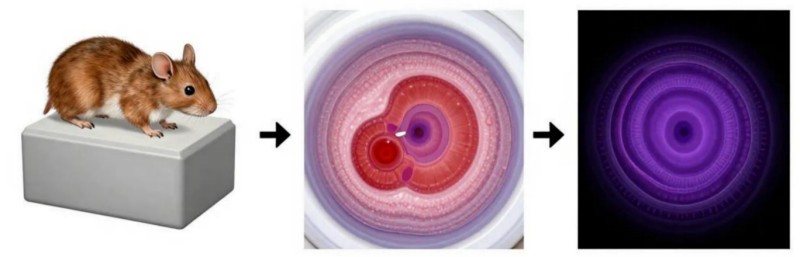
- Quantitative whole-body autoradiography (QWBA) or tissue harvesting to assess potential accumulation in adipose tissue, liver, kidney, and other organs.
- In Vitro Biotransformation and Enzyme Phenotyping
- Hepatocyte and liver microsome incubations across human and preclinical species to characterize phase I and phase II pathways, including glucuronidation and other conjugation routes linked to interindividual variability in published work.
- Recombinant enzyme and transporter phenotyping to identify key contributors to metabolism and clearance, informing future DDI and genetic variability assessments.
- Intestinal and plasma stability assays to support interpretation of oral versus parenteral AME.
- Radiometric and High-Sensitivity Detection
- Liquid scintillation counting (LSC) for routine quantification of radioactivity in excreta, blood, and tissues.
- LC–Radio–MS/MS metabolite profiling to identify and semi-quantify parent and metabolites with structural confirmation.
- High-sensitivity detection approaches that align with microtracing concepts from published human mass balance studies, enabling low-total-activity preclinical designs where appropriate.
- PK/PD and Translational Modeling Support
- Non-compartmental and compartmental analysis of radiolabeled PK.
- Integration of AME data with Conventional PK, pharmacodynamics, and body composition readouts from obesity models to build translational frameworks that guide molecule selection and preclinical-to-clinical extrapolation.
Workflow
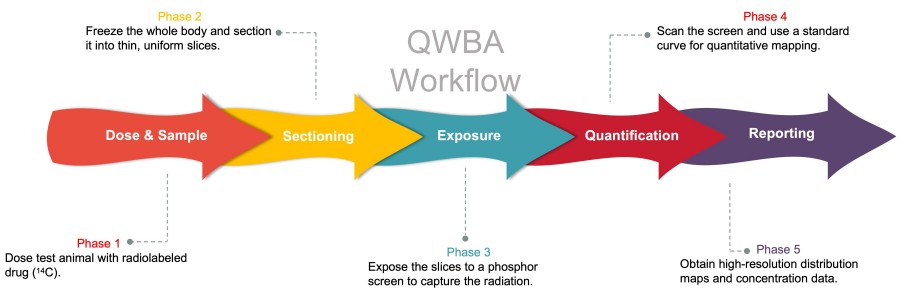
Our anti-obesity drug mass balance study service follows a rigorous, multi-stage workflow designed for scientific accuracy.
Fields of Application
Protheragen’s anti-obesity drug mass balance study service supports a broad spectrum of R&D scenarios.
- First-in-Class Small Molecules:
Where elimination pathways and metabolite profiles are unknown and need to be mapped thoroughly before clinical entry.
- Next-Generation Incretin-based Agonists and Multi-Agonists
In which long half-lives and high potency require careful understanding of clearance and potential tissue persistence.
- Programs Targeting Specific Adipose Depots or Central Pathways
Where distribution to adipose, liver, or brain-equivalent regions is critical to de-risk off-target exposure.
- Combination Regimens and Co-formulations
Where overlapping metabolic pathways can create complex AME patterns and potential DDIs.
- Lifecycle Management and Line Extensions
Including new formulations or routes of administration for existing mechanisms, where comparative mass balance can support bridging strategies.
For each of these, our preclinical mass balance work clarifies whether the candidate’s elimination profile supports long-term administration, combination use, and the degree of weight loss and body composition change that advanced clinical programs seek to achieve.
Advantages: Why Partner with Protheragen
Protheragen brings a uniquely strategic advantage to anti-obesity mass balance research, combining mechanism-shaped study design with deep AME expertise to deliver data that directly strengthens early development decisions.
Anti-Obesity–Focused AME Expertise
Published data show that obesity medications now routinely achieve double-digit weight loss and must also demonstrate cardiometabolic and body composition benefits. Protheragen has built its mass balance offering around the specific challenges of these mechanisms—high potency, long exposure, complex tissue distribution, and stringent safety expectations. Our scientists understand how AME findings will be interpreted in the context of weight loss magnitude, fat vs lean changes, and long-term use.
Preclinical-Only Focus for Early-Stage Programs
Protheragen operates exclusively in the nonclinical space. All methodologies, workflows, and reporting templates are tailored to discovery and preclinical development rather than late-stage or clinical trial operations. This focus allows us to be highly responsive to early-stage needs—such as lead optimization, candidate nomination, and FIH-enabling packages—while avoiding conflicts with clinical providers.
Integrated View of Excretion, Distribution, and Body Composition
Insights from clinical trials indicate that high-quality weight loss is characterized by preferential loss of fat and visceral adipose tissue with relative preservation of lean mass. Our preclinical mass balance approach extends beyond simple urine–feces percentages to:
• Explicitly investigate biliary excretion and enterohepatic recycling when relevant.
• Characterize distribution into adipose depots and metabolic organs.
• Highlight potential links between tissue-level exposure and long-term efficacy or safety hypotheses.
High-Sensitivity Detection and Microtracing-Aligned Thinking
Microtracing human studies have demonstrated that advanced detection platforms can provide detailed AME data at very low radioactive doses. Protheragen applies the same philosophy preclinically, leveraging high-sensitivity detection (radiometric and MS-based) to minimize total radioactivity while still delivering robust mass balance and metabolite information. This approach can streamline future clinical microtracer designs by providing well-characterized preclinical reference data.
Developmental Insight
Historical withdrawals of older anti-obesity agents, contrasted with today’s advanced incretin-based therapies, have led to a cautious environment where mechanistic clarity and safety margins are heavily scrutinized. Our team draws on deep experience in AME science to:
• Identify data gaps that mass balance studies can fill early.
• Provide clear, defendable rationales for species selection, dose levels, and metabolite follow-up.
To accelerate your obesity program, discuss your study concept with Protheragen today.
Service ScopeProtheragen’s anti-obesity drug mass balance study service is designed to accommodate the diversity of modern obesity pipelines.
Molecule Classes Supported
- Oral Small Molecules (including incretin pathway modulators, central nervous system–active agents, and peripherally restricted compounds).
- Injectable Peptides and proteins, such as long-acting agonists or multi-agonists, with complex absorption and elimination.
- Depot and sustained-release formulations, where controlled liberation and extended residence demand careful AME characterization.
- Combination regimens (e.g., fixed-dose combinations or co-administered therapies) where overlapping clearance pathways require disentangling.
Species, Models, and Matrices
- Standard rodent and non-rodent species, with the option to incorporate diet-induced Obesity Models for more physiologically relevant adiposity and metabolic status.
- Full coverage of matrices, including plasma, urine, feces, bile (in cannulated substudies), and key tissues (adipose, liver, kidney, muscle, and others as needed).
- Flexible study durations to capture long terminal elimination phases, particularly relevant for long-acting agents.
Endpoints and Data Outputs
- Total dose recovery (% of administered radioactivity) and excretion route partitioning.
- Time course of excretion and identification of slow-eliminating components.
- Detailed Metabolite Structures and relative abundance across species and matrices.
- Consolidated narrative sections describing the AME profile.
Contact our team to design a bespoke mass balance solution for your experiment.
Publication Data
Title: Beyond Weight Loss: Added Benefits Could Guide the Choice of Anti-Obesity Medications
Journal: Current Obesity Reports, 2023
DOI: https://doi.org/10.1007/s13679-023-00502-7
Summary: This review focuses on the additional benefits of approved and upcoming centrally-acting anti-obesity drugs beyond weight loss, aiming to provide clinicians with tools for personalized pharmacological management of obesity. It details the effects of drugs such as naltrexone/bupropion, liraglutide, semaglutide, tirzepatide, and semaglutide/cagrilintide on common metabolic and cardiovascular comorbidities of obesity, as well as less explored areas including neurodegenerative diseases, depression, and osteoarthritis. The article highlights that the expanding landscape of anti-obesity drugs and growing knowledge of their extra weight-loss effects will drive obesity treatment toward an era of precision medicine, allowing for tailored therapy based on patient comorbidities.
Key Findings
- Drug Classes and Core Efficacy: Approved and upcoming centrally-acting anti-obesity drugs include GLP-1 receptor agonists (liraglutide, semaglutide), dual GIP/GLP-1 receptor agonists (tirzepatide), opioid antagonist/antidepressant combinations (naltrexone/bupropion), and amylin analogue combinations (semaglutide/cagrilintide), with weight loss rates ranging from 5–20.9% in clinical trials.
- Metabolic and Cardiovascular Benefits: All drugs improve type 2 diabetes outcomes (e.g., reduced HbA1c); GLP-1 RAs and tirzepatide show cardioprotective effects (lowering MACE risk) and reduce non-alcoholic fatty liver disease (NAFLD) severity via decreased liver fat content and fibrosis markers.
- Additional Comorbidity Improvements: Liraglutide and semaglutide may alleviate obstructive sleep apnea (OSA) by reducing Apnea-Hypopnea Index (AHI); preclinical and clinical data suggest neuroprotective potential in Alzheimer’s and Parkinson’s diseases; naltrexone/bupropion benefits patients with comorbid depression.
- Food Craving and Eating Behavior Regulation: All drugs suppress appetite and reduce food cravings—semaglutide improves control of sweet/savory cravings up to 104 weeks, while naltrexone/bupropion modulates reward pathways to reduce preference for high-calorie foods.
- Safety and Tolerability: Gastrointestinal symptoms (nausea, diarrhea) are the most common side effects, typically transient during dose escalation; GLP-1 RAs and tirzepatide have favorable cardiovascular safety profiles, with no increased risk of major adverse events.
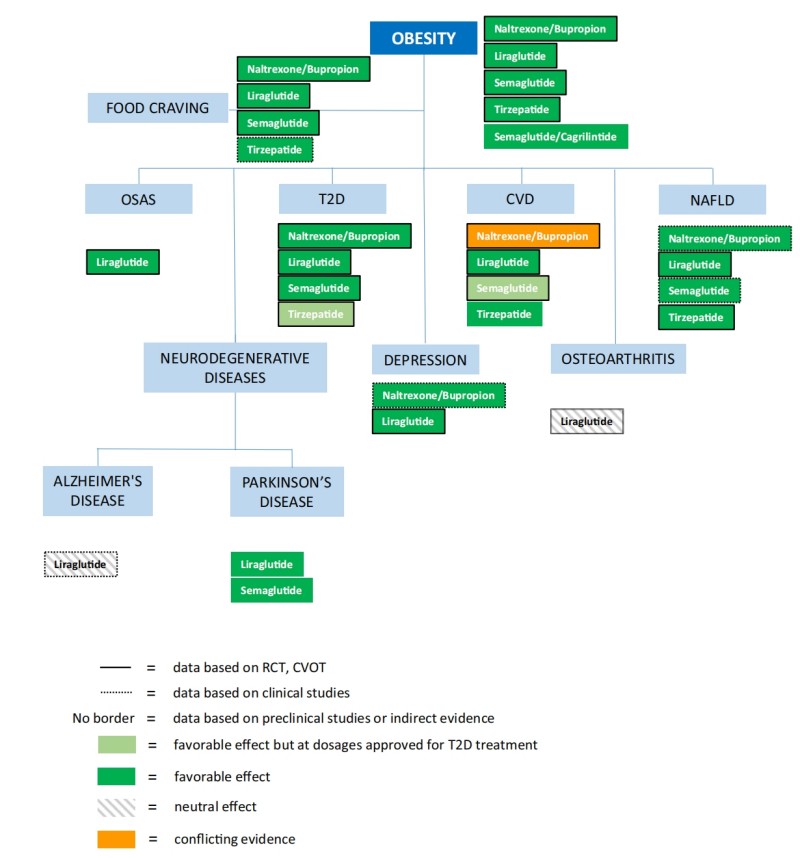 Fig.1 Anti-obesity drugs and their effects on obesity complications or comorbidities. (Guglielmi, et al., 2023)
Customer Review
Pharmacology
"We came to Protheragen with an early-stage anti-obesity peptide that had promising efficacy but limited ADME data. Their team designed a radiolabeled mass balance and tissue distribution program that quickly clarified how our compound was cleared and whether it persisted in adipose tissue. The final report made it straightforward for us to defend species selection and dose levels for subsequent toxicology studies. We have since engaged Protheragen on an additional candidate, and their scientists now participate in our regular portfolio reviews."
Dr. N. Y., Director of Pharmacology
Drug Metabolism
"Our oral anti-obesity small molecule had complex metabolism, and we were concerned about long-lived metabolites. Protheragen combined in vitro phenotyping with in vivo radiolabeled mass balance in two species, revealing a clear elimination profile and highlighting a single metabolite that warranted close follow-up. Their integrated diagrams and recommendations helped us refine our formulation strategy and prioritize which metabolite to investigate further. We view Protheragen as a long-term partner for our metabolic and obesity pipeline."
Dr. Z. B., Head of Drug Metabolism
Frequently Asked Questions
-
What is a mass balance study, and why is it important for anti-obesity drugs?
A mass balance study quantifies how much of an administered dose is recovered in excreta and tissues and in what form (parent or metabolite). For anti-obesity drugs—often long-acting and used chronically—this information is essential to understand elimination routes, potential accumulation, and the need for follow-up safety studies on metabolites. Regulators expect a coherent AME story, and mass balance is central to that narrative. Protheragen structures these studies so you can answer these questions confidently at the preclinical stage.
-
At what point in development should we plan a preclinical mass balance study?
Most teams benefit from designing mass balance work around candidate selection through FIH-enabling stages. Once you have preliminary PK and safety data in at least one species, Protheragen can integrate those findings into a radiolabeled plan that supports both internal decision-making and future clinical design. Starting too late risks rework; starting at the right time ensures that AME insights guide both formulation and candidate choice.
-
Do you support both oral and injectable anti-obesity modalities?
Yes. Our platforms accommodate oral small molecules, subcutaneous or intramuscular injectables, and sustained-release depots. Study design is always adapted to route-specific questions—for example, absorption and first-pass metabolism for oral agents versus depot liberation and systemic persistence for long-acting injectables. We tailor sampling schemes and matrices to the modality you are developing.
-
How do you handle high lipophilicity and potential adipose retention?
Lipophilic anti-obesity candidates may distribute extensively into adipose tissue, which can prolong elimination. Protheragen incorporates tissue distribution assessments—via QWBA or targeted tissue sampling—to quantify this behavior. We then interpret these findings alongside PK data to determine whether adipose binding is benign, beneficial, or potentially problematic, and we provide recommendations for follow-up studies as needed.
-
Can preclinical mass balance data inform our future clinical mass balance study?
Absolutely. While Protheragen does not conduct clinical studies, our preclinical work is designed to inform them. Species comparison, metabolite profiling, and excretion route data help you select the most informative clinical design, anticipate metabolites of interest, and align dose and sampling windows. Many sponsors use our reports as the scientific basis for subsequent human AME protocols.
-
How do you minimize radiation-related concerns in preclinical work?
We optimize isotope selection, specific activity, and dosing to achieve high-quality AME data with the lowest practical total radioactivity. High-sensitivity detection techniques allow us to work at lower activity levels while still reaching robust mass balance recovery targets. All work is performed under stringent radiation safety procedures, and we provide clear documentation for your internal governance.
-
Can you accommodate complex combinations or multi-agonist programs?
Yes. For combination regimens and multi-agonists, we carefully design labeling and study schemes to disentangle overlapping pathways as far as practical. AME data can indicate whether a single component accounts for most of the elimination burden or whether shared pathways create potential competition. Our scientists work closely with your team to prioritize which components to label and which endpoints matter most for your development strategy.
Contact Our Team for More Information and to Discuss Your Project
Protheragen provides a specialized anti-obesity drug mass balance study service built for the realities of modern obesity drug discovery—highly potent agents, demanding regulatory expectations, and the need to understand not just how much weight is lost, but how the drug and its metabolites move through the body. Our preclinical-only focus, advanced radiolabeled technologies, and deep understanding of obesity pharmacology enable us to deliver AME insights that de-risk candidate selection, inform future clinical design, and support long-term portfolio decisions.
To explore how Protheragen can support your anti-obesity program with tailored preclinical mass balance studies, please reach out via our online inquiry hotline: Contact Protheragen
Reference
- Guglielmi, V.; et al. Beyond Weight Loss: Added Benefits Could Guide the Choice of Anti-Obesity Medications. Curr Obes Rep. 2023, 12: 127–146. (CC BY 4.0)
All of our services and products are intended for preclinical research use only and cannot be used to diagnose, treat or manage patients.