

Anti-Obesity Drug Blood-Brain Barrier Permeability Assessment Service
InquiryUnderstanding how anti-obesity drug candidates interact with the blood–brain barrier (BBB) is essential for defining their mode of action, optimizing molecular design, and guiding early non-clinical development. Centrally acting mechanisms require controlled access to key brain regions, while peripherally acting strategies demand strict exclusion from the central nervous system (CNS). Both objectives depend on clear, quantitative BBB permeability data obtained in preclinical, human-relevant systems.
Blood–Brain Barrier Permeability Testing for Anti-Obesity Drug Candidates
Protheragen provides a dedicated anti-obesity drug blood-brain barrier permeability assessment service combining:
- Advanced BBB-on-chip platforms with human-relevant barrier function
- Obesity-conditioned barrier models simulating metabolic stress and inflammatory microenvironments
- In silico permeability prediction pipelines to rapidly prioritize or refine chemical series
- Integrated mechanistic readouts supporting data-driven decision-making early in discovery
This service is specifically tailored for non-clinical research teams developing metabolic, neuroendocrine, or appetite-modulating agents.
Technology Platform
Our core technologies combine microfluidic modeling and computational prediction to deliver a comprehensive view of how anti-obesity candidates interact with the blood–brain barrier.
- Human BBB-on-Chip Microfluidic Systems
Our microfluidic BBB platforms use human brain microvascular endothelial cells, pericytes, and astrocytes arranged under physiological shear stress. These models reproduce:
- Tight junction formation
- Low paracellular flux
- Transporter activity patterns reflective of human BBB biology
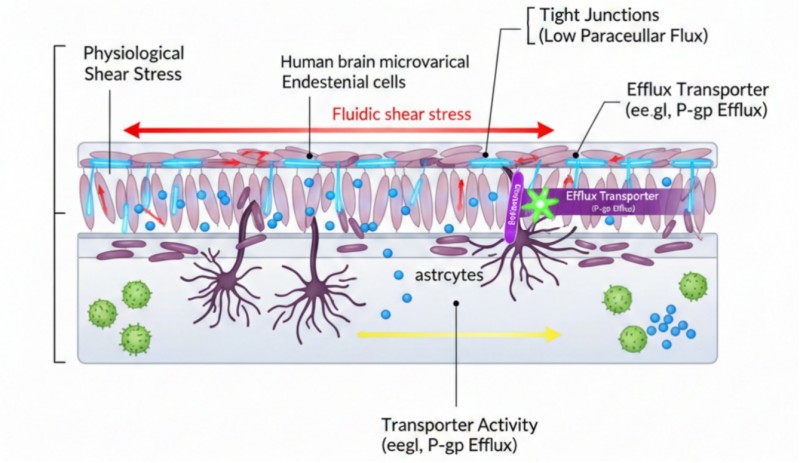
Dynamic flow-based culture enables more physiologically aligned permeability behavior compared with conventional static transwell models.
- Obesity-Mimicking BBB Stress Models
Obesity and metabolic dysfunction can alter BBB tight junctions, increase paracellular permeability, and modulate transporter expression. To capture these non-clinical phenomena, we incorporate:
- Pro-inflammatory cytokine environments
- Lipotoxic and metabolic stress conditions
- Endothelial signaling alterations linked to barrier disruption
These models help researchers determine how metabolic stress may influence CNS exposure or peripheral restriction of candidate molecules.
- In Silico Permeability Prediction
Our computational platforms integrate:
- Molecular dynamics simulations
- Steered molecular dynamics
- Lipid-bilayer transport modeling
- Structure–property analysis
These methods generate permeability predictions, rank analog series, identify structural liabilities, and guide medicinal chemistry hypotheses before experimental testing.
- Mechanism-Aware BBB Assessment
Modern anti-obesity mechanisms—particularly peptide-based incretin analogs and CNS-interacting small molecules—benefit from permeability profiling aligned with:
- Receptor localization (central vs peripheral)
- Transporter-mediated access or exclusion
- Physicochemical determinants influencing BBB behavior
Protheragen structures all studies around your intended non-clinical pharmacology strategy.
Workflow
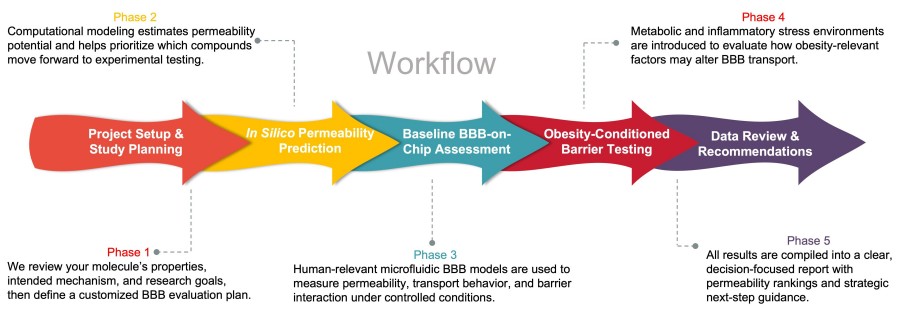
Protheragen implements a streamlined, multi-stage workflow designed to evaluate anti-obesity drug candidates with precision and operational efficiency.
Fields of Application: Targeting the Neurometabolic Axis
Protheragen's BBB permeability assessment service supports a wide spectrum of non-clinical research programs focused on central appetite circuits and CNS-adjacent mechanisms relevant to obesity biology. By providing precise, mechanistic insight into how molecules interact with the BBB, our platform empowers discovery teams to refine chemical design, strengthen mechanistic hypotheses, and position candidates with greater confidence.
- Appetite and Satiety Regulation
Many early-stage anti-obesity agents are engineered to influence hypothalamic structures such as the arcuate nucleus, paraventricular nucleus, or hindbrain centers controlling energy balance. These mechanisms demand controlled CNS penetration, making accurate BBB permeability measurement essential for optimizing potency, exposure, and mechanistic clarity.
- Neuroprotection and Metabolic Syndrome
Chronic metabolic overload can trigger neuroinflammation, oxidative stress, and barrier disruption. Research programs developing compounds to counteract these processes require detailed permeability data to understand how candidates interact with an inflamed or metabolically stressed BBB, and whether they can modulate or stabilize barrier function.
- Neurological Safety Screening
For peripherally acting anti-obesity strategies, demonstrating minimal BBB penetration helps reduce the risk of CNS-linked adverse effects. Our models allow teams to confirm restricted brain access, even under obesity-mimicking stress conditions.
- Formulation and Prodrug Strategy
Teams exploring nanoparticle systems, lipid carriers, or prodrug chemistries rely on BBB permeability data to validate whether their designs enhance transport, maintain peripheral restriction, or engage specific BBB pathways.
Advantages
Protheragen delivers a purpose-built platform for early-stage metabolic and neurometabolic drug discovery, offering a level of BBB insight rarely available at the preclinical stage. Our approach is engineered to give research teams actionable data, faster chemistry cycles, and a more confident understanding of CNS engagement or peripheral restriction.
Protheragen operates exclusively within non-clinical R&D, allowing us to design models, workflows, and analyses optimized for early discovery, hit-to-lead, and lead-optimization—not clinical trials. This ensures focused scientific rigor and rapid project turnaround tailored to discovery environments.
Human-Relevant Barrier Modeling
Our microfluidic BBB-on-chip systems incorporate human-derived cell types and controlled shear stress, offering superior physiological relevance compared with static inserts. These platforms generate consistent, reproducible permeability data aligned with barrier behavior reported in fundamental BBB research.
Obesity-Specific Barrier Insight
Metabolic stress, inflammation, and lipotoxicity can alter transporter activity and junction integrity. Nuviox’s obesity-mimicking barrier models capture these shifts, giving teams a more realistic understanding of how their anti-obesity candidates may behave under stressed barrier conditions.
Integrated In Silico + In Vitro Insights
Our dual strategy merges MD-based permeability prediction with empirical chip-based testing. This combination accelerates chemical refinement, supports prioritization decisions, and reduces unnecessary experimental cycles.
Decision-Ready Reporting
Every project concludes with a clear, interpretive data package including rankings, visualizations, and strategic recommendations—ideal for internal reviews, investor discussions, and early-stage portfolio decisions.
Contact Protheragen for a customized BBB permeability study plan.
Service Scope: Comprehensive Coverage for Anti-Obesity Drug Modalities
Our service is tailored for the complexities of metabolic and neurodegenerative drug discovery, focusing specifically on BBB challenges relevant to anti-obesity targets.
Small Molecule Anti-Obesity Candidates
Assessment of lipophilicity-driven passive diffusion and P-gp substrate activity.
Peptide and Biologic Therapeutics
Evaluation of large-molecule transport, including potential for receptor-mediated transcytosis pathways, increasingly relevant for novel peptide-based obesity treatments.
Metabolic and Neuroinflammation Agents
Testing compounds designed to treat metabolic disorders (type 2 diabetes, insulin resistance) that also show potential for BBB disruption or neuroprotective effects.
Quantitative Pharmacokinetic Endpoints
Delivering key parameters including apparent permeability (Papp), partition coefficient (Kp) (brain-to-blood ratio), and efflux ratio.
Associated Services: Comprehensive Drug Disposition Solutions
To fully support your anti-obesity drug development program, Protheragen recommends leveraging our complementary services that address the full spectrum of ADME (Absorption, Distribution, Metabolism, Excretion) challenges:
In Vitro ADME and Drug Metabolism Profiling
Essential testing to determine metabolic stability (Hepatocyte/Microsome Stability), plasma protein binding, and CYP450 inhibition/induction. This data directly supports PK/PD modeling.
In Vivo Pharmacokinetics (PK) Studies
Offering detailed tissue distribution studies in relevant Animal Models, which can be directly correlated with the predictive data from our microfluidic BBB-on-a-chip service.
Advanced Computational Modeling Packages
Providing full QSAR model development and sophisticated in silico toxicity prediction tailored to your compound class. This service is a perfect complement to the initial pre-screening step of the core BBB service.
Publication Data
Title: Evaluation of Drug Blood-Brain-Barrier Permeability Using a Microfluidic Chip
Journal: Pharmaceutics, 2024
DOI: https://doi.org/10.3390/pharmaceutics16050574
Summary: This article develops a novel microfluidic chip-based human blood-brain-barrier (BBB)-on-a-chip model to predict drug BBB permeability, focusing on mimicking the human BBB structure and function using human-derived cells (brain microvascular endothelial cells, pericytes, astrocytes). It evaluates the permeability of 10 representative compounds via LC-MS/MS analysis, verifies that the permeability trends are consistent with previous animal and cell-culture models, and establishes a positive correlation between the partition coefficient (Kp) and apparent permeability (Papp). The study highlights the core advantages of the microfluidic model in overcoming species differences and simulating the in vivo microenvironment, while pointing out limitations such as the lack of consideration for pathological factors and regional BBB heterogeneity.
Key Findings
- Model Construction & Advantages: The model uses three human-derived cell types (hBMEC, HBVP, NHA) and a dynamic microfluidic system to reproduce BBB tight junctions and cell interactions, overcoming species differences in traditional animal models and the lack of fluid flow in 2D Transwell systems.
- Permeability Evaluation Results: Among the 10 tested compounds, caffeine (CAF) and donepezil (DPZ) show high BBB permeability, while LP533401 (LP) and cetirizine (CET) exhibit low permeability, consistent with results from previous animal and cell-culture models.
- Key Parameter Correlation: A positive correlation between the partition coefficient (Kp) and apparent permeability (Papp) is established (R²=0.608), providing a reliable quantitative basis for evaluating drug BBB penetration.
- Application Value: The model enables quantitative detection via LC-MS/MS, is more cost-effective and ethical than animal models, and provides a new paradigm for predicting BBB permeability in early drug development.
- Limitations: The model does not account for factors such as inflammation, oxidative stress, regional BBB heterogeneity, or drug interactions with blood/brain components, which need to be addressed in future research.
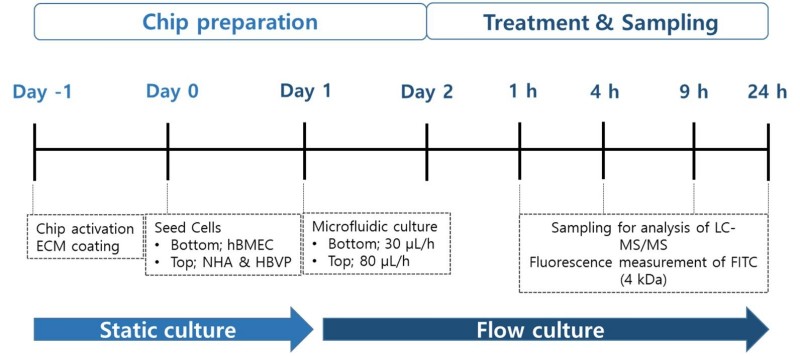 Fig.1 Functional validation of the in vitro human blood-brain-barrier (BBB) model. (Yang, et al., 2024)
Customer Review
Pivotal Mechanistic Insight: Confirming Receptor-Mediated CNS Delivery
"Protheragen provided high-quality BBB permeability data that helped us redirect our hit series. Their obesity-conditioned barrier model revealed changes we wouldn't have seen in standard systems. This clarity accelerated our chemistry decisions."
Dr. D. E, VP of Discovery Chemistry
Robust Safety Data: Definitive Proof of Active BBB Exclusion
"Our goal was to design a peripherally selective molecule. Protheragen's BBB-on-chip results demonstrated minimal barrier penetration, strengthening our internal positioning and guiding further optimization. We consider them a long-term discovery partner."
Prof. L. L., Senior Scientist, Metabolic R&D Unit
Frequently Asked Questions
-
What type of BBB model does Protheragen use?
We use human-relevant microfluidic BBB-on-chip platforms incorporating endothelial cells, astrocytes, and pericytes under dynamic flow.
-
Can you evaluate both CNS-penetrant and peripherally restricted molecules?
Yes. We quantify permeability profiles and help determine strategic positioning based on intended non-clinical mechanisms.
-
Do obesity-mimicking models affect permeability?
Yes. Metabolic and inflammatory stressors can alter junction integrity and transporter activity, and our models capture these changes.
-
How does the in silico module help?
It provides early permeability ranking, highlights structural issues, and guides medicinal chemistry before laboratory testing.
-
What readouts do you provide?
We deliver permeability coefficients, time-course concentrations, transport ratios, and mechanistic interpretation.
-
How much compound is required?
Amounts vary with assay depth; we provide exact quantities after reviewing your project scope.
-
Can you test peptides?
Yes. We support peptides, peptide analogs, and modified peptide chemotypes.
-
Can you model efflux transporter involvement?
We offer exploratory efflux assessments and transporter-modulation modules.
-
What industries typically use this service?
Early drug discovery teams focusing on metabolic disease, neuroendocrine biology, or CNS-targeting mechanistic research.
-
How do we begin?
Send us your compound information, project goals, and timeframe; our team will prepare a tailored BBB study plan.
How to Contact Us?
Protheragen delivers preclinical, in vitro, and in silico BBB permeability solutions designed for modern anti-obesity research and discovery programs.
Email: info@obesityscientific.com
Phone: 1-631-506-1393
Contact Our Team for More Information and to Discuss Your Project!
Reference
- Yang, J.Y.; et al. Evaluation of Drug Blood-Brain-Barrier Permeability Using a Microfluidic Chip. Pharmaceutics. 2024, 16(5): 574. (CC BY 4.0)
All of our services and products are intended for preclinical research use only and cannot be used to diagnose, treat or manage patients.