

Obesity Organoid Modeling and Analysis Service
InquiryObesity is a complex, multi-systemic metabolic disorder that serves as a precursor to numerous chronic conditions, including type 2 diabetes (T2D), non-alcoholic fatty liver disease (NAFLD), and cardiovascular complications. Traditional preclinical research has long relied on rodent models; however, significant interspecific differences in adipocyte biology, lipid metabolism, and inflammatory responses often hinder the translation of findings to human patients.
Metabolic Excellence: Obesity Organoid Services
Protheragen bridges this translational gap with our obesity organoid modeling and analysis service. By utilizing advanced 3D cell culture technologies, we create organotypic models that recapitulate the structural and functional complexities of human adipose tissue, the intestine, and the liver. Our platform provides a highly relevant human-cell-based environment for evaluating drug efficacy, investigating metabolic pathways, and screening anti-obesity compounds before they enter the clinical pipeline.
Core Technologies
Protheragen leverages a suite of proprietary and industry-leading technologies to ensure our organoids are the most physiologically accurate models available for preclinical research:
- Human-Derived Stem Cell Platforms
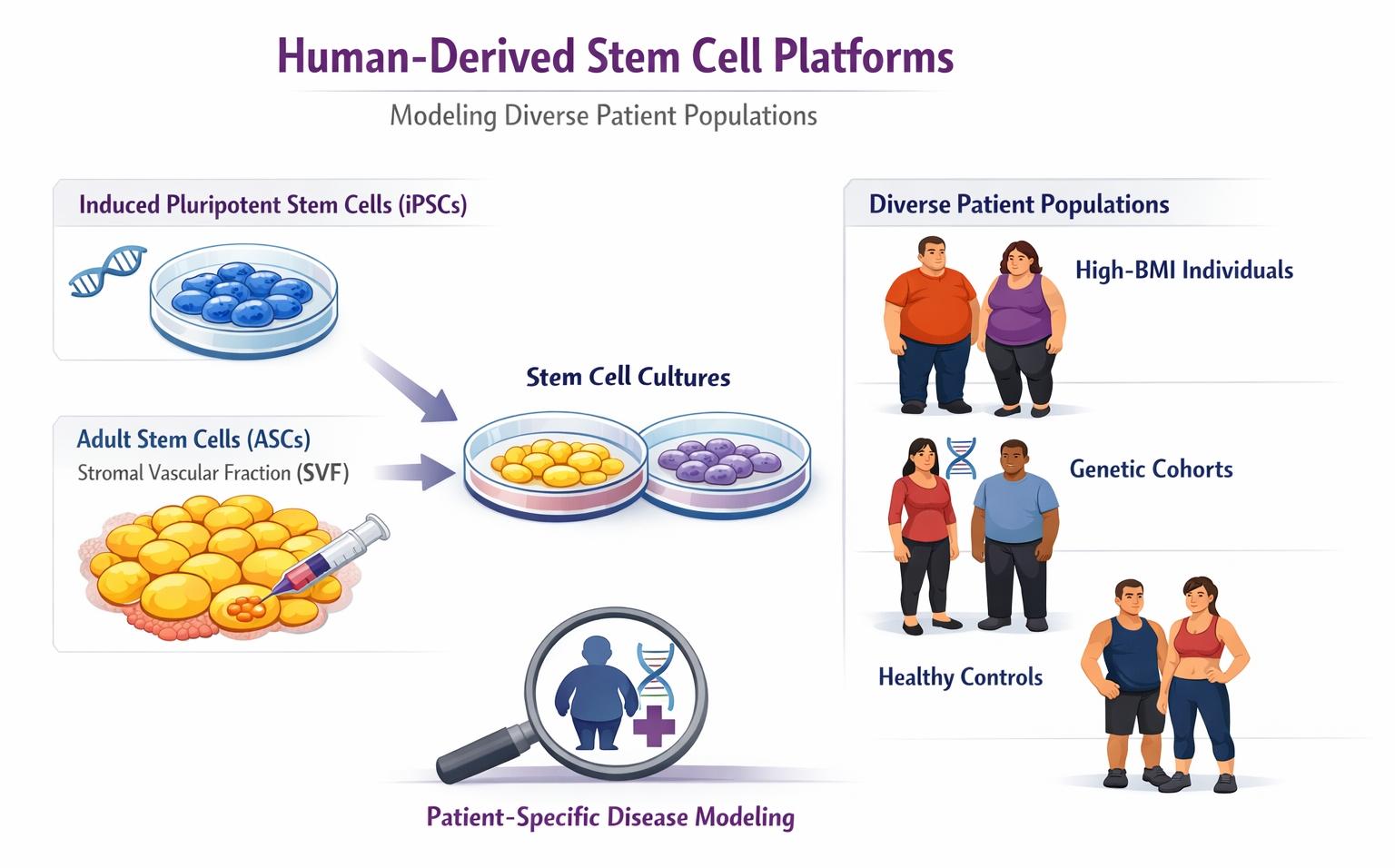
We utilize both induced pluripotent stem cells (iPSCs) and adult stem cells (ASCs) derived from the stromal vascular fraction (SVF) of human adipose tissue. This allows us to model diverse patient populations, including high-BMI individuals and specific genetic cohorts.
- 3D Scaffold-Free & Hydrogel Matrices
Depending on the project requirements, we employ xeno-free hydrogel matrices or scaffold-free magnetic bioprinting to prevent the common "floating" issues associated with mature, buoyant adipocytes, ensuring long-term culture stability (up to 90 days).
- Precision Metabolic Induction
Our "obesity-in-a-dish" cocktails induce hallmark features of obesity, such as adipocyte hypertrophy, unilocular lipid droplet formation, insulin resistance, and pro-inflammatory cytokine secretion (TNF-α, IL-6).
- Multi-Organ Crosstalk Modules
Recognizing that obesity is systemic, our platform integrates organ-on-a-chip technologies to study the endocrine communication between adipose organoids, liver organoids, and intestinal "mini-guts."
Solution Scope
Our enhanced platform now includes specialized modeling for the following critical organ systems:
We utilize human-derived SVF and iPSCs to create functional 3D white, brown, and beige adipose organoids for studying lipid storage, thermogenesis, and adipokine secretion.
Our hepatic models recapitulate micro-anatomical structures to study NAFLD and steatosis, providing a high-fidelity environment for evaluating lipid metabolism and drug-induced liver injury.
We provide specialized platforms to study the interaction between obesity-induced insulin resistance and pancreatic beta-cell function, critical for understanding the progression toward type 2 diabetes.
These "mini-guts" allow researchers to investigate nutrient absorption, incretin (GLP-1/GIP) secretion, and the impact of the microbiome on systemic obesity.
Recognizing the role of the central nervous system in energy homeostasis, our brain organoids facilitate the study of hypothalamic signaling and the neuroendocrine regulation of appetite.
Contact Our Specialist Team Today to Define Your Service Scope.
Workflow
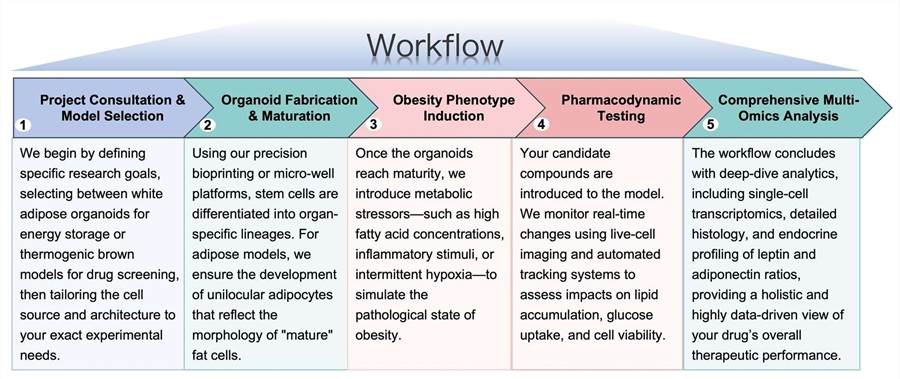
Our streamlined workflow is designed to provide high-quality, actionable data with minimal lead time. Each stage is handled by specialized biology experts at Protheragen:
Fields of Application
The obesity organoid modeling and analysis service provided by Protheragen serves as a versatile cornerstone for diverse research sectors, bridging the gap between fundamental metabolic discovery and high-stakes therapeutic development.
- Pharmacology
Evaluation of GLP-1 agonists, lipase inhibitors, and thermogenic activators.
- Toxicology
Assessing metabolic-specific toxicities and drug-induced lipid dysregulation.
- Nutritional Science
Studying the impact of specific fatty acids or bioactive food components on human adipocytes.
- Precision Medicine
Developing patient-specific models to predict individual responses to metabolic therapies.
Advantages
Choosing Protheragen means choosing a partner dedicated to scientific excellence and preclinical accuracy. Our obesity organoid platform offers:
Superior Human Relevance
Unlike rodent models, our organoids express human-specific drug-metabolizing enzymes and adipokines, significantly reducing the risk of clinical failure.
Extended Longevity
Our optimized culture conditions allow organoids to remain viable and functional for over 3 months, enabling the study of chronic drug exposure—a critical factor in obesity treatment.
Standardization & Scalability
Through automated imaging and machine-learning analysis, we minimize user-to-user variability, delivering highly reproducible data across multiple batches.
Advanced Imaging Capabilities
We provide high-resolution visualization of lipid droplet morphology and cytoskeletal restructuring without compromising organoid integrity.
Ethical Compliance
Our services strictly adhere to the principles of the 3Rs (replacement, reduction, refinement), ensuring that our research minimizes the use of animals while maximizing scientific outcomes. By providing a robust non-animal alternative, we support ethical practices in research without compromising the quality or accuracy of results.
Inquire Now to Receive a Custom Project Proposal Tailored to Your Compound’s Mechanism of Action.
Customer Review
Meal-Pattern Insights That Turned "Weight Change" Into a Clear Satiety Mechanism
"The team at Protheragen provided us with a level of insight that animal models simply couldn't reach. Their adipose organoid platform allowed us to visualize the direct effect of our lead compound on human lipid droplet size and insulin sensitivity in real-time. The transition from our previous 2D screens to their 3D organoids was seamless, and the data was pivotal for our internal go/no-go decisions."Director of Metabolic Research, Global Biotech Firm
Integrated Efficacy and Neurobehavioral Risk Readouts That De-Risked the Go/No-Go Decision
"Working with Protheragen has been a game-changer for our preclinical pipeline. Their ability to model the high-BMI phenotype using patient-derived cells gave us the confidence we needed to move toward regulatory submission. We are already planning our next series of studies to look at the gut-adipose axis using their multi-organ chips."
Senior Scientist, Innovative Therapeutics
Frequently Asked Questions
-
How do your organoids compare to traditional 2D adipocyte cultures?
Traditional 2D cultures lack the complex 3D architecture and cell-matrix interactions necessary for true adipocyte maturation. Our organoids develop unilocular lipid droplets and exhibit endocrine functions that 2D models simply cannot replicate.
-
Can you model the inflammatory state associated with obesity?
Yes. We can co-culture adipose organoids with immune cells (e.g., macrophages) or introduce pro-inflammatory cytokines like TNF-α to simulate the chronic low-grade inflammation seen in clinical obesity.
-
Is it possible to use specific patient backgrounds for the organoids?
Absolutely. We offer patient-derived organoids (PDOs) from individuals with varied BMIs and genetic backgrounds, allowing you to study population-specific drug responses.
-
How do you handle the buoyancy of mature adipocytes in 3D culture?
Protheragen utilizes specialized 3D magnetic bioprinting and high-viscosity xeno-free hydrogels that "lock" the organoids in place, preventing loss during media changes and imaging.
-
What is the typical turnaround time for an obesity drug screening project?
Most projects, from model fabrication to final data report, are completed within 6 to 10 weeks, depending on the complexity and required maturation time.
-
Can your platform measure insulin resistance?
Yes. We perform glucose uptake assays and analyze phosphorylation of key insulin signaling proteins (e.g., AKT) to quantify the degree of insulin resistance.
-
Do you provide histology services for the organoids?
Yes. We provide full histology services, including Oil Red O staining for lipids, H&E for structural analysis, and immunofluorescence for specific markers like Perilipin or UCP1.
-
Can we study the "browning" of white fat with your service?
Yes. We offer specialized assays to monitor the trans-differentiation of white adipose organoids into thermogenic beige adipocytes, including UCP1 expression and mitochondrial activity tracking.
How to Contact Us
Protheragen provides a state-of-the-art obesity organoid modeling and analysis service that delivers human-relevant, highly reproducible, and ethically sound preclinical data. By combining advanced 3D bioprinting with deep multi-omics expertise, we empower drug developers to identify the most promising anti-obesity candidates with unprecedented precision.
Contact Protheragen for More Information and to Discuss Your Project
All of our services and products are intended for preclinical research use only and cannot be used to diagnose, treat or manage patients.