

Pancreatic Organoid Modeling Service for Obesity Research
InquiryObesity is no longer viewed simply as a condition of lipid storage; it is a systemic metabolic disorder where the pancreas serves as a critical node of failure. Chronic exposure to high levels of free fatty acids (FFAs) and pro-inflammatory cytokines leads to pancreatic β-cell exhaustion and exocrine dysfunction. Traditional 2D Cell Cultures fail to replicate the complex 3D architecture of the pancreas, while animal models often exhibit metabolic pathways divergent from human physiology.
Advanced Pancreatic Organoid Modeling for Obesity Research
Protheragen provides a specialized pancreatic organoid modeling service specifically tailored for obesity and metabolic disease research. Our platform utilizes 3D self-organizing units that recapitulate the cellular heterogeneity of the human pancreas, including ductal, acinar, and endocrine lineages. By simulating the "obese microenvironment" in vitro, we enable researchers to study the mechanisms of lipotoxicity, insulin resistance, and inflammation without the ethical and logistical hurdles of clinical trials.
Core Technologies
Our platform integrates several high-end biological technologies to ensure the highest physiological relevance:
- Directed Differentiation Systems
We utilize chemically defined, animal-free media to induce pluripotent stem cells (PSCs) or adult progenitor cells into specific pancreatic lineages, ensuring high batch-to-batch consistency.
- Biomimetic Scaffolding
Our organoids are grown in advanced extracellular matrix (ECM) substitutes that provide the necessary mechanical cues and growth factors (e.g., R-spondin, noggin) to maintain tissue polarity and function.
- Obesity-Mimetic Co-culture
We integrate metabolic stressors such as palmitate-rich lipid cocktails and pro-inflammatory adipokines into the culture system to simulate the chronic low-grade inflammation characteristic of obesity.
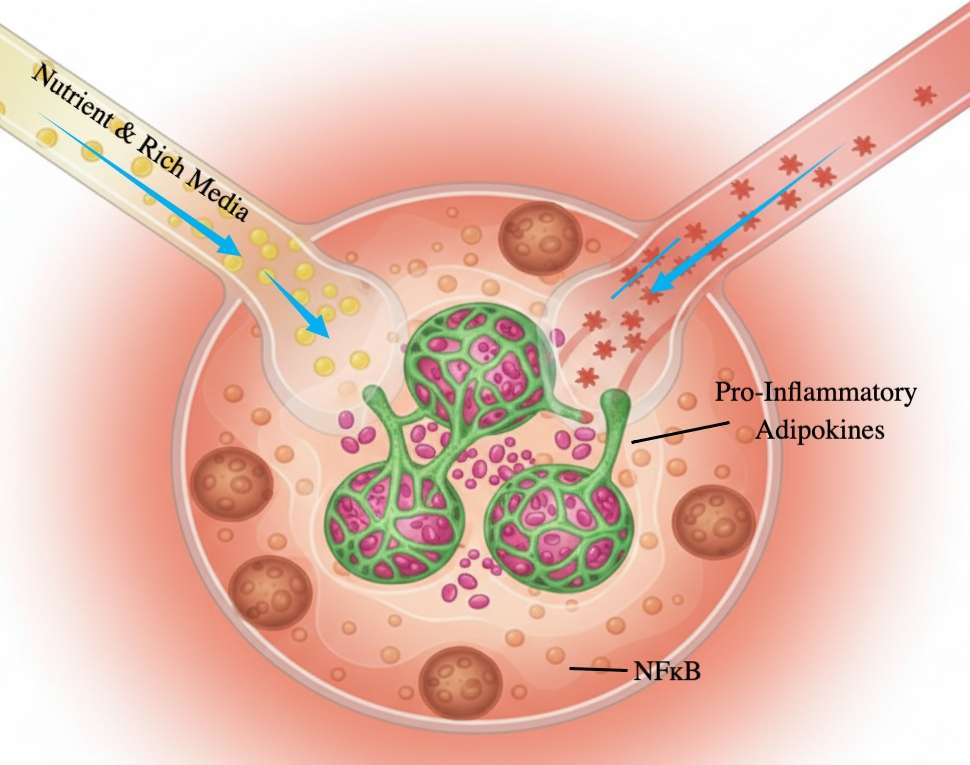
- High-Resolution Metabolic Imaging
Utilization of live-cell imaging and fluorescent glucose analogues to track real-time metabolic activity within the 3D organoid structure.
Solution Scope
Protheragen offers a modular and highly customizable suite of modeling solutions designed to capture the functional diversity of human adipose depots, from standard metabolic profiling to complex disease-state simulations.
- β-Cell Function Modeling
Investigating the impact of obesity-induced stress on insulin production and secretion.
- Exocrine Lipotoxicity Studies
Analyzing how excess fat accumulation affects acinar cell health and the secretion of digestive enzymes.
- Drug Screening & Efficacy
Preclinical testing of small molecules or biologics designed to mitigate insulin resistance or protect pancreatic tissue from metabolic damage.
- Genetic Susceptibility Analysis
Utilizing patient-derived or gene-edited organoids to study how specific SNPs influence the risk of obesity-related pancreatic failure.
Contact Our Team for More Information and to Discuss Your Project.
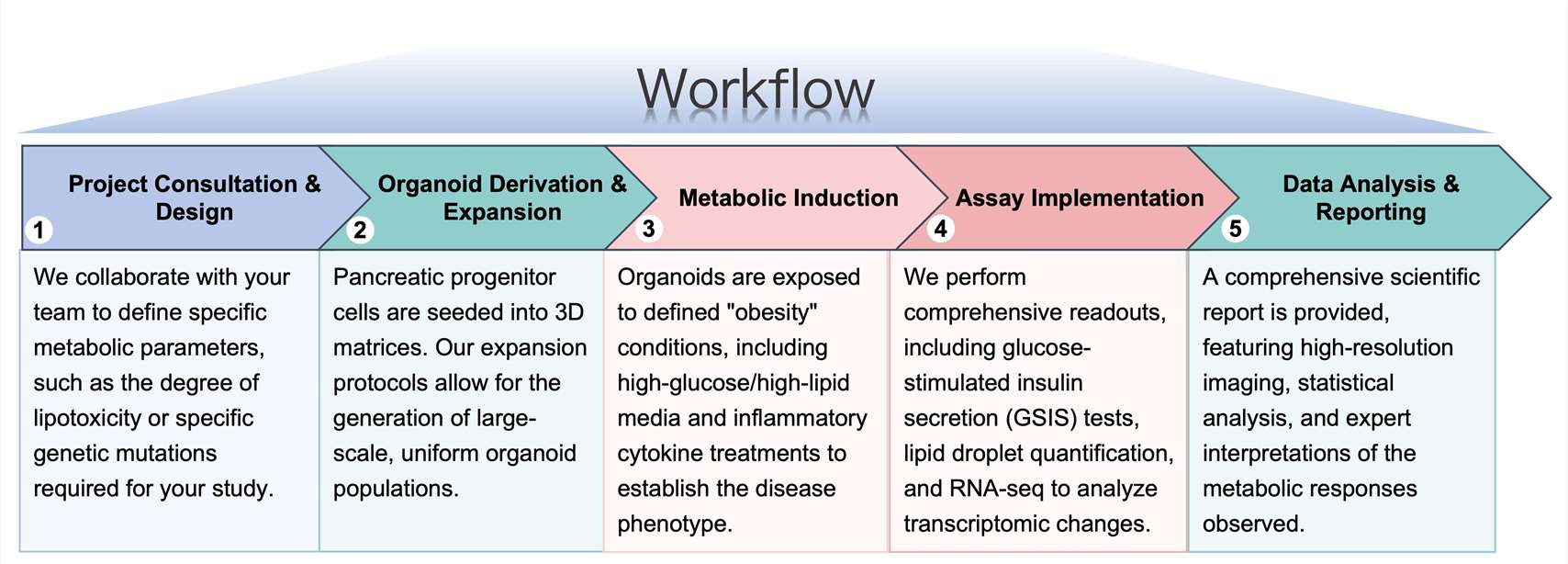
Workflow
Protheragen follows a rigorous, standardized workflow to deliver high-quality preclinical data:
Fields of Application
The versatile architecture of the Protheragen platform allows for seamless integration into diverse research pipelines, providing critical human-centric data across several key therapeutic and diagnostic frontiers.
- Type 2 Diabetes Research
Understanding the progression from obesity-driven insulin resistance to β-cell failure.
Identifying novel targets for GLP-1 analogues and other metabolic regulators.
Assessing the pancreatic safety profile of new pharmaceutical candidates in a metabolic stress environment.
- Nutritional Science
Studying the impact of specific dietary lipids and bioactive compounds on pancreatic health.
Inquire about Our Obesity-Mimetic Models Now.
Advantages
The Protheragen advantage lies in the precision and scalability of our 3D models:
Superior Physiological Fidelity
Our organoids preserve the spatial organization and cell-cell interactions found in vivo, outperforming traditional 2D models in predicting drug efficacy.
Human-Centric Data and Scalable Throughput
By focusing on human-derived cells, we bridge the gap between rodent studies and human metabolic responses. Our automated 3D culture platforms allow for high-throughput screening of metabolic compounds in a fraction of the time required for animal studies.
Published Data
Our modeling techniques have demonstrated a >90% correlation with in vivo pancreatic responses to high-fat stimuli in "published data" validated through rigorous internal benchmarking.
Publication Data
Title: Organoid-transplant model systems to study the effects of obesity on the pancreatic carcinogenesis in vivo
Journal: Frontiers in Cell and Developmental Biology, 2020
DOI: https://doi.org/10.3389/fcell.2020.00308
Summary: This study introduces a feasible organoid-transplant preclinical model to unravel the link between obesity and pancreatic ductal adenocarcinoma (PDAC) — the third leading cause of cancer-related deaths in developed countries. Using syngeneic murine preneoplastic (mP) and tumor (mT) organoids derived from genetically engineered mice (KC and KPC models), researchers tested diet-induced obesity (DIO, high-fat diet) and genetic-induced obesity (GIO, leptin-deficient ob/ob mice) against lean controls (low-fat diet). Results confirm that obesity boosts organoid engraftment, accelerates PDAC progression (from PanIN lesions to invasive carcinoma), and promotes distant metastasis. Mechanistically, obesity drives a proinflammatory microenvironment: it alters immune cell infiltration (expanding myeloid cells like CD11b+Ly6G+ neutrophils, reducing CD8+ T cells and dendritic cells) and elevates proinflammatory cytokines (IL-6, IL-10, IL-17, G-CSF). Transcriptomic and proteomic analyses further identify obesity-associated molecular signatures (e.g., NFκB, EMT pathways; proteins like ApoA2, RBP-4, SAA1) linked to poorer PDAC prognosis. This model recapitulates human disease, offering a reliable tool to explore obesity-driven pancreatic carcinogenesis and potential therapeutic targets.
Key Findings
- Obesity accelerates PDAC progression: Both DIO and GIO models increase engraftment rates of preinvasive (mP) and neoplastic (mT) organoids, speed up PanIN lesion evolution, and enhance metastatic dissemination — mirroring aggressive PDAC in obese humans.
- Proinflammatory microenvironment fuels tumor growth: Obesity reshapes immune infiltration (expands immunosuppressive myeloid cells, reduces antitumor T cells) and elevates proinflammatory cytokines/chemokines (IL-6, IL-17, G-CSF), creating a tumor-promoting milieu.
- Molecular signatures link obesity to poor prognosis: Transcriptomic analysis reveals upregulation of NFκB, TNF-α, and EMT pathways in obese models; proteomics identifies circulating biomarkers (ApoA2, RBP-4, SAA1, CP, RDX) whose high expression correlates with shorter PDAC survival (validated via ICGC data).
- Organoid-transplant model mimics human disease: The syngeneic murine model accurately reproduces obesity-associated PDAC pathology, solving the gap of previous models (e.g., cancer cell lines, spontaneous mouse models) and enabling study of early carcinogenic steps.
- PPAR signaling and metabolic dysregulation: Obesity activates PPAR pathways (key in adipocyte differentiation and inflammation), while upregulating proteins like IGFBP3 (linked to cancer cachexia) — highlighting metabolic-inflammatory crosstalk in PDAC.
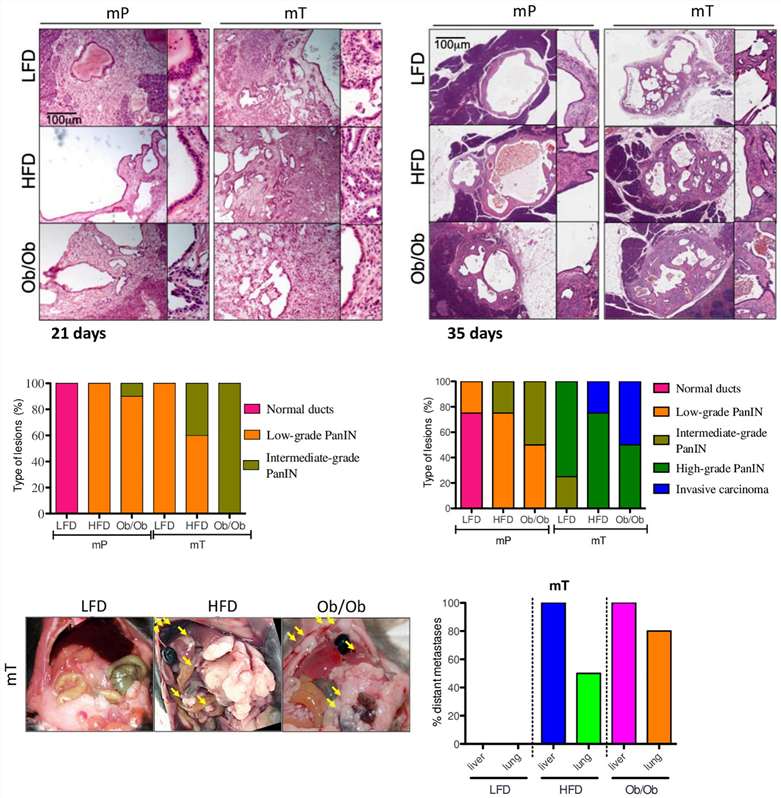 Fig. 1 Diet- and genetic- induced obesity accelerate pancreatic tumor growth, PanIN lesion evolution, and metastasis in syngeneic organoid-transplant models. (Lupo, et al., 2020)
Customer Review
Validating Therapeutic Efficacy with Human-Centric Data
"Our department was struggling with the high variability of rodent obesity models when testing our new insulin sensitizer. Switching to Protheragen's pancreatic organoid service provided us with highly reproducible data that clearly demonstrated the drug's protective effect on β-cells. We plan to integrate their multi-organ-on-a-chip platform in our next phase of research."
Principal Investigator, Metabolic Research Institute
Precision Modeling for Transcriptomic and Visual Discovery
"The technical expertise at Protheragen is unmatched. They helped us design a bespoke lipotoxicity model that perfectly mirrored the transcriptomic changes we saw in our human biopsy data. The quality of the high-resolution imaging alone was a game-changer for our preclinical filings."
Director of Discovery Biology, Biotech Firm
Frequently Asked Questions
-
How do your organoids compare to primary human islets?
While primary islets are the gold standard, they suffer from limited availability and donor variability. Our organoids provide a renewable, scalable source of pancreatic tissue with high genetic consistency.
-
Can you model the inflammatory component of obesity?
Yes. We can supplement the culture media with a cocktail of pro-inflammatory cytokines (e.g., TNF-α, IL-6) to simulate the chronic inflammation observed in obese patients.
-
Is it possible to perform high-throughput screening on these models?
Absolutely. Our workflow is optimized for 96-well and 384-well formats, making it ideal for large-scale compound screening.
-
How long does a typical study take?
From cell derivation to final report, most obesity-modeling projects are completed within 8–12 weeks.
-
Can these models be used for obesity-related pancreatic cancer research?
Yes. "Published data" indicate that obesity accelerates the progression of pancreatic lesions. We offer specific co-culture models to study this link.
-
What is the success rate for establishing organoids from frozen samples?
We maintain a success rate of over 85% for organoid establishment from properly cryopreserved pancreatic progenitors.
-
Are the media components animal-free?
We offer fully chemically defined, xeno-free media options to ensure that your results are not confounded by animal-derived growth factors.
-
How do you validate the "obese" phenotype in the organoid?
We utilize a combination of lipid staining (Oil Red O), ROS (reactive oxygen species) assays, and targeted qPCR for metabolic markers.
-
Can I provide my own cell lines for the service?
Yes, we welcome the opportunity to work with client-provided cell lines or patient-derived materials.
How to Contact Us
Protheragen is dedicated to providing the pharmaceutical and academic communities with advanced, human-relevant 3D models that accelerate the understanding of obesity and its metabolic consequences. By moving beyond traditional methods, we empower your research with data that is more predictive, more precise, and more ethical.
Contact Protheragen for More Information and to Discuss Your Project
Reference
- Lupo, F.; et al. Organoid-transplant model systems to study the effects of obesity on the pancreatic carcinogenesis in vivo. Front. Cell Dev. Biol. 2020, 8: 308. (CC BY 4.0)
All of our services and products are intended for preclinical research use only and cannot be used to diagnose, treat or manage patients.