

Anti-Obesity Drug In Vitro ADME Study Service
InquiryThe global imperative to develop safe and effective anti-obesity therapeutics (AOTs) demands unparalleled rigor in preclinical research. As chronic medications, AOTs face high scrutiny regarding their long-term safety profile and Pharmacokinetic Performance, making early and accurate ADME (Absorption, Distribution, Metabolism, and Excretion) and toxicity profiling absolutely non-negotiable. Poor pharmacokinetics and safety are the primary drivers of late-stage drug attrition.
Overview: Navigating the ADME/Tox Landscape for Chronic Anti-Obesity Therapies
At Protheragen, we specialize in mitigating this risk by deploying advanced in vitro ADME study services tailored specifically for anti-obesity agents. Our goal is to provide pharmaceutical and biotech clients with high-confidence data for lead candidate selection, ensuring that only compounds with the optimal balance of potency, bioavailability, and safety proceed to later stages. We enable data-driven decisions that save time and resources, dramatically increasing the probability of success in the complex metabolic disease space.
Core Technologies
Our service platform utilizes innovative and physiologically Relevant Models that go beyond traditional monolayer assays, providing highly predictive data essential for AOTs where long-term exposure demands translational accuracy.
- 3D Microphysiological Systems (MPS) for Hepatic Metabolism
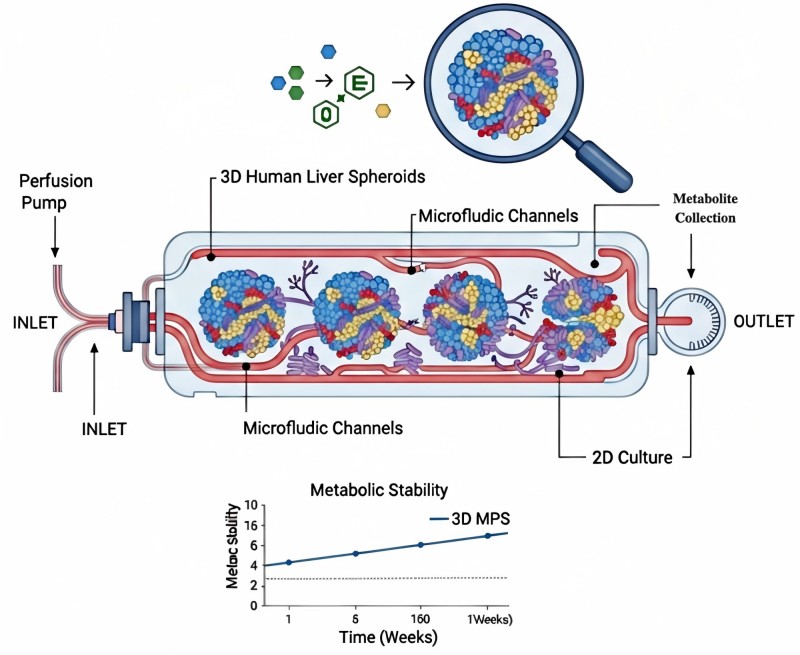
Metabolism (M in ADME) is paramount, especially for drugs targeting chronic conditions. We employ advanced 3D liver models using primary human hepatocytes and non-parenchymal cells in a perfused environment. This microphysiological system mimics the native liver microarchitecture and function far more closely than standard 2D cultures, providing robust, long-term metabolic stability and metabolite ID data. This capability is critical for accurately predicting the systemic clearance and potential for drug-induced liver injury (DILI).
- Comprehensive Transporter Assay Panels
Since Anti-Obesity Drugs often interact with multiple metabolic pathways and tissues, understanding membrane transport is vital. Our platform includes validated assays for key uptake and efflux transporters (e.g., OATPs, OCTs, P-gp, BCRP) using cell lines and isolated membranes. This allows for precise measurement of intestinal absorption (A) and hepatic/renal clearance (E), minimizing the risk of unexpected bioavailability issues or detrimental drug-drug interactions (DDIs).
- Physicochemical and Binding Assays
Utilizing state-of-the-art automation and analytical chemistry, we perform crucial early-stage assessments, including thermodynamic solubility, kinetic solubility, and high-quality plasma protein binding (PPB) studies. PPB is a key determinant of Drug Distribution (D) and clearance, especially important for highly lipophilic AOT candidates.
Workflow
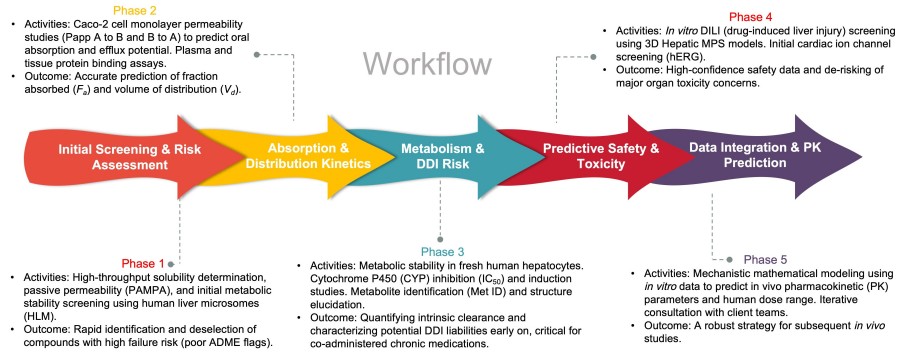
Protheragen has developed a comprehensive, five-stage preclinical workflow designed to integrate seamlessly into your drug discovery pipeline, ensuring maximum information yield at every stage.
Contact Protheragen to request a fit-for-purpose in vitro ADME study design and quote.
Fields of Application
The application of our in vitro ADME study service is critical across several key areas of anti-obesity and metabolic drug discovery.
- Small Molecule Therapeutic Candidates: Full ADME/Tox characterization for optimizing oral bioavailability, clearance, and safety profiles.
- Peptide and Biologic Drug Candidates: Specialized assays focusing on metabolic stability against proteases, protein binding, and passive permeability, especially for non-standard delivery routes.
- Natural Product and Phytochemical Screening: Comprehensive profiling to validate efficacy, determine the mechanism of metabolism, and flag potential safety concerns of novel bioactive compounds aimed at weight management.
- Lead Optimization and Structure-Activity Relationship (SAR) Support: Iterative testing to inform medicinal chemistry efforts, rapidly guiding the selection of analogs with improved PK properties and lower toxicity risk.
Advantages
Protheragen stands apart through a fusion of scientific depth, specialized focus, and technological innovation. Our advantages translate directly into lower preclinical failure rates and a faster path to the clinic for your anti-obesity candidates.
Unrivaled Predictive Accuracy with 3D Models
Our utilization of proprietary 3D hepatic microphysiological systems offers a superior biological environment for ADME and DILI assessment compared to conventional models. This innovation dramatically enhances the correlation between in vitro findings and eventual in vivo human outcomes.
Anti-Obesity Specific Expertise
With over 20 years of collective experience, our specialists understand the unique ADME considerations for chronic metabolic disease treatments—including the impact of pharmacokinetics on long-term weight management and metabolic health endpoints.
Validated Quality and Trust
Our processes adhere to stringent quality standards, ensuring data reliability and quality. We have a track record of successfully guiding complex molecules, including those with challenging physicochemical properties typical of AOTs, through preclinical development. Our commitment to excellence is supported by extensive published data demonstrating the accuracy of our models.
Connect with our Lead Generation Team for a confidential consultation.
Service ScopeOur service scope is broad yet specialized, offering both standard industry assays and advanced, bespoke solutions to address the unique challenges of anti-obesity drug development, where efficacy and safety often intertwine with lipid metabolism and long-term hepatic health.
Publication Data
Title: Anti-Obesity Effect of Nostoc commune Ethanol Extract In Vitro and In Vivo
Journal: Nutrients, 2022
DOI: https://doi.org/10.3390/nu14050968
Summary: N. commune, an edible terrestrial blue-green alga, has long been valued for its health benefits. A 2022 study published in Nutrients explored the anti-obesity potential of its ethanol extract (NEE) through in vitro (3T3-L1 preadipocytes) and in vivo (high-calorie diet-induced obese Wistar rats) experiments. NEE is rich in phytochemicals like total polyphenols, flavonoids, and terpenoids, which work synergistically to suppress lipid accumulation, regulate lipid metabolism genes, and reduce obesity-related markers—with no observed toxicity. The research confirms NEE’s potential as a natural, safe functional food for anti-obesity.
Key Findings
- Phytochemical Composition: NEE contains three major bioactive compounds—25.89 ± 1.18 GAE µg/mg total polyphenols, 19.32 ± 0.45 RUT µg/mg total flavonoids, and 926.53 ± 0.03 OAH µg/mg total terpenoids (the most abundant, ~90%).
- In Vitro Anti-Adipogenic Effects: 50 µg/mL NEE inhibits 3T3-L1 preadipocyte proliferation, reduces lipid accumulation by 26.9%, and lowers triglyceride deposition—with cell viability remaining over 95% (low cytotoxicity).
- In Vivo Obesity Reduction: In obese rats, NEE decreases body weight by 13.5%, fat tissue weight by 13.3%, and serum levels of FFA (19.4%), TG (14.2%), TC (11.8%), and LDL-C (16.4%); it also shrinks adipocyte size and reduces hepatic lipid droplets.
- Molecular Mechanism: NEE downregulates adipogenesis genes (PPAR-γ, SREBP-1c) and upregulates lipolysis (ATGL, HSL) and liver β-oxidation genes (AMPK, CPT-1, PPAR-α) to balance lipid metabolism.
- Safety Profile: High-dose NEE shows no toxic effects on kidney histology, confirming its safety for intervention.
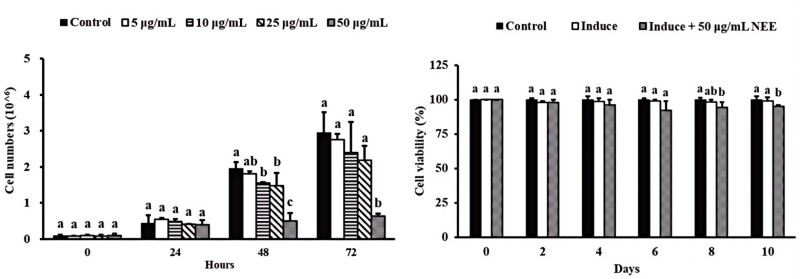 Fig.1 Effects of NEE on cell proliferation and cell viability in 3T3-L1 preadipocytes.. (Tsai, et al., 2022)
Customer Review
Definitive PK Data Unlocks IND Path
“Partnering with Protheragen for our lead optimization stage was a transformative decision. The metabolic stability and DDI data we received was the most predictive we have ever generated in vitro. Their 3D liver model flagged a metabolism-dependent DILI risk in our lead series that our previous 2D system completely missed. This early detection saved us at least 18 months of clinical development costs and allowed us to pivot to an optimized analog. We view Protheragen not just as a service provider, but as an indispensable extension of our internal ADME/Tox team, and we are already planning our next round of collaborative screening.”
Dr. J. S., VP of Discovery Research
Strategic Guidance Beyond the Bench
“As a lean biotech, we rely on partners for speed and certainty. Protheragen's expertise in anti-obesity therapeutics gave us confidence. The detailed workflow, clear communication, and the exceptional quality of their Caco-2 permeability and transporter data streamlined our preclinical progress. Their dedication to our project ensures they will be our primary ADME partner for all future programs.”
Mr. D. K., CEO of a Metabolic Biotech Startup
Frequently Asked Questions
-
How do Protheragen's in vitro models improve prediction for anti-obesity drugs?
For chronic treatments, prediction accuracy is everything. We prioritize advanced, physiologically relevant systems, such as 3D hepatic models and co-culture systems, which more faithfully replicate human tissue environments, leading to higher confidence in predicting human metabolism and DILI than traditional 2D models. We encourage you to inquire about our white paper on 3D ADME models.
-
Can your services handle diverse compound types, such as large peptides common in AOT development?
Absolutely. While ADME traditionally focuses on small molecules, we have tailored protocols for characterizing peptides, including assessment of chemical stability, enzymatic degradation kinetics, and membrane permeability assays relevant to non-oral delivery.
-
What is the typical turnaround time for a foundational metabolic stability screen?
Our high-throughput capabilities allow us to deliver initial metabolic stability (HLM/Hepatocytes) data typically within 1-2 weeks upon receipt of the compound, enabling rapid go/no-go decisions in your early-stage discovery.
-
How do you address potential Drug-Drug Interaction (DDI) risk for AOTs?
We provide comprehensive CYP inhibition/induction and transporter inhibition assays (e.g., OATP, P-gp). Since obesity patients often take multiple medications, DDI risk is paramount.
-
Are your in vitro results sufficient to replace in vivo PK studies entirely?
Our services provide the critical preclinical foundation for predicting human PK and inform the design of subsequent in vivo studies. Our data significantly reduces the required scope and cost of animal studies, aligning with the 3R principles, but in vivo studies are still typically required for full preclinical safety assessment.
-
How does your DILI screening integrate with the overall ADME package?
Our DILI screening uses our 3D Hepatic MPS, leveraging the same metabolic models used for clearance prediction. This integration ensures that observed toxicity is assessed in the context of physiologically relevant metabolism, offering a much stronger correlation to clinical hepatotoxicity risk.
-
What quality control measures are in place for your assay execution?
Every assay includes positive and negative controls, matrix blanks, and is run according to validated SOPs. Our analytical methods utilize high-resolution mass spectrometry (LC-MS/MS) with rigorous calibration and acceptance criteria to guarantee data quality.
-
We have a limited compound quantity. Can you still run comprehensive studies?
Our optimized, miniaturized in vitro assay formats are designed for compound-sparing efficiency, enabling us to obtain robust data even with limited sample availability. Please reach out to discuss your specific quantity constraints.
-
How do you ensure the data is translatable to humans?
We use high-quality human-derived biomaterials (e.g., pooled human hepatocytes, recombinant human enzymes) and advanced in vitro-to-in vivo extrapolation (IVIVE) modeling based on the latest scientific practices.
-
What is the first step to initiate a project with Protheragen?
The easiest first step is to contact our technical team to schedule a free, no-obligation consultation to review your compound's current data and outline a customized ADME testing strategy.
How to Contact Us
Protheragen delivers unparalleled scientific excellence and advanced in vitro ADME capabilities, specifically engineered to meet the chronic safety and pharmacokinetic demands of anti-obesity drug development. Our commitment is to provide high-fidelity, translational preclinical data, enabling you to select superior candidates faster and with greater confidence.
- Email: info@obesityscientific.com
- Phone: 1-631-506-1393
Contact Protheragen for More Information and to Discuss Your Project
Reference
- Tsai, S. C.; et al. Anti-Obesity Effect of Nostoc commune Ethanol Extract In Vitro and In Vivo. Nutrients. 2022; 14, 968. (CC BY 4.0)
All of our services and products are intended for preclinical research use only and cannot be used to diagnose, treat or manage patients.