
Anti-Obesity Drug In Vivo ADME Study Service
InquiryThe global challenge of obesity and its associated metabolic comorbidities has driven intense innovation in pharmaceutical research. Developing novel anti-obesity drugs requires a deep understanding of how a compound behaves in vivo—specifically, its Absorption, Distribution, Metabolism, and Excretion (ADME) Profile. A robust and reliable in vivo ADME study service is not merely a box to check; it is the critical differentiator between a promising candidate and one that fails due to poor Pharmacokinetics (PK) or unsuitable half-life.
Overview: Accelerating Preclinical Success in Anti-Obesity Therapeutics
At Protheragen, we provide preclinical in vivo ADME study services tailored for anti-obesity discovery programs—covering dosing, serial sampling, tissue collection, bioanalysis, and PK interpretation to clarify exposure drivers and de-risk candidate selection. The service is designed to support PK/PD relationship building, dose justification, and lead optimization, using study designs that emphasize clean, analyzable exposure data and actionable endpoints. We also integrate evidence mapping and data intelligence (published literature + patent landscapes + pathway/metabolism context) to help teams prioritize what to test next and avoid repeating known liabilities—especially useful when your program spans diverse modalities and chemical space.
Core Technologies
Our commitment to leading-edge science is reflected in the advanced technologies and methodologies we employ. We integrate a multi-modal approach combining in silico prediction, state-of-the-art bioanalysis, and specialized in vivo models to deliver a comprehensive ADME assessment.
- Quantitative Bioanalysis
The backbone of our service is high-sensitivity liquid chromatography-mass spectrometry/mass spectrometry (LC-MS/MS). This technology allows for precise and rapid quantification of parent compounds and active metabolites across various biological matrices (plasma, urine, feces, tissues) at low concentrations, crucial for compounds with complex pharmacology or high target affinity.
- Physiologically Relevant Models
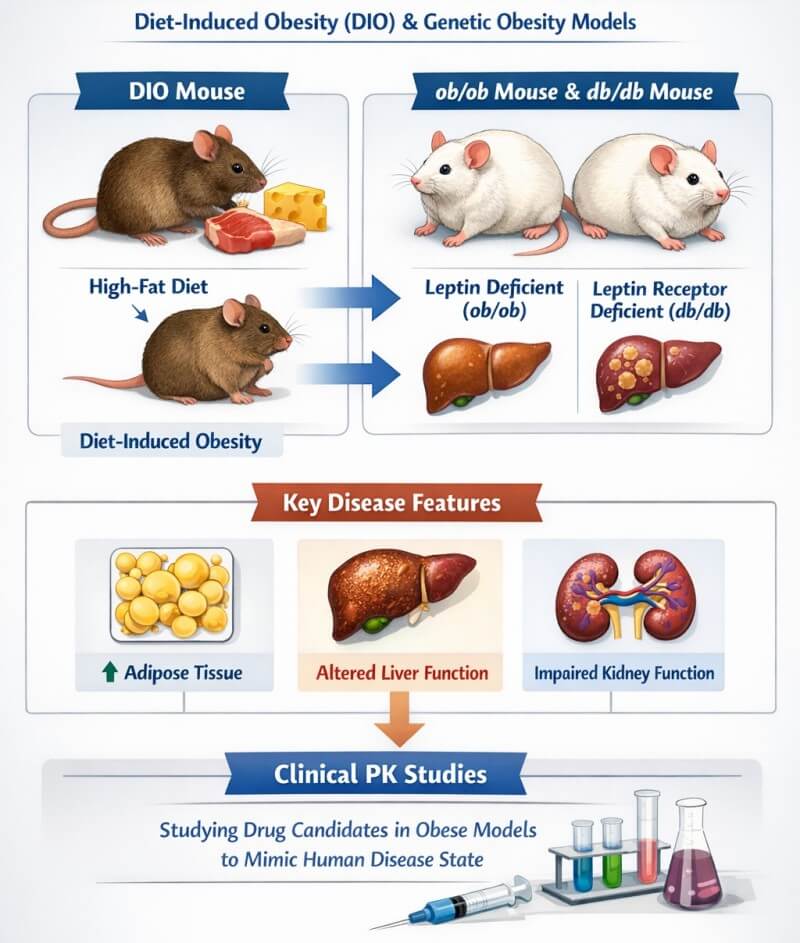
We utilize established and validated diet-induced obesity (DIO) and genetic obesity models (e.g., ob/ob, db/db mice, various rodent models) to study drug candidates under conditions that closely mimic the human disease state. The altered physiological parameters in these models (e.g., increased adipose tissue, altered hepatic/renal function) are factored into the study design to provide clinically relevant PK data.
- In Silico Modeling and Prediction
We employ proprietary computational tools and databases for early-stage prediction of key ADME properties such as metabolic stability, cytochrome P450 inhibition/induction, and blood-brain barrier penetration. This predictive layer allows for optimized formulation and study design before any animal studies commence.
- Quantitative Whole-Body Autoradiography (QWBA)
For advanced distribution studies, QWBA provides high-resolution visualization and quantification of a radiolabeled drug’s concentration in all tissues, which is vital for understanding off-target exposure and specific accumulation in metabolic tissues like the liver, muscle, and adipose depots—a critical factor for anti-obesity agents.
Workflow: A Streamlined Path to Definitive ADME Data
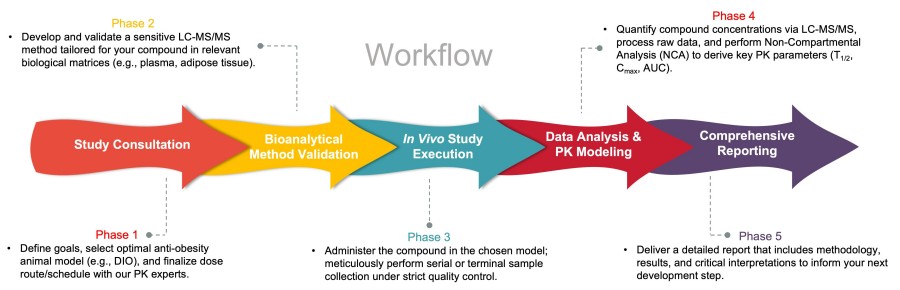
The Protheragen in vivo ADME workflow is meticulously designed to provide clarity, efficiency, and flexibility at every stage of your preclinical development program.
Fields of Application
Our in vivo ADME services are critical for a wide range of preclinical research and development areas focused on metabolic and associated diseases, ensuring your therapeutic strategy is built on solid pharmacokinetic foundations.
GLP-1/GIP/Glucagon Receptor Agonists
Characterizing the half-life extension and systemic clearance of peptide-based therapeutics, crucial for once-weekly or longer dosing regimens.
Establishing the oral bioavailability, first-pass metabolism, and overall stability of orally available compounds targeting appetite regulation or energy expenditure pathways.
Combination Therapies
Studying the non-interacting or co-dependent PK profiles of two or more compounds administered simultaneously, essential for developing multi-modal obesity treatments.
Liver and Renal Disease Comorbidities
Specifically, modeling ADME in preclinical animals with induced hepatic steatosis or early-stage renal impairment, which are common in the obese population, to assess safety margins.
Advantages: Your Strategic Partner in Anti-Obesity Drug Development
Choosing Protheragen means partnering with a team that understands the nuanced PK challenges inherent in anti-obesity therapeutic development.
- Deep Metabolic Expertise
Our specialized knowledge of metabolic disease pathophysiology ensures your study design accounts for obesity-driven changes in organ function, blood flow, and body composition, leading to more predictive data than standard PK studies.
- Unrivaled Bioanalytical Sensitivity
Our validated LC-MS/MS methods achieve limits of quantification (LOQs) necessary for accurately tracking long-acting peptides or small molecules with high potency, providing clarity where other services struggle with 'non-detects.'
- Demonstrated Success
We have supported numerous clients in advancing candidates targeting G-protein coupled receptors, neuropeptides, and novel fat metabolism pathways. Our collaborative approach has consistently translated to superior PK profiles entering later-stage preclinical assessment.
Contact Our Team for More Information and to Discuss Your Project.
Service Scope
Protheragen offers a comprehensive suite of in vivo ADME services specifically for anti-obesity drug candidates, all focused exclusively on the preclinical stage of development.
- Single-Dose Pharmacokinetics (PK)
Definitive assessment of initial ADME properties, including bioavailability and clearance, following a single administration.
- Repeat-Dose (Toxicokinetic/TK) Studies
Integration of PK sampling into non-GLP and GLP-compliant toxicology studies to evaluate drug exposure in relation to dose and potential toxicity, essential for calculating the therapeutic index.
- Drug-Drug Interaction (DDI) Potential
In vivo assessment of the effect of the candidate drug on the pharmacokinetics of a probe substrate, critical for predicting clinical DDI risk in patients often on polypharmacy for comorbidities.
- Mass Balance and Excretion Studies
Comprehensive analysis of how the drug and its metabolites are eliminated from the body, providing insight into the primary routes of excretion (renal, biliary, fecal).
- Tissue Distribution Studies (D)
Detailed quantification of drug concentration in target and non-target organs (e.g., brain, liver, kidney, and crucial adipose tissue) to assess tissue targeting and predict potential off-target effects.
Publication Data
Title: In Vivo Pharmacodynamics of Calophyllum soulattri as Antiobesity with In Silico Molecular Docking and ADME/Pharmacokinetic Prediction Studies
Journal: Pharmaceuticals, 2023
DOI: https://doi.org/10.3390/ph16020191
Summary: This study explores the anti-obesity potential of C. soulattri leaves extract (CSLE) through a combination of in vivo and in silico studies. In vivo experiments on high-fat diet (HFD)-fed rats showed that oral administration of CSLE (50 mg/kgbw and 100 mg/kgbw) for 50 days effectively inhibited increases in body mass index (BMI), body weight percentage, carcass fat (renal and anal), and total blood cholesterol levels. The 100 mg/kgbw dose of CSLE demonstrated the most prominent antiobesity activity, with results comparable to the positive control drug orlistat (120 mg/kgbw). In silico analyses, including molecular docking and ADME/pharmacokinetic predictions, revealed that seven key compounds in CSLE (friedelin, caloxanthone B, macluraxanthone, stigmasterol, trapezifolixanthone, dombakinaxanthone, and brasixanthone B) exhibit strong binding affinity to the fat mass and obesity-associated protein (FTO) receptor—outperforming orlistat. Caloxanthone B stood out with the highest binding stability to FTO, as confirmed by molecular dynamics simulations. All selected compounds comply with Lipinski's rule, showing good drug-likeness and intestinal absorption rates above 90%. Collectively, the findings validate CSLE as a promising candidate for developing natural anti-obesity agents.
Key Findings
- In Vivo Antiobesity Efficacy
- CSLE (100 mg/kgbw) significantly suppressed BMI elevation (0.57) and body weight percentage change (24%), with outcomes not statistically different from orlistat (BMI: 0.52; weight change: 27.77%).
- The 100 mg/kgbw CSLE dose reduced renal and anal fat deposits to levels comparable to orlistat, while lowering total cholesterol and triglyceride levels in HFD-fed rats.
- CSLE met standard quality requirements (e.g., water content 12.76%, complying with Indonesian Herbal Pharmacopoeia) and showed no acute/subchronic toxicity at tested doses (LD50 > 5000 mg/kgbw).
- In Silico Molecular Interactions
- All seven CSLE compounds displayed stronger binding affinity to FTO (-8.27 to -9.74 kcal/mol) than orlistat (-5.93 kcal/mol), with caloxanthone B exhibiting the highest affinity (-9.74 kcal/mol).
- Molecular dynamics simulations confirmed caloxanthone B maintained stable binding to FTO's active site (Tyr 108, Glu 234, Ser 229) over 100 ns, supporting its potential as a key antiobesity component.
- Drug-Likeness and Pharmacokinetics
- All CSLE compounds adhered to Lipinski's rule (molecular weight < 500, hydrogen donors < 5, hydrogen acceptors < 10) and showed intestinal absorption exceeding 90%, indicating favorable bioavailability.
- Toxicity predictions identified four compounds (caloxanthone B, macluraxanthone, dombakinaxanthone, brasixanthone B) as potential mutagens, with only dombakinaxanthone predicted to induce hepatotoxicity—requiring further in vitro/in vivo validation.
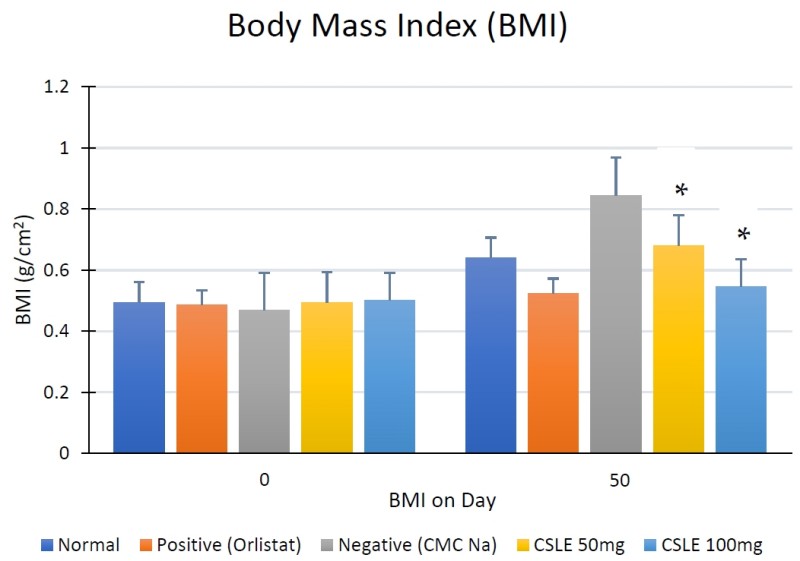 Fig.1 Animal Body Mass Index Comparison. (Fajriaty, et al., 2023)
Customer Review
Definitive PK Data Unlocks IND Path
"The team at Protheragen delivered exceptional results on our novel peptide-based anti-obesity candidate. We were struggling to accurately determine the terminal half-life due to low exposure concentrations in our initial animal studies. Protheragen’s ultra-sensitive LC-MS/MS methods successfully quantified the compound below our previous limits, providing the definitive PK data we needed for candidate selection. Their expertise in DIO models was invaluable. We now have a clear path to IND submission and are currently collaborating with them on the integrated PK/TK work for our lead optimization program."
Dr. E. S., Head of Preclinical Development
Strategic Guidance Beyond the Bench
"What impressed us most was Protheragen’s proactive consultation. They didn't just run the experiment; they acted as a true extension of our team. Their scientists quickly identified a potential DDI risk based on the compound's structure and incorporated a preliminary in vivo DDI assessment into the main PK study. This foresight saved us months of potential rework downstream. We rely on Protheragen for high-integrity data and strategic scientific guidance, and we plan to continue leveraging their full suite of ADME and efficacy services for our next generation of metabolic therapeutics."
Mr. D. C., Program Manager
Frequently Asked Questions
-
What is the typical turnaround time for a standard single-dose PK study?
While timelines vary based on the complexity of the molecule and the necessary bioanalytical validation, a standard mouse or rat single-dose PK study, post-method validation, typically takes 3–4 weeks for in vivo execution, bioanalysis, and final report delivery. We encourage you to inquire now for a detailed project timeline.
-
Can Protheragen handle complex formulations like sustained-release injections?
Absolutely. Our team has extensive experience administering and sampling for complex, depot-type formulations (e.g., subcutaneous injections) to accurately characterize the slow release, sustained exposure, and terminal half-life of such candidates.
-
Do you offer metabolite profiling as part of the ADME service?
Yes. We offer comprehensive metabolite identification and profiling. Understanding the metabolic pathway is crucial for safety and efficacy, especially for novel anti-obesity drugs. We can analyze major circulating and excretory metabolites to help identify potential active or toxic species.
-
What if my compound has poor solubility? How does that impact in vivo ADME?
Poor solubility is a common challenge. Our formulation experts work closely with the PK team to develop appropriate dosing vehicles (using techniques like nano-suspensions or cyclodextrins) to maximize delivery and ensure the observed in vivo PK is reflective of the compound’s true pharmacological potential.
-
How do your services compare to using an internal PK team?
Outsourcing to Protheragen provides access to specialized equipment (high-end LC-MS/MS), niche expertise (obesity models), and rapid scalability that often exceeds the capacity of an in-house team, all while allowing your internal resources to focus on core discovery efforts.
-
Can the same animal cohort be used for both PK and early efficacy measurements (PD)?
Yes, we frequently integrate PK/PD sampling in the same in vivo study, especially for early-stage screening. This ensures a direct correlation between drug exposure (PK) and biological response (PD, e.g., weight loss, glucose tolerance), maximizing the value of each animal study. Reach out today to design your integrated PK/PD study.
-
What are the primary precautions Protheragen takes during in vivo sample collection?
We adhere to rigorous SOPs for serial sampling, ensuring minimal stress on the animals, accurate timing of collection, and immediate, precise processing (e.g., plasma separation, use of proper anticoagulants, snap-freezing) to prevent sample degradation and guarantee data integrity.
-
Is it possible to initiate a small-scale pilot study before committing to a full program?
Absolutely. We often recommend a small pilot or "quick screen" PK study to confirm initial predicted parameters and optimize the dosage for the main studies. This flexible approach allows you to validate our processes and expertise.
How to Contact Us
Protheragen is your expert partner for high-precision Anti-Obesity Drug in vivo ADME study service. We provide the specialized models, advanced bioanalytical technology, and deep scientific expertise necessary to accurately define the pharmacokinetic profile of your drug candidate in a preclinical setting. Our commitment is to accelerate your research, mitigate risk, and maximize your chances of advancing a successful therapeutic to clinical trials.
- Email: info@obesityscientific.com
- Phone: 1-631-506-1393
Contact Protheragen for More Information and to Discuss Your Project
Reference
- Fajriaty, I.; et al. In Vivo Pharmacodynamics of Calophyllum soulattri as Antiobesity with In Silico Molecular Docking and ADME/Pharmacokinetic Prediction Studies. Pharmaceuticals. 2023, 16, 191. (CC BY 4.0)
All of our services and products are intended for preclinical research use only and cannot be used to diagnose, treat or manage patients.